John Linden spent $600 on digital cats and then asked himself a question that would become useful to his next company: why had he done that? He was accustomed to paying modest amounts to support a game. Collecting CryptoKitties had prompted a different response. He could keep them, give them away or sell them. The choices belonged to him. Somewhere between the purchase and the mild astonishment at his own receipt, a game executive had become an interesting consumer.
The co-founder and CEO of Mythical Games has spent the years since working on that change in behavior. His company makes games in which players can trade digital items, with blockchain recording ownership. That description can sound like an invitation to a financial conference. Linden’s career offers a more entertaining route into it: Call of Duty, collectible toys, football teams and penguins. The machinery is complicated. The attraction is familiar to anyone who has ever wanted to swap a duplicate trading card.
Before the cats, the crowded résumé
Linden’s introduction to entertainment began unusually close to the machinery. His father was an engineering executive at Showbiz Pizza and Chuck E. Cheese, and Linden remembers growing up around the animatronic characters. He got a Commodore 64 at eight and began programming. For a child with an interest in how entertainment worked, this was a fairly persuasive combination of classroom and arcade.
His professional route wandered through several kinds of internet business before arriving at games. He built Planet Alumni, which was acquired by Reunion.com, and Litmus Media, acquired by Think Partnership. He also held co-founder and chief technology officer roles at Adknowledge and OpenX. Those ventures put him on the systems side of the internet, where the work involves making transactions and connections happen beneath the surface of a service.
Then came the franchises. As a studio head at Activision Blizzard, he worked on Call of Duty and Skylanders. Later he became president of Seismic Games, the developer associated with Marvel Strike Force and Magic: The Gathering - Valor’s Reach. Niantic acquired Seismic. By the time Linden started Mythical, he had experience both building companies and working inside established entertainment businesses. His new proposition needed both: a way to make the underlying technology function and a reason for a player to care.
A million-dollar conversation
One of the people he needed to convince was investor Adam Struck. The two had encountered each other around Los Angeles before working together. At a crypto community event, Linden began describing an idea for trading inside games without the fraud and technical difficulty that could accompany unofficial markets. A subsequent meeting made the proposal more concrete: give digital items identifiable ownership and let players transact within a publisher-supported system.
Struck also got to know co-founder Jamie Jackson, whose background included DJ Hero and Activision. In 2018, Struck Capital became Mythical’s first investor with a $1 million check. The relationship would grow beyond the original pitch. After Mythical closed its 2021 Series C, Linden, Jackson and members of the Struck team celebrated over dinner. The resulting photograph is reassuringly uncorporate: five people around a restaurant table, fingers raised, plates still in view.
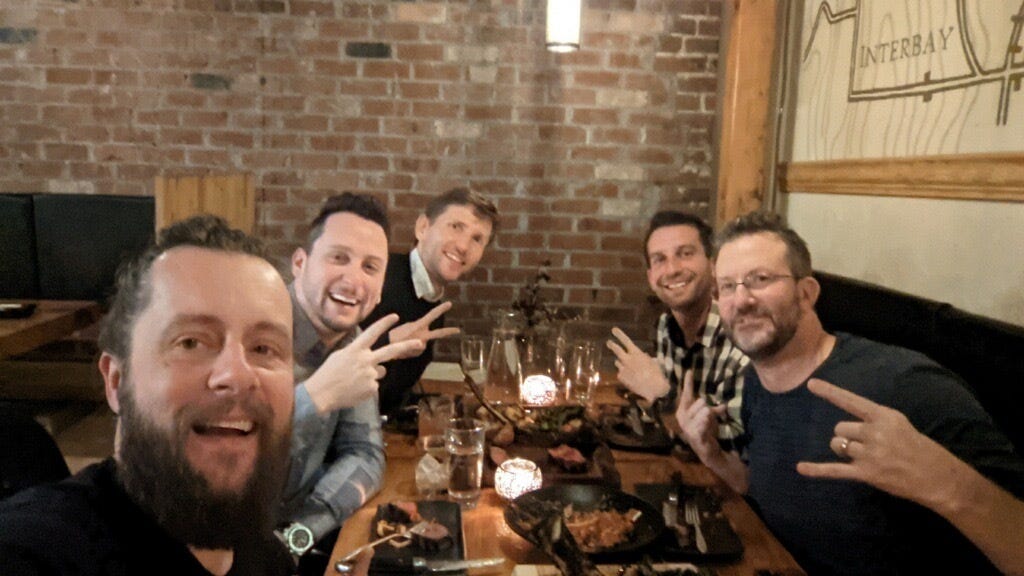
That round raised $150 million at a $1.25 billion valuation. It was a company valuation, carrying expectations about what Mythical might build. Dinner was the easier part.
The toy that could stay in its box
Blankos Block Party gave the idea a particular shape. The game’s characters resembled collectible vinyl toys, an enthusiasm shared by Jackson and early members of the team. Linden described a social world with a central gathering place, the Junction, and player-created parties involving racing, collecting and shooting. In the weeks of private beta before its December 2020 open beta, players had already made more than 1,600 blocks.
The toy analogy reached into the economy. A Blanko could have a permanent issue number, like a limited-edition card. Its owner could open it, play with it and customize it, or leave it boxed on a digital shelf. Even in a world without physical dust, the collector’s old dilemma survived: enjoy the thing, or preserve the packaging?
Linden also connected the project to artists who buy blank vinyl figures, decorate them and sell their creations. The attraction included participation in making the world, rather than simply purchasing entry to it. Blankos was an attempt to put collecting, creativity and a marketplace in the same playground.
The argument he was making in 2018
Looking back at Mythical’s first year, Linden was already interested in how little technical knowledge players might need. He welcomed a shift toward user experience and projects that did not put “Crypto” at the front of their names. He wanted digital ownership to reach people through an understandable game.
His thinking was practical down to who would pay transaction fees. He pointed to technology that allowed applications to absorb those costs for consumers. He also expected games to combine blockchain assets with conventional currency economies. These were arguments about access: what would a person need to learn, acquire or endure before getting to the enjoyable part?
It is a revealing early marker. Years before Mythical’s football games, Linden was treating the technical explanation as a design problem. A player arriving to have fun should not have to complete an induction course first.
Two minutes of football
With NFL Rivals, Linden brought that thinking to a familiar American pastime. The NFL and NFL Players Association partnership allowed Mythical to build around recognizable teams and athletes. The proposed audience was more casual than the dedicated simulation player. Linden drew inspiration from the arcade exuberance of NFL Blitz and NBA Jam, with short sessions and an accessible rhythm.
“You can pick up the game, play a couple rounds, set it down and do it again later,” he said while discussing the project in 2022. There is a considerate quality to that ambition. A game can ask for attention without attempting to occupy the entire afternoon.
NFL Rivals entered early access on iOS and Android in April 2023. Players could act as general managers, assemble rosters and play games, with optional buying, selling and trading of digital player collectibles through Mythical’s marketplace. By August, the Miami Dolphins announced a partnership that included stadium branding and chances to win VIP experiences. The game had passed two million downloads during its soft launch, with more than 15 million games played. Linden’s marketplace proposal was meeting fans in an actual football stadium.
Where the players already were
Getting there involved revising the business. In 2024, Linden spoke candidly about the expense of growing Blankos on PC. Reaching roughly 1.5 million players had not made acquiring the next wave cheap. Mobile offered a different route, through stores that people already used. Relationships with Apple and Google mattered as much as the internal engineering.
He also reconsidered the company’s relationship with blockchain itself. Mythical had started on EOS and moved through an Ethereum-compatible chain before choosing Polkadot as a home for Mythos. His explanation was unusually plain for a discussion of competing technical ecosystems: the value lay in the experience built above the chain.
“The secret sauce is what you do on top of it.”
John Linden, 2024
He wanted the team’s attention on how customers interacted with the product. Mythical’s acquisition of DMarket brought trading expertise, including knowledge of liquidity and player behavior. For Linden, these were operating questions: could someone find a buyer, make an exchange and keep playing?
The duplicate-card problem
Quick Trades made that question tangible. Introduced at the end of 2023, the feature let players exchange items for other items without requiring a separate currency transaction at the surface. In August 2024, Linden said it had increased secondary revenue by about 25%. The useful idea is easy to recognize: a collection contains things you are willing to surrender as well as things you want.
Items you can part with
The item you want
Linden’s broader explanation of ownership was similarly tied to use. He argued that gamers come primarily for gameplay and may be skeptical of volatile cryptocurrencies. Their interest in owning virtual goods does not automatically make them interested in financial speculation. His aspiration was an economy that rewards participation while serving the game. The distinction matters to his work because the same technology can support very different reasons for showing up.
A larger pitch, a different party
FIFA Rivals took Mythical into global football in June 2025. Its mobile format combined real-time competition, roster building and tradable digital collectibles. FIFA described a game designed for mainstream mobile players, with no prior web3 knowledge required. The proposition had acquired a different sport and a wider geographic audience while retaining the emphasis on approachable play.
An adidas collaboration brought digital kits, boots and a training facility into that world. Linden described the partnership in terms of football culture and players representing a recognizable brand. For a collector, a boot or shirt carries associations before it carries a technical designation. The ambition was to make those associations part of the game.
August 2025 brought Pudgy Party, developed with Pudgy Penguins. Its costumes, fast-paced minigames and competitive rounds offered another setting for collectible items. Working with Luca Netz, Linden talked about building a franchise that could last. The creatures were different; the recurring interest in what people collect, customize and share was easy to recognize.
Across these projects, Linden keeps returning to the person holding the phone. Can they get in easily? Is there something enjoyable to do? Can they make a choice about an item they have collected? The questions are smaller than a declaration about the future of the internet, and considerably more useful to a game designer. A digital cat once made him curious about his own behavior. He has been building around other people’s choices ever since.
Follow the conversation
More from Linden and the worlds he is building.