There is an unfashionable word at the center of Eric Damassa’s growth philosophy. It is not scale, disruption, velocity, or any of the other nouns that acquire capital letters in agency presentations. The word is “no.” Specifically, the right kind of no, delivered before a glamorous pitch swallows a team’s week and after someone has asked whether the opportunity makes sense for either side.
Damassa has earned the right to be particular. He joined Anomaly in 2011 as New Business Director, when the agency had two offices. Fifteen years later, it operates across Los Angeles, New York, Toronto, London, Berlin, Shanghai, and Paris. He is now Global Partner and CMO, with responsibility that reaches beyond marketing into growth, brand, technology, operations, and AI. The job sounds broad because the agency’s premise has always been broad: the answer to a business problem may be an ad, but it might also be a product, a platform, a design, or a different commercial arrangement.
His public résumé charts a tidy rise through a business famous for disorder. He started at The Active Network, the sports-and-fitness data and technology company, then moved to Saatchi & Saatchi’s New York headquarters. There he worked across account management, digital, and new business, eventually helping lead a run of global wins. At Anomaly, the remit expanded with the map.
The useful refusalA pitch is a choice about culture
New business people are paid to want things. They monitor the horizon, assemble the deck, convene the talent, and make possibility sound inevitable. Damassa’s version of the role adds an editor’s instinct. In a 2023 discussion about the human cost of pitching, he argued that an agency already has a problem if declining is no longer possible. The point was practical rather than pious. A mismatched yes lowers win rates, raises burnout, damages reputations, and can produce a partnership that expires almost as soon as the champagne does.
“If you have found yourself in a position where declining a pitch isn’t an option, you’ve already lost.”Eric Damassa on the human cost of pitching
The line contains a whole theory of positioning. To say no usefully, an agency must know what it is. It needs a view of the work it can improve, the people it can help, and the conditions under which its own people can remain good at their jobs. Damassa’s stated tests are mutual respect, shared ambition and values, and a legitimate ability to deliver. Those are softer measurements than revenue, but they predict whether revenue will be enjoyable enough to renew.
He is not arguing for monastic purity. Anomaly grew. It won major agency honors, appeared repeatedly on the Ad Age A-List, and received recognition from Fast Company. Growth mattered enough for Damassa to spend his career organizing it. His distinction is between appetite and compulsion. Ambition needs boundaries because a team exhausted by every possible opportunity eventually loses the energy for the right one.
The long middleSeven cities, without the victory lap
Anomaly’s geographic story is easy to render as dots. The management story lies in the lines between them. Damassa describes his work as connecting talent and ideas across markets, deepening current client relationships, and choosing new pursuits selectively. Paris, opened in 2026, became the seventh office and the first new one in nine years. The gap itself says something. Expansion was not treated like a metronome.
A career built inside one changing company
- 2006The Active Network - an early education in data, technology, sport, and fitness.
- 2007Saatchi & Saatchi - account, digital, and global new-business work in New York.
- 2011Anomaly - arrives as New Business Director when the agency has two offices.
- 2024Global Partner and CMO - growth, brand, technology, operations, and AI converge.
- 2026A seven-office network, plus a new problem: how to price intelligence in the AI era.
Fifteen years at one agency is now its own form of anomaly. Damassa’s longevity matters because it let him experience growth as consequence rather than announcement. He saw the chaotic early years of Anomaly Los Angeles, when the agency was roughly 40 people. He saw a network form, awards arrive, client relationships deepen, and new technology alter the work underneath the titles. The institution changed enough that staying required motion.
His connections inside that change are telling. Anomaly credits him with working alongside Global CEO Karina Wilsher and Chief AI Officer Chris Neff on the agency’s AI transformation. This is not the CMO as a custodian of messaging. It is the CMO as operating-system participant, interested in how the agency staffs, prices, and delivers the thing it markets.
The path also gives him a rare institutional memory. He can compare the promise made in a pitch with the relationship that followed, and a new office announcement with the daily work of making it useful. In an industry that regularly changes its vocabulary, memory is a form of quality control. It reveals which fashionable ideas became tools, which became habits, and which quietly left through the side door.
After the timesheetAI changes the shape of the invoice
Generative AI introduces a deliciously awkward problem for a business accustomed to selling hours. If a system compresses days of production into minutes, the old proxy between time and value starts to wobble. Yet the work does not become costless. Agencies invest in data, models, enterprise tools, engineering talent, governance, and more senior judgment. Labor expense shifts toward infrastructure and expertise. The invoice changes shape.
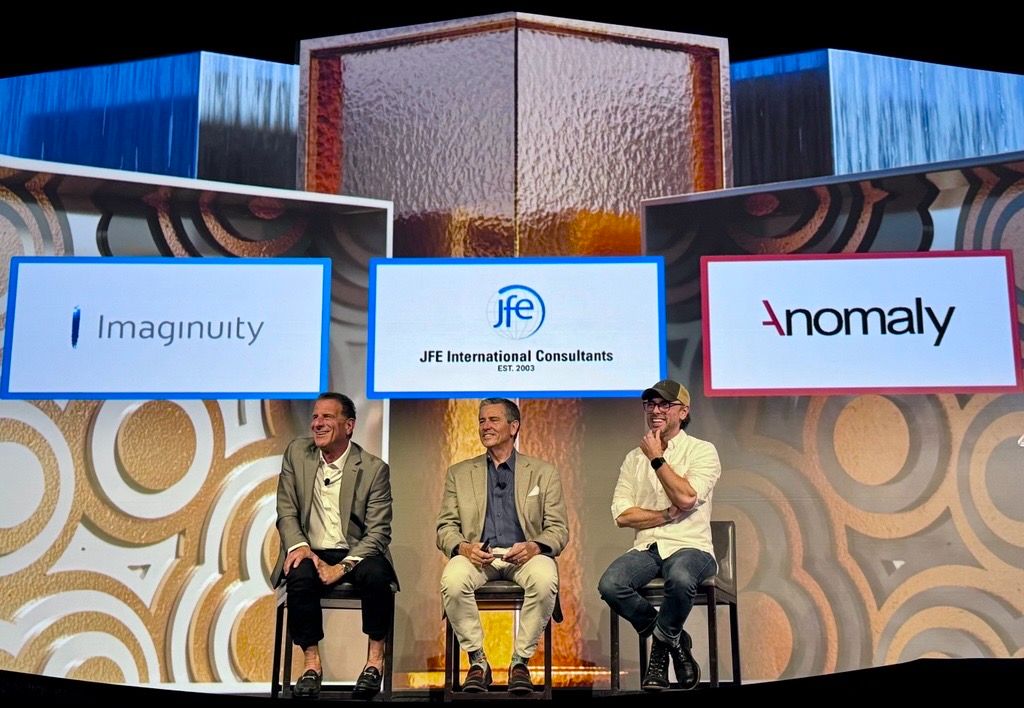
At a 2026 Association of National Advertisers panel, Damassa joined a conversation that separated agency work into two layers. There is execution - the assets that clients can see and count. Then there is intelligence - the data, models, systems, infrastructure, and strategic decisions that help those assets perform. AI can make the first layer cheaper in some circumstances while making the second more consequential.
Hours can shrink while judgment grows more valuable. The agency still has to explain what the client is buying.
This is where his old pitch discipline meets the new technology. Both begin with qualification. Which problems deserve human attention? Which processes should become systems? What is repeatable, what is proprietary, and what still depends on taste? An agency that says yes to every AI tool will fare no better than an agency that says yes to every pitch. Novelty is merely opportunity wearing louder shoes.
The commercial question is also a storytelling problem, which makes it natural territory for a CMO. Clients can easily see a film, a campaign, or a collection of assets. The system that helped choose, adapt, and measure those outputs is harder to photograph. Making that invisible layer legible - without burying it in jargon - may become one of the central marketing jobs of the agency itself.
Anomaly says Damassa is helping build internal AI operating systems and deploy enterprise tools across creative, strategy, and operations teams. The interesting phrase is “operating systems.” It implies that AI is not an extra window open on a laptop. It reaches into workflow, cost structure, staffing, and the promise made to clients. If the old model rented human time, the emerging model may sell a designed combination of machines, expertise, and responsibility.
Outside the deckThe obsessive organizer has a soundtrack
Corporate biographies often launder personality into three acceptable hobbies. Damassa’s older about.me introduction does the opposite. He lists himself as a metalhead, gamer, science-fiction nut, technophile, musician, obsessive organizer, designer, and iTunes addict. The sequence has the appealing density of a browser with too many tabs, except one suspects his tabs are labeled.
His personal website is similarly concise but revealing. Its menu offers travels, cities, dogs, and work. There is no manifesto. A photograph of a dog does some of the welcoming. The effect is less a personal brand than a person who knows what he likes and has arranged the folders accordingly.
A recommendation from former colleague Neal Foard supplies another angle: Damassa as the calm figure when metaphorical walls are on fire, focused, direct, and wearing a bemused expression. It is funny praise, but it fits the professional method. New business creates artificial emergencies. Global networks create real complexity. AI creates a daily carnival of predictions. The useful executive is often the one who can lower the temperature without lowering the ambition.
That may explain why Damassa’s most quotable idea is a boundary. No is not the conclusion of his story. It is the editing tool that keeps the story legible. It protects the people doing the work, clarifies what the agency is for, and leaves room to pursue the opportunities that deserve a wholehearted yes.
The next chapter at Anomaly will test that discipline. Seven offices must act as a network. AI systems must improve work without turning creativity into a vending machine. Clients must understand why an hour saved is not value erased. And the agency must continue growing while retaining the ability to walk away. Damassa’s career suggests he enjoys precisely this kind of puzzle: part brand, part business design, part technology, all in need of a very good organizer.