Eran Heffetz was paying two people to produce a result he did not want. One restaurant employee was training another. The instruction fell short of his standards, and the lesson was being passed along anyway. It was an ordinary exchange, the sort of thing a busy owner might walk past. Heffetz remembered it. A business can write down exactly how it wants something done and still discover that a different version is being taught on the floor.
He had opened and operated eight restaurants and bars before building Bites. That gives his interest in workplace learning a particular texture. Menus change. Staff arrive. Promotions expire. The person who understood yesterday’s instruction may be somewhere else by Friday. A training system has to survive all of that before anyone gets to admire its features.
Eight restaurants, one recurring problem
Heffetz’s complaint was both practical and financial. Restaurant staff kept needing instruction; teaching consumed paid time; the quality varied. In his account, searching for an adequate solution eventually led him toward making one. The company that emerged, Bites, now serves frontline teams with short learning content delivered through familiar communication channels.
There is a useful distinction between knowing a standard and being able to distribute it. An owner can demonstrate a task beautifully to one employee. Repeating that demonstration consistently, across shifts and locations, is a separate operating problem. Add the next menu change and the demonstration needs another outing. The restaurant has acquired a small publishing business, with rather inconvenient deadlines.
Bites’ origin joins Heffetz’s hospitality experience to the learning and development backgrounds of Tal Nagler Almog and Hagai Horovitz. The two had encountered their own difficulties reaching learners through conventional methods. Together, the founders looked toward the habits people already had: short media, social feeds and instant messages. Their company’s proposition grew around putting professional instruction into formats that felt familiar.
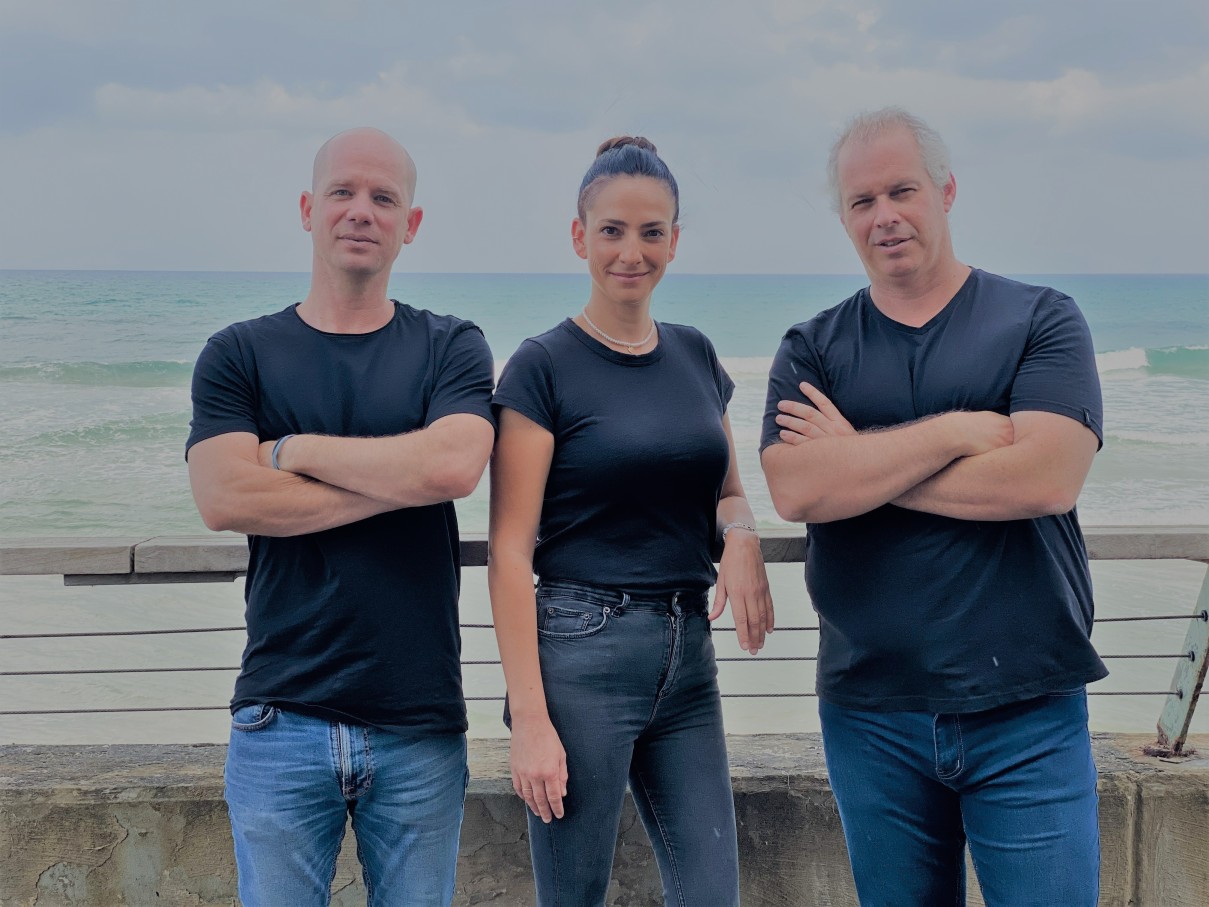
The people beside him
Heffetz’s earlier career also included flying an F-16 in the Israeli Air Force, co-founding urban-renewal company City People and a board role at fintech company Obligo. Preparation and partnerships recur across his account of those years. He describes himself simply: “I’m a partnership person.”
There is a longer history behind that preference. Obligo co-founder Roey Dor knew him as a child and later as a fellow squadron member. Dor has credited Heffetz with helping him prepare for flight academy. His description emphasizes an organized friend, someone who helped make an unfamiliar ambition possible. The connection predates the companies and the job titles.
Dor’s recollection places Heffetz in his life before either became a founder. They were schoolmates as well as friends. Dor described Heffetz’s father as a pilot and remembered that people expected Heffetz to follow that path. For Dor, whose own interests included music and surfing, Heffetz helped make the route into aviation less unfamiliar. It is a reminder that a business connection can begin long before there is any business to discuss.
Heffetz is also willing to include a failure in the story. After successful restaurant ventures, one project became too large and too expensive, and closed. He has described the experience as a lesson in modesty. Partners mattered when the work involved dealing with the consequences, rather than celebrating an opening.
“I’m a partnership person.”
Eran Heffetz
That makes the three-founder photograph more than a convenient company picture. Different kinds of experience sit beside each other: hospitality operations and learning design. A restaurant owner can identify where an instruction falls apart. An educator can think about how to build the lesson. Turning either observation into software requires both parties to keep talking.
A lesson small enough to travel
A practical explanation of the product sits in a help article carrying Heffetz’s byline. A Bite can contain four stages: a media-based story, a question, summary cards and a discussion. The sequence lets an employee encounter the information, respond to it, revisit the main points and ask something back. Longer material can become a playlist; the format can also accommodate more questions.
The question is doing real work in that sequence. Watching a demonstration and making a decision about it are different activities. The discussion gives the recipient a way to reveal what the instruction left unclear. Those details are easy to overlook when short video becomes the whole sales pitch. A smaller lesson still needs somewhere for understanding to show up.
By October 2021, Bites had announced a $5 million seed round led by Vertex Ventures Israel. The announcement named customers including Unilever, HP and H&M and reported more than 200,000 users at that time. These were company milestones with dates attached, evidence that the founding problem had found an audience beyond the restaurant business.
Led by Vertex Ventures Israel, with other venture investors participating.
The expansion changes the scale of Heffetz’s original question. A local owner may worry about what happened on one shift. A distributed employer needs information to arrive across different places and teams. The shared challenge is keeping the instruction recognizable as it travels. Every extra step between the message and its recipient gives the message another chance to be missed.
The document gets another shift
Heffetz’s public posts show an interest in the machinery behind that journey. When he announced Bites 2.0, he highlighted content assignment, organizational hierarchy, an AI video editor and Ask AI. He also used the announcement to thank the people building the features. The celebratory subject was a product release; the people occupied much of his attention.
In another video post, he described how quickly AI had changed content production. A long PDF could become a playlist of short video lessons in minutes, a pace he said he would once have struggled to imagine. The older restaurant problem remains recognizable beneath the newer vocabulary: someone has information, and making it usable takes work.
Bites’ AI Studio accepts PDF, DOC and PowerPoint material and turns it into editable learning videos with narration, summaries and questions. Its tools include branding and localization, with changes available before publication. For Heffetz, that places software closer to the recurring task of making and revising instructions, rather than treating each lesson as a production commissioned once and carefully left untouched.
A menu has no particular respect for the time spent preparing its previous training video. Neither does a process update. The value of easier editing lies partly in accepting this rather rude fact. An attractive lesson about an obsolete procedure is still an obsolete lesson. The useful product has to accommodate the next change as well as the first upload.
Leave something for the room
By June 2026, Heffetz was setting out a more deliberate division of teaching work. His article on hybrid frontline training assigned repeatable knowledge to digital delivery and reserved in-person time for practical work, coaching and complex interactions. Employees could arrive prepared; managers could use their time together for things that benefited from being together.
It is a consequential position for someone selling digital learning. The task determines the format. A video can introduce a procedure. A live session can let someone practise it and receive feedback. Heffetz also argued for measures tied to workplace outcomes, such as onboarding and execution, rather than treating hours of instruction as the result.
On the phoneRepeatable knowledge, product information and process updates.
In the roomHands-on practice, coaching and complex situations.
His proposed arrangement also gives the manager a more specific job before the live session. Completion information can show where people need support, so the group does not have to start by repeating every basic instruction. The calendar may contain fewer hours of presentations while the actual meeting contains more useful practice. That is the distinction his argument asks employers to make when they design the program.
The same concern appears in his conversation with SHRM about productivity. His emphasis is on connecting training to business performance and giving HR clearer measures of its contribution. That ambition brings the conversation back to the owner’s question: what changed in the work after somebody received the lesson?
Bites Learning joined SHRM Labs’ 2025 WorkplaceTech Accelerator cohort alongside TransCrypts and Refresh. The program offered business-development exposure, HR expertise and guidance on product and strategy. For a founder whose starting point was operational frustration, it put the company among people whose daily decisions include which workplace tools deserve a place in an organization.
A regional customer program supplies a concrete example of the work at larger scale. In January 2026, Bites published Glico Asia Pacific’s account of training across six countries. Its initial rollout included 42 video lessons in three languages for more than 500 employees, delivered inside Microsoft Teams. The account reported a launch in under eight weeks and 90 percent completion.
These figures describe that program, rather than a universal result. Their interest is in the practical coordination: the same initiative had to work across languages and locations. Heffetz’s restaurant-floor concern has travelled a considerable distance, but the destination is still an employee who needs an instruction they can use.
Back to the table
His next listed Chicago gathering brings the story back within reach of a restaurant table. As of October 25, 2026, Bites names Heffetz as host of a November 18 evening at The Dawson. The invitation promises conversation about frontline learning, with food and drinks. It is an upcoming event, another opportunity to talk with the people responsible for making these systems work.
There is a pleasing continuity in that setting. Hospitality supplied him with a training problem; hospitality now supplies a place to discuss it. The software has acquired more tools, more formats and more organizational machinery. The original test is still easy to state. When one employee shows another what to do, does the intended lesson survive?