At Discovery, the experiment had a filmmaker’s name. Jeffrey Douglas and his team tried a little motion on the images promoting video: the gentle pan associated with Ken Burns documentaries. Optimizely’s case study reports a 6% increase in click-throughs. Nobody had to invent a new television network. They had to find out whether a still picture was sitting a little too still.
- Episerver bought Optimizely in 2020 and announced the name change in January 2021.
- Today’s portfolio connects content, commerce, experiments, analytics and AI workflows.
- The useful habit to copy: define success before changing the page.
That small test is a useful entrance to a company with an unusually complicated family tree. Optimizely sells the machinery for creating digital experiences and checking their consequences. A marketer can publish a page. A product team can compare variations. A retailer can connect an experiment to what customers eventually buy. The interesting part lives between those activities.
01 The buyer who borrowed the name
Start in Sweden in 1994. Mikael Runhem founded the business as ElektroPost, initially working on internet email. A content management system followed in 1997. Episerver became associated with the practical work of keeping websites current: giving editors tools to publish without turning every revision into a programming assignment.
The original Optimizely had a separate beginning. Dan Siroker and Pete Koomen founded the American experimentation company in 2010. Episerver announced its acquisition in September 2020. Then, in January 2021, the combined business announced that it would use the Optimizely name. The buyer had bought a brand it wanted to become.
“Digital experience is a journey without a finish line.”
Alex Atzberger, CEO · January 2021
The old name had a perception problem. In an interview published by implementation partner Epinova, Optimizely’s Mårten Bokedal explained that the company’s capabilities had moved beyond what people associated with Episerver. Publishing software was too narrow a description. Testing, commerce and personalization had changed the proposition. The name followed the work.
02 A page, a test, a consequence
The product portfolio, Optimizely One, follows a recognizable chain. Its content management system handles websites and editing. Its Content Marketing Platform handles planning and collaboration. Commerce products support storefronts and complex business buying. Web Experimentation compares website variations; Feature Experimentation brings testing and feature controls into software development.
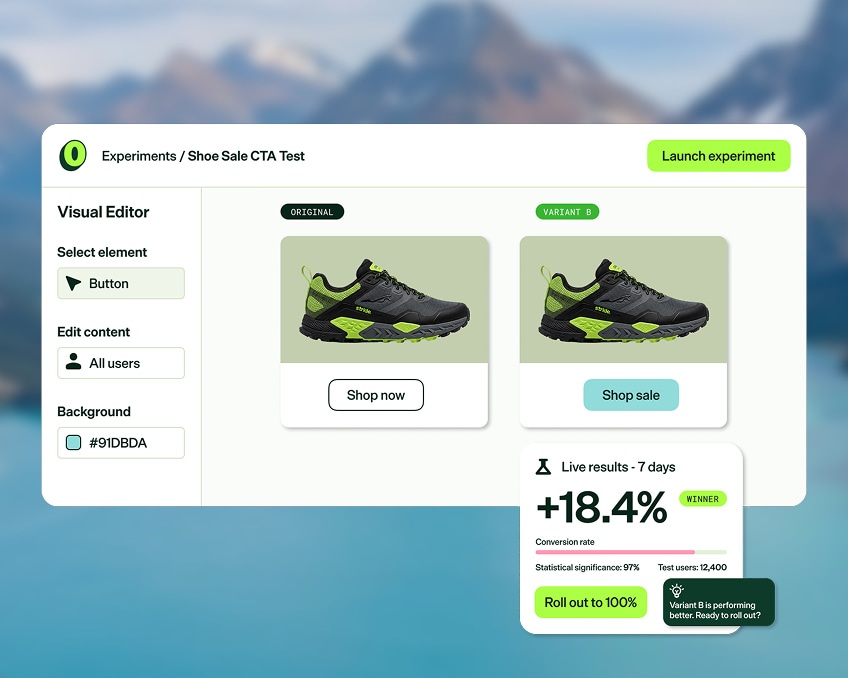
The ambition is to shorten the distance between making something and learning from it. Personalization changes experiences for different audiences. Analytics asks what happened afterward. NetSpring, acquired in 2024, supplied warehouse-native analytics, allowing teams to analyze experiments against business data already held in systems such as BigQuery or Snowflake.
Think of a hypothetical promotion that attracts more clicks but also more returns. A click counter would congratulate the team too early. Connecting the experiment with downstream data makes a harder question possible: did the change improve the business? That example is the attraction of the architecture, rather than a promised result.
+6% reported click-through lift. Indexed comparison; baseline = 100. No absolute conversion rate implied.
03 The price of joining the pieces
This is enterprise software sold through individually packaged plans and custom quotes. For a buyer, the sensible budget includes the selected products plus migration, integration and the people who will operate them. The subscription is one decision. Whether the organization can use the evidence is another.
The financial history needs similar care. Insight Partners’ 2018 acquisition announcement valued Episerver at $1.16 billion. That was a transaction valuation, not a software price or a current valuation. In 2024, Optimizely reported reaching $400 million in annual recurring revenue. ARR describes recurring contracts; it is not the same figure as recognized annual revenue.
Its market spans several buying decisions. Adobe and Sitecore overlap in enterprise digital experience platforms. Contentful overlaps in content infrastructure; specialist testing products compete for experimentation budgets. Optimizely’s pitch rests on connecting these functions. Buyers should compare the actual modules they need, the integrations they can support and the cost of keeping separate tools.
There is a revealing example inside the company itself. Epinova’s account of the corporate website merger says the team used the more comprehensive Episerver site as its base, then rebranded it. Even a company selling an integrated platform had to make a practical choice about which existing system to keep. For customers, that is a useful reminder to start with an inventory of what already works before commissioning replacements.
04 The next colleague has permissions
By 2026, the company was extending the same argument into AI. In August it announced Virtual Teammates: persistent assistants with roles such as marketing analyst and conversion optimization manager. The announcement describes retained context, recurring assignments, individual identities and permissions, with organizations deciding where human review is required.
In September, Optimizely announced purpose-built marketing models and Mark-Bench, an evaluation covering 285 tasks across 15 marketing functions. Its early cost-efficiency claims remain company-reported results. The practical promise is more specific than automatic creativity: reduce the repeated explanations and handoffs between a brief, an analysis and a finished piece of work.
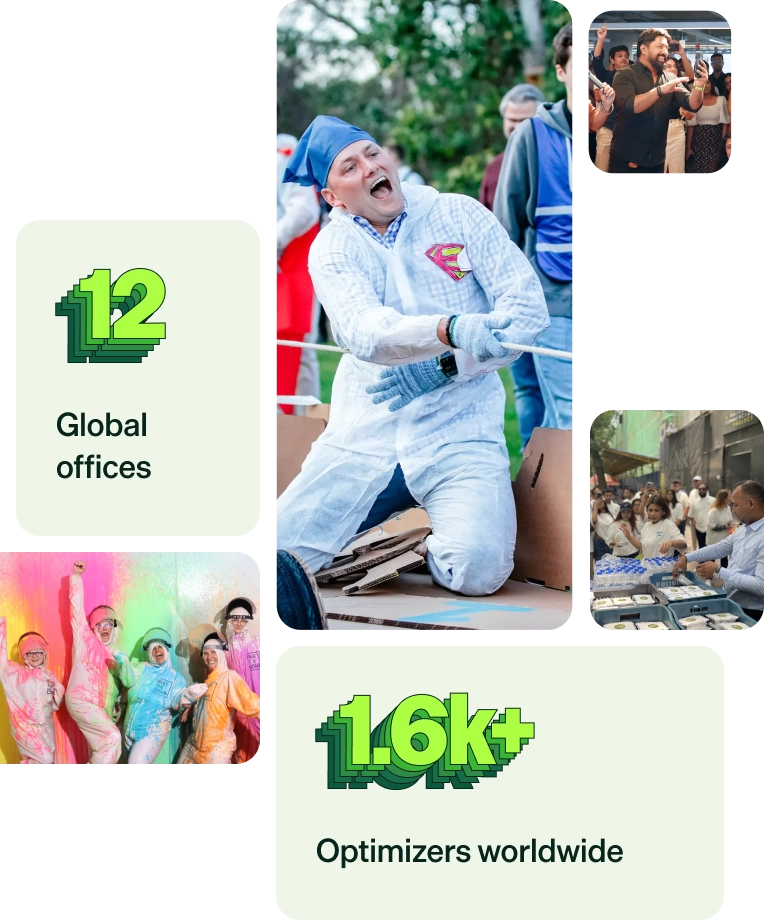
The customer base is broad: Optimizely says it serves more than 10,000 businesses. The common thread is work shared across marketing, product and technology. Its careers materials describe experimentation as an internal habit, too. That is a useful aspiration for a company selling the practice of reconsidering a decision.
05 Borrow the habit before the platform
The transferable lesson is modest. Pick an assumption with a business consequence. State what would change your mind. Choose the measurement before looking at the result. Then make room for a result that disappoints the person who proposed the change.
A quiet website may take too long to collect useful evidence. Unreliable tracking can make comparisons misleading. A team unwilling to change course can buy excellent tools and keep making the same decisions. Discovery’s moving thumbnail offers a better starting point: a specific question, a contained change and a result small enough to be believable.