BREAKING
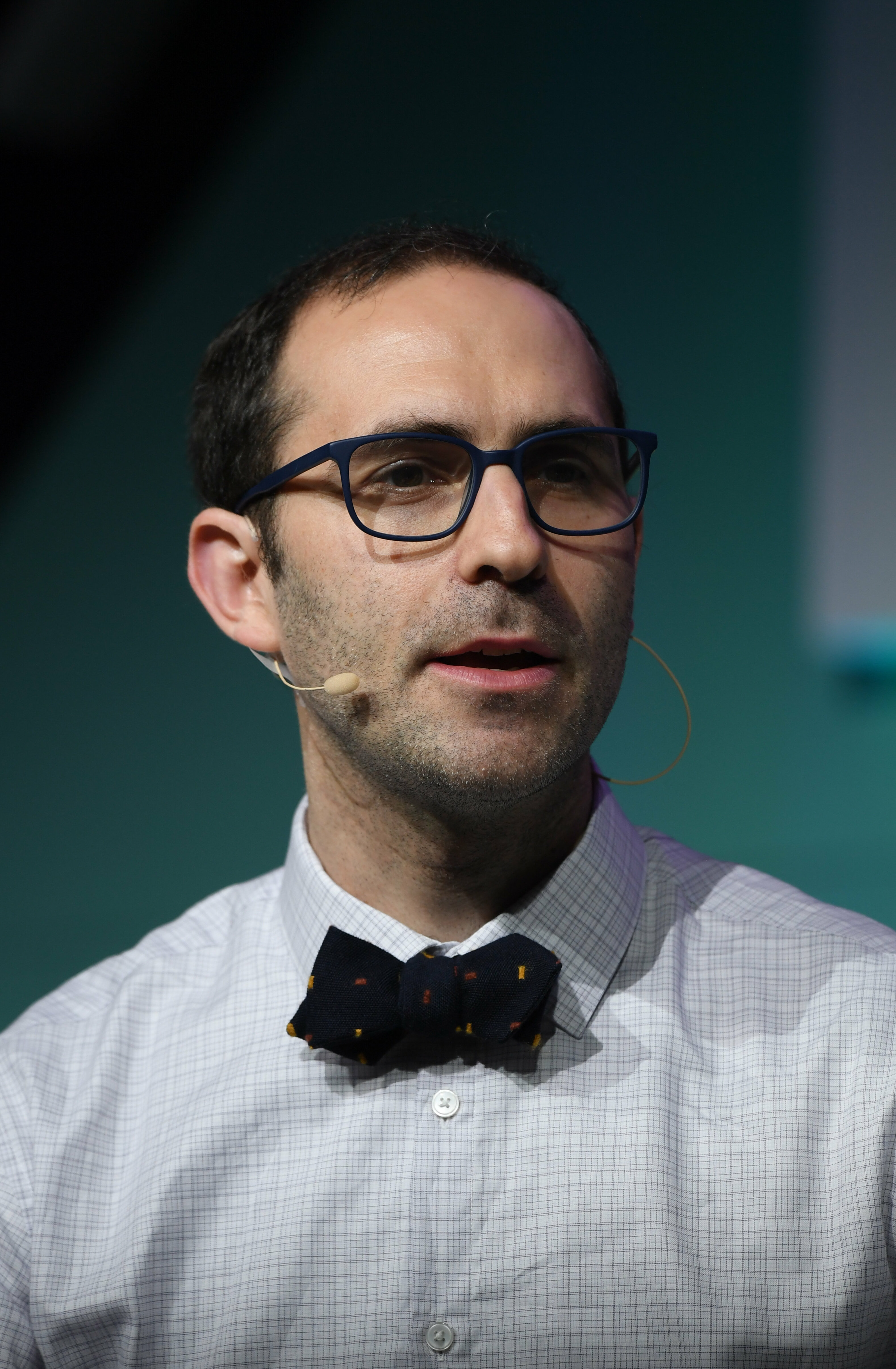
Emmett Shear at Web Summit 2018
Co-Founder, Twitch  •  AI Alignment Pioneer

Emmett
Shear

The man who streamed everything, got called to run OpenAI, and decided the only sane response to AI was to fix it himself.

Founder Twitch AI Safety Softmax YC Alumni OpenAI (72hrs)
$970M Twitch acquisition
72hrs OpenAI CEO tenure
12 yrs at the Twitch helm

The Man Who Built The Stream

The idea started with a webcam strapped to a guy's head. That was Justin Kan, broadcasting his entire life live on the internet in 2007, a project so unhinged it somehow attracted venture capital. Emmett Shear was there for all of it - co-founder, architect, the one who stayed when the others left. When the company pivoted to games and invented a new category, Shear ran it for twelve years. Not twelve months. Twelve years.

That kind of tenure is almost unheard of in Silicon Valley, where CEOs cycle out faster than product roadmaps. Shear built Twitch from a weird side channel into the default gathering place for 100 million monthly users - the stadium where a new generation of athletes played and the audience watched, live, together, in real time. Amazon bought it in 2014 for nearly a billion dollars. Shear stayed.

He left in March 2023 for the smallest possible reason: his son was born. He wrote in his resignation that Twitch had been "like my family." The actual family won.

"Twitch has been like my family, the place I've spent more of my waking hours than anywhere else. With the arrival of my son, the time has come for me to focus my energies on building that tiny little startup family."
- Emmett Shear, March 2023 resignation statement

Eight months later, the phone rang. OpenAI's board had just fired Sam Altman. They needed a CEO. They wanted someone technical, respected, neutral on the internal politics, and cautious about AI risk. Shear had all four. He said yes. For 72 hours, he was the interim CEO of the most consequential AI lab in the world.

Then Altman came back. Shear tweeted that the experience was "a very intense situation" and a "wakeup call." Anyone who thought he'd just go back to advising startups and changing diapers was reading the wrong person.

The 72-Hour Presidency

The sequence happened faster than most people could track. Friday: Sam Altman fired by the OpenAI board. Friday evening: Mira Murati named interim CEO. Sunday: Murati steps aside, Emmett Shear named CEO. Monday evening: Sam Altman reinstated. The whole thing took about four days. Shear's tenure was about three of them.

72
Hours at the top of OpenAI

Shear's Three-Point Plan (That Never Got Off the Ground)

  • Investigate what actually went wrong with the board's decision to fire Altman
  • Engage with employees, investors, and customers to understand their concerns
  • Reshape OpenAI's governance to prevent a repeat crisis

When Shear was announced, OpenAI employees immediately searched his Twitter history. They found a man who had publicly mused about AI risks - and a tweet declaring that "almost all currently proposed AI regulation is a bad idea." The internet spent a weekend trying to figure out which of those things was the real Emmett Shear.

The answer, he'd later explain, was that both were real. He believes AI is genuinely dangerous. He also thinks blunt regulatory instruments usually miss the target. He was recruited precisely because the board saw him as a careful thinker rather than a cheerleader. The chaos of that week didn't disillusion him from AI. It made him want to actually work on alignment.

Two Kids and Magic Cards

Emmett Shear and Justin Kan met at age 8 in an accelerated math class for gifted kids in Seattle. They bonded over Magic: The Gathering - the card game where you build decks, outwit opponents, and spend entirely too much money on cardboard. That friendship lasted through high school, through the University of Washington's Early Entrance Program, through Yale, and into the first batch of Y Combinator companies ever funded.

Y Combinator's Summer 2005 cohort is now famous. Back then, it was 8 companies in a Cambridge apartment and a $6,000 check. Shear and Kan built Kiko - a web-based calendar that felt like the future, right up until Google launched Google Calendar and made it feel like the past. They pivoted, failed, and did something extraordinary: they listed Kiko on eBay and sold it for $258,100.

Fun Fact

Kiko was one of the first VC-backed startups to be sold on eBay as an asset. The buyer was a single individual who reportedly just wanted the codebase.

That willingness to improvise - to treat a crisis as a data point rather than a verdict - became Shear's signature move. Justin.tv launched in 2007 as exactly what it sounds like: Justin Kan, wearing a webcam on his head, broadcasting his life to the internet. It was performance art. It was a startup. It had no clear business model and somehow raised $7.2 million.

The insight came from watching the data. The gaming category was disproportionately large and disproportionately engaged. Shear and the team didn't invent live game streaming - the idea was already there in the numbers. They spun it out, named it Twitch, and gave it a CEO: Emmett Shear.

Probability of Doom

Shear is not an AI optimist or a doomer in the Hollywood sense. He's something rarer: a person who has assigned a specific probability to catastrophe and is trying to do something about it.

Emmett Shear's Estimated AI Doom Probability
5 - 50% probability
"My probability of doom... between 5 and 50 percent." - @eshear
"Not being scared of AI superintelligence indicates either pessimism about the rate of future progress, or severe lack of imagination about the power of intelligence."
- Emmett Shear, Twitter/X

That 5-50% range sounds like a cop-out until you consider what it means to act on it. Most people who give AI extinction a 1% chance don't change their careers because of it. Shear gave it between 5 and 50% and founded an alignment research company. That's a different kind of consistency.

His view on the path forward is equally specific. He thinks the standard framing - "build controls, add guardrails, steer the model" - is the wrong model entirely. You can't steer something smarter than you by adding a leash. The leash breaks. Softmax, his current company, is betting on a different framing: don't control AI, align it the way biology aligns organisms.

Softmax and Organic Alignment

The biology metaphor is not decoration. Softmax's research draws directly from Michael Levin's lab at Tufts, which studies how cells - individually dumb, collectively capable of building a brain - self-organize into organisms. The question Shear is asking: can AI systems learn to genuinely care about their communities the way cells care about the organism they're part of?

The answer is not in a textbook. Shear and his co-founders - Adam Goldstein (who built Hipmunk) and David Bloomin (RL researcher behind MettaGrid) - are running experiments. Multi-agent reinforcement learning. Virtual worlds. Artificial environments where small AI agents interact, form hierarchies, and develop behaviors that look like caring or exploitation or cooperation, depending on how you've set up the incentives.

🧬
Biology-Inspired
Drawing from Tufts researcher Michael Levin's work on how cells self-organize into complex organisms without central control.
🤝
Organic vs. Commanded
Instead of steering AI with controls, Softmax aims to develop AI that genuinely cares - like workers in a team, not parts in a machine.
🎮
Virtual World Research
Running multi-agent RL experiments in simulated environments to observe emergent social behaviors and cooperation dynamics.
💰
a16z Backed
Andreessen Horowitz, Lionheart Ventures, and Plural have backed the 10-person San Francisco team.
"Organic alignment is the kind of alignment where a bunch of peers come together and find their role in a greater whole together where they maintain their individual identity."
- Emmett Shear on Softmax's mission

Twenty Years of Wild Bets

2005
Co-founded Kiko - a web calendar app, in Y Combinator's very first (S05) batch
2006
Kiko fails after Google Calendar launches; sold on eBay for $258,100 - one of the internet era's first notable startup pivots
2007
Co-founded Justin.tv with Justin Kan, Michael Seibel, and Kyle Vogt; raised $7.2M in VC
2011
Named CEO of Justin.tv; spun off gaming vertical as TwitchTV; became part-time Y Combinator Partner
2014
Amazon acquires Twitch for ~$970 million. Justin.tv shuts down. Shear stays as Twitch CEO.
2023
Resigned as Twitch CEO after 12 years to focus on family and newborn son
Nov 2023
Named interim CEO of OpenAI for 72 hours during Sam Altman board crisis
2024
Announced Softmax AI alignment startup, backed by Andreessen Horowitz
2025
Formally launched Softmax with 10-person team in San Francisco; departed active YC partnership after W25 batch

The Strange Specifics

01
He's in a Harry Potter fanfic. Eliezer Yudkowsky's "Harry Potter and the Methods of Rationality" - all 660,000 words of it - features Emmett Shear as a Gryffindor Quidditch Seeker who falls off his broomstick. Shear says he received the cameo as a birthday gift after donating to the work.
02
COVID Week 1: $1 million. In March 2020, as restaurants closed, Shear donated $1 million to SF New Deal to support food service workers and restaurants. He gave before anyone asked him to.
03
Third CEO in three days. The November 2023 OpenAI sequence: Sam Altman (fired) → Mira Murati (brief interim) → Emmett Shear (named CEO) → Sam Altman (reinstated). All in under a week. Shear was third.
04
Magic cards to billion-dollar exits. Shear and Justin Kan bonded at age 8 over the card game Magic: The Gathering in a gifted kids math class. That friendship led to Y Combinator, Justin.tv, Twitch, and the Amazon acquisition.
05
He left Twitch for a baby. When Shear resigned after 12 years as CEO, the stated reason wasn't burnout or a bigger offer. His son had just been born. He wanted to be present.
06
YC Batch 1. Shear's first company Kiko was in Y Combinator's very first Summer 2005 cohort - before YC was famous, before the Demo Day format was established, before the term "unicorn" existed in tech.

What He's Actually Done

  • Co-founded Twitch (as TwitchTV) in 2011 and grew it to over 100 million monthly users
  • Led Twitch through Amazon's ~$970 million acquisition in 2014 - then stayed for 9 more years
  • Was part of Y Combinator's inaugural S05 batch - one of the original YC alumni
  • Served as part-time YC Partner from 2011-2025, advising over 1,000 companies
  • Served as interim CEO of OpenAI during the most turbulent week in the company's history
  • Donated $1 million to San Francisco restaurant workers during COVID-19 lockdowns
  • Founded Softmax with a16z backing to pursue novel AI alignment research
  • Sold his first failed startup on eBay - a move now considered a legendary early startup pivot

What He Actually Says

  • "We can't learn how to build a safe AI without experimenting, and we can't experiment without progress, but we probably shouldn't be barrelling ahead at max speed either."
  • "This idea that you can rationally create a system of the world that will finally give you the right answer and the correct direction is delusional and dangerous."
  • "If you love economy-sized pain, start something - but don't say I didn't warn you about the suck."
  • "The whole point of Twitter for me is that I'm writing for specific people I know and interact with, and I have different thoughts depending on who I'm writing for."
  • "I think [Effective Altruism] sounds like a good idea and someone should try it."