Emily Boyce began her marketing career near the meeting room, but not quite in it. Her work was event management and logistics for an agency serving a major pharmaceutical company: getting people to the gathering, arranging what surrounded it, making sure the machinery ran. She liked the work. Yet the centre of gravity was elsewhere. The questions that held her attention concerned the conversation itself: what people heard, what they understood, and what they would decide when the doors closed.
She wanted, in her own phrase, to work inside the meeting room
. That instinct became a compass. It pulled her from logistics toward corporate communications, from executing an event toward shaping the reason for it. The shift sounds small until you notice what it reveals: Boyce has spent her career moving closer to the point where message, customer and decision meet.
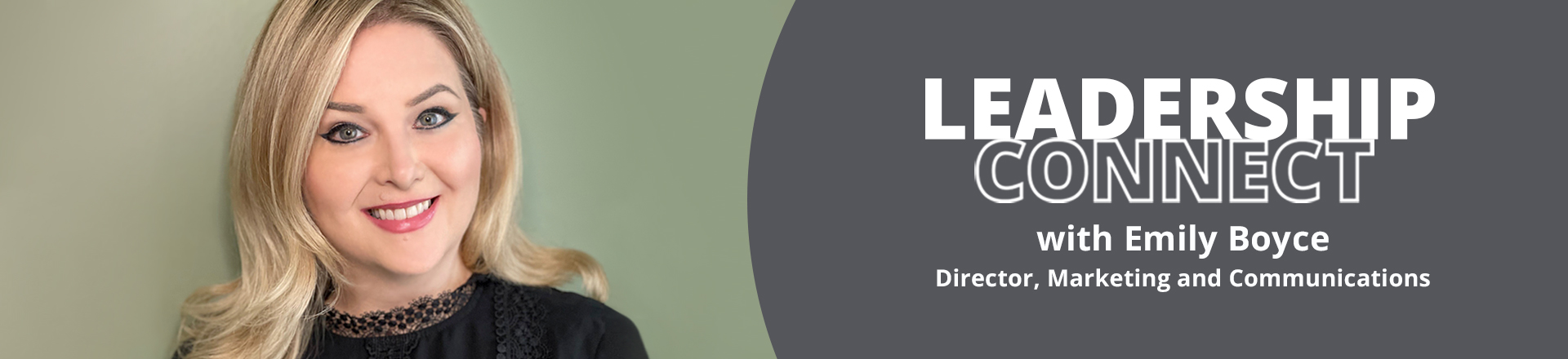
Today she is Senior Director and CMO of Marketing and Customer Enablement at Teranet, a Canadian company whose work underpins land registration, property intelligence and digital real-estate transactions. The products are consequential and often invisible. A registry platform does not ask for applause. A reliable parcel record or valuation tool usually earns attention only when someone needs to make a high-stakes decision. Marketing here is less about adding sparkle than making complex infrastructure legible.
A useful kind of restlessness
After her first agency role, Boyce joined Bond Brand Loyalty. The range widened. She managed advertising campaigns, national sales meetings and loyalty programs for clients including Merck, Unitron and Cadbury. Agency life taught her client management and project management at once: hold the ambition, mind the deadline, translate among specialists, and keep the work moving when every stakeholder sees a different risk.
She later found her niche at FCT in product marketing for financial services and real estate. The sector felt familiar. She had grown up around family members in real estate and banking, so the vocabulary of property and finance did not arrive cold. At FCT, that familiarity became expertise. Product marketing gave her a sharper frame for the question that had interested her from the beginning: not merely what should we say, but what problem is the customer trying to solve?
The path toward the decision
That sequence helps explain why her title now includes customer enablement. In complex B2B markets, the distance between a promise and its practical use can be large. Marketing can create attention, but customers also need understanding, confidence and support. Boyce's career moved steadily across that distance.
Build the machine before the campaign
Boyce joined Teranet in 2018 as Financial Services Marketing Manager. About two years later, she became Director of Marketing and Communications. Her first big chapter in the wider role was deliberately unglamorous: assemble the team, install the operational systems, build the marketing technology stack, and clarify how the corporate brand should show up in the market.
The order matters. A campaign can make a promise in an afternoon. A team needs the capability to keep it for years. By 2022, the groundwork had become visible through a new website, the We Connect brand platform and the coming launch of TeraIntelligence, a digital hub for the company's data and analytics capabilities.
We Connect gave the company a simple organizing thought. Teranet serves governments, lenders, legal professionals, utilities, real-estate businesses and others through technology and data. The connecting tissue is not merely technical integration. It is the act of understanding a customer's constraints and helping that customer reach a goal with greater confidence.
Learning is infinite.Emily Boyce on staying current in marketing
Her method for keeping pace is social as much as technical. Talk with customers through Teranet's insight community. Join industry associations. Attend events. Take courses. Learn what competitors are doing. Most of all, create a team where people with different backgrounds teach one another. The technology stack matters; so does the human network that knows what to do with it.
This is the operator inside the marketer. Boyce holds a Lean Six Sigma Green Belt and a Level II certification from the Pragmatic Institute alongside her Chartered Marketer designation. Her education adds another combination: sociology and anthropology at McMaster University, plus hospitality and event management at Humber College. Human behaviour, service design, product discipline and process improvement all end up at the same table.
Why gets the first question
Boyce has described her leadership philosophy in three compact words: why before how
. It is a useful brake on the reflex to begin with a channel, a dashboard or a favourite tactic. Why this customer? Why this problem? Why now? Only then does how become an intelligent question.
The idea also explains her view of data and intuition. Marketing data can reveal patterns, compare choices and discipline a debate. It cannot decide what a company should care about. Intuition can detect a human truth before it becomes obvious in a report. It can also be wrong. The work is to let each side test the other, with strategy holding the frame.
Her academic interest in social behaviour gives that balance a personal logic. People do not experience a brand as an abstract system. They encounter a confusing form, a useful report, a reassuring expert, a delayed answer, a clean interface, a relevant conversation. The brand is the accumulation. Good marketing notices the accumulation and improves it.
Watch: Women in Leadership Market Insight ForumTeranet · 2024 · Boyce joins a four-person industry panelA career with switchbacks
On a Teranet panel about women in leadership, Boyce offered a more personal account of progress. Ambition was present early, but confidence was a barrier. She had difficulty finding role models whose lives combined the career and family she wanted. At one point, she stepped back to prioritize family. The path rose, paused and resumed.
Her advice from that experience is striking because it is operational. Be relentless in advocating for yourself
, she told women entering their industries. Capture accomplishments when they happen. Record the metrics. Learn to build a business case. Work deserves to be visible, and memory is a poor system for preserving it.
Keep an evidence ledger
A portable practice drawn from Boyce's public career advice. Confidence can follow the record.
- Name the result
- Save the metric
- Note who benefited
- Build the case
The same commitment appears in her volunteer work. As marketing co-lead for Lean In Canada's Toronto network, she helped support an organization focused on women's ambitions and equality. She has said that the women she met there, with varied backgrounds and experiences, became teachers and inspiration. A recommendation from that period credits her with rebuilding the network's marketing efforts and pairs strategy with operations and team building.
Her industry service has continued through the Canadian Marketing Association. She received its Chartered Marketer designation in 2024, appeared on the association's multi-disciplinary judging list in 2024 and 2025, and in 2026 announced that she had been selected as a Senior Judge. She described awards judging as work that exposes her to creativity across sectors and improves her own leadership. Reviewing other people's best work becomes another form of study.
The awards role fits the larger pattern. Boyce repeatedly places herself where different kinds of work can be compared: industries at an association, customer perspectives in an insight community, and varied specialties inside her own team. Comparison gives a leader range. It shows which ideas depend on a category's habits and which principles travel well. For someone marketing registries, analytics and property platforms to several professional audiences, that range is practical equipment. One message will not land identically with a lender, lawyer, public servant or real-estate professional. The underlying purpose can stay coherent while the route into it changes.
Making property mean possibility
Teranet's subject matter is property, but Boyce's real material is confidence. A lender wants confidence in a valuation. A legal professional wants confidence in a transaction. A government wants confidence in a registry. A marketer wants confidence that the message corresponds to an actual customer need. Each depends on trusted information moving through a system without losing meaning.
That makes her early meeting-room instinct feel less like a departure and more like a recurring scene. First she wanted to get closer to the conversation. Then she learned to shape it for clients. Product marketing taught her to begin with the problem. Leadership asked her to build the team and tools around the answer. Customer enablement widened the room once more, bringing the people who use the product into the work of explaining it.
There is no single cinematic pivot in the record. There is a sequence of useful decisions, each moving nearer to substance: logistics to communications, campaigns to products, products to customer outcomes, brand story to operating system. Boyce's career is persuasive because the progression is practical.
The aspiration she has expressed for Teranet's marketing is similarly grounded: keep evolving the way the company tells its story, keep adding value, and nurture customer relationships at a deeper level. The infrastructure may be invisible. The work of connection does not have to be.