The useful fact about Embolden Beverage Group is not that it makes a matcha hazy IPA. That is the fact most likely to win a raised eyebrow at the bar, but it is garnish. The useful fact is that the company began as one thing, bought a facility built for something much larger, and allowed the mismatch to rewrite the company.
In 2016, former college roommates Kyle Pool and Andy Sist, with Megan Alkana and Ari Jarrell, were homebrewing hard kombucha. Their premise was social before it was nutritional: beer drinkers had the culture and the taprooms; people who preferred tea, seltzer or kombucha were often handed an afterthought. The group wanted one place where those tastes could coexist.
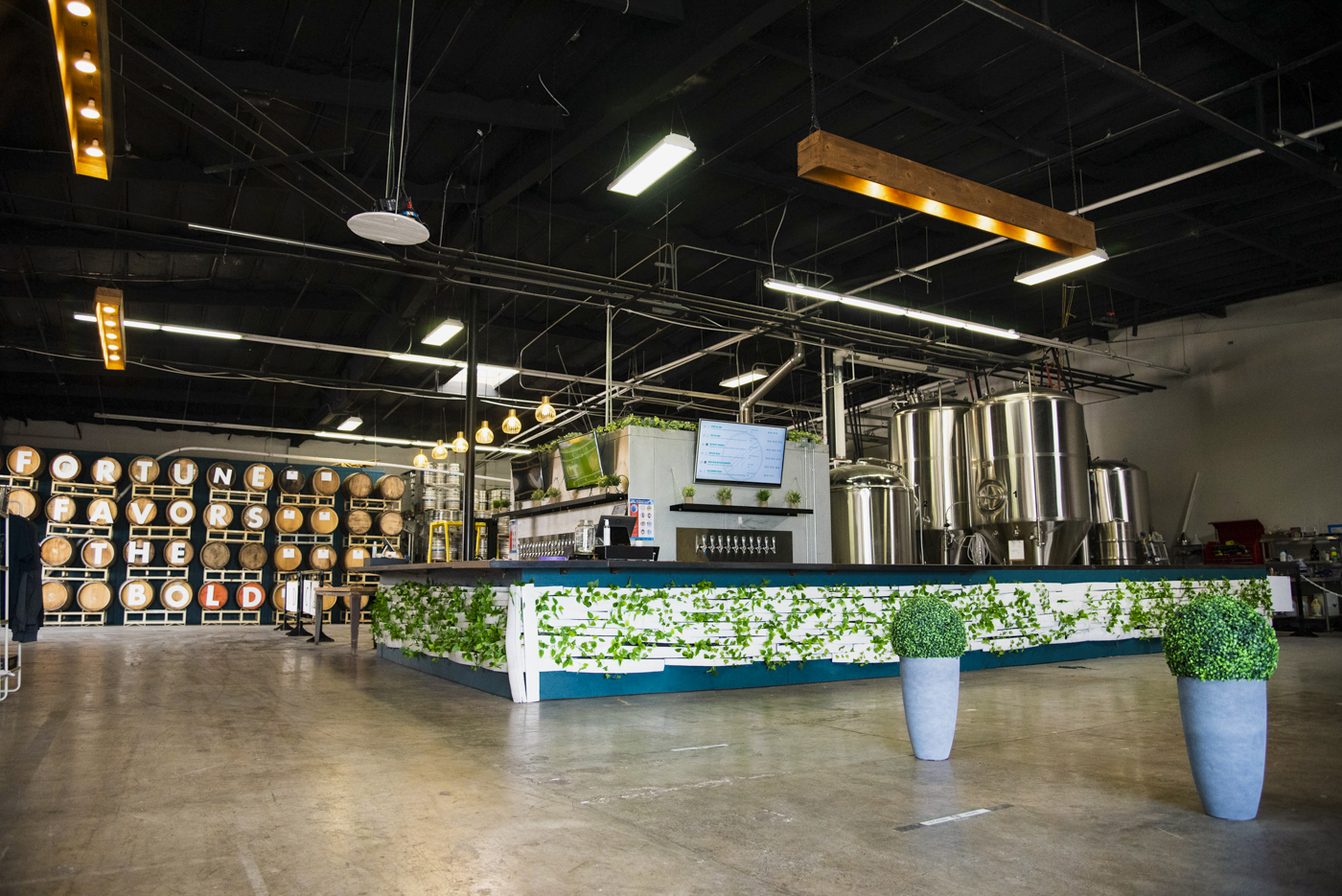
Four years later, amid a pandemic that had made brewery real estate newly negotiable, an equipment broker called. The former 32 North Brewing space in San Diego's Miramar district was available. It included a 20-barrel brewhouse and a canning line. The price was attractive. The plant was also more brewery than an alternative-beverage startup had planned to own.
The first plan met a 20-barrel reality
The first thing to fail was not a product. It was the neatness of the original plan. New Motion had spent years developing hard kombucha. By launch, it had already stretched into hard seltzer and hard tea. Now the team had tanks, packaging equipment and experienced beer people whose talents exceeded the brief.
Cody Morris, then a veteran of Mission Brewery, had joined as a consultant. He and his cousin Andrew Kelly knew how to make ales and lagers at scale. Faced with the oversized plant, Pool asked the plain question: did they want to start a brewery too? They did. New Motion Beverages and Embolden Beer Co. opened side by side on November 21, 2020.
“We got a bigger footprint than we originally intended.”Cody Morris, on the facility that changed the plan
That pivot is easy to romanticize after the fact, so keep the mechanics in view. The building already supported beer. The canning line reduced the distance to retail. The brewing team was already in the room. Embolden was not a random second startup; it was a way to put idle capacity and underused expertise to work.
+ canning line
Embolden
Shogun
Retail
Events
Web
A menu built for the group chat
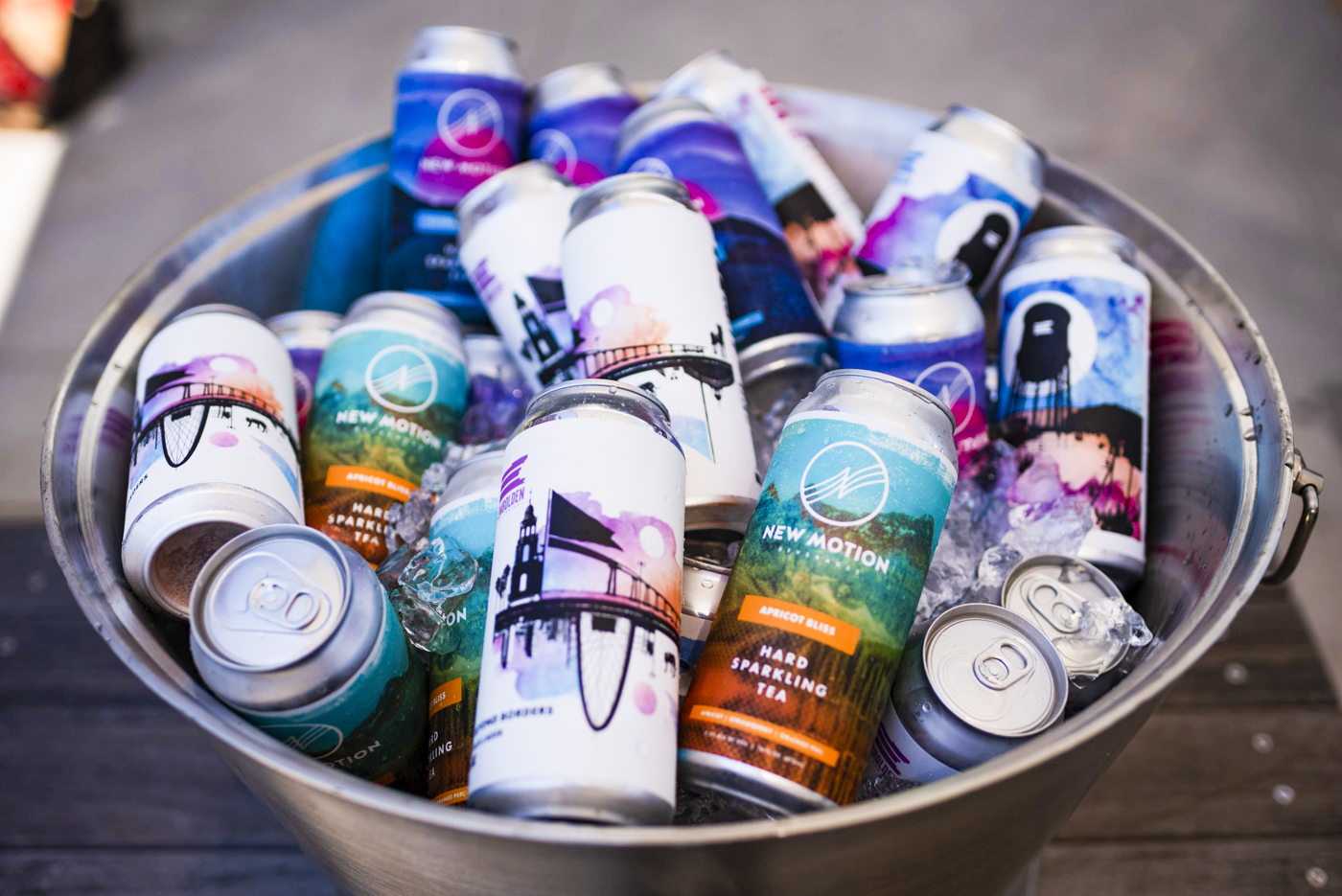
Today the company's site lists 30 beverages. Embolden covers familiar craft territory - West Coast and hazy IPAs, lagers, blonde ales and stouts. New Motion handles hard seltzer, cider, tea and kombucha. Shogun by Embolden pushes Japanese ingredients through recognizable beer formats: hojicha lager, ube hazy IPA, yuzu blonde ale and matcha stout.
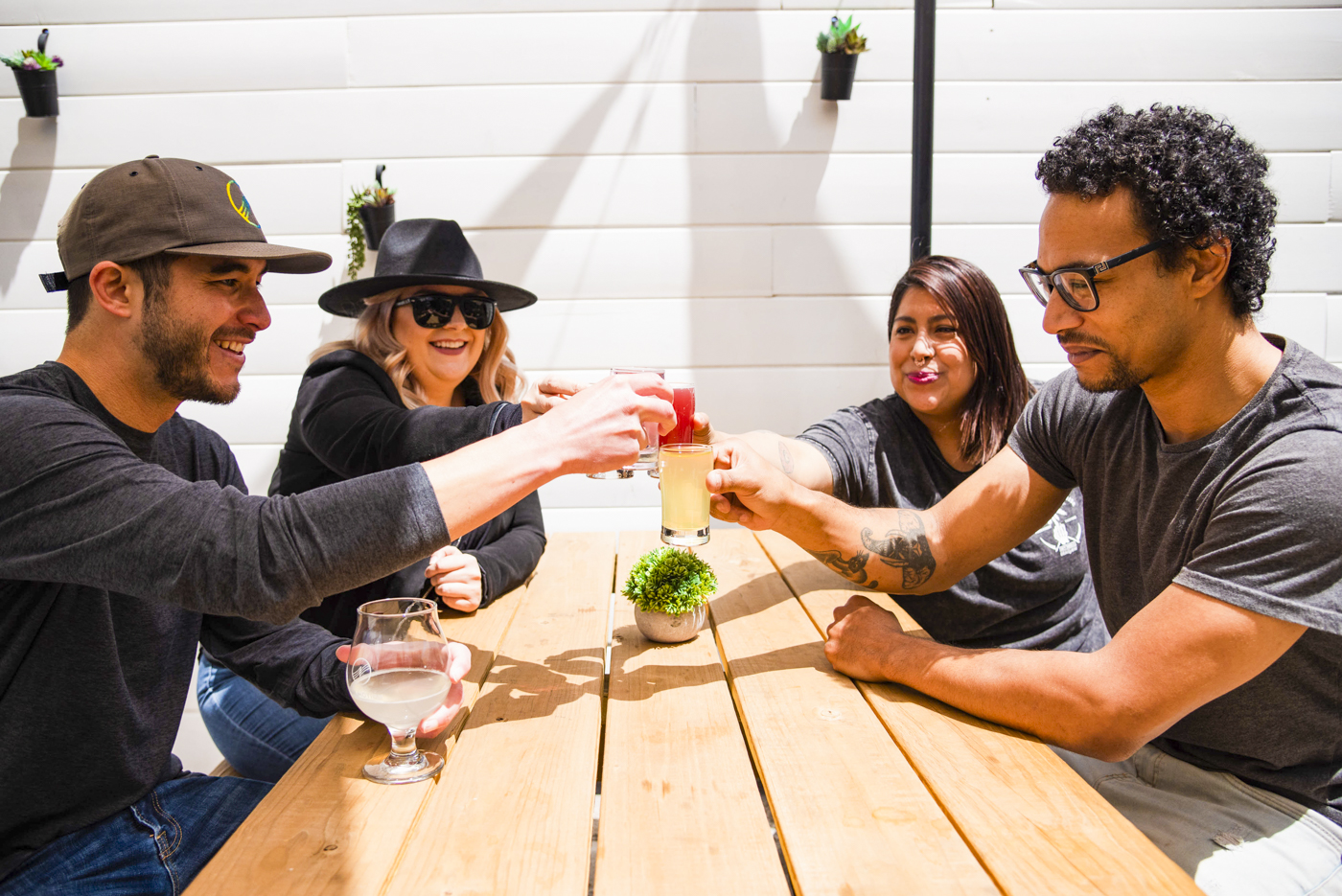
The names are playful, but the portfolio solves a sober problem. Social groups do not segment themselves as cleanly as beverage shelves do. One person wants a hoppy IPA. Another counts sugar. A third is curious about tea. Embolden's 30-tap room turns that disagreement into a larger order instead of a veto.
New Motion gives the health-conscious drinker a qualified kind of choice. Its hard sparkling teas are marketed as vegan, gluten-free, made without added sugar and below three grams of sugar per serving. They still contain alcohol. “Functional” here does not mean medicine; it means benefits such as lower sugar or ingredients including tea and fruit, attached to an adult drink.
The ingredient list supplies some of the differentiation. The company names tea merchant G.S. Haly, Coloma Frozen Foods, Yakima Chief Hops, Freestyle Hops, Skagit Valley Malting and Oregon Fruit among its suppliers. For the Shogun series, it partnered with Matcha Cafe Maiko San Diego. Midnight in Tokyo combines ceremonial-grade matcha with Citra, Mosaic and New Zealand Cascade hops. Dusk in Kyoto uses roasted hojicha in a lager. The point is not novelty alone; each unfamiliar ingredient is anchored to a style customers already understand.
The room is the margin engine
Embolden is a manufacturer, a hospitality venue, an events business, a wholesaler and an online shop. That sounds sprawling for a small company. The tasting room is what makes the shape legible. In a fundraising profile last updated in 2022, management said direct taproom sales produced roughly 40 percent of revenue from only 10 percent of production volume. The same profile cited more than 17,000 customer interactions over 12 months and a 35 percent monthly return rate.
Wholesale supplies reach and repeat orders. Company materials have cited Scout Distribution, placements at Trader Joe's in Southern California and concession locations at LAX. More recent fundraising claims describe service to more than 1,500 retailers, bars and restaurants across California, Arizona and Japan, with over 500 accounts ordering monthly. Those numbers come from the company, but the route itself is visible: local taps, regional shelves, airport coolers and a Japanese import relationship with Nagano Trading.
E-commerce adds nationwide shipping where law and product eligibility allow. Events and merchandise add more reasons to visit the room. The Garden, food-vendor rotation, games, televisions, music, dog bowls and family-friendly policy are not decorative amenities. They turn production space into a place people choose to spend an afternoon.
What did the experiment cost?
The cleanest public capital snapshot is a stack, not a single startup bill. A 2022 fundraising profile listed $350,000 from friends and family, $450,000 in total debt financing, $400,000 in grants and $1.2 million raised to date, alongside an $8 million stated valuation. Separate company data records a $350,000 debt financing in May 2022. By March 2026, its Wefunder page displayed $300,333 raised from 15 investors.
Those figures span different dates and definitions, so adding them would create a confident-looking fiction. What they do show is that tanks, packaging, inventory and distribution require real capital even when the underlying strategic move sounds charmingly improvised. In 2022-era materials, the company reported about $1 million in trailing-12-month sales and 20 percent growth. Current revenue is private.
There were people costs too. The company opened in the pandemic. Morris later left for Harland Brewing; Andrew Kelly stepped into the lead brewing role. A broad portfolio asks a small team to maintain several production disciplines, multiple brand voices and more complicated inventory. Variety attracts the group chat, but it can also make the operations calendar look like one.
Proof beyond the pitch deck
The opening weekend delivered one useful signal: New Motion's canned hard teas sold out. Five years later, Embolden's Broken Record West Coast IPA won gold at the 2025 San Diego County Fair Craft Beer Competition, a contest that drew more than 1,200 entries from nearly 200 California breweries. The two moments bookend the strategy. Alternative drinks supplied early demand; technically credible beer supplied staying power.
Broken Record is not trying to rewrite IPA. It uses Nelson and Mosaic hops for a crisp San Diego profile. That restraint matters. A portfolio cannot consist entirely of conversation pieces. The familiar product earns trust; the matcha, hojicha or ube release gives regulars a reason to return.
The menu looks chaotic. The asset strategy is tidy.
The part worth stealing
The copyable move is not “launch three brands.” It is to make adjacent bets pass through the same scarce asset. Embolden could brew the products in the same plant, pour them in the same room, package them on the same line and sell them through overlapping relationships. Each new label had to earn its complexity by reusing infrastructure.
A four-question copy test
- What expensive asset is currently underused?
- Which adjacent customer wants a different output from that same asset?
- Can the new offer travel through the same sales channels?
- Can customers understand the distinction without needing a lecture?
There is another lesson in the tasting room: use direct retail as a research instrument. Thirty taps create a live scoreboard. A strange beer can begin as a pour, earn repeat orders, then graduate to a can. Feedback arrives as purchases rather than survey answers. For a small producer, that can reduce the cost of learning which experiments deserve distribution.
Works when
Products share equipment, talent, space and routes to market; the portfolio serves a real mixed group; direct sales provide fast feedback and better margins.
Breaks when
Every category needs new machinery, distributors or compliance; brand differences confuse buyers; or operational variety destroys consistency in the core product.
Embolden fits between a neighborhood craft brewery and a miniature beverage holding company. It lacks the scale advantages of national portfolios, but it can change recipes faster and listen at the bar. Its local competitors include broad-menu breweries such as Novo Brazil, Belching Beaver and Second Chance. Its more revealing competition is the venue down the street that lets a group choose drinks from many producers. Embolden's answer is to manufacture the variety itself.
The strategy would not travel cleanly to a company with a single-product reputation, a rigid production line or no direct customer channel. It also depends on brewing competence across styles. Without quality, a wide menu becomes a flight of compromises. Embolden's 2025 gold medal matters because it makes the portfolio claim believable one glass at a time.
The company started by asking why craft beer and alternative drinks felt so far apart. The larger brewery did not answer that question; it made the question expensive. Embolden's solution was pragmatic: fill the tanks, fill the taps and give each kind of drinker a reason to stay at the table.