Ella Peinovich used to return from Kenya with an extra suitcase. Inside was jewelry made by local artisans, bound for her family’s art gallery in Wisconsin. The pieces could sell. The people who made them had skill. The missing part was a dependable route between the workshop and the customer. For an architecture student, it was an unusual design brief: build something that could carry a business across an ocean without requiring its maker to leave home.
The suitcase was a useful experiment and a rather poor distribution network. It depended on a traveler, spare luggage capacity, and a gallery at the other end. Peinovich’s subsequent career has been an extended attempt to make that connection work without the suitcase. SOKO, the jewelry company she co-founded, organized independent workshops through mobile phones. Powered by People, where she is founder and CEO, tackles the same distance for other independent brands.
A gallery before a marketplace
There was precedent at home. Peinovich grew up with a musician and an artist as parents, and with an art gallery that gave other artists somewhere to show and sell their work. Making things and making a living from them were already neighboring activities. The gallery later became a testing ground for the Kenyan crafts she brought back.
Her childhood also involved considerable mileage. By the time she finished high school, she had visited 47 American states, along with Europe and South America. From 14, she joined summer church service trips, helping build homes, ramps, and gardens. As an architecture student, she led Habitat for Humanity trips. The habit was hands-on: arrive somewhere, work with people, make something useful.
She earned a bachelor’s degree in architectural studies at the University of Wisconsin-Milwaukee, then a Master of Architecture at MIT in 2012. Her graduate work investigated localized design and manufacturing. Architecture supplied a way of thinking about relationships between parts, people, and places. She would put that training to work on a business whose factory could not be circled on a map.
The phone was already in the workshop
The early enterprise was called SasaAfrica. Peinovich built it with Catherine Mahugu and Gwendolyn Floyd. Mahugu brought computer science expertise from the University of Nairobi; Floyd brought experience in social enterprise. By October 2013, the venture had become SOKO. The name means marketplace in Swahili, an admirably practical choice for a company with so much machinery behind the scenes.
The premise rested on something artisans already used: a mobile phone. An international shopper could pay online by credit card while a maker received mobile money. Product information could travel by text message. A person could participate without first acquiring the computer, conventional bank account, and web storefront that online commerce tended to assume were standard equipment.
That distinction mattered. A beautifully designed website is of limited assistance to someone who cannot transact through it. The founders worked on the handoff between two existing systems: the online shopping habits of customers overseas and the mobile habits of producers in Kenya. The commercial opportunity lay in joining those systems reliably enough that both parties could use them.
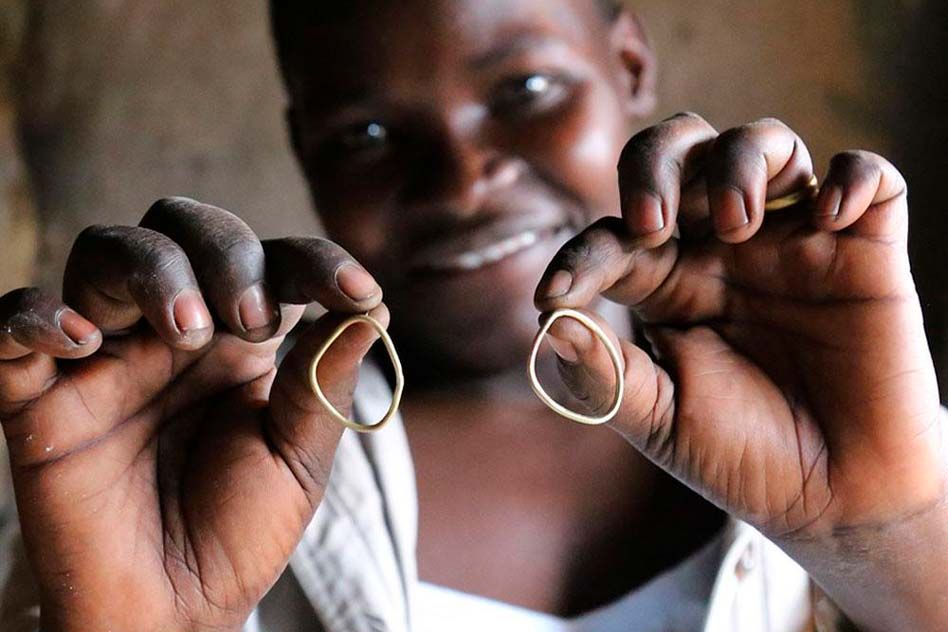
The earrings still had to sell
Access alone did not settle the question of demand. SasaAfrica initially offered a marketplace for individual artisan designs. The team discovered that a collection with a recognizable brand could reach wholesale buyers more effectively. Moving toward SOKO meant thinking about repeatable pieces, coordinated designs, pricing, and the cost of getting anyone to notice them.
Peinovich described the change plainly: “We went from a technology company for artisans to a consumer-facing company.” The distinction sounds tidy in retrospect. In practice, it required the business to become good at fashion as well as software. A necklace needed to look right in a shop, arrive on time, and justify its price. The cause could open a conversation; the product still had to close the sale.
There is a pleasing awkwardness in this part of her story. The architect interested in production systems had acquired the full complications of running a jewelry brand. Marketing was part of the mechanism. So were visual consistency and a retailer’s confidence that the next shipment would resemble the last. Good intentions did not issue purchase orders.
A factory made of connections
SOKO’s answer was a “virtual factory”: a network of independent workshops coordinated through mobile tools. Makers could manage orders, inventory, deliveries, and payments while continuing to work in their own spaces. A piece could combine components from several workshops before final assembly. The business joined existing skills into a production process capable of serving a larger customer.
A schematic of SOKO’s model, rather than a map of individual suppliers.
The work included less glamorous obstacles than a fashion photograph suggests. Access to working capital could prevent an artisan from taking an order. SOKO used purchase orders and deposits and worked with lending partners. Larger orders also required training in consistency and quality. These were practical conditions for participation: knowing how to make a cuff did not automatically provide the money to buy materials for the next batch.
By 2015, Peinovich was also describing changes in who could do the work. Metalworking had traditionally been male territory, but the growing need for production was bringing more women into casting and soldering. That detail gives her idea of inclusion a concrete shape. Participation could mean acquiring a technical skill and taking a place at the furnace.
Recognition followed. SOKO was honored in MIT’s 2016 Inclusive Innovation Competition. The same year, Wisconsin-Milwaukee recognized Peinovich with its Graduate of the Last Decade award. Her Career Girls interviews brought the process to younger audiences, covering design thinking, entrepreneurship, education, and travel. One clip is called “I Loved SOHCAHTOA.” Trigonometry rarely gets such affectionate billing.
When a growing brand is too small an answer
The next turn came from a limitation inside the success. Looking back in 2020, Peinovich described a SOKO network of about 2,500 producers. Revenue could grow as the brand commanded better prices, yet production volume and work for artisans did not necessarily rise alongside it. Seasonal orders also left workshop capacity unused. More sales dollars were an incomplete measure of what she wanted to accomplish.
She stepped down as CEO in 2018 and began developing Powered by People. The question widened from how to build one jewelry brand to how other maker businesses might reach buyers, finance production, and manage orders. Her experience at SOKO had exposed the administrative load attached to every attractive object. Requiring each small brand to rebuild all of it was an expensive proposition.
“Going out on your own, and doing things by yourself, it’s just not economically efficient anymore.”
Ella Peinovich, 2024
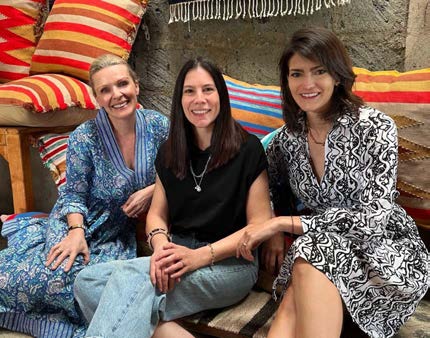
Her new co-founders brought their own experience of those difficulties. Hedvig Alexander had built the artisan sourcing business Far + Wide Collective. Alison Phillips had founded the home brand Caban and worked in merchandising and industrial design. Powered by People launched publicly in June 2021, bringing together technology, market access, and the experience of actually putting goods in front of customers.
The department store, with another door in
The newer business has continued to change how it reaches shoppers. Powered by People has used Shopify’s Collective technology since 2023, connecting independent makers with American retailers. A retailer could add another merchant’s goods to its own online shop without taking on all the inventory. Products could appear where customers already shopped, while the maker gained another route to market.
Peinovich’s interest in collaboration follows the arithmetic of that arrangement. A small brand has limited resources for attracting each customer, holding stock, and managing distribution. A larger retailer has an audience and an appetite for products that distinguish its assortment. Connecting the two makes their different assets useful to each other. The technology has a commercial task to perform.
Makers on Powered by People’s wholesale platform
Those distinctions matter. A registered business, an active wholesale participant, and a maker in a dropship catalog describe different relationships. At the end of 2024, Powered by People counted each separately. It expanded dropshipping as retailers leaned toward third-party marketplaces. Beneath the broad ambition sat decisions about which channel could produce orders in a changing retail economy.
The ambition survives the revisions
In a January 2026 conversation, Peinovich discussed the pressure behind those changes. Rebuilding the model had required layoffs in successive years. That was a difficult responsibility for someone whose company existed to expand economic opportunity. She also spoke about seeking honest feedback and choosing investors who understood the mission. The account gives the founder’s persistence some necessary texture: continuing involved cuts as well as construction.
By March 2026, she was still explaining the larger ambition in characteristically direct terms. She wanted independent brands to have a fairer chance of selling through major retailers. Her stated aspiration extended to replacing mass-produced goods in the retail market. It is an expansive goal, pursued through comparatively specific work: product catalogs, orders, compliance, distribution, and the means to get paid.
The family gallery remains a useful place to begin understanding her. It offered artists a place to meet a buyer. Her companies have kept returning to that transaction, widening the distance it can travel and changing the equipment that carries it. The suitcase had proved there was something worth selling. Peinovich has spent the years since working on everything that has to happen after someone says, “I’ll take it.”
Continue the conversation
- CURRENT WORKPowered by People
- THE JEWELRY BRANDSOKO
- SOCIALElla Peinovich on LinkedIn
- WATCH · 2026Her conversation with Mark Horoszowski
- LISTEN · 2026Limitless Africa: Technology and human potential
- WATCHCareer Girls: Design thinking, travel, and entrepreneurship
- READMIT News on SOKO’s mobile supply chain
- READThe decision to build a consumer brand
- READIndependent brands and collaborative retail
- READ · PDFPowered by People’s 2024 sustainability report