Eido Gal had a sales problem. He knew about internet protocols, proxy detection and the machinery of online fraud. He could explain all of it. The trouble was that explaining all of it did very little to make somebody buy. In March 2013, with Riskified barely under way, he wrote about the experience with a useful measure of self-mockery. Technical fluency was failing him at precisely the moment he needed to be understood.
His eventual answer could fit on an invoice. Riskified would review an order a merchant was about to reject, charge for an approval, and stand behind that decision if fraud followed. A shopkeeper did not have to develop an affection for networking protocols. There was a sale to recover and somebody prepared to accept responsibility for it. The young founder had found a more interesting subject than the sophistication of his software: the cost of being too suspicious.
A business hiding in the rejected orders
Before Riskified, Gal worked close to the problem. His career included Fraud Sciences, the Israeli company acquired by PayPal in 2008. He subsequently worked as an analyst at PayPal from January 2009 to January 2011, then at BillGuard from January 2011 to January 2013. These were jobs in which transactions and the people behind them were everyday material, rather than an abstract market waiting for a pitch deck.
Tel Aviv supplied another kind of education. Gal later described watching friends start companies and meeting people in the industry. Familiarity made the prospect of starting something himself less mysterious. There is a pleasingly unromantic quality to that account. Entrepreneurship became imaginable through proximity. People he knew were doing it; the distance between employment and a company of his own began to shrink.
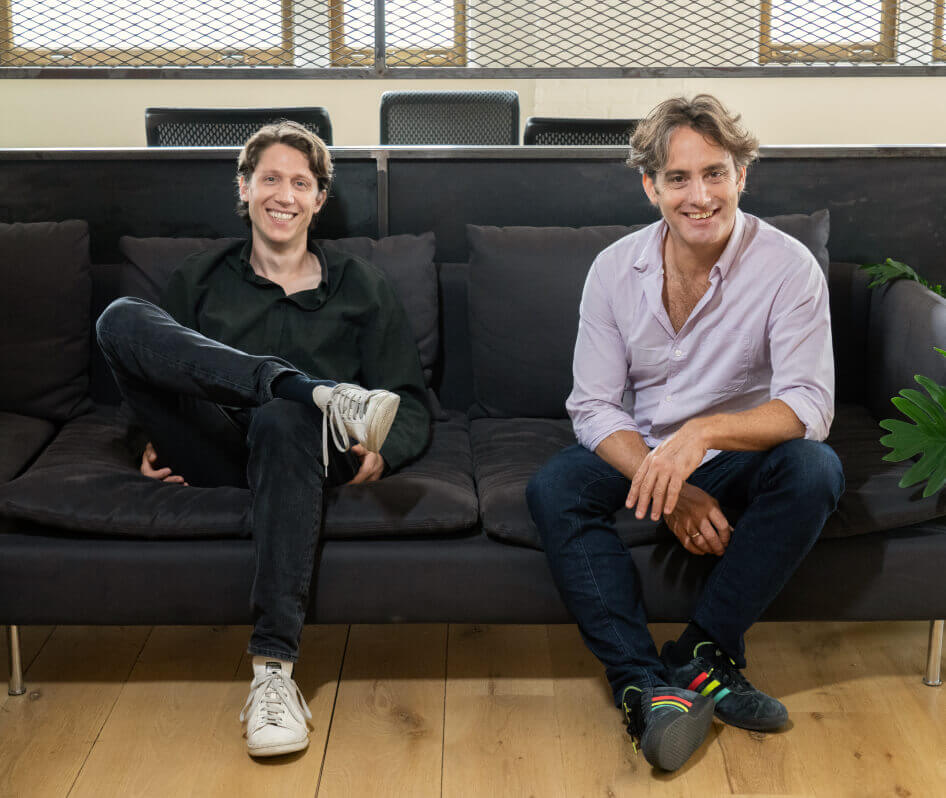
With Assaf Feldman, he built Riskified. The company was incorporated in November 2012 and began operating in January 2013. Its early workplace was Gal’s apartment. Feldman became chief technology officer; Gal took the chief executive role. Their shared conviction was that merchants were turning away paying customers because their fraud systems could not distinguish enough legitimate purchases from dangerous ones.
The first customer was a CD store in Brooklyn. For a company that would eventually serve international retailers, it was an appropriately tangible beginning: somebody wanted to sell something, somebody else wanted to buy it, and a decision in between could ruin the arrangement. Fraud prevention can sound like a remote technical discipline. At shop level, the question is whether the till gets to ring.
Of orders early clients intended to decline, Gal said Riskified could safely approve this share.
Put the promise on the invoice
Look at the rejected pile and a different business becomes visible. A blocked fraudulent purchase represents a loss avoided. A blocked honest purchase represents revenue abandoned. Both disappear from the checkout, but their meanings are opposite. Gal built his argument around the second group, the customers who had been mistaken for a problem.
His early writing used the example of a proxy connection. It might conceal a fraudster, or simply belong to a legitimate shopper using a workplace network. A warning signal needs context. Treating suspicion as a verdict makes an efficient way to refuse business. It is rather less useful if one’s occupation involves selling things.
The guarantee gave that reasoning commercial weight. Riskified’s Chargeback Guarantee covers qualifying fraud-related chargebacks on transactions it approves, subject to the agreement. The company has a financial stake in the quality of its judgment. A merchant can evaluate the arrangement in terms of sales, fees and losses, rather than trying to referee competing claims about whose algorithm is cleverest.
- 01An order looks risky
A merchant needs a decision.
- 02Riskified reviews it
Data informs approval or rejection.
- 03The approval carries a guarantee
Eligible fraud losses shift to Riskified.
That design also explains why Gal’s story keeps returning to shoppers. The sale is an encounter between a business and a person whose circumstances may look unusual to a machine. A system that can interpret those circumstances has something useful to sell. The guarantee makes a mistaken interpretation expensive for the interpreter, too.
The elevator gets crowded
Growth introduced a less technical identification problem. By 2018, Gal was encountering people at work whom he could no longer reliably place. He recalled introducing himself to someone in the elevator because he thought she was new, then discovering she was not. A company built to recognize customers had reached the point where its founder could lose track of colleagues. The irony had excellent timing.
His explanation of management was correspondingly practical. Moving from Tel Aviv to New York had been a difficult personal and professional decision. He missed knowing almost everything happening inside the business. Expansion required trusting other people with decisions he once made himself. In a small team, his responsibilities had ranged across product, customer support and accounting; the title stayed the same while the work changed.
“I tend to look to the data.”
Eido Gal, 2020
He also made a point of hiring people whose company he enjoyed. His advice to founders was to consider the people who would make the growing organization work, alongside technology, finances and fundraising. Entrée Capital had backed Riskified early and led its Series A. Gal valued the partners’ experience as founders, suggesting that useful company-building advice sometimes arrives attached to a cheque, provided the people writing it have done the work themselves.
These details give some texture to a job often described through funding announcements. Hiring a colleague, leaving a city, relinquishing a decision: none makes a particularly tidy revenue chart. Each changes what the founder’s day feels like. For Gal, building a larger company meant accepting that knowing the business could no longer mean personally knowing every event inside it.
From the apartment to a ticker symbol
By November 2019, the financial announcements were substantial. Riskified raised $165 million in a Series E led by General Atlantic, with Fidelity Management & Research, Winslow Capital and existing investors participating. The valuation exceeded $1 billion. Gal presented the money as a means to develop products and expand geographically. His account connected expansion to better performance: new merchants and new products could add information that helped the system make decisions.
On July 29, 2021, Riskified began trading on the New York Stock Exchange as RSKD. It had priced shares at $21, above its previously announced range, at a valuation of about $3.3 billion. The apartment enterprise now had public shareholders. The original wager about rejected orders had acquired a market price and a set of quarterly expectations.
- 2013
- Operations begin
- 2019
- $165m Series E
- 2021
- NYSE listing
- 2024
- Workforce reduction
- 2026
- Growth accelerates
A listing, however, does not supply a permanent happy ending. In February 2024, Riskified cut more than 40 jobs, roughly 6% of its workforce. Gal told employees that growth had fallen short of expectations and that progress toward its earnings targets needed to happen faster. The company’s market value had also fallen considerably from its IPO valuation.
This belongs in the account alongside the fundraising. A founder who signs up to take financial responsibility for transaction decisions must also make decisions about his own organization. The consequences land on people. The vocabulary of efficiency can make those choices sound frictionless; a reduction in colleagues never is. Gal’s long tenure includes the contraction as well as the expansion.
The checkout keeps moving
By August 2026, there was evidence of renewed momentum. Riskified reported second-quarter revenue of $98.7 million, up 22% from a year earlier. It raised its outlook, and Gal pointed to new business and customers adopting more of its products. The same quarter still produced a GAAP net loss of $9.1 million. Growth had accelerated; the accounts remained more complicated than a single celebratory number.
His responsibilities now stretch beyond the moment a card payment is accepted. Riskified offers tools addressing account security, policy abuse and disputes. A customer’s interaction with a retailer can begin at login and continue through delivery, a return or a refund. Each point involves a decision about trust. For Gal, pursuing those decisions extends the commercial logic that first made the company intelligible to merchants.
The company’s 2026 announcements show where that pursuit is going. An August partnership with Marqeta focused on improving card authorization decisions and reducing false declines. September brought an expansion of ARIA, its AI risk analyst. In October, Riskified announced agent identity risk intelligence for AI shopping assistants. These are product announcements, rather than evidence that every promised outcome has already arrived. They show the questions Gal’s company has chosen to work on.
In July 2026, Gal was named an EY Entrepreneur Of The Year New York finalist. His response emphasized helping merchants approve legitimate customers and credited the team, customers and partners. Years of scale had not displaced the founding problem from his explanation of the business. The honest shopper was still there, trying to complete a purchase.
That persistence is the useful thread through Gal’s career. The storefront changes, payment methods multiply, and software begins shopping on somebody else’s behalf. His company still has to decide who can be trusted and accept the cost of getting certain decisions wrong. Somewhere behind the product names and quarterly figures sits a modest commercial ambition: let a willing customer buy the thing. It has kept Gal occupied for more than a decade.