On April Fool's Day in 2023, someone planted the wrong kind of sign in the Compton Community Garden. It said the land was for sale. For a decade, the lot had produced strawberries, fava beans, bananas, medicinal plants and the small social miracles that occur when strangers pull weeds beside one another. Now it had attracted a bid approaching $500,000. Jonathan Fajardo, a garden director and land steward, first wondered whether the sign was a joke. It was not.
This is a useful place to begin the story of earthside, the communications company Fajardo co-founded in Los Angeles. Not with a press release or media list, but with a threatened patch of ground. The studio describes its purpose in one economical sentence: connecting diverse communities, organizations and subcultures with ecology at their core. The public portfolio makes the sentence stranger and more persuasive. Compton Community Garden sits beside Sky High Farm, Denim Tears, Usal, Nike x Undefeated, Garrett Leight, two land trusts, the musicians Pink Siifu and Fly Anakin, and MudTown Farms in Watts.
A conventional agency might divide that list into verticals. earthside's list behaves more like an ecosystem. The connective tissue is not an industry. It is a sensibility about land, culture and who gets invited into the room.
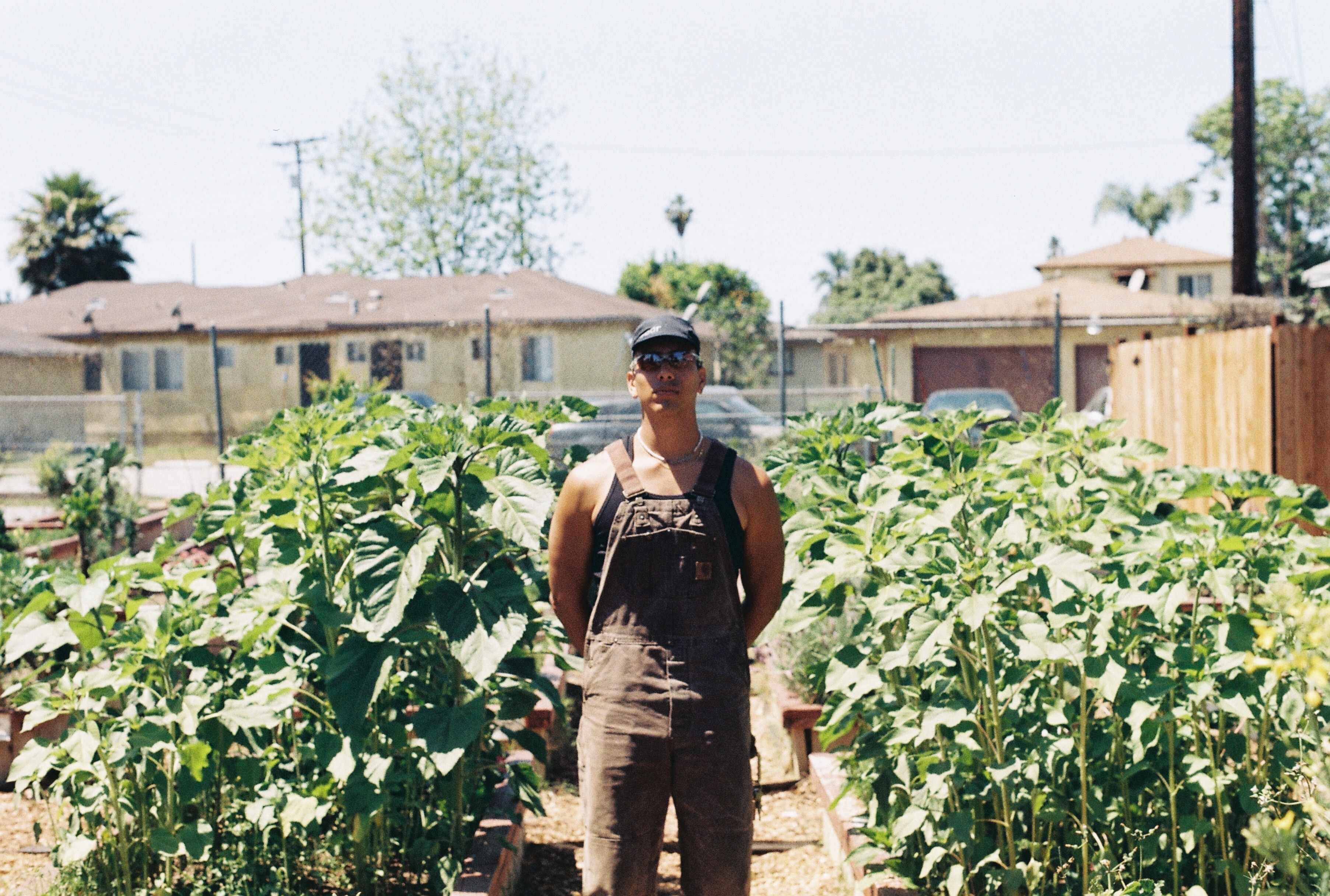
The category error is the point
earthside is formally in public relations and communications. That label is accurate, but incomplete in the way that calling a garden “landscaping” misses lunch. The studio is small - LinkedIn lists a company-reported range of two to ten people - and privately held. Its service prices, revenue and funding are not public. There is no sprawling menu of branded methodologies. What is visible is its selection of work.
The public project orbit
The customer, then, is likely an organization that needs cultural context as much as attention: a conservation nonprofit trying to reach beyond its usual constituency; a consumer brand trying to participate without parachuting in; an artist whose work belongs to a wider community; or a neighborhood initiative that needs resources and a public narrative. The practical alternatives are a traditional PR firm, an environmental communications specialist, an in-house partnerships team or a cultural strategy studio. earthside occupies the overlap.
“Connecting diverse communities, orgs & subcultures with ecology at their core.”earthside's public description
A sneaker can point back to a garden
Consider the Nike x Undefeated “Community” Air Force 1 release in November 2022. The shoe was a retail object, but the collaboration's public story pointed toward two Los Angeles organizations: Feed The Streets LA and Compton Community Garden. The latter addresses food insecurity and ecological inequality by growing organic food and creating a free place to learn, gather and breathe.
The distinction matters. A community can be used as campaign scenery, or it can be treated as a participant with its own history and aims. earthside lists Nike x Undefeated and the garden among its recent projects. Public materials do not itemize the studio's exact deliverables, so it would be foolish to award it every piece of the collaboration. The useful observation is narrower: earthside has built a practice close enough to both worlds to list them honestly in the same breath.
That proximity is difficult to counterfeit. Fajardo grew up in Compton and served the garden in culture, programming and land-stewardship roles. In a 2022 interview, he described gardens as rare in a city commonly imagined through concrete. He talked about young people, Indigenous, Black and Brown agricultural history, free classes and direct democracy. These are not campaign themes chosen after a brainstorm. They are the operating context.
The first failure was not messaging
The garden's crisis reveals the limit of good communications. The project had occupied leased land since 2013. That arrangement made the garden possible, but it also left its future attached to someone else's deed. When the lot went up for sale, no amount of audience affection could substitute for capital and secure tenure. The first thing to fail was the underlying land arrangement.
The response also reveals what an accumulated network can do. Garden leaders spoke at Compton City Council. Local media covered the threatened sale. Volunteers and supporters rallied. In early May, the public GoFundMe had passed $180,000; by May 17, CBS Los Angeles reported more than $445,000 through the campaign, with additional direct donations, and said organizers had reached the amount needed to pursue the purchase. The exact cost of earthside's role was not published. The cost of the larger problem was visible: a competing offer around half a million dollars and a fundraising target of $600,000.
A campaign worth copying
A sudden land sale converted a slow structural risk into an urgent deadline.
Local spokespeople, a concrete dollar target, visible public meetings and a decade of earned trust.
This model depends on real prior participation. Attention cannot manufacture ten years of community value in ten days.
There is a tempting business lesson here, though it is less glamorous than “go viral.” Build the relationship before the emergency. Give people something specific to save. Put those closest to the consequences in front of the microphone. Connect the story to a decision - in this case, ownership of the land - rather than treating coverage as the finish line.
Under different conditions, this approach would sputter. It would not rescue a brand collaboration with no meaningful community benefit. It would not replace a competent legal or financing plan. It would struggle without trusted local people willing to speak publicly. And it would be slower than buying impressions because its raw material is accumulated credibility.
Small by design, specific by necessity
earthside was founded in 2020, a peculiarly revealing year for a business built around physical community. Its public presence remains spare. That can frustrate anyone looking for a neat agency case study with budgets, conversion rates and client testimonials. It also fits the proposition. The company is not selling a software platform or a repeatable media package. It appears to sell judgment, relationships and translation across groups that do not naturally share a conference room.
Its business model is therefore best understood as project-based communications and partnership work, with pricing kept private. Its expertise lives in a cross-section: environmental and land-access issues, community programming, outdoor culture, fashion and music. Its difference from competitors is not that it can issue a press release more elegantly. It is that the people and projects in its orbit grant it a view of what a campaign may mean on the ground.
There is a neat paradox in the name. “earthside” sounds planetary. The work is persuasive when it is particular: one garden, one neighborhood, one group of young people, one contested lot. The studio's national conservation names and consumer brands may widen the canvas, but the Compton story supplies the scale that matters. Communication travels. Trust stays stubbornly local.
For organizations wanting to copy the approach, the portable tool is not the roster. It is the sequence: begin with a place; learn who has already done the work; make the partnership useful before making it visible; let community members describe the stakes; and choose cultural collaborators whose audience can carry the idea into a different room. Then measure not only how far the message moved, but what remained after it passed.
In earthside's case, the most memorable proof is still that wrong sign in the garden. It threatened to turn a living commons into a real-estate transaction. The people around it answered with another kind of transaction - thousands of donations, joined to years of volunteer days, classes, meals and conversation. A communications studio that understands that difference has found a useful patch of ground.