There is a moment in the life of an advertisement when somebody says, “Now let’s make the Spanish version.” It sounds efficient. The music has been licensed, the joke approved, the edit locked. All that remains, supposedly, is to move the words from one language to another. Daisy Expósito-Ulla built an agency around the suspicion that this tidy final step was often the first mistake.
d expósito & Partners - usually shortened to dex - opened in New York in 2005. Expósito-Ulla had spent 24 years helping build The Bravo Group, the Young & Rubicam and WPP operation that became a giant of U.S. Hispanic advertising. After leaving, she and filmmaker Jorge Ulla joined with experienced colleagues including Gloria Constanza and Fernando Fernández. The venture was independent, women- and minority-owned, and deliberately small. Two decades later, public industry records put its staff around 30 people.

The agency does the recognizable work of an integrated shop: research, strategy, creative, digital, media planning and buying, social, public relations and community outreach. Its client history stretches from McDonald’s regional cooperatives and Tajín to AARP, Nielsen, the Smithsonian, Point32Health and New York City. But the actual product is a way of looking. Dex calls it “cultural dexterity” - cultural intelligence plus emotional intelligence plus business intelligence. The phrase risks sounding like conference-room fog until you inspect the ads.
The same bottle, two different tables
Consider Tajín, the Mexican chile-lime seasoning. For an established Hispanic customer, the bottle can carry memory, family and the reassuring authority of a familiar flavor. For a newcomer at an American barbecue, it can be a small experiment - What if I put this on fruit? On the rim of a drink? Dex’s “As Unique As You” campaign did not sand those experiences into one generic scene. It made two television spots under one idea: a diverse group of friends discovering possibilities, and a multigenerational Hispanic family treating Tajín as a trusted presence.
The split is the lesson. Cultural specificity did not fracture the brand. It gave the brand two honest entrances. The agency reported a 30 percent lift in top-of-mind awareness, sales more than 25 percent above projections and a 300 percent return on the e-commerce campaign. Those numbers are more persuasive than any sermon about authenticity because they show the sequence: observe a difference, honor it in the work, then measure what happened.
“Culture isn’t a trend - it’s a truth.”Daisy Expósito-Ulla, founder and CEO
An ad agency makes a documentary
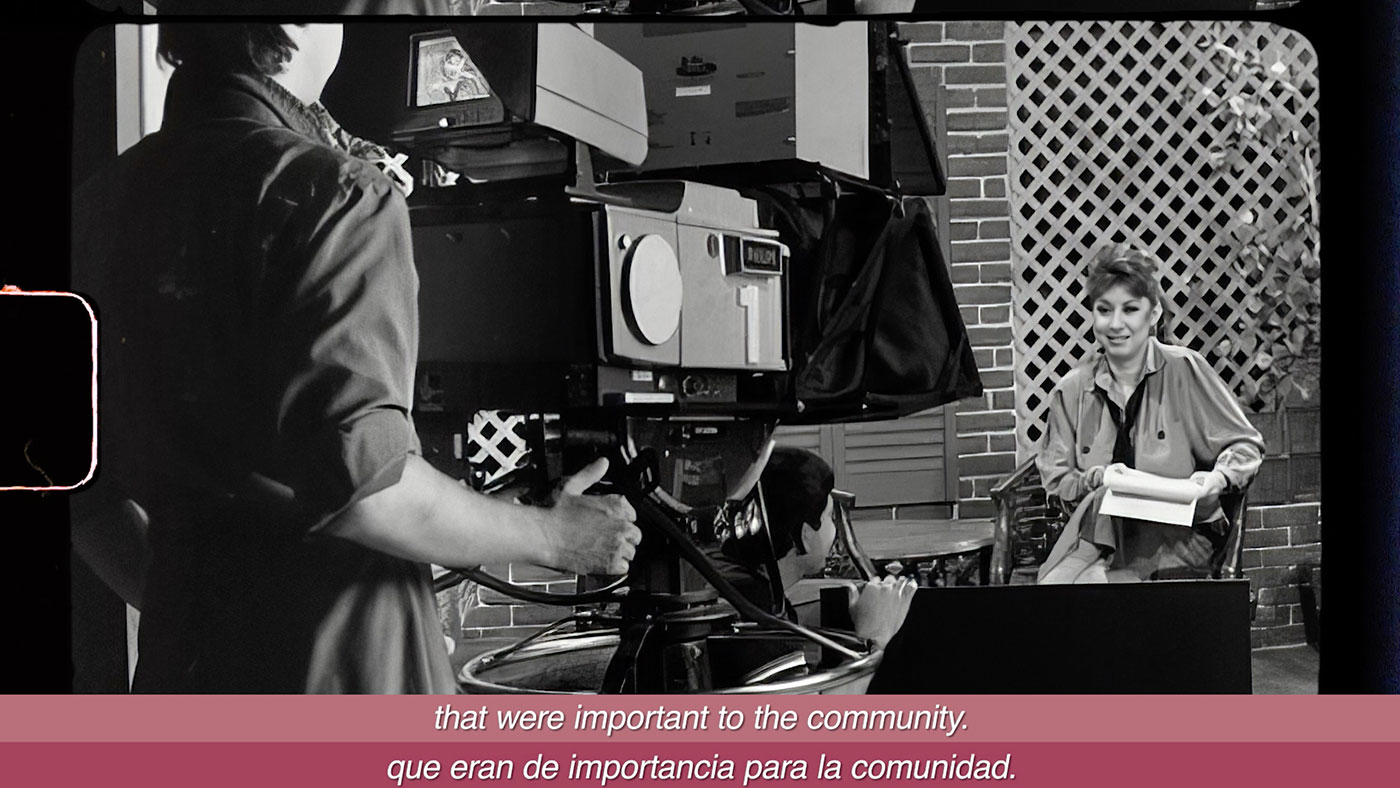
AARP’s problem was family caregiving. The service information mattered, but a list of resources could not explain why many Latino caregivers place their own needs behind those of a parent, spouse or relative. Dex’s answer was not a warmer brochure. It was Cada paso del camino, a documentary following five Hispanic caregivers, including television personality Marco Antonio Regil.
Then came distribution: an exclusive story on Univision’s Despierta América, a media tour, coverage on Telemundo and People en Español, and complete broadcasts on Azteca América and EstrellaTV. The campaign generated 500 million earned impressions, 180,000 YouTube views, nine million social views and 10.5 million engagements. Weekly visits to the relevant AARP page rose 400 percent at launch.
The conventional unit of agency output is an ad. Dex treated the unit as a useful cultural object. A documentary could hold contradiction, duty, exhaustion and affection in a way a thirty-second spot could not. The first thing to fail here was the old container, not the audience. What changed minds was not a slogan. It was evidence that a fuller story traveled farther.
Belonging, with a dashboard
For the Smithsonian’s 2023 exhibition ¡De última hora! Latinas Report Breaking News, the agency produced an anchor film narrated by Emmy-winning journalist María Elena Salinas. The gallery honored seven Latina journalists and led bilingually with Spanish. The launch campaign produced more than half a billion earned impressions; Latino visitation to the National Museum of American History rose 33 percent after opening. The emotional outcome - visitors feeling welcomed and recognized - and the institutional outcome - more visitors - belonged on the same report.
Public service work provides another test. New York City’s childcare campaign needed to reach working families across a city where “multicultural” is less a segment than the morning commute. Dex built English and Spanish television creative, then added community media for Chinese, Haitian, Russian, Indian and Armenian audiences. Video completion ran 28 percent above benchmark, display engagement 30 percent above benchmark, and clicks beat the goal by 137 percent.
The money tells a plainer story. A public New York record shows a $49,000 2025 contract for digital and transit advertising for the Tree Census; another records a $99,999 emergency-services contract spanning 2023 to 2025. These are not global-brand media budgets. They show the conditions in which the method is useful: defined communities, accountable spending and messages that must survive outside a national television buy.
Veterans of The Bravo Group build a founder-led agency in New York.
Dex coordinates more than 14 agencies for the non-response follow-up campaign.
AARP’s work takes the first CAPE Grand Prix and a PRSA Big Apple Award.
The bilingual gallery campaign connects representation to museum attendance.
Efectiva handles media; résonant takes on PR, social and creators.
Small shop, expanding toolkit
In 2025, dex added two named practices. Efectiva, led by Gloria Constanza, brings together conventional buying, programmatic, streaming, social, retail and e-commerce media. Résonant, led by Andy Checo, began with six staffers focused on public relations, social media, influencer partnerships and bilingual or polylingual media relations. One sells sharper placement; the other tries to earn the attention a media plan cannot purchase.
That expansion also locates dex in a crowded market. Its alternatives include specialist multicultural agencies such as Alma, Casanova//McCann, Gallegos United and Zubi, plus the multicultural practices inside enormous holding companies. Dex’s pitch is founder-level continuity and one integrated point of view. Several senior partners have worked together for decades. The agency weathered the financial crisis, the “total market” era, the pandemic and the recurring corporate temptation to treat difference as inefficiency.

The useful part you can steal
Start before the translation. Ask what the audience already knows, what behavior the brand is entering, and which emotional premise changes across communities. Keep the brand idea constant only if the evidence allows it; let scenes, languages, channels and storytellers vary. Pair community knowledge with a hard commercial or civic measure. Tajín had awareness, sales and e-commerce return. AARP had viewing, engagement and page visits. The Smithsonian had sentiment, reach and attendance.
The method is less effective when “culture” is used as costume, when researchers are invited after the concept is locked, or when a brand will not fund distinct executions and distribution. It also cannot repair a weak product or an institution unwilling to serve the people its campaign attracts. Recognition creates an expectation. If the experience on the other side does not match the invitation, precision merely disappoints people more efficiently.
Three questions worth copying
What does this audience know that the brief ignores? Which part of the idea should change because of that knowledge? What result - behavioral, commercial or civic - will prove the change mattered?
At its twentieth anniversary, the agency estimated that it had directed roughly $1 million toward social causes, mentoring, scholarships, community initiatives and the arts. Its self-funded pandemic PSA used the pageantry of lucha libre to promote masks when Spanish-language guidance was thin and mask-wearing had become political. This, too, is part of the business model, though not easily entered in a spreadsheet: credibility accumulated before a brief arrives.
Madison Avenue once offered a convenient fiction. There was the mainstream, large and undifferentiated, and then there were markets with adjectives. Dex’s career has coincided with that fiction becoming harder to maintain. America did not lose its mainstream. Its mainstream became visibly cross-cultural. The agency’s trick was to notice early - and to keep enough measurement nearby that clients could notice, too.