The ordinary T-shirt contains a delayed surprise. In the store it lies flat, square and persuasive. Then it enters a washing machine. The neck wanders. A side seam develops ambition. The torso loses an inch. What looked like a purchase becomes a chemistry experiment conducted by the customer.
Massive Prints, a Southern California apparel manufacturer founded in the mid-1990s, has spent decades attacking that moment. Its central insight is almost comic in its simplicity: if washing exposes the weakness, wash the garment before the buyer does. Then do it with enough care that the treatment becomes repeatable at industrial scale.
The company began with the Dubar family printing shirts one at a time in a backyard for punk, surfer and skateboarder friends. The name, Massive Prints, was aspirational. The operation was not. Yet the subcultures were a useful classroom. People who cared intensely about graphics also cared about the hand of a shirt, the fall of a shoulder and the particular dignity of black after its twentieth wash.
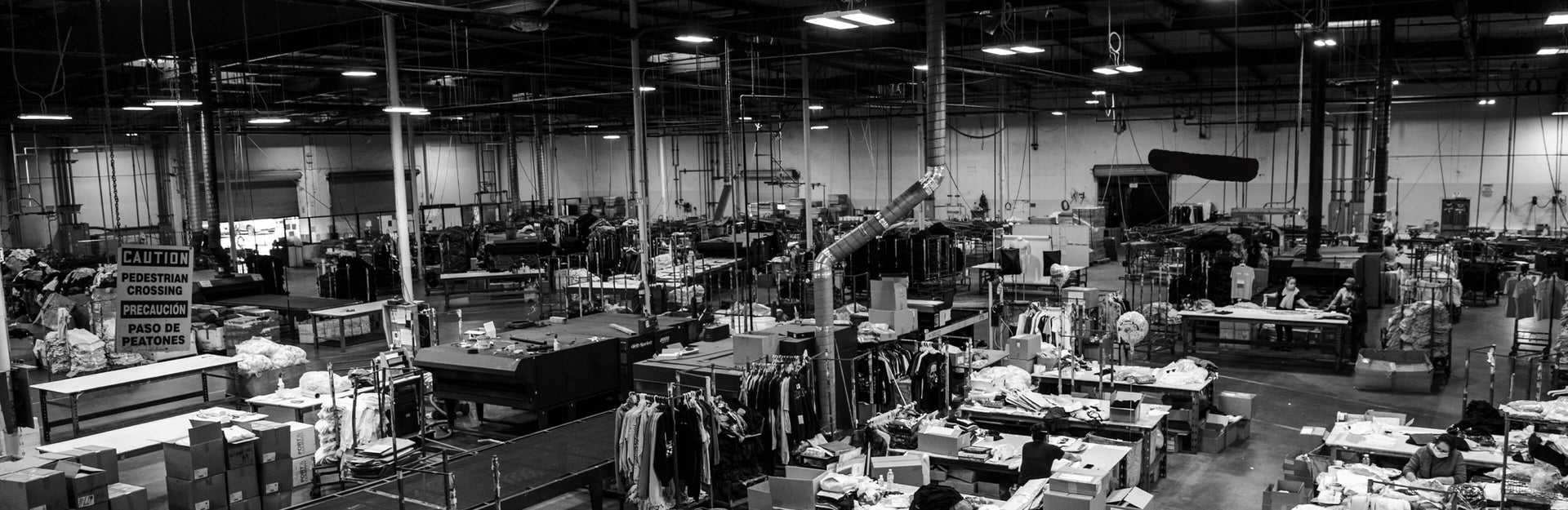
The factory learned to do the laundry
The first thing that failed was the first wash. Cotton fabric carries tension from knitting, rolling, cutting and sewing. Release that tension carelessly and a garment can shrink or twist. Massive's published process begins by pre-laundering the fabric before it is cut. Then comes the odd rule: do not roll it back up. The cloth is flat-folded, spread and allowed to relax. After cutting and assembly, the garment is washed again to remove impurities and release tension introduced by sewing. Only then is it ready for dye.
Pre-launder the raw fabric
Flat-fold, never reroll
Spread and let it relax
Cut, sew and reinforce
Wash again before dye
This is the answer to “what changed their mind?” in the only form the public record supports. Massive says 25 years of garment-dye work taught it how to make shrink-resistant garments. The company moved from decorating the surface to controlling the causes underneath it. A printer became a manufacturer because the print cannot rescue a shirt whose shape disappoints.
The interesting product is not the shirt on the shelf. It is the absence of a complaint three washes later.
That logic pushed Massive upstream and downstream. Its menu now includes patternmaking, grading, cutting, sewing and sampling; direct-to-garment and screen printing; embroidery, sublimation, flock, puff, rhinestone and labels; garment dyeing and bolt printing; then pick-and-pack and fulfillment. A brand can arrive with an idea and leave with boxed inventory. Massive also sells its own blanks online, turning factory knowledge into tees, mock necks, drop-shoulder shirts, heavyweight hoodies and sweatpants.
Color has two personalities
Garment dyeing means assembling the piece first and coloring it afterward. This allows a brand to hold an undyed, prepared-for-dye garment and make color choices later. It also produces the gentle variation that makes a new shirt feel as if it already has a history.
But “garment dyed” hides an important fork. Pigment dye forms color near the surface of the fabric with the help of a binder. It fades gradually, and the fading is the point: the customer is buying a future vintage shirt. Reactive dye bonds chemically with cotton fibers. The result is brighter, more colorfast and friendlier to most printing and embellishment. One look is supposed to change; the other is supposed to hold.
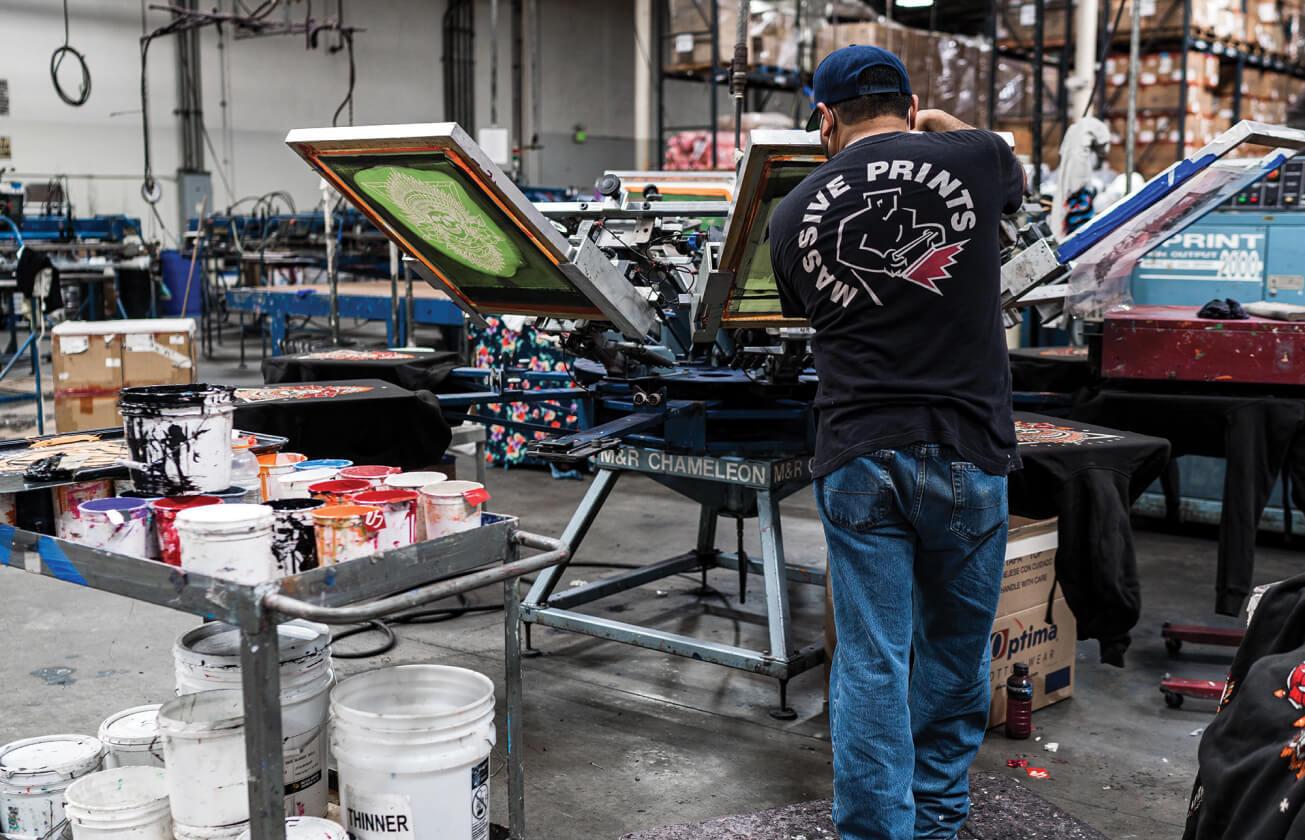
There is a useful boundary here. Discharge printing, which removes dye to create an image, does not work on Massive's pigment-dyed goods. The company recommends reactive dye for printing and most embellishment. The lesson is portable: a manufacturing option is not a menu item in isolation. It changes what becomes possible at the next station.
What does control cost?
The public storefront makes part of the economics unusually legible. A men's premium tee starts around $20, a drop-shoulder tee around $21, a mock neck around $23 and a men's heavyweight hoodie around $50. Prepared-for-dye versions are typically a dollar or two less in the listed examples. These are online prices, not a confidential factory quote, but the volume ladder tells the larger story.
Published discount per T-shirt
Massive's published online tiers as of September 2026. Hoodies and sweatpants follow different schedules, reaching a $20 per-item discount at 1,200 pieces.
The business model sits between factory and store. Small buyers can order blanks through Shopify. Larger customers get scale discounts. Brands can add the higher-value work - dyeing, decoration, labels, production and fulfillment. Vertical integration reduces the costly handoffs between a blank supplier, a dyer, a printer and a warehouse. It also concentrates responsibility. If color, fit or timing goes wrong, there are fewer vendors available for the familiar game of pointing elsewhere.
The customer is really buying consistency
Massive's natural customer is not simply someone who needs shirts. It is a fashion label, merch operator, sports franchise, entertainment company or young brand whose reputation will be worn and washed by somebody else. A startup can forgive a crude spreadsheet. Its customer will not forgive a hoodie that becomes a different hoodie on Sunday.
The company's facilities - a reported 280,000 square feet in Los Angeles and 600,000 in Ensenada - signal where it sits in the market. This is larger and more vertically integrated than the neighborhood printer, but more specialized and accessible than an anonymous overseas sourcing chain. Competitors range from premium blank makers such as Los Angeles Apparel, AS Colour and Comfort Colors to regional cut-and-sew and decoration shops. Massive's pitch is the combination: its own blanks, a prepared-for-dye program, color chemistry, decoration and logistics.
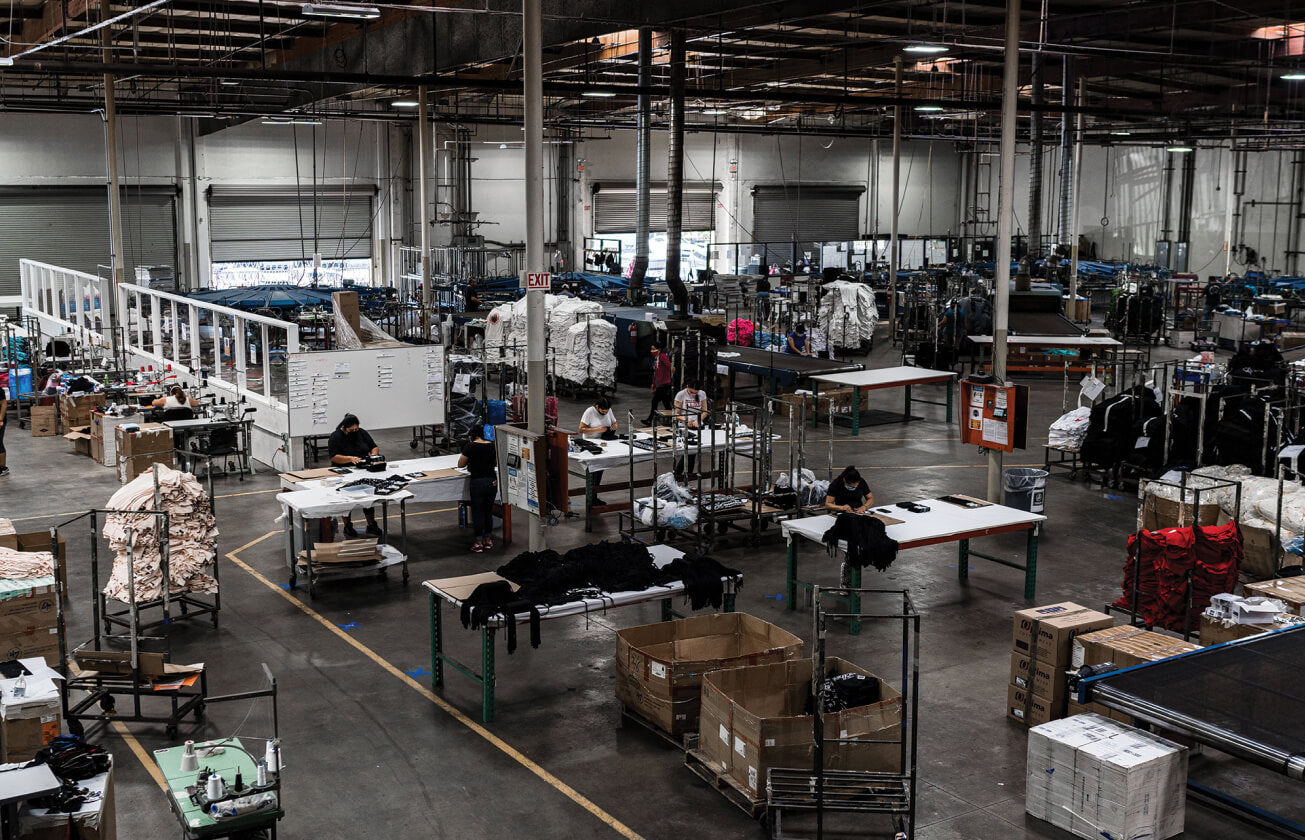
The approach is not magic. Dye lots can vary. Pigment color is designed to evolve. A soft, relaxed garment may not suit a customer who wants a rigid technical fabric. Vertical integration matters most when a brand values custom color, tactile quality, decoration and fewer handoffs. It matters less when the brief is simply the lowest possible unit price on a commodity tee.
What can another company copy? Find the failure that appears after the sale. Reproduce it before the sale. Then redesign the process so the unpleasant surprise happens under your roof, where you can still fix it.
For an apparel founder, that could mean wash-testing every sample, measuring before and after, specifying dye method by intended aging, and decorating the actual production blank rather than a substitute. It means treating fabric handling as product design. The small procedural detail - flat-fold, do not reroll - is exactly the kind competitors skip because it looks too dull for a campaign.
Massive Prints named itself before it became massive. The better bit of foresight may have been less obvious. It understood that a good print is temporary unless the garment beneath it behaves. So the company built around the unphotogenic work: relaxing cloth, washing twice, matching dye, reinforcing seams and moving boxes. In fashion, the glamour travels outward. The control stays in the laundry.