A listener reaches the end of an episode. The heroine has found a locked room, the heir has discovered a forged will, somebody has heard footsteps where no footsteps should be. The phone offers a choice: wait, or spend a few coins and continue. Somewhere behind that moment of impatience is Lalit Gangwar, an engineer turned product operator who has helped make the cliffhanger do double duty as drama and distribution.
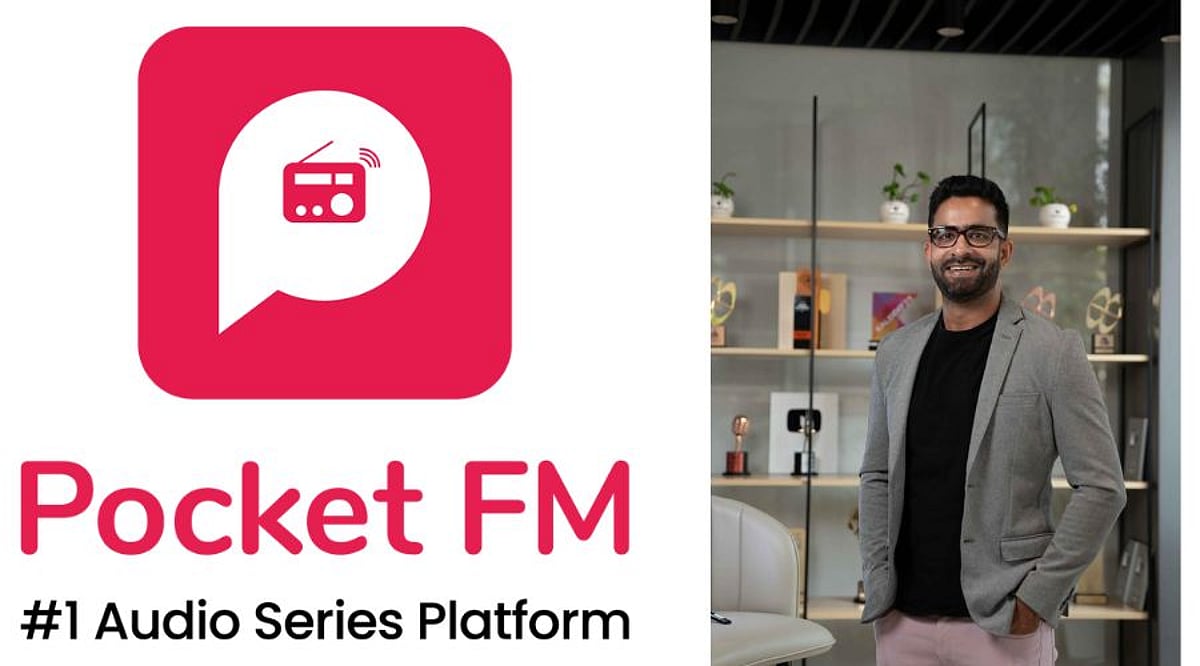
Gangwar is chief operating officer of Pocket FM, the serialized-audio company founded in India and now operating across more than 20 countries. His job is not to write the twist. It is to build the machine that finds an audience for it, measures whether the audience stays, and makes the next twist arrive quickly enough to deserve another tap.
This is an oddly fitting career for somebody whose public biography is written mostly in verbs: build, scale, test, unlock. He joined Pocket FM in 2021 to lead growth in India. He later took on global growth, then the United States business, and in April 2026 the company put its global audio operations under him. His remit now spans markets, monetization and execution. The title is grand. His own description of the work is deliberately plain: stronger systems, sharper execution, a higher bar across markets.
The second build is the revealing one
India gave Gangwar the first laboratory. Pocket FM said its early growth and marketing playbook helped the platform reach more than 150 million users within his first year. The raw number matters less than what followed. When the company entered the United States in 2022, it could not simply pack the Indian operation into a suitcase and clear customs. Gangwar built local teams, content operations and a fresh market playbook. In January 2024, he was named vice president and US country head, responsible for American content and revenue growth.
The work exposed a central puzzle of global entertainment. Emotions travel easily. Interfaces, pricing and discovery habits are more temperamental. Romance can cross an ocean without a visa; the marketing campaign usually cannot. Gangwar's answer has been to begin with audience behavior, then work backward into content and distribution. Pocket FM samples stories through organic clips, paid channels and partnerships. It watches what listeners start, where they leave, and whether they return.
That process can sound bloodless beside tales of fantasy kingdoms and dangerous marriages. Yet it is precisely the contrast that defines him. Writers handle yearning. Gangwar handles repeatability.
A résumé that keeps changing verbs
Gangwar studied engineering at IIT Madras from 2010 to 2014. Even the campus details hint at his later tastes. His project involved optimizing ball mills, while his extracurricular work involved hospitality, catering and logistics for student organizations and Shaastra, the institute's technical festival. Machinery on one side, movement of people on the other. During a volunteer business-development stint, he contacted 20 NGOs across five districts in Rajasthan and secured seven partnerships. It was a small exercise in funnels long before anybody called it growth.
His first corporate role was as a Vodafone management trainee. He then joined Townrush, a logistics startup acquired by Grofers, as a founding team member. Product jobs at Dineout and HealthKart followed, as did a stint at Zomato. Telecom, last-mile delivery, restaurant discovery, commerce: each business offered a different version of the same question. What makes a person act on a screen, and what makes that action become a habit?
Begins at Vodafone after graduating from IIT Madras.
Moves through Townrush, Dineout, HealthKart and Zomato, working close to products and consumer behavior.
Joins Pocket FM to lead India growth.
Takes charge of the United States market after leading global growth.
Becomes COO with end-to-end responsibility for the global audio business.
At Pocket FM, the verbs converged. Product thinking met content marketing; data analysis met melodrama. Colleagues have described Gangwar as detail-minded, process-oriented and unusually focused on identifying the right problem before attacking it. His own public language favors the collective. When he accepted the COO role, he credited founders Rohan Nayak, Prateek Dixit and Nishanth Srinivas, the leadership team, and the people who kept showing up through the disorder of an early-stage company.
“Revenue is the end outcome. But what you are building is more important.”Lalit Gangwar
Coins, patience and the price of suspense
Pocket FM started with subscriptions. Its more distinctive business emerged from microtransactions. A listener can begin free, receive episodes over time, watch advertisements, buy an all-access plan, or purchase coins to unlock the story immediately. This turns monetization into a sequence of small verdicts. Every episode must make a case for the next.
Gangwar describes the company as a microtransaction-led audio storytelling business, a phrase with all the poetry of a quarterly review and all the precision of a product manager. In practice, it means the audience is not asked to make one large commitment at the door. It is courted repeatedly. Suspense becomes inventory. Patience becomes a pricing tier.
By April 2026, Pocket FM reported more than 250 million listeners, over 100,000 audio series and more than 300,000 writers. Gangwar said US retention was roughly 40 to 50 percent and improving as the catalog improved, while acknowledging that larger, mature services still set a higher benchmark. It is an operator's kind of candor: the number is promising, the gap remains useful.
The company also changed how it tests demand. Short trailers once ran for 30 or 40 seconds. Longer cuts of 10 to 15 minutes now provide a better read on whether a story can hold attention. The distinction is important. A striking premise can sell half a minute. A world worth inhabiting must survive the commute.
When the studio becomes a system
The most consequential change in Gangwar's operating environment is AI. Pocket FM uses it across writing assistance, voice, post-production, analytics, product and localization. He has said that a 200-hour series once took as long as two years to produce and evaluate for long-term retention. With AI-supported processes, a version can be produced and tested in about a month. Human-led production has also compressed, though less dramatically.
Approximate upper-end comparison described by Gangwar in April 2026. Faster is a production claim, not a guarantee of a better story.
The qualification matters. Early AI output provoked listener backlash, and Gangwar has been open about the need for quality to improve. More content is not automatically more entertainment. A warehouse full of bland cliffhangers is merely a warehouse with poor lighting. The advantage of speed is the ability to test, discard and refine before two years have passed.
His preferred framing is expansion rather than replacement. In one example he shared, a first-time creator in Hyderabad found an audience in the United States and earned roughly $50,000 in a month. It is an anecdote, not an average. Still, it captures the aspiration: software reduces the distance between an idea, a production and a foreign audience. In Gangwar's telling, AI changes the supply curve for stories while data helps decide which worlds deserve further investment.
The person inside the process
Executives in growth are often tempted to narrate themselves as solitary rainmakers. Gangwar resists that pose. His announcement of the COO role called the promotion less about a title than the journey, and described the company's progress as a collective effort by teams willing to take ownership amid chaos. That choice of credit is consistent with Pocket FM's explanation for promoting him: it wanted to grow a leader from within.
There is also a quiet wit in the mismatch between his industry and his manner. Pocket FM trades in vampires, revenge, secret heirs and grand declarations. Gangwar trades in operating foundations. His favorite dramatic device appears to be the feedback loop. Yet serialized entertainment needs exactly this division of labor. Somebody must insist that a story has a soul. Somebody else must make certain the app remembers where chapter 417 stopped.
The promotion gives him responsibility for a business now moving faster than the biography can settle. Pocket FM said its annualized revenue run rate passed $400 million in April 2026, after the second $200 million arrived in a year. In September, parent company Pocket Entertainment reported a run rate above $500 million and a creator ecosystem exceeding 550,000 people. Those are company figures, and run rate is not the same thing as reported annual revenue. Their usefulness lies in the direction they indicate: a once-local audio experiment has become an international operating problem.
“Build stronger systems. Drive sharper execution. Keep raising the bar across markets.”Lalit Gangwar on becoming COO
What happens after the cliffhanger
Gangwar's next assignment is to make growth predictable without making the product predictable. Europe is becoming a larger part of the business. The United States remains a strong contributor. Creators need better tools and wider distribution. Listeners require a reason to return tomorrow that feels emotional, not algorithmic. Every improvement in production speed increases the burden on taste.
He has said Pocket FM ultimately wants to be understood as a media-technology company rather than merely a content app. The distinction reveals the size of the ambition. Apps are downloaded. Systems travel across languages, formats and markets. Gangwar sees successful story worlds moving among audio, books, visual media, games and communities. The operating task is to let an idea cross those borders without sanding away whatever made it compelling.
For now, the cleanest picture of his work still fits on a phone screen. An episode ends. A listener pauses. The system has learned enough to offer another door, but the story must persuade the hand to open it. Technology can shorten the wait, translate the dialogue and count every hesitation. It cannot feel curiosity on the listener's behalf. Gangwar's business depends on respecting that final, stubbornly human gap.