At Princeton, the cup had changed. The destination had not. Ahead of the university’s 2023 Reunions, Princeton Alumni Weekly reported that the previous year’s trial of Earth Brands compostable cups had suffered from low collection rates. Too few cups had actually been composted. For the next attempt, student crews would be trained to direct them into the proper bins. A material designed to disappear needed people to help it leave.
- Earth Brands supplies compostable and recyclable food-service packaging, including custom cups.
- Its customers range from campus groups and cafes to Madison Square Garden.
- Collection, storage and replenishment explain why the business now reaches beyond the cup.
That small failure is a useful introduction to Earth Brands. A cup is easy to understand. The arrangement that makes it useful is more complicated: a buyer, a supplier, a stockroom, a bartender, a bin, a hauler, a facility willing to accept the material. Leave out one participant and the environmental promise can end at the trash bag.
The red cup already had a fan club
The founders encountered the problem on their way to tennis practice. Misha Vitels, identified in earlier coverage as Misha Medvedev, and Peter Frelinghuysen were student-athletes at Williams College. Discarded red cups were part of the campus scenery. They launched Earth Cups in April 2021, offering a plant-based alternative to the disposable party cup.
The object they were challenging had an advantage that a packaging specification cannot describe. The red cup belonged to college life. It was recognizable before anybody read its label. Earth Brands wanted sustainability to have some of that social appeal. Its early ambassador network gave students a way to spread the product through people they knew.

The culture was young and informal, but the work was tangible. In a founder interview, Misha described calling plastics experts, testing samples and working with composting facilities before the first batch arrived. Lucy Hirshland, the first official hire, contacted the founders after seeing a social post. UVA Today reported that she worked remotely for a year before meeting them in person.
The brewery wanted cups, full stop
Commercial demand supplied a useful correction to the campus story. In a Plant Based Products Council interview, Misha recalled shortages bringing breweries to the company: “There were cup shortages and breweries started reaching out to us seeking cups for their locations.”
A brewery could appreciate the material and still begin with a simpler question: can you supply the cups? Earth Brands’ own history credits a Cisco Brewers opportunity with encouraging its move into business customers. Availability opened the conversation. Repeated purchasing gave it somewhere to go.
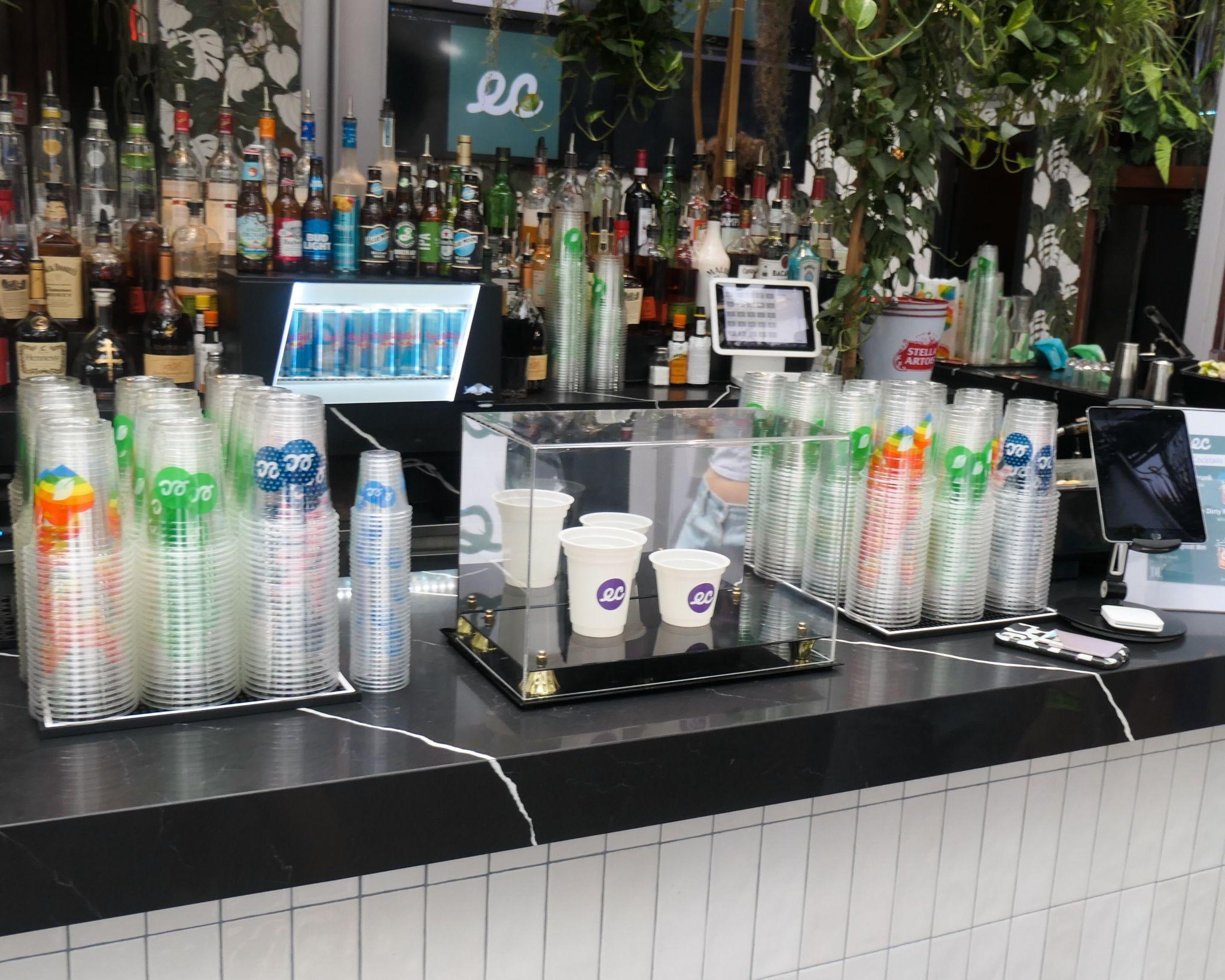
By February 2024, Madison Square Garden had announced Earth Brands as an official partner, with cups and lids for concession stands and hospitality spaces across sporting and entertainment events. The current customer roster also includes Barclays Center, Tatte and Life Time. These buyers put the company in food-service procurement, where delivery and fit matter alongside the message printed on the side.
The price of the cup, and the work around it
Earth Store offers a public catalog for stock purchases and a separate path for custom production. On October 4, 2026, a case of 1,000 clear compostable cold cups was listed at $106.60: roughly 10.7 cents each. A branded compostable listing was $237.50 per 1,000. Those listings describe different offerings; they do not establish the cost of a complete event.
About 10.7¢ and 23.8¢ per cup respectively. Listed products, not an all-in event budget.
Custom orders start at 5,000 units. A buyer can commission one run or enter an annual-volume arrangement with warehousing and portal reordering. For a cafe group, that means branches can request stock without starting a fresh printing project every time. Earth Brands sells the object and offers an arrangement for keeping it available.
The capital behind that expansion has included Mark Cuban and Wyc Grousbeck. A November 2023 announcement described a $4 million Series A and said proceeds would support new products, domestic manufacturing capacity and hiring. Its current history reports a somewhat different amount and round label. The sensible reading is that outside investment helped finance the move beyond early campus sales.
A compostable cup cannot choose its own bin
The original Earth Cups use PLA, a plastic made from plant sugars. Their composting route requires an industrial facility. Plant-based describes the feedstock; it does not tell you where a discarded cup will land. Earth Brands also offers recyclable PET options, so the brand name alone cannot settle the disposal question.
“The collection effort did not work last year.”Princeton Alumni Weekly, reporting on the 2022 trial
Princeton’s response makes the lesson unusually concrete: put trained people near the point of disposal. Earth Brands later reported collecting and composting more than 120,000 cups there in 2023. That is the company’s account of an outcome, distinct from counting cups purchased. The distinction matters to anyone writing an event’s sustainability report.
- 01Accepted material
- 02Guided collection
- 03Arranged hauling
- 04Confirmed processing
Operators can copy that sequence: confirm acceptance with the processor, organize collection, train staff and check what was recovered. Without an accepting facility or dependable collection, compostability will not deliver the intended result. At the same Reunions, another Princeton class piloted TURN reusable cups. Return systems ask their own questions about collection and repeated use.
The business hiding in the stockroom
Earth Brands occupies a busy market. Eco-Products and Vegware already offer sustainable food-service packaging and recovery support. Earth’s particular pitch combines its consumer-facing brand with custom printing, US warehousing and ordering tools. Its 2024 Earth Base facility makes the stockroom part of the story.
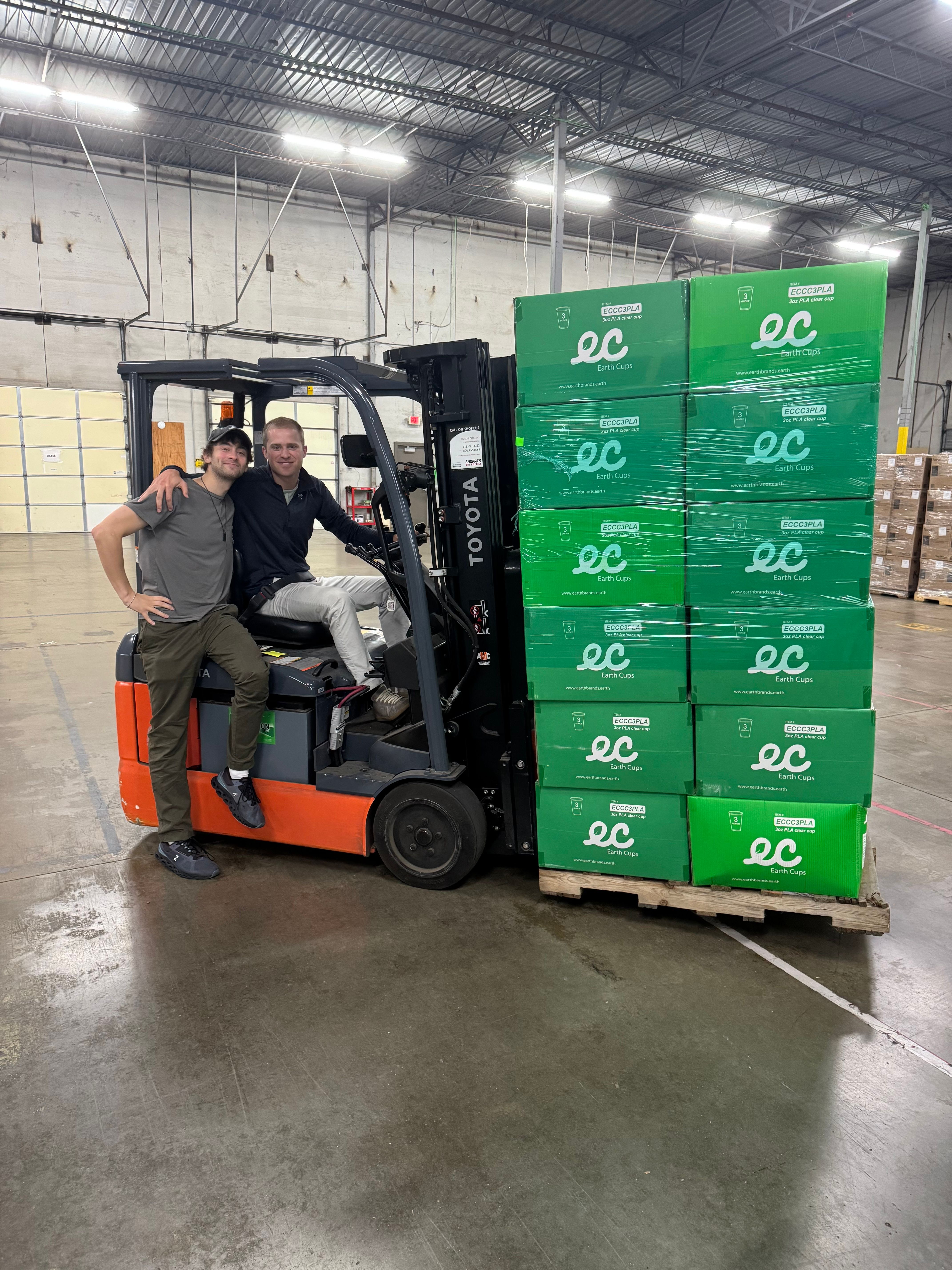
Haven, its operations software, now advertises inventory tracking, deliveries, manuals and team training. The move suggests an ambition to stay useful between packaging orders. For a buyer, the appeal is practical: choose a suitable material, keep locations supplied, and make disposal someone’s assigned job. The cup gets the attention. The less glamorous arrangements decide whether it earns it.
Follow the cups
Earth Store · Custom cups · Haven · Company blog
LinkedIn · X · Instagram · Facebook · TikTok
Just Raised founder interview · Consumer Rundown conversation