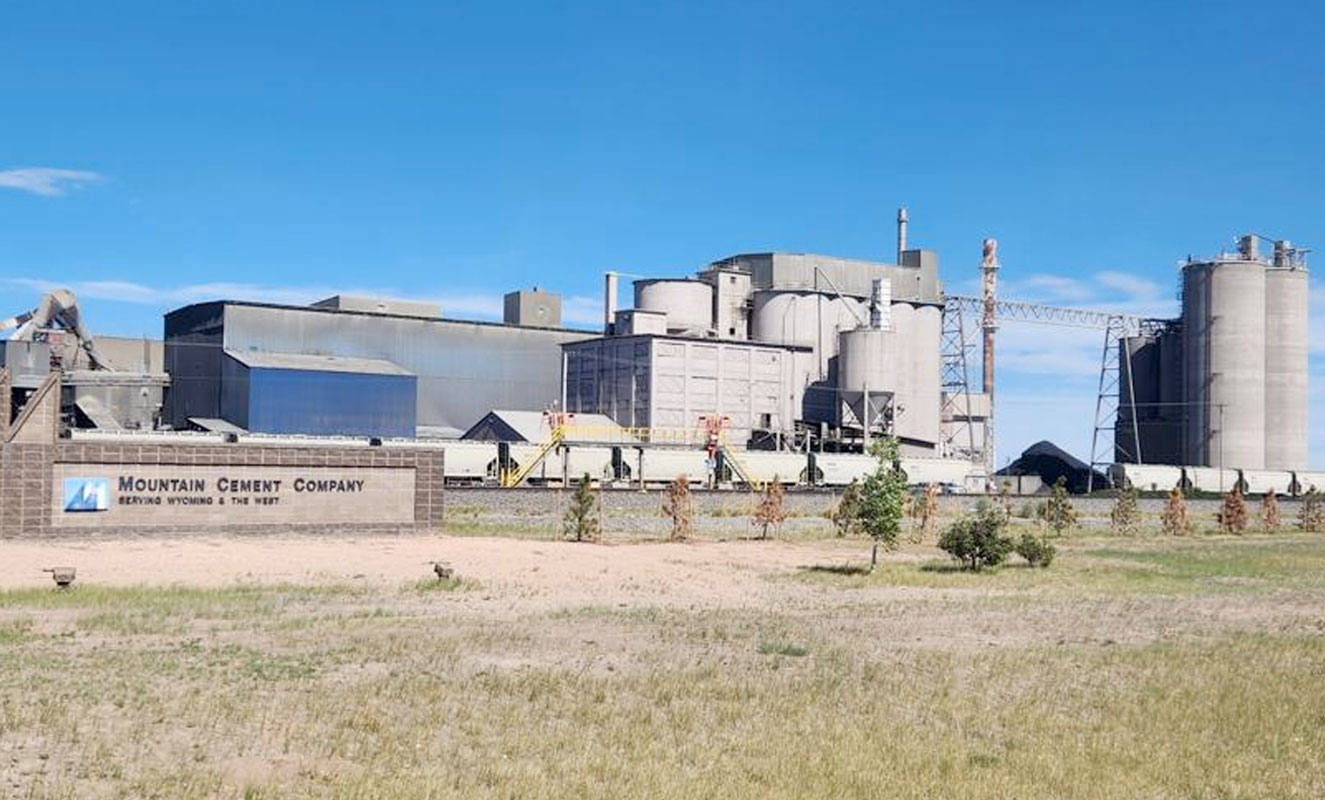
In Laramie, Wyoming, a piece of equipment failed. For a cement maker, this is an expensive way to discover how much the rest of the company matters. Eagle Materials put the earnings impact at about $6 million in its July 2026 results. Yet customers kept receiving cement. Other plants in its network took up the task. The broken machine exposed something a photograph of a factory cannot show: the value of having another factory.
- Eagle sells the ingredients of American construction: cement, wallboard, paperboard, concrete and aggregates.
- Its advantage starts with nearby minerals, efficient plants and the cost of delivery.
- Two planned modernizations carry a combined $760 million price tag. The promised savings still have to arrive.
That is a useful introduction to a business whose products disappear into other people's achievements. Nobody admires a new hospital and asks about the paper facing its drywall. Eagle has made a substantial business of supplying things people need without needing to think about them.
01 / The weight of an ordinary product
Cement binds sand and aggregates into concrete. Gypsum wallboard divides rooms and supplies inherent fire resistance. Crushed stone, sand and gravel form the granular skeleton of construction. Eagle makes these materials through operating companies that include Mountain Cement, American Gypsum and Republic Paperboard.
Its customers occupy the practical middle of the building economy: concrete producers, building-material dealers, specialty drywall distributors, lumberyards and home centers. Contractors ultimately put the materials into roads, houses and commercial buildings. The business earns money on physical shipments, measured in tons, cubic yards and square feet. There is no subscription hiding inside the wall.
The overlooked variable is distance. Shipping heavy, relatively inexpensive material eats into what the manufacturer keeps. Eagle's investor presentation explicitly emphasizes an inland cement footprint away from coastlines and imports. A map of quarries, kilns and terminals tells you more about its competitive position than a clever advertising campaign would.
02 / The paper mill inside the drywall story
Eagle began in 1963 as a Centex subsidiary. It went public in 1994; the 2004 spin-off brought the Eagle Materials name. Its history reads like a succession of plant purchases and expansions, with manufacturing knowledge accumulating alongside capacity.
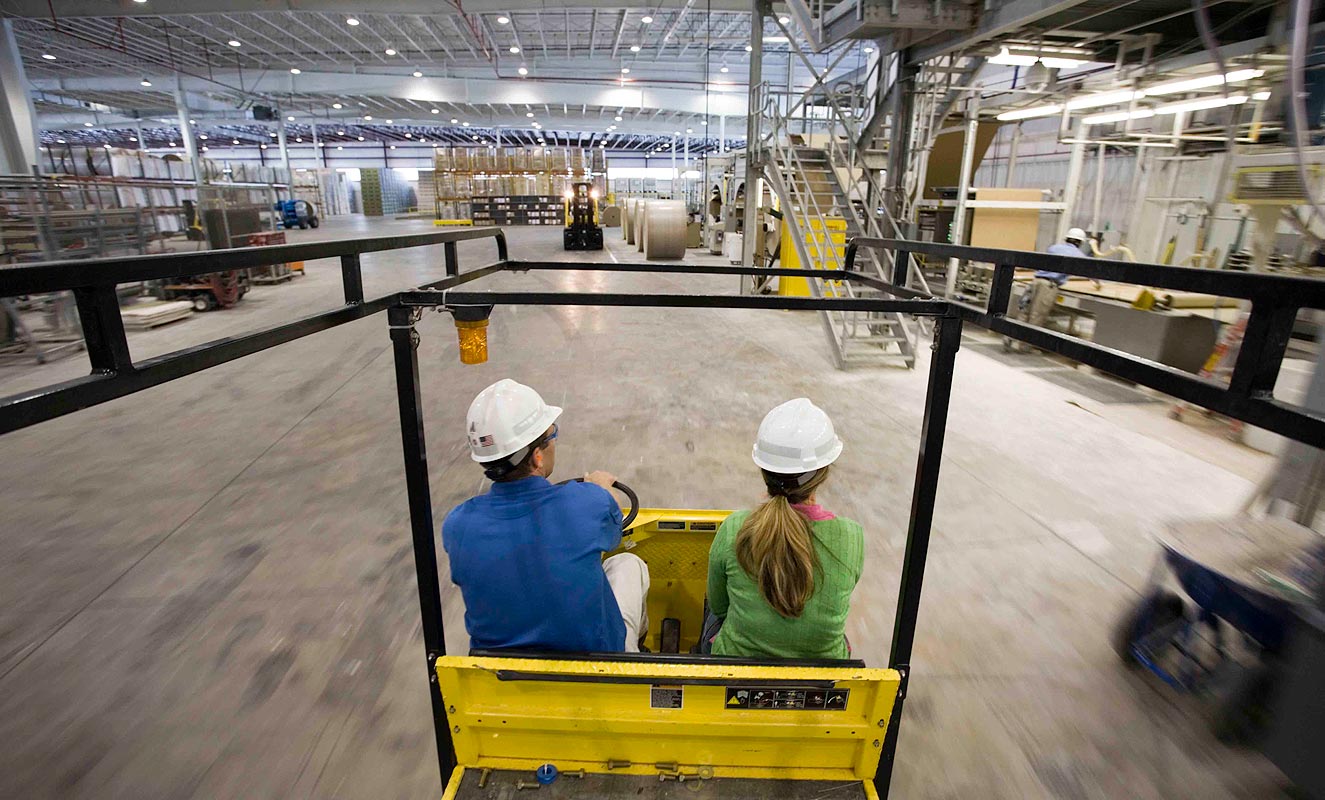
One especially telling purchase joined an Oklahoma wallboard plant with a paper mill in Lawton. Republic makes paperboard from recycled raw materials. That paper becomes the facing on gypsum board, and also goes into products such as bags, boxes and tubes. Eagle's 2025 shareholder letter said the mill supplied nearly all its wallboard business's recycled-paper needs.
This is selective control over an important input. Eagle describes its broader approach as having limited vertical integration. The distinction matters: owning a useful bottleneck can improve supply reliability without requiring ownership of every truck, distributor and building site downstream.
“Our operating strategy is to be a low-cost producer of each and every product we make.”Eagle Materials, operating strategy
The competitive field changes with the product. American Gypsum competes with USG, National Gypsum, CertainTeed and Georgia-Pacific. Cement competition includes Heidelberg Materials, CRH and regional producers. Heidelberg is also Eagle's partner in the Texas Lehigh 50/50 joint venture. Industrial competition can involve sharing one asset while contesting another market.
03 / A $760 million argument for staying put
Eagle's current investment program makes its priorities visible. The announced Mountain Cement modernization budget is about $430 million, including a Northern Colorado distribution terminal. The project is designed to add 400,000 tons of annual capacity and lower plant operating costs by roughly 25%.
At Duke, Oklahoma, a planned $330 million wallboard upgrade would add 300 million square feet of annual capacity and reduce operating costs by about 20%. Nearby natural gypsum reserves are part of the rationale. Both projects replace two older production lines with one modern line.
Announced project budgets. Cost reductions are management targets, not achieved results.
The schedule places Mountain commissioning in late 2026 and Duke in the second half of 2027. The Laramie breakdown did not change the modernization project, management said. For customers, the attraction is dependable regional supply; for Eagle, the wager is that familiar deposits and established markets justify expensive new machinery.
04 / Sand taught the opposite lesson
There is a cautionary chapter. Eagle's oil-and-gas proppants business sold sand used in hydraulic fracturing. Demand weakened as drilling activity slowed and customers substituted local, in-basin sand for more costly northern white sand. The logistics advantage had moved.
Eagle recorded about $220 million of related impairments in fiscal 2019 and $224 million in fiscal 2020. These were accounting write-downs, not a single cash bill. In September 2020, it sold the proppants business to Smart Sand. Owning material reserves had offered little protection when customers preferred a nearer alternative.
Management also changed course on corporate structure. A proposed separation of heavy and light materials was abandoned in 2021. The board pointed to the combined company's financial scale, geographic diversity and flexibility after a period of pandemic uncertainty and portfolio disposals.
05 / Read the delivery bill
The lesson a reader can copy is a set of questions: Where are the inputs? What does delivery cost? Can another plant cover an outage? Before buying capacity, find the constraint that customers actually experience. For a builder evaluating Eagle's subsidiaries, local availability and the relevant product specifications make a sensible starting point.
There are limits. In fiscal 2026, revenue reached $2.31 billion while net earnings fell 9%. Housing weakness hurt wallboard. Fuel prices, freight costs, idle equipment and excess industry capacity can overwhelm careful operations. Lower manufacturing costs help only if the delivered product still finds a buyer.
Eagle's factories invite an unfashionable kind of attention. Watch the paper supply. Watch the quarry. Watch the replacement line and the miles to the customer. The next useful insight about American construction may be sitting on a delivery invoice.