In 1927, a cement plant in Laramie, Wyoming, began operating. Michael Haack would arrive in its corporate story much later, with two engineering degrees, an MBA, and a career spent learning how complicated industrial operations hold together. The plant makes a useful introduction to Eagle Materials’ chief executive. It has already outlasted generations of business forecasts. His job includes deciding what it should be capable of doing next.
In May 2024, Eagle announced a roughly $430 million modernization and expansion of the plant and related distribution facilities. The proposal joined three ambitions: make more cement, spend less producing each ton, and reduce carbon intensity. This is executive decision-making with foundations. Once the equipment is installed, a change of mind becomes rather more expensive than editing a presentation.
Haack has led the Dallas-based company since July 2019. His professional life runs through drilling operations, manufacturing, and building materials. Follow that route, and the recurring subject is the arrangement of physical things: people, machinery, materials, and the distances between them.
An engineer before an executive
Haack earned a bachelor’s degree in industrial engineering from Purdue and a master’s in the same subject from Texas A&M. The Aggie alumni network identifies him with the Class of 1997. He later added an MBA from Rice, where his LinkedIn profile lists studies from 2002 to 2004. The academic combination gives his career an unusually tidy set of coordinates: engineering, operations, business.
At Halliburton Energy Services, he spent 17 years progressing through operating responsibilities. His assignments included senior country manager for Sperry Drilling in Norway from 2008 to 2010, followed by a northern regional management role. He then moved into global strategic business management and, in 2014, global operations management.
Those positions changed the scale of the problems on his desk. A country business, a region, and a global division each demand a different view of the same operating machinery. His eventual Sperry responsibility extended across major oil and gas markets and more than 8,000 employees. By the time Eagle recruited him, he had experience coordinating work well beyond a single factory or national boundary.
The job was built before he took it
Eagle brought Haack aboard in December 2014 as chief operating officer, a newly created position. Steve Rowley was then president and CEO. The company was expanding in construction and energy-related markets, and Haack’s experience in drilling operations had an immediate connection to that wider portfolio. He entered as an operating executive with an industry transition to make.
In August 2018, Dave Powers, by then Eagle’s CEO, announced Haack’s promotion to president and COO. The following March, the company named him as Powers’ successor, effective July 1. Eagle described the appointment as the culmination of a succession plan developed over several years. The chronology matters: he spent more than four years inside the business before taking its senior job.
His response to the promotion was about continuity. “I look forward to continuing the company’s well-established strategy,” he said. That is a restrained opening line for a new CEO. It also set a practical standard. The task was to build on an existing operating model, with its advantages and obligations, rather than treating the appointment as an invitation to rename everything.
“I look forward to continuing the company’s well-established strategy”
Michael Haack · March 2019
The attraction of seven terminals
One of Haack’s early decisions as CEO arrived with a map attached. In November 2019, Eagle agreed to acquire the Kosmos cement plant in Louisville, Kentucky, along with seven distribution terminals and substantial raw-material reserves. The announced purchase price was $665 million, subject to adjustments. Eagle completed the acquisition in March 2020.
The plant could produce nearly 1.7 million tons of cement annually. The terminals connected it to markets across the surrounding region. Together, they made the acquisition a question of how another business would fit into Eagle’s existing footprint. Haack emphasized that fit when discussing the agreement. A production asset becomes more useful when the routes to its customers make sense.
In April 2020, Eagle sold Western Aggregates and Mathews Readymix for $93.5 million. Haack explained the disposal in terms of whether those businesses provided essential support to the cement plant network. Read alongside Kosmos, the sale makes his operating priorities easier to understand. Owning more assets and owning a coherent set of assets are different management problems.
Later additions included a Denver-area concrete and aggregates business and the Stockton import cement terminal. These locations give the career story a geographical texture. The work involves putting production, reserves, and access to customers into a useful relationship. A corporate map earns its keep when product can actually move across it.
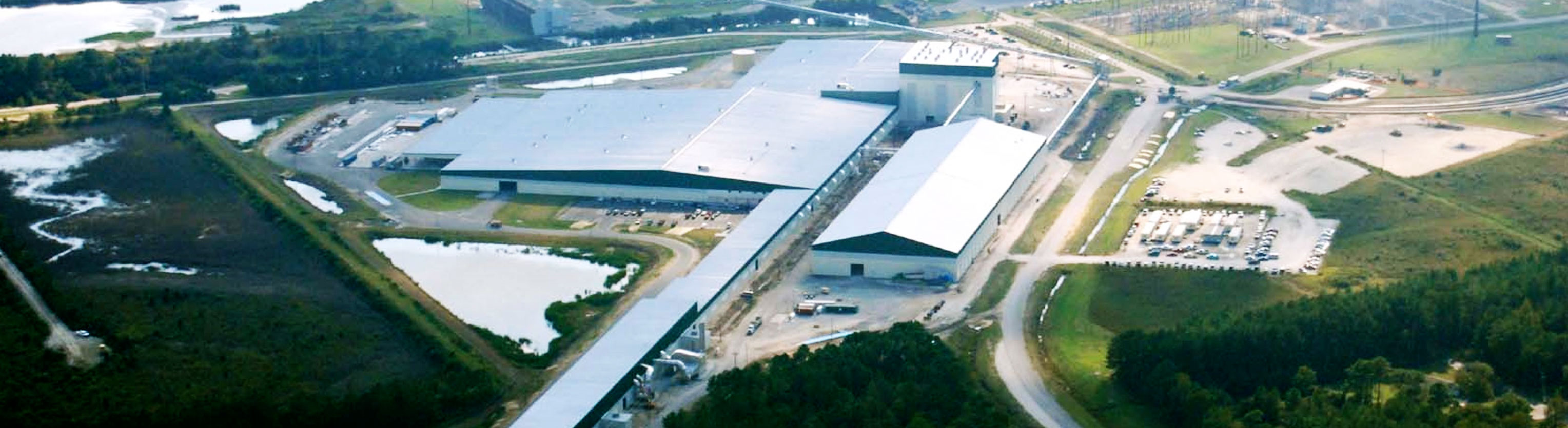
A plant born in 1927 gets another chapter
The Laramie project brings that thinking back to an existing site. Its announced expansion would take annual cement manufacturing capacity from 800,000 tons to approximately 1.2 million tons. A new distribution facility in northern Colorado forms part of the investment. Production and delivery appear in the same plan because both affect how much value additional capacity can create.
The proposed operating changes are specific. A modern kiln line would use alternative fuels and natural gas in place of solid fuels, simplify maintenance, and improve efficiency. Eagle projected manufacturing cost savings of approximately 25% and a reduction in carbon intensity of nearly 20%. These are project expectations, with the eventual performance still dependent on execution.
For Haack, the project puts the engineer’s and the CEO’s responsibilities beside one another. The equipment needs to work. The capital needs to earn its place. Customers need supply while a plant is being changed. The age of the original facility adds perspective: an industrial business can keep an old location relevant by repeatedly changing what happens inside it.
The wall behind the wallpaper
A second major investment sits in Duke, Oklahoma. In May 2025, Eagle’s American Gypsum business announced a roughly $330 million modernization and expansion there. The plant serves customers across the South and Sunbelt and sits near long-lived natural gypsum reserves. The planned increase is 300 million square feet of annual wallboard capacity, bringing the total to approximately 1.5 billion.
That unit of measurement is a reminder of the product’s everyday destination. Wallboard disappears into rooms. Before it does, its manufacturer has to make decisions about mineral supply, processing, energy, and transport. A building material can be visually unremarkable and operationally demanding. The wallpaper gets the compliments; the factory gets the capital budget.
Haack’s investments unfold against construction demand that does not arrive on command. Residential activity affects wallboard, while public infrastructure and industrial projects help drive cement consumption. In 2024, he pointed to those different demand sources when discussing Eagle’s outlook. They make the business a collection of related markets with different rhythms.
Eagle’s operating strategy is to use fewer resources to produce familiar commodities and invest across cycles. That approach puts pressure on decisions made before demand improves. A plant project takes years; customers can change their orders much faster. Haack’s task is to connect the long preparation with the shorter selling season.
A new ingredient, a familiar problem
His work also reaches beyond Eagle’s established production methods. In December 2023, the company entered exclusive agreements with Terra CO2 for potential commercial plants producing supplementary cementitious material in three geographical areas, including greater Denver. Each fully developed plant was described as having potential annual production of about 240,000 tons.
The connection addresses a supply problem as well as carbon intensity. Haack pointed to declining availability of materials such as fly ash and the need for other supplementary products. In February 2025, Eagle joined Just Climate and GenZero in co-leading an $82 million Terra funding round. He also serves on Terra’s board.
The interesting continuity is the commercial question. A different ingredient still has to become a reliable product that customers can use. Technology agreements, financing, and operating plants represent different stages of that journey. Haack’s involvement puts an established manufacturer beside a developing materials business, where progress must eventually be demonstrated at production scale.
The next room in the house
In August 2026, Champion Homes appointed Haack as an independent director and placed him on its compensation committee. The homebuilder makes manufactured and modular housing. Its invitation takes his manufacturing experience further along the chain, from materials used in construction to the factories producing homes themselves.
Haack said Champion “serves an important housing need.” The connection is straightforward: operating multiple facilities, controlling costs, and coordinating production are relevant on both sides of that board table. The new role adds another setting to a career that has crossed industries while remaining close to industrial operations.
The numbers still provide a demanding check on the narrative. For the quarter ended June 30, 2026, Eagle reported revenue of $651 million, up 3%, while net earnings fell 17% to $102.1 million. Higher sales and higher profits do not necessarily travel together. The distinction keeps a manufacturing biography grounded in the performance of the business.
Haack’s story now runs from Norwegian drilling operations to American quarries, kilns, and wallboard plants. The Laramie facility offers the clearest final image: a location established almost a century ago, receiving another substantial investment in its future. The CEO has a quarterly calendar. The plant has a much longer one. His work is to make the two useful to each other.