Will Schwartz joined UFP in 1998 with the sort of plan that looks sensible on a graduate’s resume: get a start, gain some experience, move along. The moving-along part took an unexpected form. He became an account manager, a sales manager, a regional sales director, a plant operator, a purchasing executive and, eventually, the chief executive. The employer stayed the same. Almost everything about the assignment changed.
By the time he took over on December 29, 2024, Schwartz had spent 26 years learning the business from several directions. A sale looks different from a factory floor. A factory looks different from a purchasing desk. From the CEO’s chair, all three come with a return requirement. His career is an unusually practical education in how those perspectives fit together.
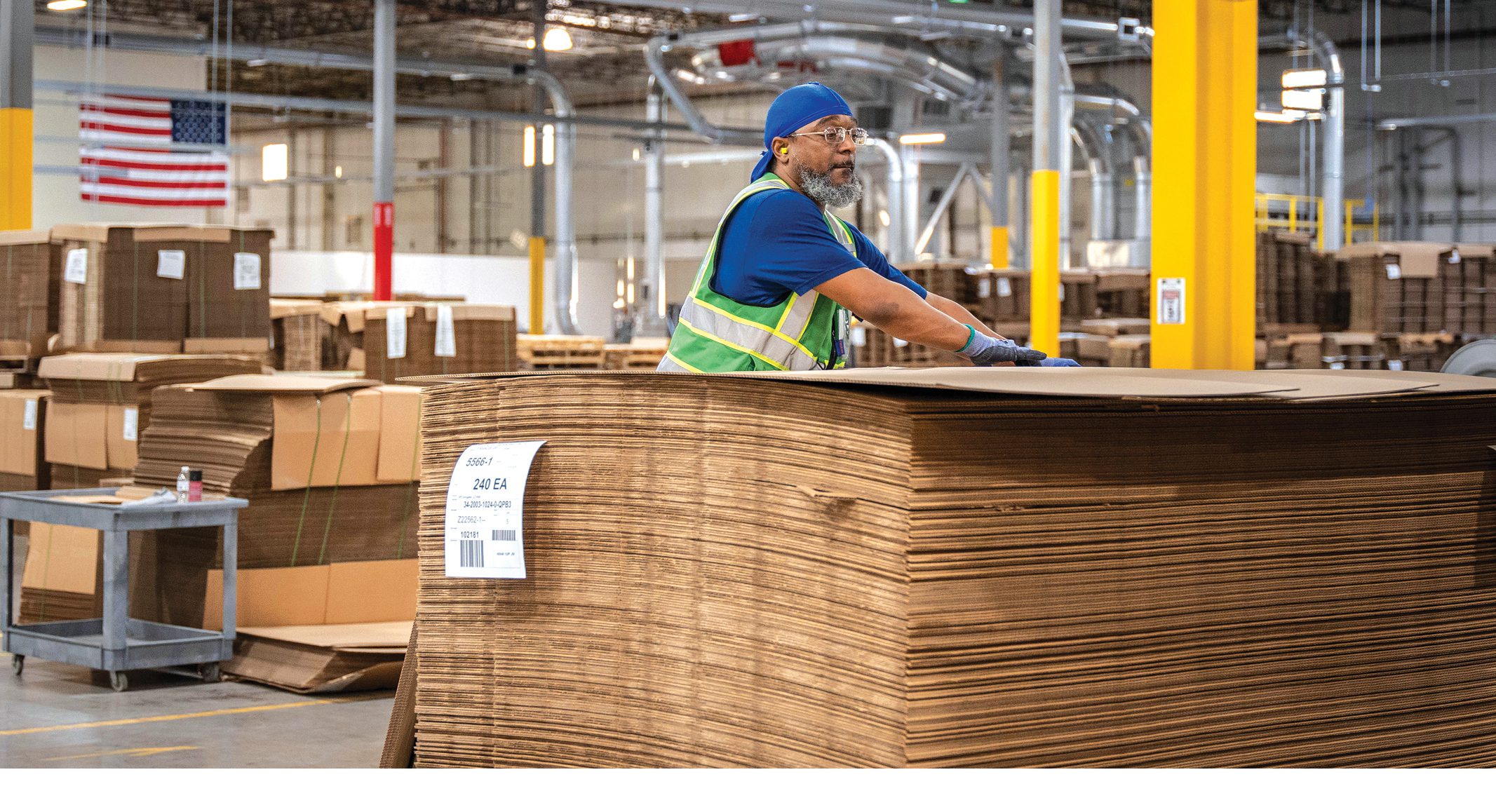
UFP is headquartered in Grand Rapids, Michigan, and makes products for retail, packaging and construction customers around the world. Its businesses put materials into homes and gardens, protect goods in transit and supply building components. These are physical products with physical inconveniences: they need space, machinery, handling and transport. A persuasive presentation cannot make a truck arrive.
The first promotion was out of the script
“I’m a sales guy at heart,” Schwartz has said. The early record supports him. He moved through customer-facing jobs and earned membership in UFP’s CEO Club, which recognizes its leading salespeople. Long before he held the actual title, he had collected the club version. Corporate foreshadowing is rarely so obliging.
What makes the progression interesting is the move into operations. Schwartz served as general manager of operations for several plants before becoming an operations vice president in 2014. Those responsibilities widened the question from winning an order to fulfilling it. The customer’s enthusiasm has to survive contact with production schedules, material availability and cost.
In 2020, he became executive vice president of purchasing. In 2022, he became executive vice president of operations services. That sequence put him in roles where the less visible parts of manufacturing become central. Purchasing and transportation may lack the glamour of a product launch. They are quite capable of deciding whether the launch makes money.
When UFP announced his next promotion in September 2022, then-CEO Matt Missad credited Schwartz with helping manage the supply chain through the pandemic. Missad also described a leader who improved the people working with him. It was a recommendation grounded in assignments already completed, including the difficult business of keeping materials moving when ordinary arrangements had stopped being ordinary.
A bigger desk, familiar products
On January 1, 2023, Schwartz became president of UFP Retail Solutions. The portfolio included ProWood treated lumber, Deckorators decking, UFP-Edge siding and trim, and Outdoor Essentials fence and garden products. Here was a different kind of operating problem: several brands, related customers and a need to make the products recognizable as well as available.
He led a restructuring of the retail business, strengthened its marketing and sales functions and expanded the reach of its brands. Those were the accomplishments UFP highlighted when it announced his selection as CEO in August 2024. His purchasing and transportation work also featured in the announcement. The case for promotion rested on both selling and delivering.
The succession was planned. Missad, who had led UFP for more than 13 years, moved to executive chairman. CFO Mike Cole added responsibility as president of corporate services. Schwartz inherited a business with experienced colleagues remaining close by, alongside a new obligation to decide where the whole enterprise should go.
There was a long history behind the handover. UFP began in 1955 as Universal Forest Products, supplying the factory-built housing market. It went public in 1993. In 2020 it adopted the UFP Industries name and reorganized around markets rather than geography. Schwartz arrived in an earlier version of the company and rose through the changes.
Growth, with a calculator nearby
Schwartz’s public ambitions are direct. “And I like to win. I like to grow,” he has said. He also emphasizes patience and investment discipline. The combination matters in a company able to build capacity, buy businesses and introduce products. Having money to spend supplies options. It does not rank them.
In his first earnings call as CEO, in February 2025, he described a push for profitable growth, continued acquisitions, automation and product development. He also discussed closing underperforming operations and removing costs. Expansion and housekeeping arrived in the same conversation. A manufacturing company needs room for both on the agenda.
“Meeting our internal return on capital targets drives all of our business decisions.”
Will Schwartz, February 2025 earnings call
The emphasis on products with added value builds on work that predates his appointment. UFP launched its Innovation Accelerator in 2022 and established a venture fund in 2023. Its investor presentation described opportunities ranging from automation to new uses for manufacturing residuals. Schwartz’s task includes choosing which existing efforts deserve more resources and which can become meaningful businesses.
The leadership around product development changed, too. In 2025, UFP brought in Brian Floyd as innovations director after a 20-year product-design and innovation career at Procter & Gamble. That appointment added outside experience to an organization that emphasizes internal advancement. Schwartz’s agenda gives both kinds of knowledge something concrete to do: create products customers will buy at worthwhile returns.
The strategy acquires an address
In March 2025, UFP announced a $77 million investment in a 30-acre site in Lackawanna, near Buffalo, New York. The planned Deckorators facility included roughly 240,000 square feet of manufacturing and warehouse space. Its stated purpose included doubling production capacity for Surestone composite decking. The project belonged to a broader, five-year, $250 million plan for the product line.
Those details give scale to an otherwise abstract phrase such as product-led growth. Capacity needs an address, equipment and people. The announcement anticipated around 60 jobs and described a regional expansion. It was a commitment to make more of a particular product in a particular place, with the expectation that customers would justify the investment.
Deckorators investment in Lackawanna, New York
In April 2026, UFP added another route to capacity by acquiring MoistureShield decking operating assets from Oldcastle APG. The deal included manufacturing assets, inventory, certain brands and CoolDeck technology. Schwartz explained the attraction in operating terms: remove constraints, add capacity and advance growth plans sooner than building new facilities would allow.
The distinction between expanding a plant and buying assets is consequential. Both require capital. They arrive with different schedules and integration work. UFP said the acquisition met its internal return targets. That claim turns the transaction into a future operating test: the added resources must produce the sales and returns used to justify buying them.
Someone has to make the handovers work
Schwartz also began shaping the organization around that work. In April 2026, he announced a new executive vice president of operations integration role for Patrick Benton, effective July 1. Benton brought experience across UFP’s three core segments. His assignment was to improve the integration of acquisitions and strengthen the performance of existing operations.
Mike Ellerbrook was selected to succeed Benton as president of UFP Construction. Earlier, Landon Tarvin had succeeded Schwartz at Retail Solutions. Tarvin had joined UFP as an account manager in 2002 and subsequently worked in sales, plant management and brand leadership. There is a recognizable family resemblance between that route and Schwartz’s own progression.
Schwartz praised Tarvin’s strategic judgment and ability to develop talent when announcing the retail succession. The company’s stated commitment to promoting internally becomes more substantial when attached to these specific handovers. One person’s advancement creates another person’s assignment. Keeping that chain working is now part of the job Schwartz holds.
The freight bill has an opinion
By July 2026, the results supplied a less comfortable measure of progress. Second-quarter sales reached $1.88 billion, about 3 percent above the previous year. Diluted earnings per share fell from $1.70 to $1.48. Higher freight costs weighed on earnings, while residential construction remained weak. Selling more had not made every line of the business improve.
Schwartz’s response kept the short and long term together. He pointed to operating improvements, a continuing cost-reduction program and investment in core businesses. Surestone sales increased 37 percent from a year earlier, offering evidence of demand in one of the areas receiving capital. The wider picture remained mixed. A promising product cannot cancel a company’s freight invoice.
That is the assignment now: choose where to expand, decide what to buy, develop the people who will run it and keep delivery costs from consuming the reward. Schwartz has occupied several of the jobs involved. His years at UFP gave him a long view of their connections. Being CEO makes him accountable for how well those connections work.
The next public checkpoint is already scheduled. UFP plans to release third-quarter results on October 28, 2026, followed the next morning by a call hosted by Schwartz and Cole. The calendar gives the strategy another date with the arithmetic.
His early expectation of a brief stop at UFP has become a career spent moving through it. The trainee learned to sell. The operator learned what a sale demanded. The purchasing executive learned what it cost. Now the whole company is his assignment, and the next lesson will arrive with the next set of results.