The awkward moment in leaving a large wealth management firm comes after the declaration of independence. Someone still has to open the accounts. Someone has to reconcile the data, arrange compliance support, choose the software and tell clients where their money will be held. The advisor has acquired freedom and, almost simultaneously, a very long shopping list.
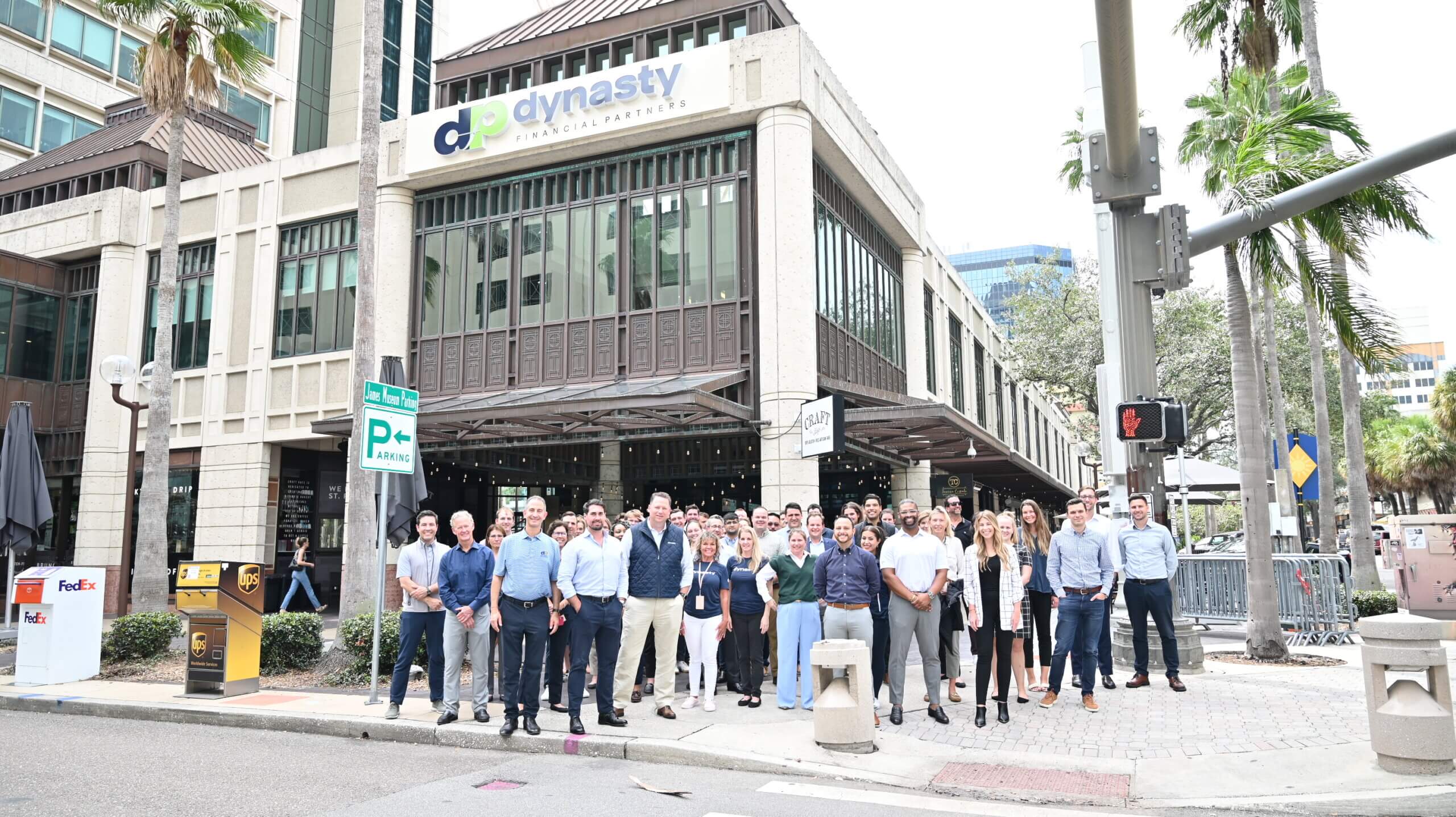
Dynasty Financial Partners has made that list its business. Founded in 2010 by Shirl Penney, Edward Swenson and Todd Thomson, it supplies independent advisory firms with much of the machinery that a large institution normally keeps backstage. The interesting part is the allocation of control: the advisor can own the firm while buying substantial parts of its operating capacity from someone else.
- The customer: advisors launching, joining or growing independent firms.
- The purchase: technology, operations, investment tools and access to capital.
- The bargain: retain business control; pay for shared infrastructure.
01 / The business behind the advisor
Dynasty’s customers include teams leaving banks and brokerages, along with established registered investment advisors, or RIAs. Their clients are often wealthy households with complicated financial lives. Dynasty works behind the advisory business, supplying services that range from transition planning and marketing to investment operations and finance.
Consider the difference between advising a family and running the firm that advises it. One requires judgment about the family’s circumstances. The other requires client onboarding, reporting, billing, systems and management. Dynasty’s proposition is that an advisor should not have to construct every one of those functions before becoming a business owner.
Its network includes Americana Partners, Clear Trail Advisors, Procyon and DayMark Wealth Partners. In October 2026, DayMark announced a new Florida office with a former Morgan Stanley team bringing $250 million in client assets. The platform can support firms that keep adding teams after launch.
02 / Three corners, fewer crossed wires
Penney previously held leadership roles at Citi Smith Barney. Dynasty’s answer to the institutional model is what it calls the Triangulation of Advice: separate the advisor’s counsel from the custody of assets, and separate both from investment product manufacturing.
Picture three businesses doing three jobs. The advisor recommends; a custodian safeguards assets; investment providers supply products. Dynasty names Schwab, Fidelity and BNY Mellon Pershing among the custodians used by network advisors. The structure aims to reduce conflicts associated with distributing a parent institution’s products.
Separate roles. A clearer view of who does what.
Separation does not make every commercial incentive disappear. Dynasty has institutional shareholders, investment offerings and minority stakes in some network firms. An advisor evaluating the platform still needs to understand fees, ownership provisions and the relationships behind recommendations.
03 / The invoice behind independence
Dynasty earns money from platform and investment services, alongside financing and transaction advice. Historical reporting described Core Services fees tied to assets, with rates declining as firms grew. That arrangement connects the supplier’s economics to the scale of the businesses using it.
The investment layer has its own costs. SageSpring’s March 2025 disclosure described applicable Dynasty platform fees of up to 0.30% annually, additional to SageSpring’s investment management fee and any independent manager fees. At 0.30%, the arithmetic is $3,000 a year on $1 million. That is one network firm’s disclosed range, not a universal Dynasty quote.
Program selection matters. Compare the complete arrangement.
The more useful question is what those expenses replace: hiring, systems, vendor coordination and the advisor’s own administrative time. A firm already equipped to handle those functions has a different calculation from a team starting with client relationships and an empty office.
04 / The IPO that did not happen

In January 2022, Dynasty filed to go public. Its proposed Nasdaq symbol was DSTY. By December, it had changed course, bringing in Abry Partners and Charles Schwab as minority investors and withdrawing the offering.
Penney explained the turn by pointing to the public markets. Some network firms also exchanged minority equity interests with Dynasty. The financing decision created a closer ownership relationship between the platform and participating customers.
“After evaluating the state of the public markets”Shirl Penney, explaining the December 2022 funding decision
The IPO plan was the visible reversal; it did not end the business’s access to capital. BlackRock and J.P. Morgan Asset Management joined a 2024 round. Dynasty announced a $125 million credit facility in September 2025, undrawn at the time, followed by another minority raise in February 2026 that added Fortress. Borrowing capacity and equity funding are different instruments.
05 / After launch comes the next transaction
An independent firm eventually confronts questions larger than account opening. Should it acquire a neighboring practice? Bring in a shareholder? Finance a founder’s retirement? Dynasty launched its investment bank in 2023 to advise wealth and asset managers inside and outside its network.
The bank advised on 15 M&A and capital-raising deals in 2024. In June 2026, Dynasty announced an upcoming acquisition of Optima Group to expand its consulting business, adding strategy, branding and marketing expertise. Its offering increasingly follows the business owner through successive decisions.
Community is another part of that design. Dynasty runs a year-long Advisor to CEO program, investment gatherings and a Women’s Network. The names reveal the underlying transition: a capable advisor suddenly has employees, budgets and a company to lead.
06 / The next chore to disappear
In September 2026, Dynasty announced Claude-powered capabilities to query an advisor’s client book and generate work for review. Book-Level AI Chat was in early release, with wider rollout planned for the fourth quarter. A Virtual Chief of Staff was scheduled for early 2027.
Those plans extend the same operating idea. Dynasty competes with supported-independence providers such as Sanctuary Wealth and LPL’s Strategic Wealth Services, as well as the option of assembling vendors directly. Its case rests on the breadth of work available through one relationship.
The lesson travels beyond finance: preserve control of the relationships that make a business valuable, then examine which repetitive functions can be shared. The arrangement makes less sense when the owner dislikes standardized systems, already has efficient operations or would pay more than the outsourced work saves. Independence still requires someone to make that judgment.