A customer gives your company a bad score. The dashboard turns an inconvenient color. Somewhere, a presentation acquires another chart. Dmitry Lepikhov has a more direct suggestion: call the customer. For the chief executive of a company that sells business phone software, this is a pleasingly literal approach to management. The telephone, it turns out, can still be used to ask a question.
That recommendation sits inside a larger story about the way Lepikhov runs MightyCall. He took over in 2015. MightyCall’s growth under his leadership exceeded 500 percent, and the company earned a place on the Inc. 5000. Yet the details that make him interesting are smaller than a growth figure: a complaint followed up, a workday discussed, a complicated product made easier to operate.
The customer at the center of this story is a small business with work to do and limited time to learn a new system. A phone service has to accommodate that reality. It is an unusually concrete brief for a software executive. However elaborate the technology becomes, somebody still has to answer.
Away from work, he is a husband and father of two. He describes a belief in championing the people around him. That is an easy sentiment to print. The more revealing material is what he asks leaders to do with it. His essays repeatedly return to choices that can be observed: whether staff can choose a workplace, whether a manager makes expectations clear, whether a complaint gets a response. They give an otherwise broad statement a set of practical tests. The people around a chief executive have good opportunities to mark the results.
The customer who spoils the average
In September 2022, Lepikhov described how he uses Net Promoter Score, the familiar customer recommendation survey. His advice was to add an open question, listen to the explanation, and contact the people who gave the lowest marks. He said he had been tracking the measure since 2019. The result belonged in product decisions and company discussions, rather than being filed away after the survey.
This is a revealing choice of audience. Happy customers make agreeable company. An unhappy one can explain exactly where the machinery catches. Lepikhov treats those explanations as useful material for the next version of a product. There is a modesty in the method: the executive’s plan must make room for an objection from someone using the thing.
“The customer satisfaction metrics are our yardstick for companywide assessment.”
Dmitri Lepikhov, 2022
A memory for the next call
In November 2019, MightyCall introduced Contact Book PLUS. Users could import and export contacts and keep a journal of customer interactions. Recordings, transcripts, and staff notes could sit together. The feature was available on the web and in the mobile app, and the announcement said existing customers would receive it without an extra charge.
That sounds like a minor piece of product housekeeping until you consider the ordinary business problem it addresses. A conversation finishes; another person handles the next call. Without a shared record, the customer gets to repeat the story. A journal gives the business a memory that travels beyond the person who happened to pick up.
Lepikhov described the ambition as bringing software associated with larger enterprises within reach of solopreneurs and small companies. The practical question was affordability as well as capability. A feature that a small team cannot justify buying will contribute very little to its working day. The price belongs in the design conversation.
The lion had to fit on a phone
Even a corporate mascot can offer a clue. When MightyCall refreshed its lion logo, Lepikhov wanted to keep the animal while making the mark recognizable on mobile screens. The lion’s associations with speed and strength mattered to the team and customers. So did its ability to work as a small app icon. A lion is allowed a mane; an icon has a rather stricter allowance.
Head of UX design Nataly Manuylova worked on the redesign, translating the company’s ideas into simpler, more dynamic features. Lepikhov’s stated brief paired powerful technology with a service people could use easily. It is the same tension visible in the contact journal: plenty happening underneath, less effort required from the person at the screen.
A boss with an opinion about leaving time
His writing about management takes a similarly practical turn. In 2021, he proposed that managers and employees agree on what a good working day looks like. That meant discussing progress and availability, with expectations that could survive an ordinary week. He also advocated a defined vacation allowance of at least 20 days and encouraged leaders to use the flexibility they offered.
His example is wonderfully familiar: an executive stays late, and everyone else starts calculating whether leaving will look bad. The official policy can say one thing while the room communicates another. A ping-pong table does not resolve the discrepancy. It merely gives the furniture something cheerful to say.
These are published recommendations, rather than a claim that every MightyCall working day follows a perfect script. They do show the obligations Lepikhov assigns to a boss. The person who sets expectations also supplies the example. Employees are likely to notice both, especially when the examples occur around the end of the day.
Culture without compulsory pizza
Later in 2021, he wrote about a team that had grown from just under 50 people to 65 since spring 2020. New colleagues were collaborating through video calls and Discord. His response was to preserve remote work and introduce choice: people could work at home, in the office, or divide their time between them.
He put particular emphasis on hiring capable people who shared ideas about how colleagues should work together. Compulsory afterwork pizza received an unfavorable review. That detail gives his argument some personality. A company cannot assume that ordering enough slices will settle the more awkward questions about belonging and trust.
The connection to his product is hard to miss. MightyCall sells software that lets business communication move beyond a fixed piece of office equipment. His management argument allows a similar mobility for employees. Both depend on making coordination work when people are not necessarily sitting in the same room.
The next conversation was in Tashkent
By December 2024, MightyCall had established an engineering hub in Tashkent’s IT Park. Lepikhov identified three reasons for the decision: infrastructure ready for use, engineering talent, and tax incentives. He also praised the IT Park management team and the process of getting the operation established.
His interest extended to Uzbekistan’s potential as a regional technology center. He spoke about cross-border collaboration and the opportunity presented by its workforce. The expansion gives a geographical dimension to his management ideas: a business serving small teams can draw on talent across borders to build its tools.
There is something refreshingly specific about the explanation. Buildings, people, and operating conditions can be examined. They are the elements an engineering operation has to live with after the announcement is over. A new address becomes useful when colleagues can get on with the work there.
- 2019
- A shared contact journal for small teams.
- 2021
- A published case for choosing where to work.
- 2024
- An engineering hub in Tashkent’s IT Park.
What happens beneath a clear call
In March 2025, MightyCall announced an infrastructure update built around synchronized servers and redundancy. The company described dedicated physical servers it owned, with a 60 percent performance reserve to accommodate increases in call activity. Lepikhov presented the release as a foundation for the product’s reliability.
These are the company’s engineering claims, and the purpose is straightforward: keep conversations connected as demand changes. For a customer, the infrastructure may be least noticeable when it is doing its job. There is no particular reason for someone making a business call to admire the server arrangement halfway through a sentence.
This part of the story places a useful demand on the promise of simplicity. A clean interface still needs machinery behind it. Making a product easier to use transfers work to the people building and maintaining it. The executive’s job includes paying attention to the parts customers would prefer never to think about.
The ranking and the repeated detail
The external recognition has accumulated. MightyCall was a 2024 CO-100 Tech Innovators honoree and received an Inc. Power Partner award that year. Inc.’s 2026 Pacific regional profile lists the company at No. 19, with 449 percent two-year growth. Those are company distinctions during Lepikhov’s leadership, with their own dates and measures.
In August 2026, MightyCall announced a No. 588 position on the Inc. 5000. Lepikhov’s response emphasized the team and the cumulative effect of attending to details. He described customers with modest resources and considerable dependence on a phone line. The company’s ambition, in that telling, is measured through the businesses relying on it.
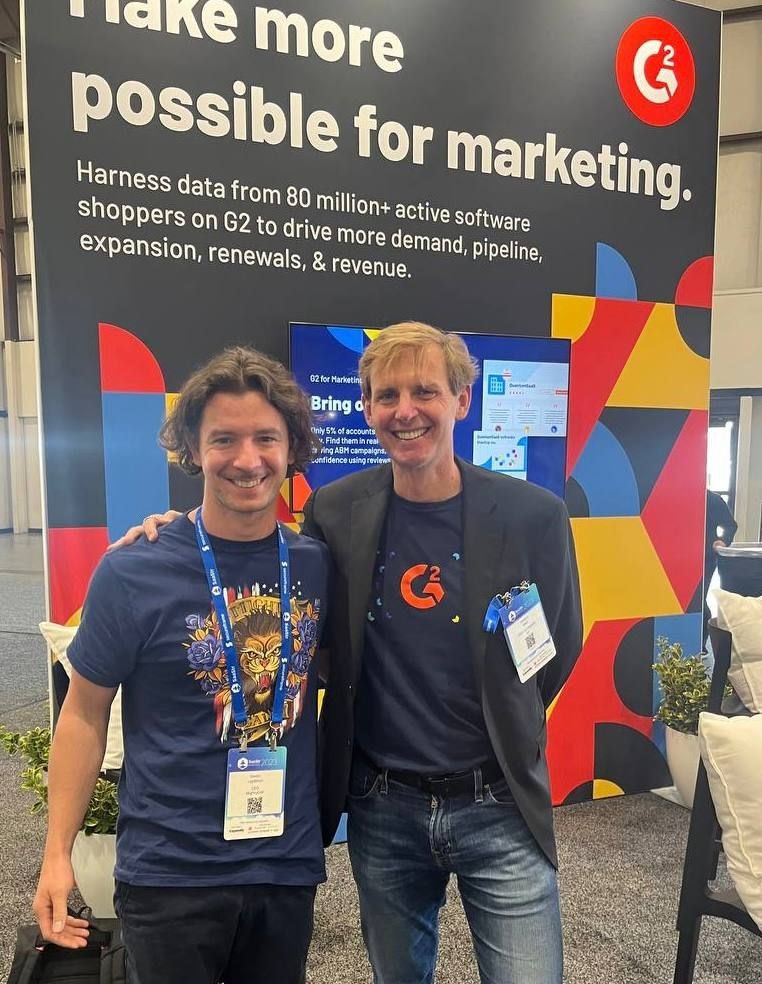
A similar emphasis appeared in his takeaway from SaaStr 2024. He welcomed the attention being given to customer care, retention, and the relationships already established. The attraction of another customer is obvious. Keeping a conversation going with an existing one requires a different kind of attention.
That is where the portrait of Lepikhov comes into focus. He writes about the working arrangements behind a team, the explanation behind a survey answer, and the infrastructure behind a call. Each gives him something specific to change. Then comes another conversation, with someone who will have an opinion about whether it worked.