Birdeye vs tawk.to and What Free Live Chat Really Costs
Birdeye bundles reviews, listings and messaging into one paid platform; tawk.to gives live chat away and charges only for the extras. Here's how to choose without paying for the wrong thing.
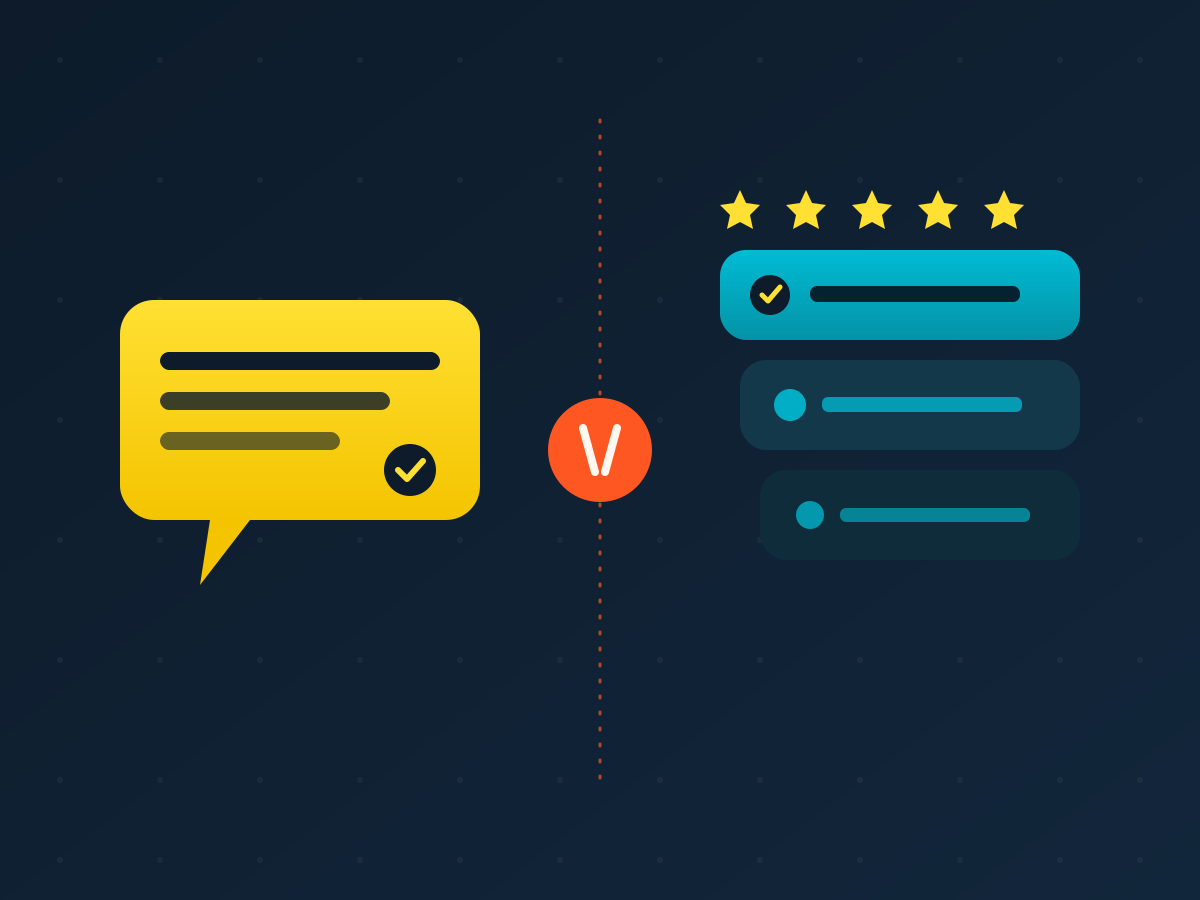
Type "best live chat software" into a search bar and you get a wall of logos that all promise the same thing: talk to your customers, sell more, churn less. Two of those logos, Birdeye and tawk.to, are worth pulling out of the pile - not because they do the same job better than each other, but because they answer the question in opposite directions. One is free and wants to stay in the corner of your website. The other costs real money and wants to run your reputation. Picking between them is less about features and more about which problem you actually have.
Here is the thing most comparison posts skip. These are not two versions of the same product. tawk.to is a free live chat tool. Birdeye is a reputation and customer-experience platform that happens to include messaging. Comparing them head to head is a bit like comparing a doorbell to a home security system. Both involve people at your door. Only one of them files a report, calls the neighbors and keeps a log.
01 / The free oneWhat tawk.to actually is
tawk.to launched in 2012 out of Las Vegas with a mission that sounds like a mission statement but turns out to be the whole business model: remove cost as a barrier to talking to your customers. The core product - a live chat widget, real-time visitor monitoring, ticketing, a knowledge base, a basic contacts CRM, and mobile and desktop apps - is free. Not free-trial free. Not free-until-you-hit-100-contacts free. Free forever, with unlimited agents, unlimited websites and unlimited chat history.
That last part is the part people don't believe. Most "free" plans are a hallway with a paywall at the end. tawk.to's free tier is a genuinely working room. It's how the company reached over 2.2 million subscribers and, by its own count, more than three billion people touched every month - all without taking venture capital.
Bootstrapping matters here in a way that's easy to skim past. Because tawk.to never sold a chunk of itself to investors, it never inherited the pressure to squeeze every user for a subscription. It could afford to let the free tier stay generous, because the free tier is the marketing. Every widget in the corner of a small business site is a small billboard. Multiply that by two million sites and you have a distribution engine that most funded competitors would pay millions to rent.
So how does a free product survive? Add-ons, sold one at a time to the people who need them. Want to remove the "Powered by tawk.to" badge from your widget? That's a paid property. Want AI to draft replies? AI Assist is metered by message volume. Want video, voice and screen sharing? Another line item. Don't want to staff the chat at all? tawk.to will rent you outsourced live agents for roughly a dollar an hour. The genius is that the thing people expect to pay for is free, and the money comes from the things they didn't see coming.
02 / The paid oneWhat Birdeye is really selling
Birdeye also started in 2012, out of Palo Alto, founded by brothers Naveen and Neeraj Gupta - alumni of Google, Yahoo, Amazon and Cisco. Its early cap table read like a Silicon Valley reunion: Salesforce's Marc Benioff, Yahoo's Jerry Yang and Google AdSense's Gokul Rajaram all wrote checks. The company went on to raise roughly $93 million and crossed $100 million in annual recurring revenue by 2023.
You don't get to $100M ARR selling a chat widget. Birdeye sells reputation. The platform pulls together the jobs a local or multi-location business has to do to look good online: collect and manage Google and Facebook reviews, keep business listings accurate everywhere, run CSAT and NPS surveys, and route email, SMS and web chat into a single unified inbox. Chat is one tile in that grid, not the whole board. Reviewers consistently single out Birdeye's onboarding and account management - which is another way of saying you're buying a relationship, not just a login.
Think about who that's built for. A dentist with ten offices doesn't lie awake worrying about a chat widget. They worry that a one-star review from a bad Tuesday is now the first thing a prospective patient reads, and that the address listed for their newest location is wrong on three different maps. That's not a support problem, it's a reputation problem, and it plays out across dozens of channels the business owner can't watch at once. Birdeye's whole reason to exist is to put that sprawl on one screen and give you a person to call when it breaks. The price reflects the promise.
Free, focused
- Live chat widget + visitor monitoring
- Unlimited agents, sites, history
- Ticketing + knowledge base
- Bootstrapped, no VC
- Pay only for add-ons
Paid, all-in-one
- Reviews + listings management
- CSAT / NPS surveys
- Unified email, SMS & chat inbox
- ~$93M raised, $100M+ ARR
- Quote-based contract pricing
03 / The real costWhere the money actually hides
"Free" and "expensive" are the wrong axes. The useful question is where the cost hides. With tawk.to, the sticker is zero, and the cost surfaces later as small, optional decisions - the branding you eventually want gone, the AI messages you eventually want more of. You can run for years and never pay a cent, or you can quietly assemble a $100-a-month stack of add-ons without noticing. With Birdeye, the cost is loud and upfront: a contract, quoted by your number of locations and modules, with no public free tier to ease into.
There's a second, quieter cost that neither pricing page lists: the switch. The most expensive software is rarely the one with the highest sticker. It's the one you rip out in eighteen months because you bought for today instead of for the shape you're growing into. A solo shop that buys Birdeye is renting a truck to carry groceries. A forty-location dental group leaning on free chat while its Google rating slides is saving forty dollars and losing patients.
04 / The decisionHow to actually choose
Skip the feature grid. It will tell you both tools have a "unified inbox" and leave you no wiser. Ask instead what job is on fire. If the fire is "visitors land on my site and leave without talking to me," tawk.to puts it out today for nothing. If the fire is "my Google reviews are thin, my listings are wrong across the web, and I can't see my customer experience across ten locations," that's a reputation problem, and a free chat widget doesn't touch it. That's Birdeye's job.
Pick tawk.to if: you want to start today, you mostly need website chat, and you're comfortable paying only when a specific add-on earns its keep.
Pick Birdeye if: reviews, listings and multi-location reputation are the actual priority, and you want one vendor and one account manager owning the whole stack.
Run both if: you use tawk.to for free front-line chat and Birdeye for reputation - just decide which system owns the customer conversation of record, or you'll end up with two inboxes and one headache.
The most interesting part of this matchup isn't which tool wins. It's that two teams looked at the identical problem - help businesses talk to their customers - and built opposite companies. One gave away the product and monetized the edges. The other charged upfront and monetized the outcome. Both work. If you're a founder pricing your own thing, that contrast is worth more than any feature list: the number on the tag is a strategy, not an accident. tawk.to's free tier is distribution disguised as generosity. Birdeye's contract is a promise that someone will pick up the phone.
For everyone else - the operators who just need to choose - the shortcut holds. Name the fire first. The software picks itself.
Go deeper
Questions people actually ask
Is tawk.to really free?
The core product is free forever with unlimited agents, websites and chat history. You pay only for optional add-ons: removing the tawk.to branding, AI Assist, video/voice/screensharing, or hiring outsourced agents.
What does Birdeye do that tawk.to doesn't?
Birdeye is a full reputation and experience platform - collecting and managing Google and Facebook reviews, syncing business listings, running CSAT/NPS surveys, and unifying email, SMS and chat in one inbox. tawk.to focuses on live chat, ticketing and a basic knowledge base.
Which is better for a small business?
If you mainly need to chat with website visitors and want to start today at no cost, tawk.to fits. If reviews, local listings and multi-channel reputation are the priority - common for multi-location or local service brands - Birdeye's paid platform is built for that.
How much does Birdeye cost?
Birdeye doesn't publish a free tier; pricing is quote-based by contract and scales with locations and modules. It's positioned as a premium, all-in-one investment rather than a per-seat chat tool.
Can I use both together?
Yes. Some businesses run tawk.to for free front-line website chat and use Birdeye for reviews, listings and reputation. The main risk is duplicated inboxes and data in two systems, so decide which tool owns the customer conversation of record.