The chat box that was never supposed to grow up
The easiest & fastest way to add live chat to your website. FREE for the first 30 days!
In 2012, a software company in Scottsdale, Arizona did something most companies only talk about. It told its engineers to stop working. For thirty days, everyone at Axosoft was free to abandon the roadmap and build whatever they wanted, as long as they finished it. One of the things that came out of that month was a chat box. It did not look like the start of anything. Today that chat box has carried more than 39 million conversations.
The chat box is Pure Chat, and its whole story is a quiet argument against the way software companies are supposed to behave. It did not raise a fortune. It did not chase the biggest logos. It stayed small on purpose, kept its price low, and made itself easy enough to install that a florist or a plumber or a two-person law firm could have it running on their website before lunch. That turned out to be a durable place to stand.
01 / What it isA widget, and a promise to get out of the way
Pure Chat is live chat software. You drop a snippet of code onto your website, a small chat window appears in the corner, and when a visitor types a question, someone on your team answers it in real time. That is the entire pitch, and the company has resisted every temptation to make it more complicated than that. Sign up, install the code, start chatting in minutes.
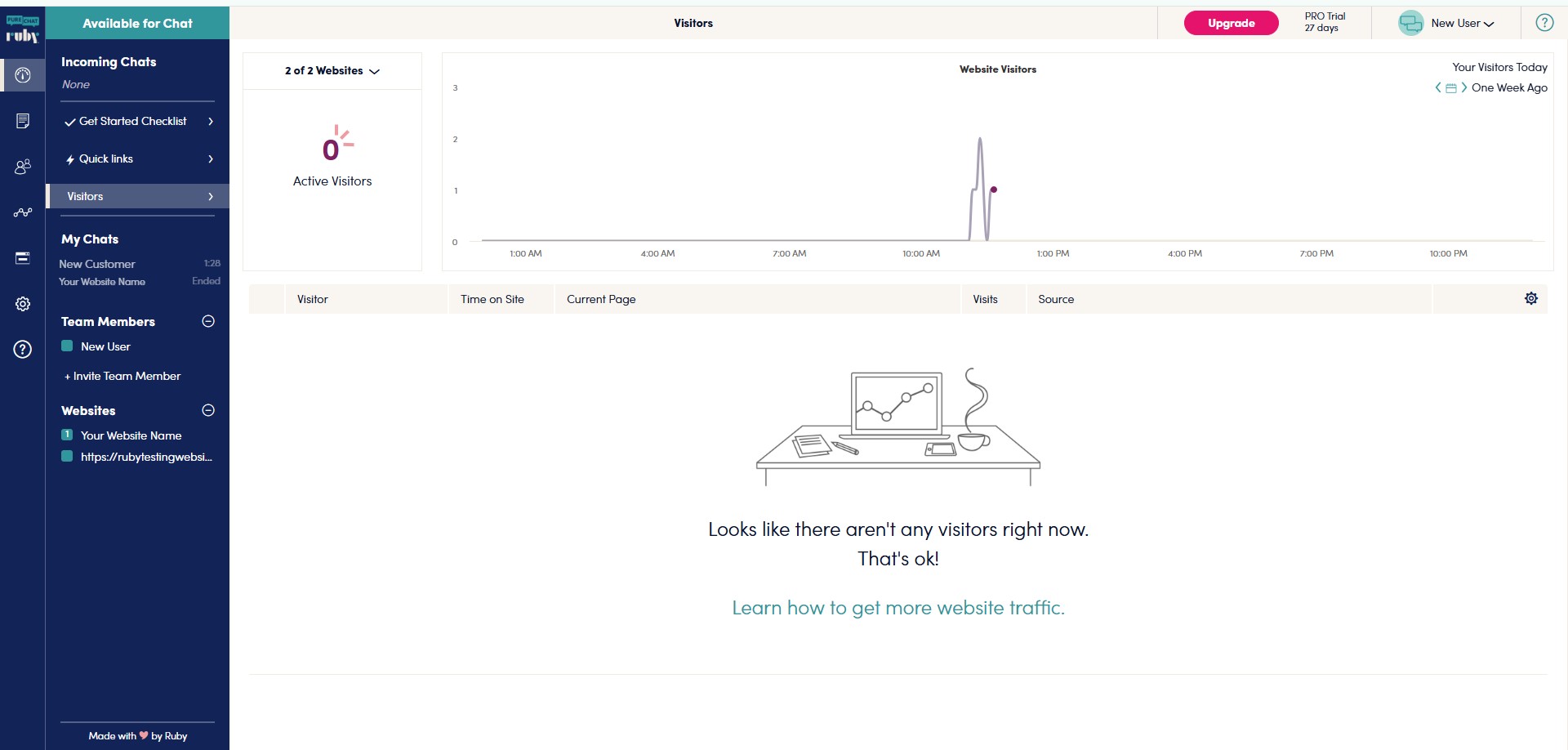
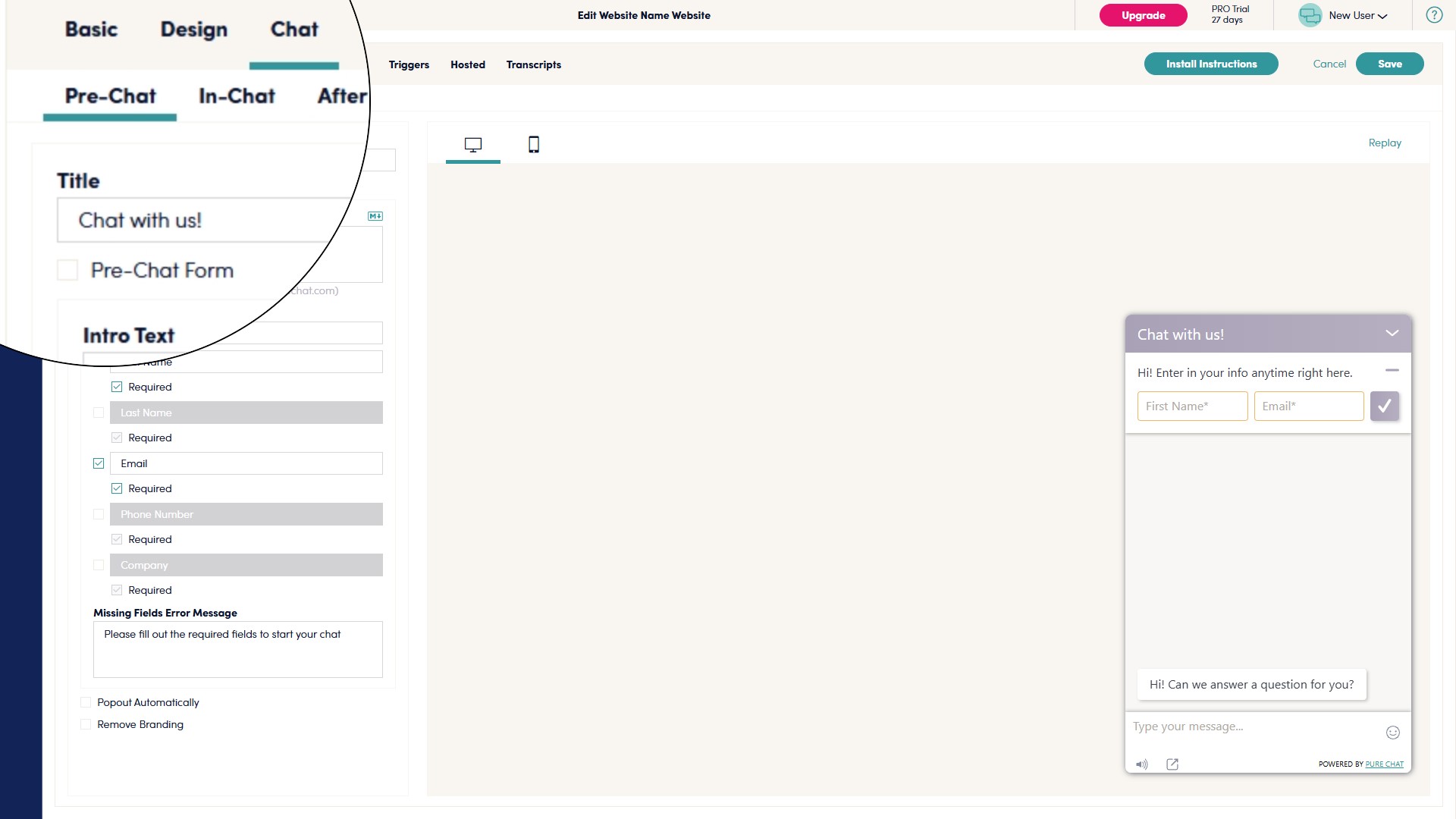
Underneath the simplicity there is a real toolset. Operators get unlimited chats and unlimited transcript history, canned responses for the questions they answer forty times a day, pre-chat forms to collect a name and email before a conversation starts, file transfer, and a dashboard that shows who is on the site and where they came from. There are native iOS and Android apps, so a business owner can answer a customer from a parking lot. And there is ArtiBot, a free AI chatbot that captures leads, books appointments against a Google Calendar, and even collects payments when nobody is at the keyboard.
02 / Who it's forThe customer everyone else skipped
The live chat market is not short of players. Intercom, Zendesk, Drift and LiveChat have all built large businesses, and most of them point their sales teams at companies big enough to sign an annual contract and sit through an onboarding call. Pure Chat pointed the other direction. Its customer is the small team, the solo founder, the shop that has a website and wants to talk to the person looking at it right now.
That focus shows up in small ways. The pricing is legible. The setup does not require a specialist. Even the branding is honest - lower plans carry a small Pure Chat mark, and if you want it gone, you upgrade, which the company states plainly rather than hiding behind a sales call. For a business owner who has been burned by software that needed a consultant to turn on, that plainness is the feature.
"Pure Chat was born with a simple premise: to help entrepreneurs and small teams have better conversations with leads and customers."
- Pure Chat, on its founding03 / The problemThe visitor who came, wondered, and left
Most people who visit a small business website leave without doing anything. They had a question the page did not answer, or a moment of doubt, and there was no one to ask. A phone number is a high bar - it means stopping, dialing, and waiting. A contact form is a black hole. Live chat sits in between: low effort for the visitor, instant for the business, and personal in a way a form never is.
Pure Chat's bet is that the businesses least able to afford lost visitors - the ones without a marketing department - are exactly the ones that benefit most from catching them mid-hesitation. When the owner cannot be at the desk, ArtiBot takes the first pass, qualifying the lead and booking the meeting so the conversation is not lost to a time zone or a lunch break.
04 / The modelPriced for the little guy
Pure Chat is a subscription. A 30-day free trial opens the door with the full Pro feature set, then the choice is simple: Growth at $49 a month for a single website and a handful of seats, or Pro at $99 a month for unlimited websites, more users, more SMS, and no Pure Chat branding. There is no enterprise tier waiting to swallow you, no seat minimum designed to trip you into a bigger plan.
- 1 website
- 4 users
- 100 SMS
- Unlimited chats
- Unlimited websites
- 10 users
- 1,000 SMS
- Branding removed
Held next to the industry, the number tells its own story. Most head-to-head comparisons place Pure Chat at the affordable end of the market - a deliberate distance from the tools built for teams with procurement departments.
05 / The differenceSmall as a strategy
Plenty of companies say they serve small business and then quietly grow up, adding tiers and complexity until the original customer no longer fits. Pure Chat mostly did not. It reached more than 150 countries on under $2 million in total funding - a seed round of roughly $1.5 million in 2015 across a couple of raises - which is another way of saying it never had the pressure to become something it was not.
The moat is unglamorous: it is easy to start and it does not get in your way. That is harder to copy than it sounds, because staying simple requires saying no to features on every roadmap review. The reward is retention. A tool that a florist set up herself, in ten minutes, without help, is a tool she keeps.
"Install the code on your website and start chatting in minutes."
- The Pure Chat setup, in one line06 / Where it fitsFrom hackathon to Ruby
Pure Chat grew out of the developer culture of Axosoft, the Scottsdale company behind tools that later became known as GitKraken, founded by Hamid Shojaee. The 30-day challenge that produced it was less a marketing stunt than a working belief: give people a hard deadline and a blank page, and useful things appear. Pure Chat was one of them.
In October 2020 the company found a natural home. Ruby, which provides live virtual receptionists and chat for small businesses, acquired Pure Chat to round out an omnichannel offering - phone, chat, and bot under one roof, aimed at the same customer both companies already understood. Pure Chat kept running as a standalone product. Its integrations reach outward too: HubSpot, Salesforce, Zoho and Google Analytics directly, and thousands more through Zapier, so a lead caught in the chat window lands in the systems a business already uses.
There is a lesson in the whole arc that founders keep relearning the hard way. The flashy path is to build the platform. The durable path is often to pick a customer everyone else finds too small, make their life genuinely easier, and stay there. Pure Chat did the second thing, and 39 million conversations later, it is still on.