A screw comes loose. A handrail gives way. A man falls from the stairs of a trailer. On paper, that sequence takes three short sentences. Understanding how it happened, and why it led to spinal surgery, demands considerably more. For Texas attorney Robert Kwok, DK Global built an animation that traveled from the offending hardware to the fall, then into the injured body.
The company’s account describes the bolt and washer popping out before the camera moves through layers of anatomy to explain the injuries and treatment. The case settled for a confidential seven-figure amount before jury selection. The instructive detail is the route the viewer takes: hardware, movement, impact, medicine. Nobody has to assemble the sequence from four unrelated exhibits.
That is the territory occupied by DK Global, the California company that makes visual presentations for legal teams. Its customers bring accident reports, medical records and expert explanations. The studio gives those materials a form that a judge, mediator or juror can follow. The buyer is the attorney. The person the work must reach often has no technical training at all.
A specialist in the things words struggle to show
Founded by Michael Caldwell in 1998, DK Global works at the intersection of animation, medical illustration and litigation support. Its public service list runs from crash reconstructions and surgical animations to enhanced scans, charts and day-in-the-life videos. The assignments cover the event, the injury and the consequences. Sometimes one case needs all three.
Its practical value becomes clear in the particulars. An animation can change the viewing angle inside a vehicle. A medical illustration can locate an injury within recognizable anatomy. A documentary can show the effort involved in an everyday task after an accident. Each format answers a different question; commissioning a moving picture is only one option.
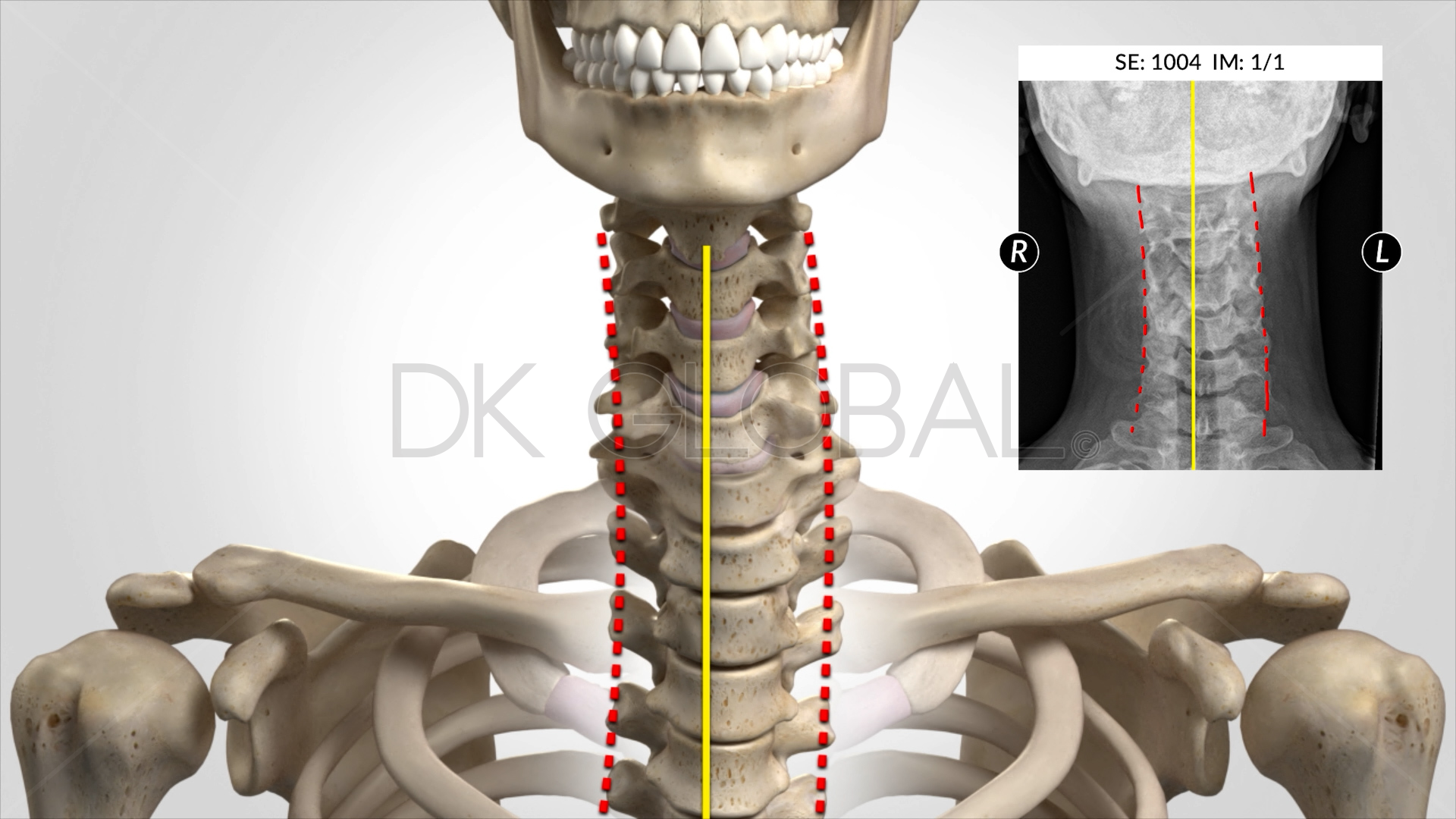
The company’s surgical-animation writing gets down to the screws and plates used to rebuild a jaw. Those details can come from operative reports, including the dimensions of the hardware. This is a useful description of the craft: an artist must make the procedure legible while respecting the particulars of the patient’s treatment. A generic body model is only a starting point.
For attorney Russell Beall, DK Global visualized a knee procedure following a motor vehicle crash. Its case account describes a progression through the arthroscopy and the findings inside the joint. The reported recovery was $535,000. Here the visual task was concentrated and technical: let a lay audience follow a procedure that medical terminology can make almost impenetrable.
The $15 million case the jury never watched
A client account published by Chain | Cohn | Clark in October 2025 shows how early these presentations can matter. Its client, trucking executive William Johnson, survived an explosion involving a compressed natural gas fuel system. His outward recovery made the lasting brain injury difficult to convey. The defense initially offered $125,000, according to the law firm.
DK Global worked with the attorneys’ experts on an animation connecting brain anatomy with CT and MRI images. The firm says a focus group responded strongly, and the attorneys used the animation in expert depositions. It was never shown to the jury. After a week of trial, the parties reached a $15 million damages settlement; liability remained for the jury to decide.
The account gives the visuals a role in explaining injuries before jurors saw them. It also describes a five-year legal effort. The settlement belongs to that larger record of investigation, expert work and negotiation. Treating the difference between the opening offer and final agreement as an animation’s return on investment would tell readers more than the evidence establishes.
Damages settlement reported by Chain | Cohn | Clark. The animation appeared in expert depositions; the jury never saw it.
Before the rendering, the argument
DK Global’s production guidance puts substantial work before the finished animation. Its storyboarding essay describes static images that establish content and camera angles. Attorneys and experts can inspect the sequence while it remains comparatively easy to change. It is the point at which a beautifully wrong interpretation should become an ordinary correction.
The company describes the labor involved in producing 30 frames for each second of animation, and warns that changes to a finished sequence can consume hours. That explains the commercial importance of the unglamorous storyboard. A disagreement about perspective, timing or what to include gets more expensive once it has been turned into a polished scene.
Its broader service description follows that logic: evaluation, design, development and support. Visual consultants examine the materials; the studio coordinates with the attorney and experts; scripts, markups and drafts create opportunities for feedback. The underlying product is a managed explanation. The animation file arrives at the end of a series of decisions about what the audience needs to understand.
Other businesses can copy the sequence without buying animation software. Decide what question the audience must answer. Put the proposed explanation in a rough, reviewable form. Ask the person who knows the subject to check it. Only then spend money making it look finished. DK Global’s published process makes those otherwise invisible steps unusually easy to recognize.
The price starts with the case
DK Global sells custom production to businesses, with attorneys commissioning work for particular matters. Its FAQ directs prospective customers to a case evaluation, after which a consultant provides a scope of work. The opening consultation is complimentary, and the price follows the assignment. A single illustration and a reconstruction with multiple scenes are different purchasing decisions.
The same FAQ gives a typical production window of 30–45 days, depending on the case, while allowing for discussions about faster delivery. That is a useful planning figure, especially when a mediation or trial date is approaching. The sensible first conversation concerns the intended use, the material already available and the deadline. Those choices define what can actually be produced.
The business model rewards an ability to understand a brief as well as execute it. Its sales-assistant job description explicitly emphasizes maintaining relationships for repeat business. An attorney who returns with another case brings a new set of facts, even when the working relationship is familiar. That combination of custom work and returning customers is characteristic of a specialist studio.
One incident, three different lenses
Consider the casino performer whose case appears in DK Global’s portfolio. Attorney Frederick Schenk of Casey Gerry commissioned a reconstruction, a medical animation and a day-in-the-life video after a stage lift crushed the performer and left him paraplegic. The three pieces divided an enormous explanation into manageable parts.
The reconstruction addressed the incident. The medical sequence showed the spinal injuries. The documentary followed the continuing effects on the man and his family. DK Global reports a substantial settlement without naming the amount. The editorial lesson is the choice of formats: a model explains the machinery, while a camera in a home records consequences that a diagram cannot capture.
In a separate coal-mining case, the studio reconstructed an underground loading vehicle and the driver’s restricted view. It also depicted design changes intended to improve visibility. DK Global reports a $625,000 settlement. This is the practical appeal of a virtual camera: it can place an audience where a driver sat, then offer an overhead view of the same space.
A flying pig, and a demanding day job
DK Global has a lighter piece of company lore. In that essay, staff writer Heather Texter recalled Caldwell bringing a small wooden winged pig into the office. Employees wondered what it was doing there. Eventually, they asked.
“It’s a flying pig. We make pigs fly.”
Michael Caldwell, recalled in DK Global’s 2018 company essay
The essay connects the ornament to the team’s willingness to attempt difficult assignments and deadlines. Its hiring materials put more concrete demands behind the sentiment. A published animator role calls for modeling, rigging, lighting and rendering skills, proficiency with 3ds Max and Adobe tools, and a capacity to handle constructive criticism.
That last requirement is particularly revealing. In this business, a requested revision may come from someone who knows more anatomy, engineering or case history than the artist. The listing also emphasizes collaboration with generalists and project managers, and attention to budgets and schedules. The work asks for imagination that can accommodate correction.
The exhibit still has to earn its place
DK Global competes in an established specialist market. MediVisuals + High Impact offers medical and forensic animations across legal and technical subjects. ESi’s Demonstratives combines visualization with capabilities including laser scanning and other data collection. Medical illustration and reconstruction are shared disciplines, so their presence alone cannot establish a competitive advantage.
DK Global’s case library provides a more useful basis for comparison: look at how it links a particular incident to a particular injury, and how its teams combine formats. Its history also includes TrialTouch, an iPad application for organizing and presenting exhibits, and CLEAR, an augmented-reality presentation concept. Both reflect an interest in how attorneys control a visual explanation once production ends.
The limits are part of the purchasing decision. DK Global’s FAQ stresses communication with experts from the beginning, and its storyboarding guidance warns about accuracy and admissibility. A polished visual cannot resolve an unsupported premise. Where a dispute needs only a clear timeline or annotated scan, those simpler formats deserve consideration. The company’s own service menu includes them.
For a prospective client, the most useful opening question is therefore precise: which part of this case is hard to understand? The answer might be a driver’s view, the location of an injury or the sequence of a surgery. DK Global’s business begins at that point of confusion. The work succeeds as an explanation when the audience can finally follow what happened.
Explore the work
Visit DK Global, browse its articles, or read Chain | Cohn | Clark’s case account.
Watch the explosion-case video and attorney interviews or explore DK Global’s YouTube channel.