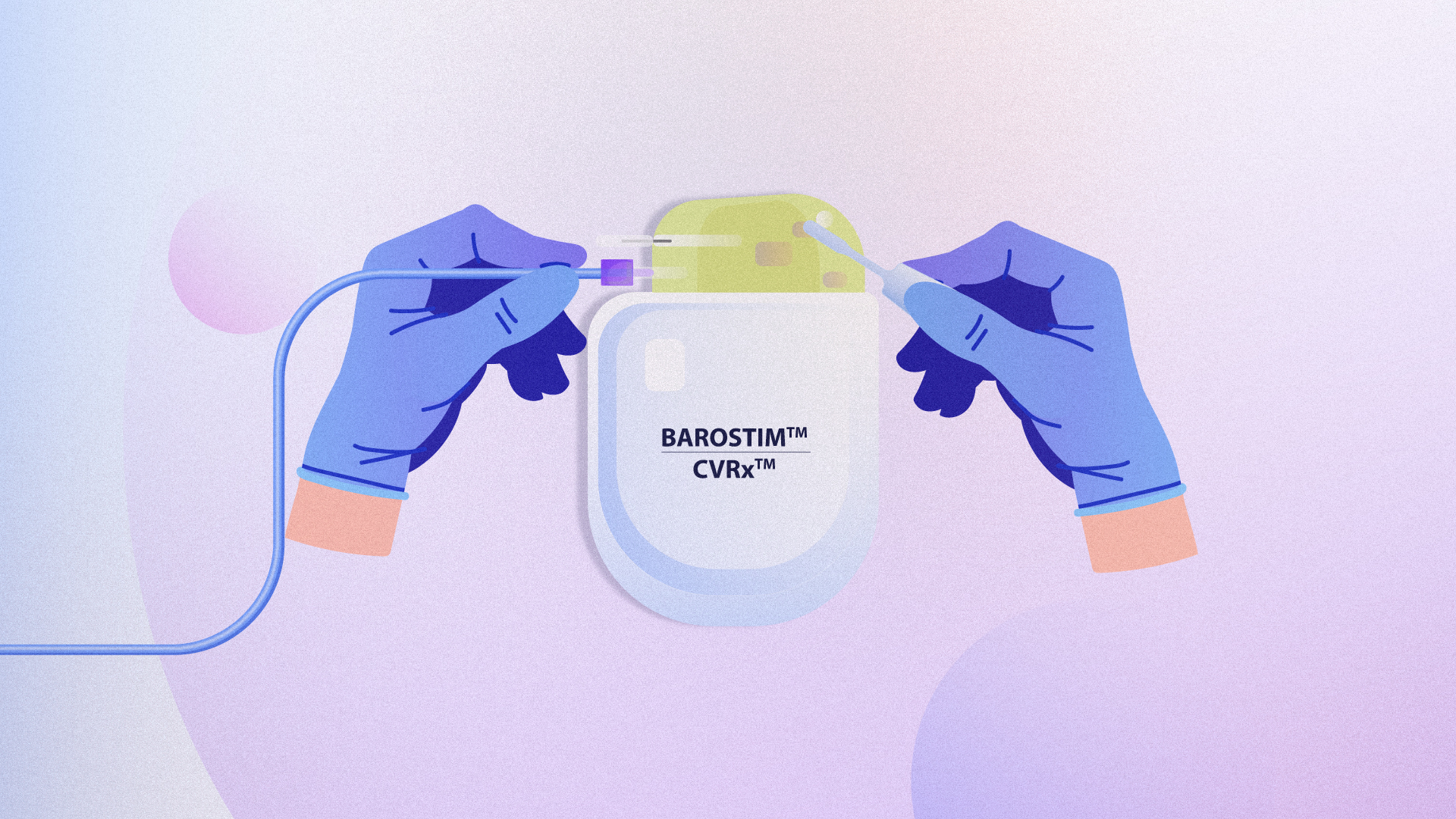
The animation already did its job. It showed how an implant procedure worked. But for Barostim, the look had become a problem: too cartoon-like, too far from the realistic, patient-friendly presentation the client wanted. INOVIT’s assignment was to rebuild it. Keep the explanation. Change the visual language. Then attend to the small things, including an incision sequence, implant details and the arrangement of a scene.
That is a useful introduction to this Irvine, California, studio. INOVIT makes animated business videos, a category whose cheerful characters can disguise some exacting work. Its subjects include medical hardware, enterprise software, charging infrastructure and consumer gadgets. The common ingredient is a product or process that somebody needs to understand before doing something else: buying it, using it, recommending it or discussing an investment.
The films are short. The decisions behind them are less so. What belongs in the script? Which feature deserves a close-up? How realistic should an illustration be? INOVIT’s public work offers a view of a service business built around those questions. A finished animation is what the customer receives. Choosing what the audience needs to see is much of what the customer pays for.
A cartoon can be too cartoonish
The Barostim assignment was a 120-second, character-based 2D animation. According to INOVIT’s project account, the client wanted an updated treatment for patients and referring physicians. The studio rebuilt the visuals, adjusted the script and incorporated requested changes to the procedure’s presentation. This was a revision of an existing communication asset, with a specific audience and a specific reason to reconsider its appearance.
The distinction matters. “Make it more realistic” can sound like a matter of taste. Here it was part of deciding how a medical subject should be presented. A friendly illustration and an unserious illustration may share a palette; their effect can be very different. The case is a reminder to buyers to describe the problem with an existing video before requesting another one. Otherwise, a new color scheme can become a surprisingly elaborate way to avoid the actual brief.
The device gets a close-up
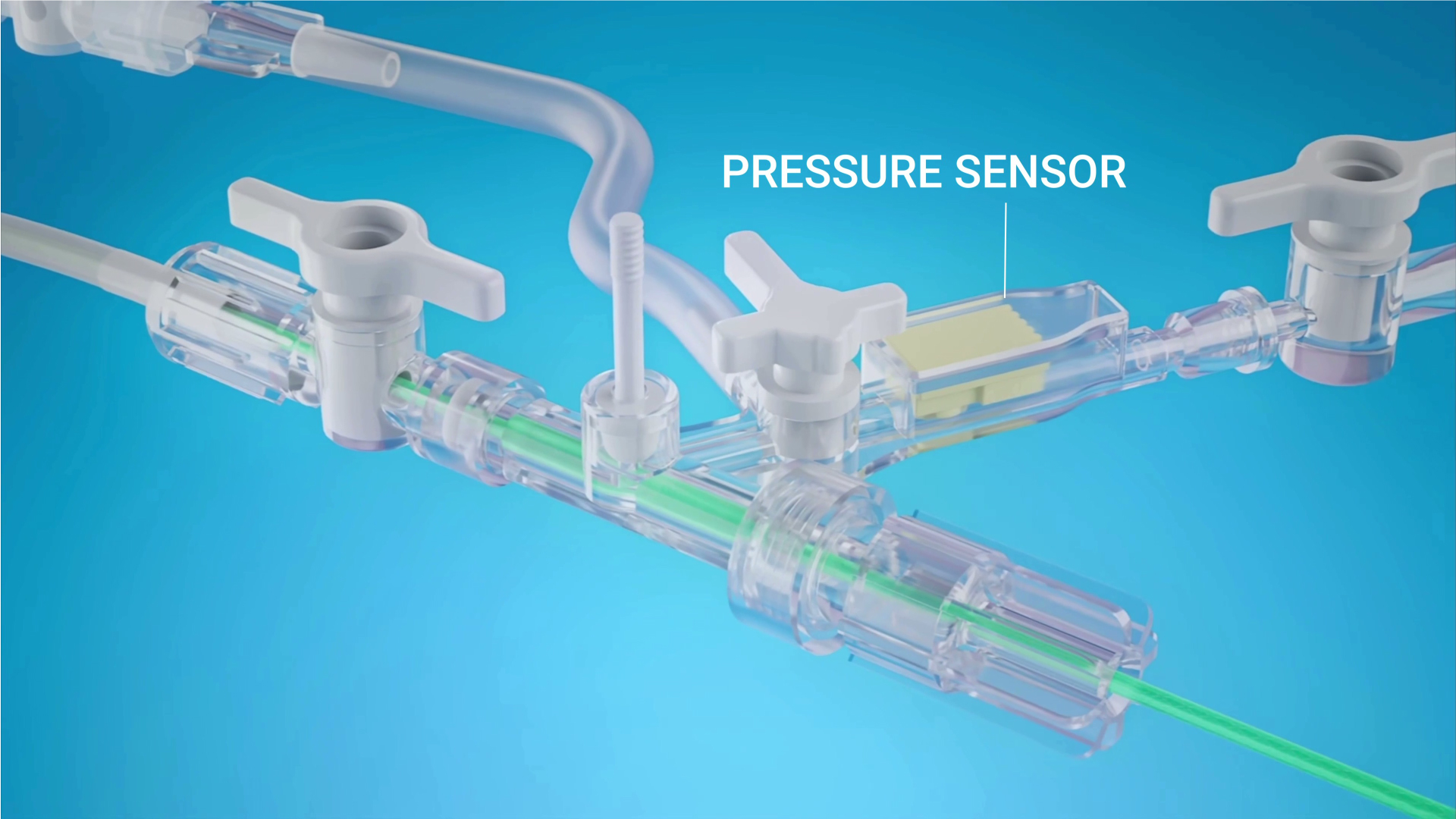
For CYGNUSMED, the subject was EndoSphinx, a medical device the client wanted to present to potential investors. INOVIT’s 80-second 3D film visualizes the device and its components, including a pressure sensor. The project account describes a brief centered on showing its sealing and monitoring functions. Here, the useful property of animation is the ability to direct attention inside a mechanism that would be difficult to explain with an exterior product shot.
Beam Global presented a different problem. Its EV ARC charging product needed a concise introduction. INOVIT’s 90-second 2D treatment emphasized deployment, off-grid operation and renewable power, using the client’s colors and accessible graphics. The engineering is the subject; the viewer’s understanding determines which engineering details make the cut. That is an editorial decision as much as an artistic one.
The range helps explain where the studio fits. INOVIT is a supplier to organizations with something to explain, including businesses selling to other businesses. Its portfolio moves between physical objects and abstract services. A 3D model can expose a component; a drawn character can establish a customer’s situation. Buyers can choose the visual approach around the communication problem, rather than forcing every subject into the same house cartoon.
A minute of film has several prices
INOVIT’s dedicated FAQ puts a 60-second animated video at roughly $2,500 to $5,000, with format, runtime and deadline affecting the quote. Its homepage gives a lower $2,000 to $4,000 estimate. Treat those figures as published guidance, not an interchangeable menu. The company describes a typical four-to-six-week schedule and at least half the fee paid before production begins.
A historical customer account makes the transaction more tangible. Kathleen Ullmann, owner of the hands-free carrying product It’s No Yoke, told Clutch that her 2021 project cost $2,000, paid in two $1,000 installments. She supplied a website, product photographs, a logo, key points and a sketch. The intended minute became 77 seconds. Voiceover pronunciation needed correcting twice. Her reported contract-to-handoff dates ran from April 21 to June 24.
That is a useful example of scope and revision, rather than a current price promise. A buyer can recognize the ingredients: material supplied by the client, interpretation by the studio, choices about narration and a final check. Ullmann’s account concerns a recently delivered film; her satisfaction should not be stretched into a measured sales result.
Different published ranges. Get the scope and price in writing.
Settle the words before the pictures move
The studio divides production into six stages: briefing, scripting, style frames and treatment, voiceover, animation, and audio mixing. The sequence puts approvals ahead of the laborious part. A written treatment describes what will happen alongside the narration. Style frames let the customer inspect the proposed appearance before an entire film has been animated.
It is an ordinary-looking process with an important economic purpose. Replacing a sentence in a draft is a smaller intervention than changing a completed sequence that was built around it. INOVIT explicitly asks clients to sign off the script, visual direction and voiceover before animation. The process page also welcomes a client’s own narrator, including a CEO, with one delightfully practical condition: “All we ask is that you don’t record this on your iPhone!”
- 01Brief
Audience + purpose - 02Script
Approve the words - 03Style
Approve the look - 04Voice
Set the delivery - 05Animate
Build the motion - 06Mix
Finish the sound
Its published review guide is equally revealing. Scripts are reviewed in Google Docs; visual feedback uses Wipster to attach comments to particular frames. The studio says scripts commonly go through two or three updates. It asks for comments that explain a misunderstanding or a visual concern, rather than merely declaring that something looks wrong.
The part readers can copy costs nothing: identify the audience’s likely confusion and attach it to a particular line or image. Give the artist a problem that can be solved. “Our buyer will think this includes installation” is more actionable than a request for extra energy. It also creates a test for the next draft: did the misunderstanding disappear?
“Our mission is to make your story interesting and clear.”INOVIT’s stated mission
The people behind the moving parts
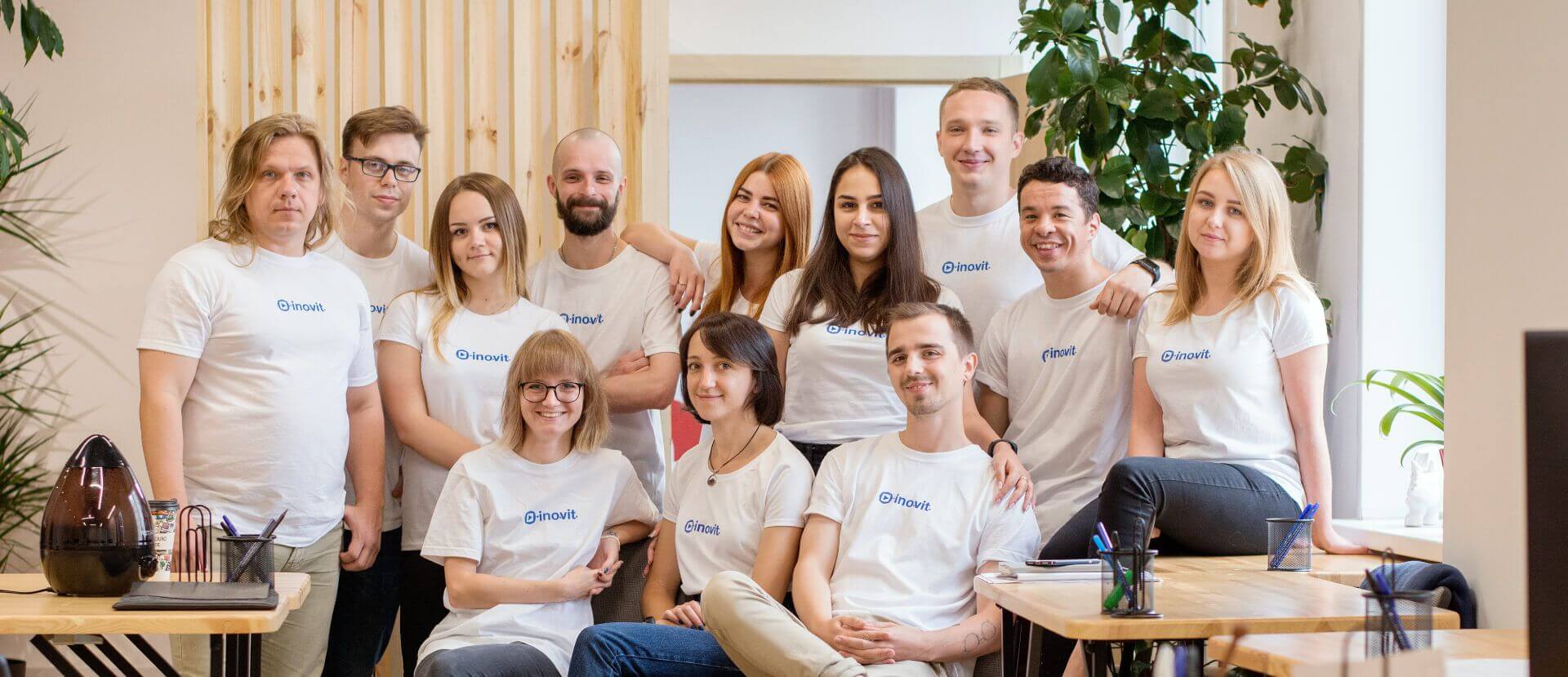
Nataliia Kolodzinska identifies herself publicly as INOVIT’s CEO. The company dates its founding to 2015. Its About page presents art direction, project management, illustration and animation as distinct roles, and describes a working relationship in which the client supplies industry knowledge while the studio shapes the video. That division is particularly relevant when the product cannot be understood by looking at it.
The customer still has work to do. An illustrator can choose a legible visual metaphor, but the client must be able to say whether it is accurate. A project manager can organize the next review, but somebody on the buying side must resolve conflicting comments. INOVIT’s emphasis on collaboration makes most sense as a practical allocation of responsibility. Subject expertise and visual expertise have to meet in the same draft.
After the explainer comes episode two
INOVIT also sells video series. In its account of that work, the company says it produced eight series in 2019. Its examples include Friday Health Plans and early-learning content. The studio describes a production challenge familiar to anyone who has commissioned a sequel: a concept must be affordable to repeat, but flexible enough that each episode does not feel identical.
That makes series work a different buying decision. A striking visual idea for one film may be too labor-intensive for eight. A recurring format needs room for different introductions, perspectives or narration. INOVIT’s advice is to consider the whole series during concept development, including what happens if somebody watches several episodes consecutively. Repetition can establish familiarity; it can also make the viewer reach for another tab.
There is a recurring commercial offer alongside the project work. INOVIT advertises social media management at $449, $699 and $999 per month. The top tier lists 20 posts and three short vertical or square videos, among other deliverables. That service extends the relationship into regular publishing. It should be evaluated as a monthly content package, with its own scope, rather than assumed to include the same production as a commissioned 3D film.
The next brief should start with a question
INOVIT’s competitive pitch combines custom animation with a guided production process. Those are reasons to consider it, not exclusive inventions. Other studios, freelancers and internal creative teams can make explainers. A useful comparison is how each option handles the actual work: script development, visual judgment, specialist review, revision and delivery. A reel shows the finish. A conversation about the brief shows how the supplier intends to get there.
The studio is a plausible fit when a business has a stable product and a specific misunderstanding to resolve. The case is weaker when the message is still changing daily, reviewers cannot agree or the deadline leaves no room for approval. Those conditions collide directly with the staged process. For a simple interface walkthrough, a buyer should also ask whether the audience needs custom illustration or just a clear demonstration.
A sensible commissioning test follows from the work: choose one question the viewer should be able to answer afterward. Show the draft to someone outside the project. Then ask that question. It is a modest test, but more revealing than a roomful of colleagues agreeing that the colors look good. The nicest compliment an explainer can earn may be the least theatrical: now I understand.
Website · Portfolio · Pricing & FAQ · Studio blog
LinkedIn · Instagram · Facebook · Behance · Vimeo
Press play / project films