There is a certain kind of sentence that institutions produce by the hectare. It is accurate, approved and almost impossible to remember. It describes a compensation program, a health service, a human-rights claim or a new piece of research. Nothing in it is technically wrong. Yet somewhere between the policy expert and the person who needs the information, the meaning quietly expires.
linza agency works in that gap. Founded in Kyiv in 2019 by Les Yakymchuk and Iryna Shostak, the studio makes communication for NGOs, socially important projects and responsible businesses. The list of services looks broad - audience research, strategy, identity, PR, graphic design, explainers, animation, social content and documentary video. The logic connecting them is narrow: make consequential information visible, clear and useful.
That puts linza in an odd corner of the market. A general creative agency might sell reach, while a production house sells the film and a PR firm sells the coverage. linza sells the connective tissue. It can diagnose why an audience is not acting, decide what story might move it, make the assets and distribute them. Its clients include UNDP Ukraine, IREX, PATH, FAO, the EU Delegation to Ukraine, the UN Global Compact Network Ukraine and a long roster of Ukrainian civil-society groups.


The first failure is usually comprehension
Consider a 2025 campaign for UNDP Ukraine. The subject was a government program that compensates employers for adapting workplaces for people with disabilities. On paper, the offer is practical. In public, it faced three stubborn obstructions: low awareness, fear and prejudice. A prettier leaflet would not solve those. The agency interviewed five people in depth, studied employers, civic groups and media, and then built the campaign around actual workers and workplaces.
The output became a system: three video success stories, three animated promos, media pitches, newsletters, social posts, an offline event, three online events, 14-plus influencers, 42 media placements, and posters and leaflets sent to 25 regions. Reported reach exceeded 7.1 million people. What changed the argument was not a louder description of the program. It was evidence of ordinary work being done by recognizable people.

That choice had an earlier rehearsal. In 2023, linza and Dostupno.UA made three training films and one promotional film about adapting after musculoskeletal injury. The central figure was veteran Oleksandr Budko, known as Teren. The point was not to ask viewers to admire his endurance. It was to show that life after injury could still be self-directed, social and ambitious. The campaign reported total reach above 10 million.
“Life after injury exists, and it can be whatever you want it to be!”Campaign message, Dostupno.UA collaboration
Reported audience reach / selected campaigns
A service list arranged around a problem
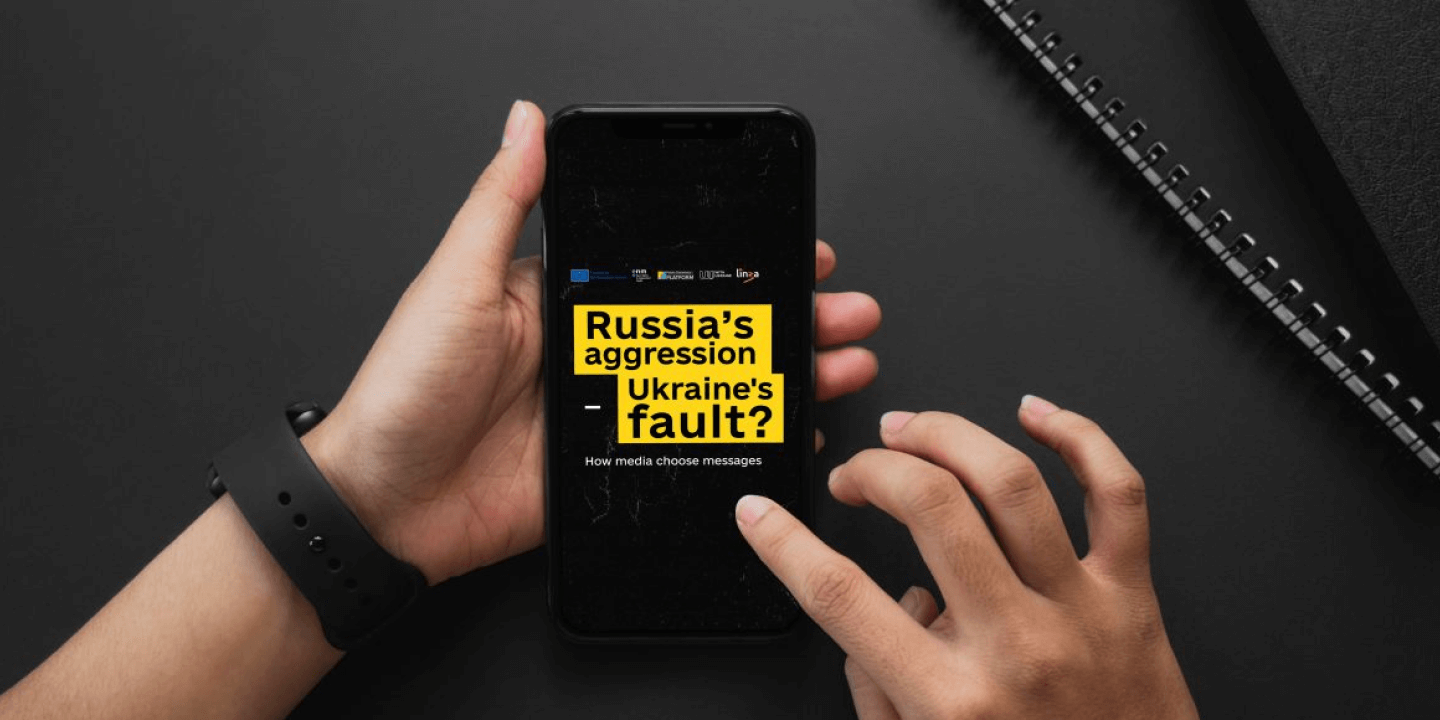
This is why the agency's range makes more sense in motion than it does on a capabilities page. For PATH's HIV program, the barrier was confusion and stigma around oral self-testing. linza produced three animations, including short, step-by-step versions and a longer film explaining what follows a positive or negative result. For WithUkraine, the problem was the language international media use when reporting Russia's war. Five vertical videos isolated loaded or misleading phrases, showing how a few words can quietly relocate blame. The series reported 284,000-plus views, 4,600-plus likes, 400-plus saves and another 50,000-plus reach on X.
For other clients, the same method becomes a brand identity, an online course, an infographic, a documentary or four months of ready-to-publish social content. Alight, the humanitarian organization, wanted international donors to understand impact without sanding away the voices of Ukrainians. linza paired deep interviews and photo stories with an organized publishing system. The client's praise was notably unromantic: clear files, no chaos, content available whenever it was needed. In communications work, good plumbing is a creative achievement.
What purpose costs
linza does not publish a neat price card, and serious custom work rarely fits one. Its public marketplace profile is more revealing. Clutch lists a minimum project size of $1,000 and an hourly rate of $50 to $99. Six of eight published reviews sit below $10,000; a verified 2024 charitable-foundation engagement was listed between $10,000 and $49,999. Those are guide rails, not quotations. A few reels and a national campaign with research, production, media relations and paid distribution are different animals.
Public marketplace signals, not a rate card
The business model is conventional project work. The client filter is not. linza says it works only with socially responsible projects and calls the relationship a partnership rather than a client-implementer arrangement. That can be dismissed as agency copy until one notices what specialization does: repeated exposure to donors, public agencies, vulnerable participants and contested language creates judgment that a generalist must acquire afresh on every brief.
The funny advantage of being findable
In 2025, the US-based Opera Verace Foundation reportedly found linza by asking ChatGPT for a capable Ukrainian agency working on socially important projects. The search produced a relationship and, eventually, a communications strategy and brand identity. It is a small, peculiar origin story, but it reveals the value of a clear position. “Full-service creative agency” is fog. “The Ukrainian communications agency for NGOs and public-interest work” is something a person - or a machine - can retrieve.
There are limits to the model. It depends on a client willing to expose the real obstacle, involve stakeholders and tolerate discovery before deliverables. It is poorly suited to a brief that wants volume tomorrow, has no access to its audience, or treats participants as scenery. The integrated approach also loses its edge when the task is simply buying media or producing a predetermined asset. Research is valuable only when the answer is still allowed to change the work.
A playbook worth borrowing
The reusable lesson is not to imitate linza's bright typography or hire an animator. It is to reverse the usual order. Do not begin with the format. Begin with the failure.
“People do not know” is not enough. Is the obstacle fear, distrust, shame, confusing procedure or absent proof?
A real worker, veteran, patient or beneficiary can carry information that an institutional paragraph drops.
The film, reel, press pitch, event and leaflet should be adaptations of the same diagnosis, not unrelated decorations.
Reach matters, but so do saves, regional availability, clear next steps and assets the client can publish without another meeting.
The name “linza” means lens. It is almost too convenient. But a lens does two jobs: it focuses, and it frames. The agency's interesting wager is that socially important work needs both. The public does not owe a worthy project its attention. The project has to earn attention by becoming legible.