A pump is an awkward movie star. Its most interesting work happens behind a casing, in the company of liquids nobody especially wants on a camera lens. Film the outside and you get a machine sitting there. Open it digitally and the sales argument finally has somewhere to go.
California Technical Media works in that gap between what a product does and what a prospective customer can see. The Los Angeles studio makes technical animation, illustrations and interactive explanations for businesses whose products resist a quick photograph. Industrial equipment, surgical devices and software workflows all turn up in its orbit. The recurring assignment is wonderfully concrete: show the part people keep asking about.
Consider its Eddy Pump film. Two mechanisms appear side by side, their housings cut away so viewers can follow the material moving through them. The comparison gives the seller a way to discuss a design difference while the audience watches it. The animation carries the manufacturer's argument; it is not an independent performance test. But it makes the argument available for inspection.
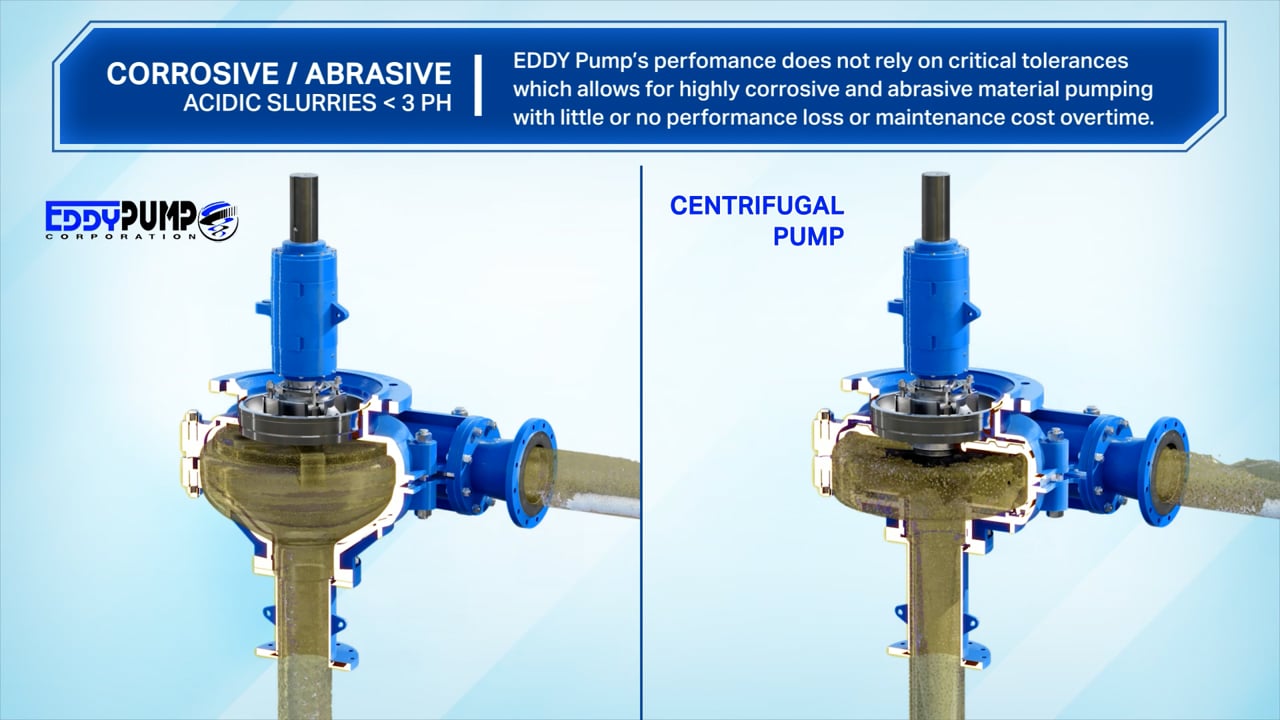
The camera stops at the casing
The company's technology advertising division occupies a particular corner of business marketing. A product photographer can make equipment look desirable. An engineer can explain its tolerances. CTM's job is to turn the relevant engineering into a sequence that someone outside the design team can understand. The audience might be a buyer, an investor or a person learning to operate the thing.
Its industrial offering includes exploded assemblies, moving mechanisms, instructional diagrams and browser-based models. Those formats answer different questions. An exploded view establishes which components belong together. A motion sequence shows what happens next. An interactive model lets a viewer choose where to look. Choosing between them is an editorial decision before it becomes an animation task.
That makes the natural alternatives broader than another animation studio. A company could hire freelance artists, use a general production agency or ask its own technical team to make the material. The useful comparison is how much explanation, technical interpretation and review coordination the assignment requires. A polished image alone will not settle those requirements.
projects across a client base of more than 320. These are CTM's company-wide figures.
From a safety system to a surgical tool
The public portfolio has the appealing oddness of an engineering trade show. A surgical navigation system sits near a hybrid-electric truck powertrain. Elsewhere there is a breathing simulator, a hydroponic system and a motorized carry-on suitcase. CTM is selling a method of explanation across different subjects, rather than staking its identity on one kind of machine.
Its Siemens Energy direct air capture case study, published on Vimeo in June 2024, breaks a system into successive stages, from air intake to carbon-dioxide handling. A surgical guidance case study followed in April 2025. The portfolio identifies that system as NavBit Sprint and describes the animation's attention to registration and orientation. These are specific communication assignments, not evidence that CTM developed the underlying technology.
A smaller customer makes the service easier to picture. Safe Crossings, a pipeline-safety business, commissioned a brief demonstration for its website and trade shows. Co-owner Derek Moretz said the video showed the system working in a natural setting. His June 2023 review reported a project below $10,000 and praised its timing, highlighting and straightforward video feedback.
“They met all our deadlines and were responsive to our requests, even with a tight timeline.”
Derek Moretz, Safe Crossings
Client review, June 2023
For a buyer, the instructive detail is the narrow assignment. The company needed viewers to understand a particular system in a particular setting. That gave the production a defined job. It also gave the client something more useful to approve than a general impression that the animation looked expensive.
The larger names help establish the range. CTM lists NASA, Toyota, Dyson and Thermo Fisher Scientific among its selected clients. Those names place the studio in a market where technical teams must communicate beyond their own departments. They do not make every assignment alike. A demonstration for a small manufacturer can require the same careful choice about what to leave visible and what to explain in stages.
The price depends on what moves
CTM sells commissioned production work. Its Clutch listing puts the advertised minimum at $10,000 and the hourly range at $150-$199. Historical reviews include smaller budgets, so the listing should be read as a buying reference, not a promise that every assignment costs the same amount.
The studio's own product descriptions reveal another way to think about cost. A Basic Product Overview is a short rotating-product or camera-fly-around presentation, with two revision rounds and a running time below a minute. CTM describes it as normally costing about one-third of an animated commercial. That comparison belongs to the company's published offering; a fresh brief still needs a fresh quote.
Relative pricing described by CTM. Different scope, different revision allowance. Not a current quotation.
The fuller commercial can include internal cutaways, animated mechanisms, liquids and other effects, with three to five revision rounds described in the comparison. The difference is not simply a longer running time. It is how much has to be built, explained and reviewed. A brick turning on screen and a mechanism opening while fluid passes through it are different production problems.
That distinction gives buyers a practical way to restrain a brief. If the feature is visible on the outside, a short overview may be enough. If the benefit depends on a sequence, make the sequence the centerpiece. Buying additional motion without identifying additional meaning is an easy way to make a video busier.
Approve the rough version
CTM's diagnostics offering spells out a four-stage process: scoping, script and storyboard, an animatic, then final production and delivery. An animatic is a rough motion preview. It lets reviewers examine timing, camera angles and the order of events before the team commits to finished rendering.
The company explicitly distinguishes inexpensive changes at that stage from changes after final rendering. This is where a technical production schedule meets organizational reality. Marketing may want a clearer benefit; an engineer may notice the wrong sequence; a reviewer may question a claim. Their comments belong early enough to affect the structure.
- 01ScopeAudience, purpose, inputs
- 02StoryboardReview the explanation
- 03Motion previewReview timing and sequence
- 04DeliveryRender, sound, formats
CTM advertises diagnostics delivery in as little as three weeks, while acknowledging that review cycles often make projects longer. Read the qualification as part of the offer. Fast production cannot make a client's decision-makers available. A deadline becomes credible when the people responsible for approvals have reserved time to give them.
The lesson a reader can copy is simple enough to use without buying animation. Name the audience. Write down the decision the material should support. Sketch the explanation. Let someone who understands the subject challenge it while corrections are cheap. A rough drawing that exposes a missing step has already earned its place in the process.
The people keeping the explanation honest
Co-founder and CEO Ari Zahavi holds a J.D. and directs production and client strategy. Co-founder and COO Elena Borodina handles operations, production coordination and client management. Their stated responsibilities put interpretation and execution beside each other: deciding what the visual needs to communicate, then getting it through production.


Their company describes its approach as “Meaning first. Graphics second.” Its separate litigation business makes the connection to legal communication explicit, building visual plans around the material a case requires. For the technology division, the transferable concern is whether a viewer can follow the relationship between an event and its consequence.
That discipline matters in life sciences, where CTM says it builds from primary material and works with subject-matter experts. A device visual may need to show placement, anatomy or a mechanism accurately while remaining understandable. Detail is useful when it answers the viewer's question. Detail added merely because the model contains it can become another obstacle.
One production, several useful lives
The medical-device service is designed to produce more than a single finished film. CTM lists a master animation, a silent booth loop, social cuts, presentation stills and training clips. It also advertises full copyright transfer and delivery of source files for that offering, without per-channel licensing surcharges.
This is an economically useful distinction. A trade show floor is noisy; a training session permits more explanation; a presentation may need one frozen view of a component. The material must change with the setting. Planning those outputs before production makes the original modeling and review work available to several teams.
Software presents a related challenge with fewer physical clues. CTM offers animated workflows and data-flow diagrams alongside product demonstrations. A screen recording can show where a user clicks. A process visual can explain what happens between systems after the click. That is the same interpretive job as opening a pump, applied to a product without a casing.
For a prospective customer, a useful first conversation would therefore include the intended viewer, the technical references, the required formats and the person who can approve accuracy. CTM's contact page asks for audience, timeline and reference material. Bringing those answers turns a request for a video into a production brief. It also makes competing proposals easier to compare: the studios are pricing the same communication problem.
There are limits to the method. An animation cannot establish that a disputed claim is true, and a detailed sequence is wasted on someone who only needs a simple view. Those are reasons to choose the brief carefully. The strongest use of CTM's work is a decision that becomes easier once somebody can see the mechanism. Start with that question, and the moving parts have a purpose.