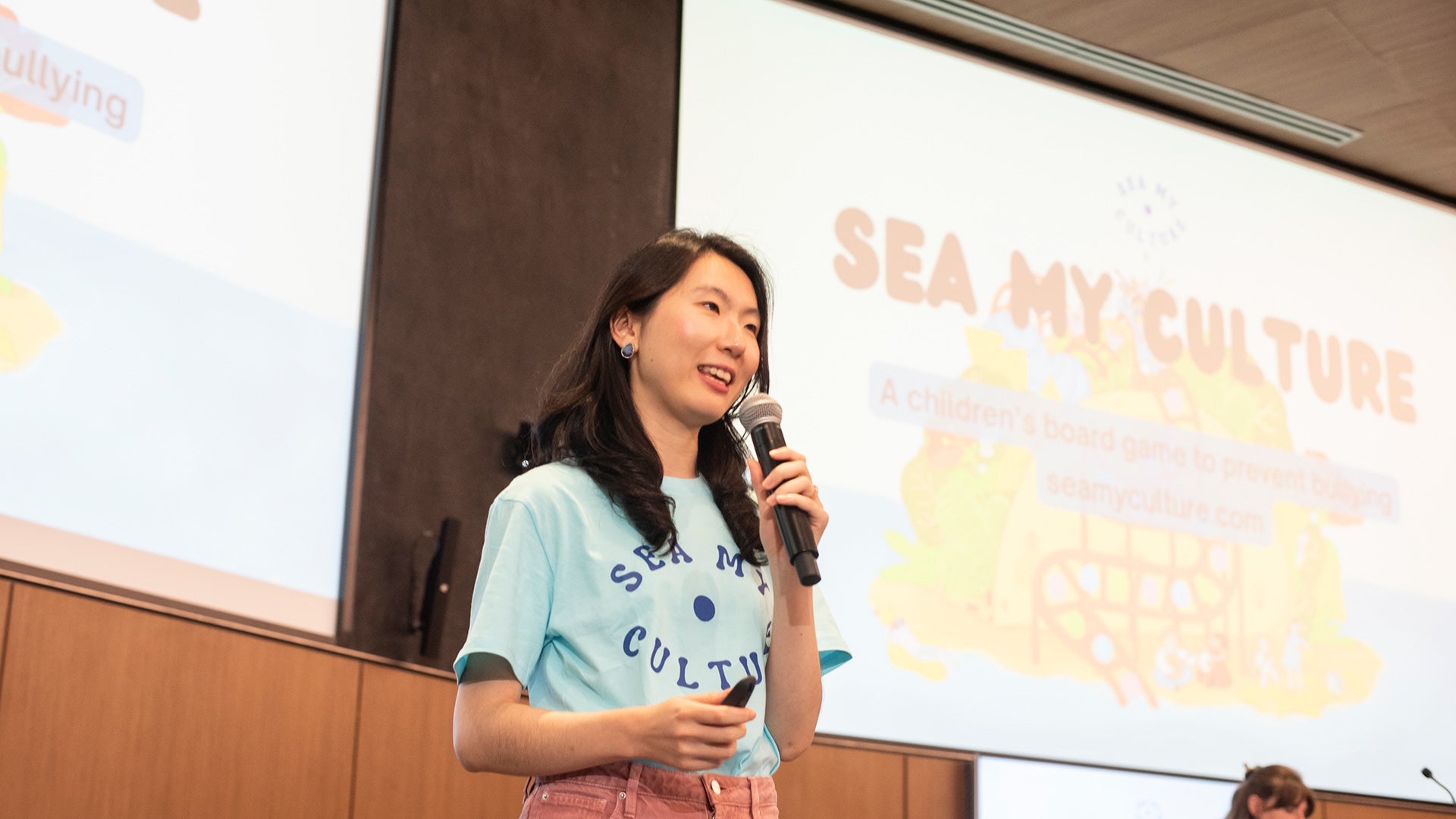
Xinyi Zhang had already done something many aspiring founders postpone: she had put her product in front of people. More than 700 children, educators and parents had tested her prototype of Sea My Culture, a board game intended to help children discuss multicultural issues and prevent bullying. Yet when the psychology doctoral candidate entered Maryland’s summer startup accelerator in 2024, one essential piece was missing. She did not have a pitch.
- Start small: advising accepts an idea; a business plan is optional.
- Meet the market: students can test products at a free campus marketplace.
- Earn the next step: grants, competitions and summer mentoring support ventures at different stages.
That gap explains the appeal of the Dingman-Lamone Center for Entrepreneurship. A useful product and a viable business are related achievements, but they require different work. Zhang wanted help with marketing and scale. By Demo Day, she had a polished presentation and received the Cohort’s Choice Award. The lesson was wonderfully unglamorous: even a well-tested idea needs a way to explain itself.
A pitch before there was a place to pitch
The center began with a similar translation problem. In 1986, Rudolph “Rudy” Lamone brought his vision for an entrepreneurship center to businessman and philanthropist Michael Dingman in New York. The appointment was scheduled for thirty minutes. It lasted two hours. Dingman promised $1 million immediately and another $1 million if Lamone delivered the first year’s plans. Both promises were fulfilled.
The founding bargain paired ambition with a test. Money followed a proposal, then performance. Today, inside the University of Maryland’s Robert H. Smith School of Business, the center applies a comparable discipline to students: articulate the idea, expose it to feedback, show progress, then seek more support. The institution that teaches pitching was itself financed by one.
The table, the chair, the customer
The front door is deliberately informal. Dingman Advising welcomes the university community, including alumni, and draws on entrepreneurs and specialists in law, accounting and strategy. Its FAQ says an idea is enough to begin. There is no dress code, either. Entrepreneurship has enough obstacles without inventing a wardrobe requirement.
“No. All you need is an idea.”
Dingman Advising, on needing a business plan
The center teaches lean startup methods: talk to customers and test assumptions. A business model canvas can organize the questions. Terp Marketplace then supplies something more concrete: a table, a chair and a tablecloth. Current students bring products, marketing materials and a sign. Participation is free. The audience is the campus community; the exercise is discovering what attracts attention and what persuades someone to buy.
For students wanting structured coursework, New Venture Practicum combines regular classes, advising and a final presentation. Its dedicated program page describes roughly twenty participants each fall. The useful connection is between classroom work and actual venture decisions. Completing an assignment can move a founder toward seed funding or a summer application.
An illustrative pathway, not a required program sequence.
Small checks, specific jobs
Some barriers are embarrassingly ordinary. A prototype needs materials. A website needs hosting. The E-Fund offers non-dilutive grants of $250 to $1,000 for expenses such as these, including incorporation fees and equipment. The money is tied to getting an idea closer to market. It makes a practical case for funding the next experiment rather than demanding that a beginner finance the entire enterprise.
The summer accelerator asks for a larger commitment: eight weeks of venture work, supported by mentors, workshops and up to $5,000. Its stated destination includes product progress, initial customers and a clearer go-to-market strategy. Selected founders can pursue continued support through Terp Startup Fellows. In the 2019 pilot, that follow-on program offered funding up to $20,000 alongside workspace and advising.
These are published funding amounts, not the center’s operating budget. Its support comes through university infrastructure and philanthropy, including corporate sponsorship and individual gifts. The arrangement gives student founders a chance to obtain help before their businesses can afford much of it.
Beaded bags belong here, too
Oluwanifemi Orekoya’s LoveGlam and Aesthetics grew from making beaded bags and accessories. During the 2024 accelerator, she moved her website to Shopify, revised her branding and began considering bulk materials contracts. Those changes concern the less photogenic side of entrepreneurship: selling consistently, purchasing sensibly and presenting a recognizable business.
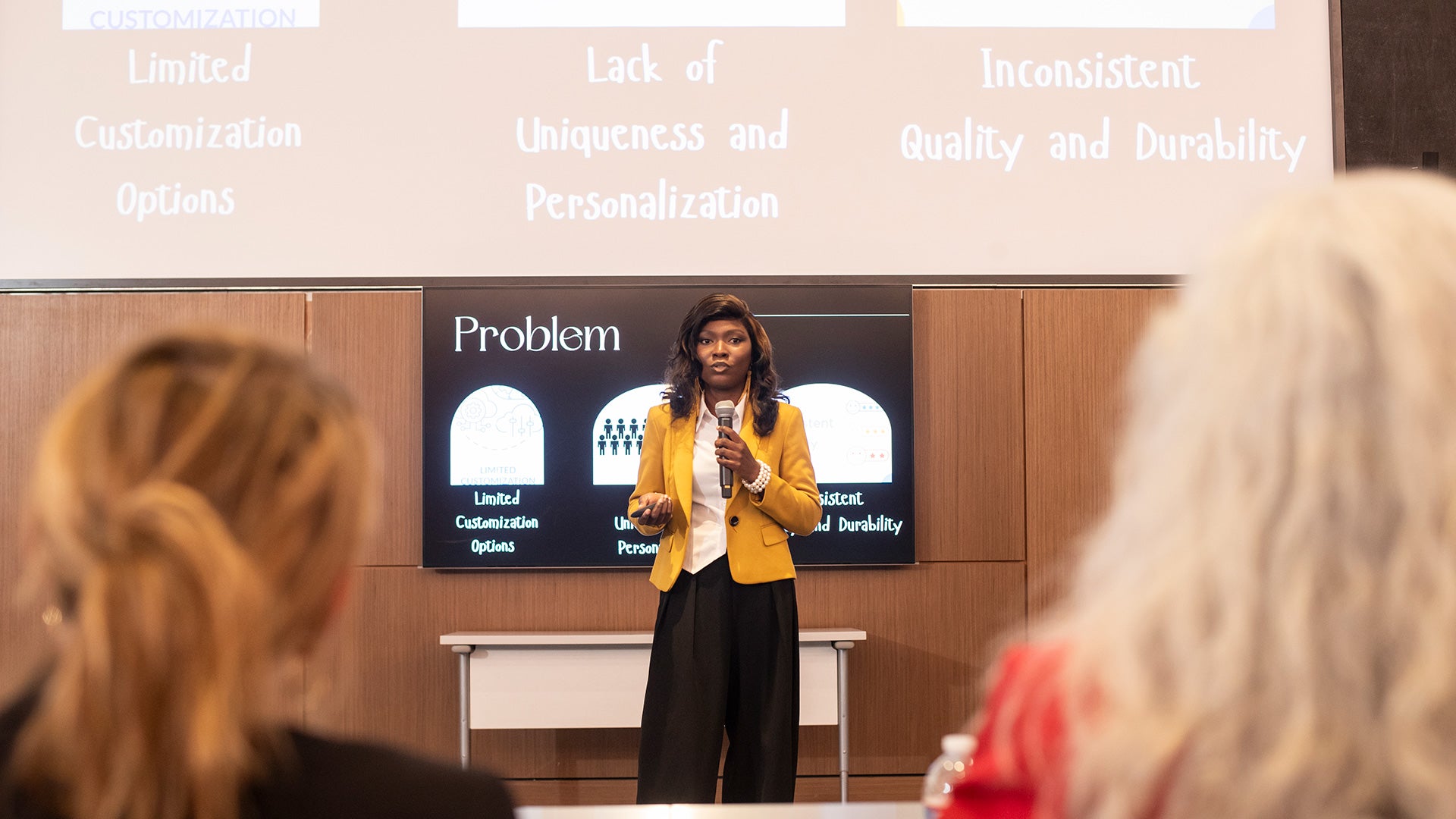
The same breadth appears in Pitch Dingman. Its 2026-27 rules distinguish ideas, scalable technology ventures and revenue-producing Main Street businesses. A small business does not have to pretend it intends to conquer a continent. That distinction matters on a campus where entrepreneurs also have peer incubation through Startup Shell, technology resources through Mtech and social-impact support through the Do Good Institute.
Revision is part of the curriculum
For a particularly clear change of mind, look at the center’s 2025 Launchpad high school stories. Iniya Guhesan initially planned to manufacture clothing for petite women. She instead chose to repurpose thrifted pieces and make alterations, building sustainability into Nilaworks. The program gave each team $100 and a chance to showcase its work. Here, progress meant revising the method while keeping the customer’s problem in view.
The copyable practice is straightforward: name a customer, test a modest version, ask for feedback and spend on the obstacle blocking the next test. It depends on willingness to revise. University eligibility also matters. An unaffiliated founder cannot assume access to student programs, and a campus audience may tell little about a business selling to distant industrial buyers.
A longer relationship than one semester
Regional companies with traction have another route: Dingman Center Angels. Members make individual investment decisions; the network is not a pooled fund. Its criteria favor developed offerings and evidence of sales. Student experimentation and investor readiness therefore occupy different rooms in the same ecosystem.
In January 2025, a $3.8 million gift from Linda Lamone accompanied the addition of her late husband’s name to the center. Plans included broader alumni support. The enduring proposition is a relationship that can outlast a course: somewhere to bring the idea, somewhere to test it, and someone who asks what happened when you did.
Keep the conversation going
Visit the center · Explore the program portal · Competition dates and rules
Founder stories · Bootstrapped interviews · Watch: Inside the Dingman Center