An itinerary is a small miracle of clerical work. A supplier sends a PDF. Someone else sends an email. A traveler expects one coherent plan. Between those events sits a person moving information from one place to another. At a travel media and events business described in Digital Convergence Technologies’ case studies, that passage had become a bottleneck. More bookings meant more manual processing. Growth was producing paperwork faster than the operation could absorb it.
- The work: connect systems, build software, and automate business processes.
- The buyers: enterprises and mid-market companies, with deep roots in media and healthcare.
- The useful idea: measure the whole workflow, including the handoffs.
DCT built a system to extract information, check it against business rules, and route structured data into downstream workflows. The company reports an 80% reduction in manual itinerary-processing effort. The interesting part is the sequence. Reading the document was only the beginning. The value depended on getting usable information to its destination.
That is a useful introduction to DCT, a technology services company whose name sounds abstract until you encounter a business held together by copying and pasting.
A film needs more than a play button
Founder and CEO Vineet Dhawan dates the company’s beginning to 2006. In a 2024 interview, he described early work helping US clients monetize and syndicate digital content. As consumption moved toward video, he saw a problem among mid-sized content owners: they had material worth watching, but lacked the resources to build and manage their own streaming operations.

“What stood out to us was a gap in the market for mid-sized content owners,” Dhawan said. DCT’s answer was dcafé, a white-label streaming platform. Bitmovin’s partner directory describes a service controlled from a single content management system, with integrations spanning encoding, playback, and analytics.
Dhawan’s example was wonderfully specific. A Bhojpuri content owner could use advertising to serve viewers in Bihar while charging overseas audiences a subscription. The same film could support different commercial arrangements in different places. Geography, language, rights, and payment were engineering requirements. A video player alone could not settle them.
DCT’s experience sits in that space around the content: how it arrives, where it travels, what viewers discover, and how its owner gets paid.
Fifteen weeks, meet six to eight
A more recent Hungama engagement shows how those foundations can change a delivery schedule. Hungama wanted a short-form streaming service with personalization and monetization in the initial release. DCT brought an existing streaming foundation, customized it, and used Claude Code as the primary development environment.
The tool was connected to Jira and Confluence for current acceptance criteria and to Figma for design detail. The team delivered iOS, Android, web, and CMS capabilities. DCT reports completing 15 planned weeks of development in 6–8 weeks, cutting code-review time by 40%, and reducing design handoff rounds from three per feature to one.
These are DCT’s project figures. They do not isolate the contribution of AI from the contribution of reusable software or an experienced team. What a reader can reasonably copy is the arrangement: give engineers a foundation, connect their tools to live requirements, and reduce the distance between design and implementation.
The work becomes valuable when information reaches the next step.THE EDITORIAL TAKE
Buying the connections
Today DCT markets an enterprise AI suite alongside cloud engineering, product development, systems integration, modernization, and managed operations. Forge addresses software delivery. Flow handles business workflows. Sage organizes enterprise knowledge. ObserveIQ addresses operational visibility. Strata provides a secure data layer. The names describe different entrances into the same organizational problem: useful technology must operate inside existing systems.
The company also sets up and runs global capability centers, covering talent, operations, and technology. Buyers can therefore engage DCT for a particular build, ongoing operations, or a managed extension of their own organization. This is a services business with proprietary platforms and reusable engineering assets woven through it.
DCT’s published portfolio names organizations including Veeps, MASN, Abacus Insights, and FootballCo. The mix helps explain its range: a sports publisher needs advertising and audience infrastructure; a healthcare data business needs reliable information flows. Those buyers have different products, yet both need software that can pass information between specialized systems without creating a new manual job at every boundary.
Its competitive proposition is breadth with delivery responsibility. The alternatives include an internal team, another systems integrator, or a specialist platform supplier. A company buying a simple, self-contained tool may have little reason to buy an integration engagement. DCT’s proposition becomes more relevant when the work crosses several systems and somebody must own the connections.
That also changes the cost question. A buyer should compare implementation, migration, infrastructure, review, and ongoing operation together. Saving development hours is useful; moving those hours into exception handling merely changes the department paying for them. A sensible brief specifies both the target saving and the work that remains.
Give the workflow an owner
In March 2026, Akamai announced DCT’s entry into its Partner Connect program, emphasizing cloud refactoring and managed services for mid-market and enterprise clients. Refactoring matters because changing the cloud provider does not automatically repair an awkward architecture. The work includes reconsidering how the pieces fit.
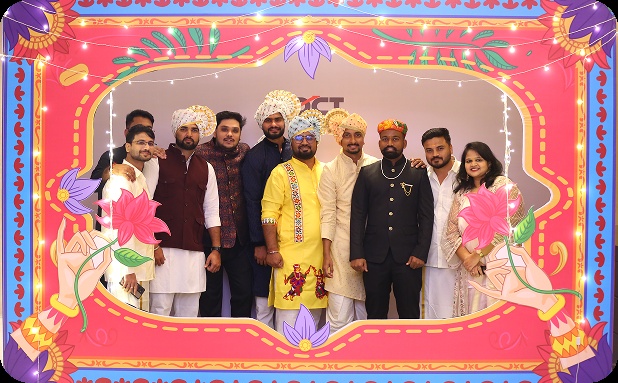
DCT’s stated mission is “To engineer clarity and deliver value.” Its public values include care and trust alongside growth and excellence. In a healthcare AI engagement, the company describes building an operating model with defined ownership, compliance controls, human oversight, and internal capability. Those are useful buying criteria regardless of whose name appears on the proposal.
A working demonstration should therefore include an ordinary exception. Give the system an incomplete document or an ambiguous instruction. Watch who receives it, what gets recorded, and how it returns to the process. That exercise tests the operational design more directly than a polished answer to an easy question.
The practical starting point is modest: choose one process, name its owner, establish a baseline, and follow an item from arrival to completion. If source information is unreliable, rules are unclear, or nobody can resolve exceptions, automation will inherit those weaknesses. Fixing them is part of the engineering. DCT’s work is most instructive where it makes that usually invisible job visible.