A company can survive its first customers and still be undone by its next thousand. Orders arrive faster than people can coordinate them. The founder who once approved everything becomes the person everyone is waiting for. Success has produced a new problem: the organization must change while the product keeps selling. DFJ Growth has made this awkward interval its place of business.
- Growth capital for technology companies with a working product and market validation.
- Operating help with hiring, strategy and the machinery of scaling.
- A $1.2 billion fifth fund, announced in May 2025.
The gap before the opening bell
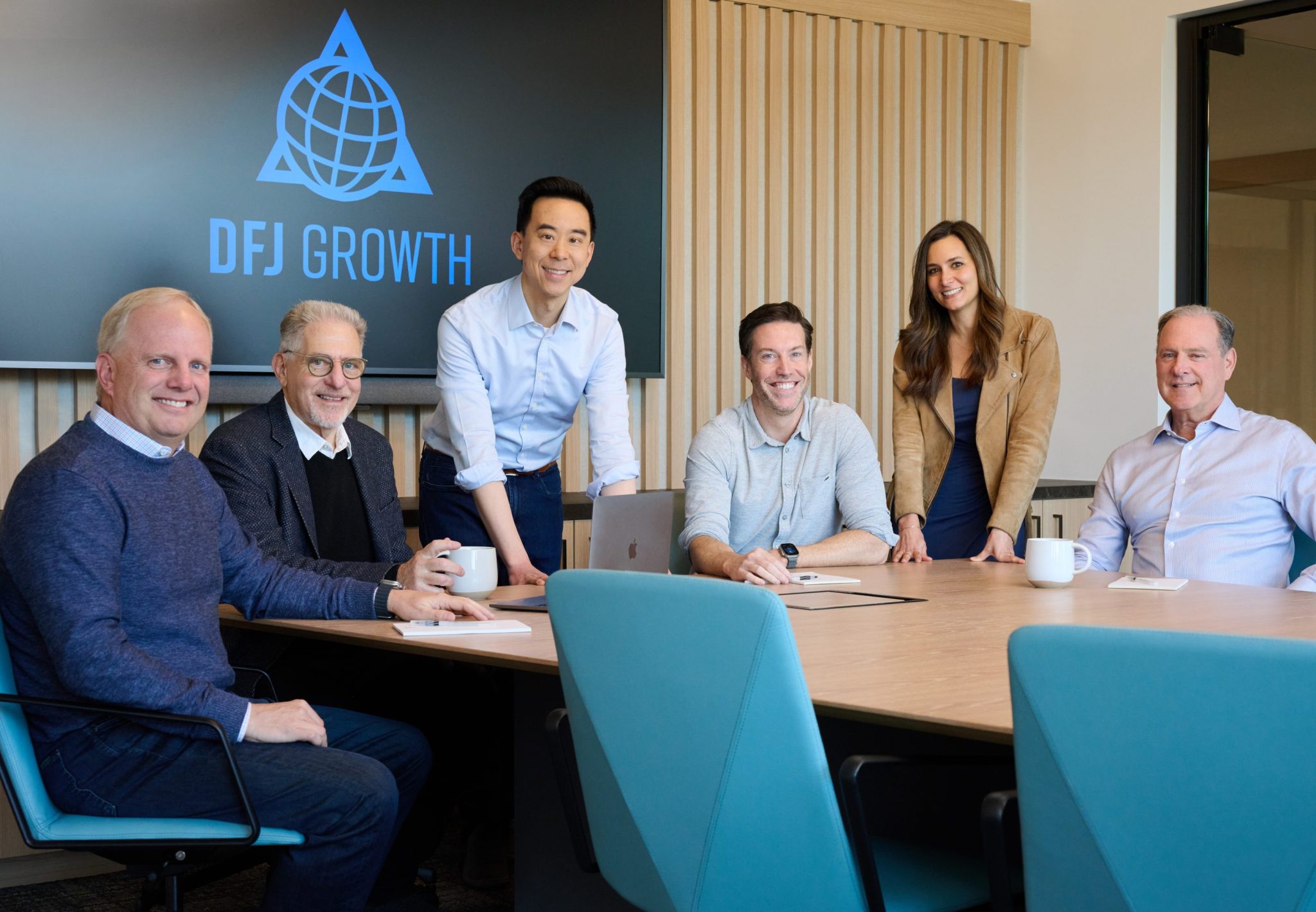
In 2005, John Fisher, Barry Schuler, Randy Glein and Mark Bailey formed DFJ Growth around a change in the market’s timetable. Their account of the founding is straightforward: public investors wanted more mature businesses. Young technology companies would need to remain private longer. Someone had to finance the distance between an early venture round and a business capable of facing public-market scrutiny.
That distance involved work as well as money. Schuler had run America Online. Glein’s background included engineering and operating roles. Bailey had worked in corporate development and venture investing. They were assembling a firm whose pitch included experience with what happens after an idea starts working. Its investment history now includes Tesla, SpaceX, Coinbase and Unity. Those names establish where it has participated; they do not explain every outcome.
A working product earns the conversation
The useful distinction is between a financing label and a company’s actual condition. DFJ Growth says it has an affinity for early growth, although it invests across growth stages. It looks for a product already in the market and evidence that customers want it. A Series B badge alone proves very little. Adoption and customer testimony can matter before conventional revenue measures tell the whole story.
Consider Positron, an AI computing investment. In its account of the deal, DFJ Growth singled out the company’s delivery of working FPGA-based hardware to customers within two years of formation. The attraction was partly that customers could test the architecture in real environments. Hardware had become something people could use. That is a more informative milestone than a persuasive slide about a future chip.
The first thing to break is coordination
Sam Fort and Bailey’s published guide to growth describes a sequence familiar to anyone who has watched a small team expand. At first, the job is survival. Then people need clearer responsibilities. Later, specialists need to coordinate across departments. Eventually, the company needs operations predictable enough for public investors. The challenge changes even when the company’s mission stays put.
- 01SurviveFind customers
- 02CoordinateClarify ownership
- 03AlignConnect specialists
- 04RepeatDeliver predictably
Conceptual progression adapted from the firm’s growth framework. No fixed timetable.
This is where the operating support becomes concrete: recruiting, executive search, introductions and help around strategic transitions. It is also where founders can make an expensive mistake. Hiring more people increases the number of relationships that need managing. If no one owns a decision, a larger payroll can simply fund a longer wait. The implication of the framework is uncomfortable: yesterday’s informal habits may become tomorrow’s constraint.
Operators who changed their approach
Ramin Sayar, now a venture partner, offers a specific example from his time leading Sumo Logic. Enterprise buyers were hesitant about SaaS security. He describes refocusing the product and go-to-market approach around developer log analytics, then expanding the platform. Customer resistance altered the route. The story is useful because it identifies something founders can observe: a gap between what the company wants to sell and what customers are ready to adopt.
Max Sirenko took another route into operating expertise. He left an associate role at DFJ Growth, worked at Mapbox and SpaceX’s Starlink program, then returned. His account of early Starlink work includes testbed instability and poorly coordinated dependencies slowing engineering progress. He was assigned ownership of the critical path. His advice follows from that experience: simplify requirements, name the responsible person and shorten the time between trying something and learning whether it works.
“Nothing kills a company like trying to scale before the technology or product is ready.”
Maxim Sirenko · Venture partner
A bigger fund, a specific job
In May 2025, DFJ Growth announced Fund V at $1.2 billion, against an initial $800 million target. That is committed investment capital, rather than the firm’s revenue or valuation. Its stated interests span AI, technology meeting biology, automation, aerospace and defense. The remit accommodates software and physical systems, including companies selling to government customers.
The firm sits between two constituencies. Founders want capital and useful judgment; fund investors want their commitments to produce returns. A growth investment has to make sense for both. This is why the distinction between a promising business and a suitable venture investment matters. A company can serve customers well without needing the expansion, outside ownership or eventual liquidity that a venture fund is built around.
The investments put detail behind those interests. DFJ Growth led Endor Labs’ $93 million Series B for application security in April 2025, and Hidden Level’s $65 million Series C for passive airspace sensing that February. In September 2026, it co-led BigHat Biosciences’ $75 million Series C with Premji Invest. BigHat combines AI with physical experimentation for protein therapeutics. Its financing supports both the platform and its clinical pipeline.
What a founder can borrow
For a founder, the practical question is what new capital will change. More capacity? A missing executive? Faster experiments? Those answers belong in the fundraising conversation. An equity investment also means sharing ownership and agreeing governance terms; the cost depends on the deal. The announced round total is not necessarily DFJ Growth’s individual contribution.
The advice travels further than the portfolio. Review the team against its next set of responsibilities. Assign ownership to the bottleneck. Let customer behavior challenge the plan. These habits can help a company diagnose growth without raising money. They also establish a limit: a fragile product cannot become ready merely because its bank balance grows. Before buying speed, find out what is slowing you down.
Follow the work
DFJ Growth · Portfolio · The firm’s story · News · Portfolio jobs
LinkedIn · X · Watch: Randy Glein on the firm’s AI strategy ↗