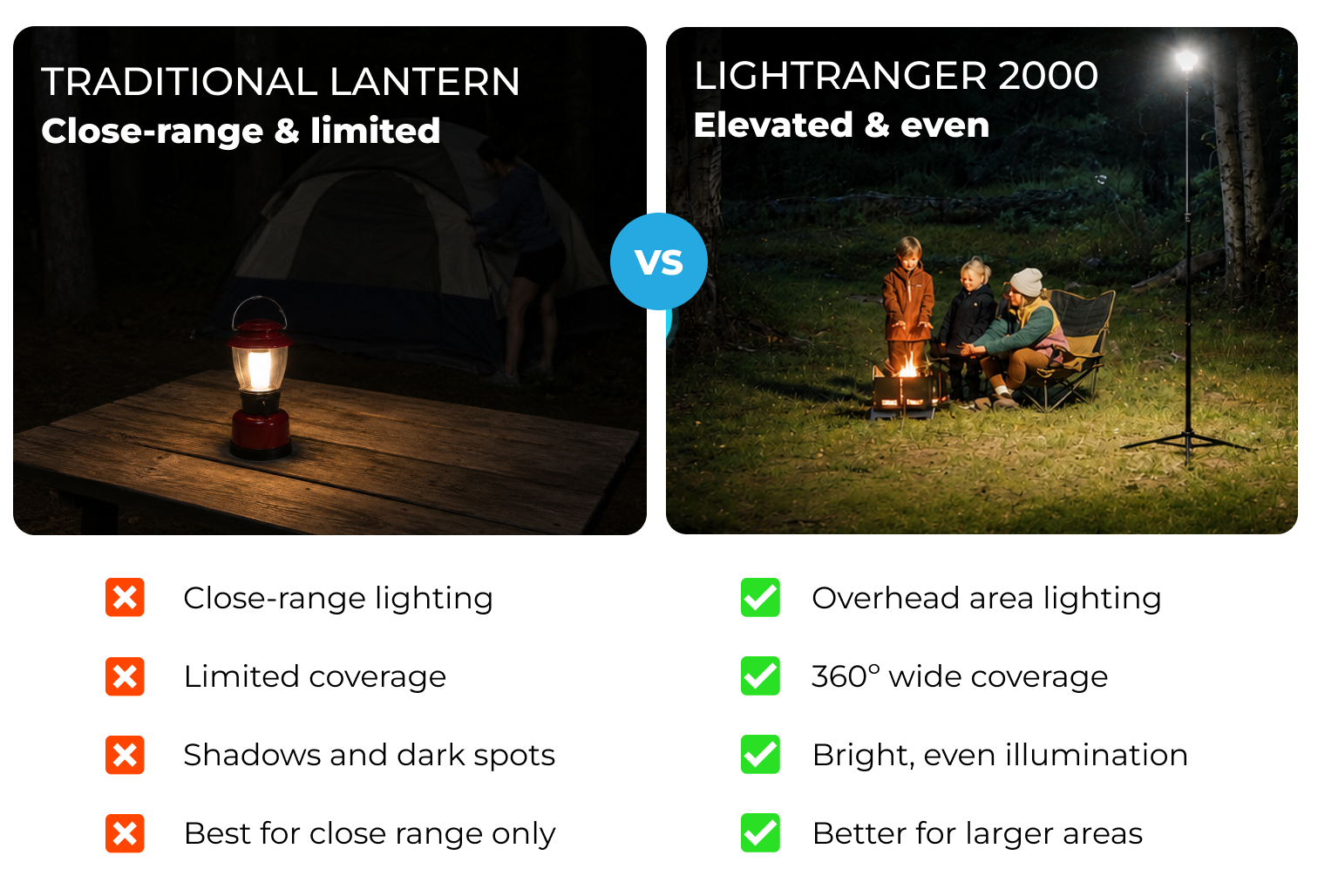
Almost every camping lantern makes the same mistake. It sits on the picnic table, throwing a hard little glare straight into your eyes while your hands - the parts actually doing the cooking, the unpacking, the card game - stay in shadow. A small team in Springville, Utah looked at that and asked a stubbornly simple question: why is the light down here instead of overhead, where you need it? Their answer became Devos Outdoor, and a lantern that climbs nine feet into the air.
Devos is an acronym - Developing Outdoor Solutions - and the name doubles as the whole pitch. The company was founded in 2020 by Ryan Crawford and Chris Nelson, alongside a group of engineering, industrial-design and product-development people who describe themselves, plainly, as outdoor enthusiasts building for problems they hit in the field. The flagship product line, the LightRanger, is a rechargeable LED light that rides on a telescoping aluminum pole and tripod. Raise it, and the light lands from above, spreading evenly across a campsite instead of blinding whoever is nearest the table.
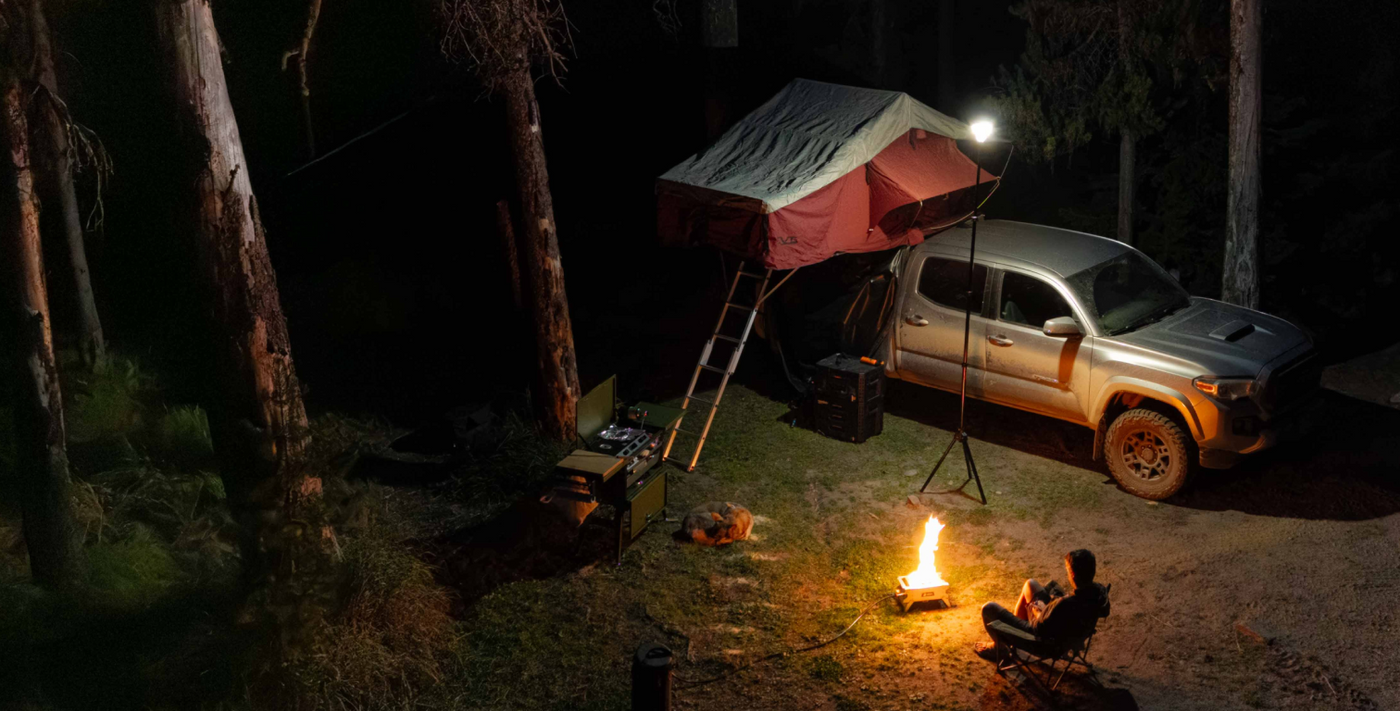
That single ergonomic idea - light belongs overhead - turns out to scale in every direction. Shrink it, and you get a compact 500-lumen lantern for a backpack. Grow it, and you get the LightRanger Pro 15000: a 15,000-lumen scene light that telescopes to 13 feet, runs more than six hours on a 400-watt-hour battery, and takes commands from a phone. The same posture that helps a family see their dinner helps an EMT light an accident scene. Devos didn't reinvent the campsite so much as find one good principle and refuse to let go of it.
The problemLight you can actually work under
Spend a night in a tent and you learn the difference fast. A lantern on a table casts long shadows and a mean glare; a light overhead casts soft, usable coverage. The LightRanger 1200, the model that put the company on the map, pushes up to 1,200 lumens across a roughly 60-foot circle, extends from three to nine feet, and carries an IP56 rating so a passing shower doesn't end the evening. It weighs four pounds, charges over USB-C, and - the detail people don't expect - passes power back out, so the battery that lights the campsite also tops up a phone.
You can run it on four sides, two sides, or one, which is a small mercy that does double duty: aim the light where you want it, and stretch a 3.75-hour blast at full brightness into as much as 80 hours on low. Those are the kinds of decisions that don't photograph well but decide whether someone buys a second one. The LightRanger 1200 holds a 4.67-star average across roughly 397 reviews, and Men's Health named the LightRanger the best full-coverage camping lantern it tested.
The lineupOne platform, five kinds of buyer
Here is the quiet business move. Devos does not sell to campers. It sells to campers and overlanders and RV travelers and contractors and first responders - all off one telescoping platform. The LightRanger 2000 adds Bluetooth and an app, pushing 2,000 lumens across an 80-foot area. The 4000 is pitched at garages and job sites. The Pro 15000 lands squarely in professional and emergency territory: sports practices, contractor work zones, roadside service, EMT scene management. Same idea, escalating job.
LightRanger 1200
The flagship camp light
1,200 lumens, 3-9 ft, ~60-ft coverage, IP56, USB-C in and out. Around $150.
LightRanger 2000
Bluetooth & app control
2,000 lumens across an ~80-ft area, adjustable per panel from your phone.
LightRanger 4000
The work light
Built for garages, job sites and bigger spaces where a camp lantern runs out of reach.
LightRanger Pro 15000
The scene light
15,000 lumens, telescopes to 13 ft, 6+ hrs on max, four panels aimed by app.
The app matters more than it sounds. The Devos control app - on both iOS and Google Play - lets you aim the Pro's dual panels and dial brightness over Bluetooth, including individual control of all four sides, color and output. For a contractor that means throwing all the light at one wall; for an event it means not wasting output on empty grass. Hardware companies rarely ship decent software. Devos treats the app as part of the product, not a bolt-on.
What ties the range together is the promise Devos writes on its own about page: gear that is easy to use, built to last, and ready when it's needed most. That last clause is doing quiet work. A camping lantern is a nice-to-have; a light you can trust during a power outage or a roadside emergency is closer to insurance. By building the same overhead-light idea all the way up to a professional scene light, Devos gets to sell reassurance to one customer and fun to another without changing its factory. The tent buyer and the emergency-management buyer are, mechanically, buying the same aluminum pole.
The pivotA lantern company that quietly sells power
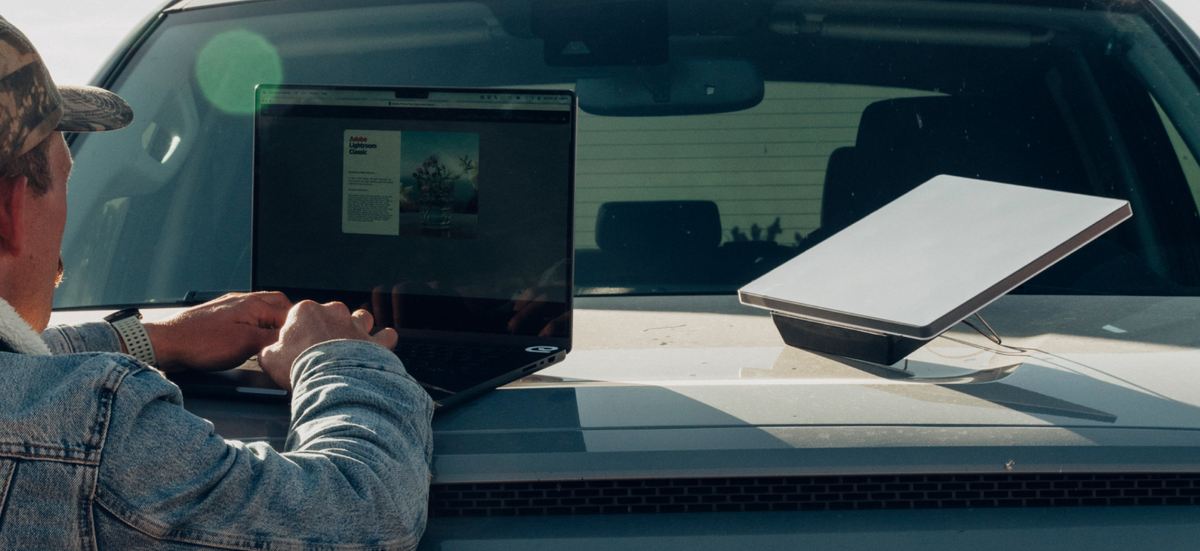
Follow the accessories and a second business appears. Devos now sells AmPak power banks, foldable solar panels, and battery kits built specifically to run a Starlink Mini in the field. When your customers are the sort of people who live off-grid - overlanders parked on a ridge, crews working past sundown - the light was only ever the entry point. What they actually need is power that travels, and a lantern is a friendly way to start that conversation.
Reach for a 9-person company
Approximate audience across owned channels
The backstoryThe band got back together
Devos didn't start from a blank page. Its first real move, in February 2020, was buying the OEG outdoor projector-screen product line from Camp Chef. The twist: Chris Nelson had originally designed that lineup for Camp Chef in the first place. He said, in effect, that he was glad to have it back with the team that built it. It's a small story with a big lesson for anyone who has ever shipped great work under someone else's logo - sometimes you can buy your own creation back and run it yourself.
The moatWhy the boring details win
Devos does not compete on price. Its lights cost more than the big-box glow sticks, and the argument for the premium is stacked out of unglamorous decisions: an IP56 rain rating, USB-C in and out, a 2-year warranty, a US-based support team, and discounts for the people who buy the most - military, first responders, medical workers and teachers. None of that trends on social media. All of it decides whether a first-responder agency standardizes on your gear.
The competitive field is not empty. On the consumer side sit names like Goal Zero, BioLite, Coleman and LuminAID; on the professional side, a range of portable work- and scene-light makers. Devos's wedge is the overhead telescoping form factor and a single platform that follows a customer from their first backyard cookout to a job site to an emergency callout. It's a nine-person company competing on focus, not scale - the storefront runs on Shopify, and a dealer network from AT Overland to SeaSucker to Everything Lifesaving fills in the rest.
Being small is part of the strategy, not a weakness the company is waiting to grow out of. Devos ships direct, keeps its support in the United States, and points its discounts at the exact audiences - military, first responders, medical workers, teachers - who buy repeatedly and tell colleagues. That's a slower way to build than blitzing every big-box shelf, but it produces the kind of review pile and word-of-mouth that a small team can actually stand behind. The company's whole posture is that a good product for a well-defined customer beats a mediocre product for everyone.
The takeawayWhat you can steal from this
The copyable lesson isn't the lantern. It's the method. Devos took a frustration everyone had quietly accepted as normal - glare from a table lamp - and treated it as a real problem worth engineering around. Then it stretched that one solved problem across price points and customer types until a camp light became a product line and, eventually, a portable-power company. Where it works: any category full of products people tolerate but don't love. Where it wouldn't: if the underlying annoyance is imaginary, no amount of aluminum pole saves you. Devos's bet is that the annoyance was real - and roughly 397 five-star-ish reviews suggest they were reading the campsite right.