Given a magic lamp and a blue genie, Deepak Garg knew what he would ask for. He would connect everyone on the planet. This was his thought experiment in a diary entry looking ahead to 2022, and it is an unusually expansive wish for a founder whose business involves utility accounts. Most of us would settle for remembering the password.
Garg made the wish more specific as he went along. A connection should help people understand their bills, make decisions about energy and water, and get useful guidance. He even imagined reversing the arrangement: the genie could supply the connections, and Garg would build the digital platforms that made them intelligent. A fairy tale had acquired a product specification.
That combination of scale and detail runs through his work. Garg is the founder, chairman and group CEO of Smart Energy Water, now branded SEW.AI. He talks about billions of people, but the business repeatedly brings him back to a small encounter: someone needs something from a utility. The quality of that encounter is where his larger argument begins.
The engineer at the customer’s end of the wire
His education supplied a technical starting point. Garg studied engineering and earned a master’s degree in computer science; executive programs at Stanford and MIT added management education. Before SEW, he held senior roles at Fortune 500 organizations. His public professional story is rooted in building enterprise technology, with the questions of product development and implementation that follow it.
SEW’s founding is recorded as 2012. By 2014, Garg was explaining a recognizable problem: people expected their utility to provide the convenience they already encountered with banks and retailers. They wanted timely information, personalization and access through their phones. The comparison carried a quiet rebuke. Electricity could travel to a house with considerable reliability; information about the account could still require patience.
The company used mobile and cloud software to build configurable tools for customers and utility workers. Garg emphasized deployment costs and integration risks alongside the experience on the screen. Those concerns reveal the enterprise engineer’s instincts. A feature has to find a home inside an organization, among systems and routines that are already doing necessary work.
One early account of a mobile workforce deployment offers a pleasingly ordinary sign of progress. Employees at an unnamed Western utility saw colleagues using the software and wanted to join the program themselves. The story contains no dramatic launch and no triumphant unveiling. The recommendation traveled from worker to worker. For business software, voluntary enthusiasm is a rather useful form of applause.
A 2014 deployment account described workers opting into SEW’s mobile workforce program after seeing it in use.
By April 2022, Garg described a company with more than 400 clients and a workforce exceeding 1,200. He reported annual growth above 50 percent at the time. Those figures belong to that moment in the business. The underlying model was straightforward: utilities subscribed to the cloud platform, then made its services available to their customers.
The client list included Southern California Edison, Southern California Gas and San Diego Gas & Electric. People could manage accounts, pay bills and monitor consumption; providers could coordinate operations and dispatch crews. Garg’s conservation ambitions had found a commercial mechanism. He was selling software to organizations capable of putting it in front of many households at once.
The crew is part of the conversation
Consider the person sent to carry out the work. In his 2023 writing on workforce experience, Garg gave field technicians a central role in the service relationship. A customer-facing application has limited value if the worker handling the next step lacks the information to act. The promise on the screen has to survive the journey into the field.
His recommendations became quite specific: learn what workers actually need, provide useful mobile tools, train people properly and give them access to job information. He also insisted on offline capabilities. It is a small requirement with a large implication. Software designed for field work should be prepared to leave the reassuring company of a reliable internet connection.
Garg discussed predictive maintenance, location information and better scheduling as ways to support those workers. The emphasis was on connecting their decisions with the customer’s experience. A well-informed technician and a well-informed customer are participants in the same service. Keeping them in separate organizational conversations is an expensive habit, even when each department has a perfectly respectable dashboard.
the accountUsage · bills · updates
happens nextJobs · context · dispatch
the systemAssets · demand · signals
When the car joins the utility account
The scope of that relationship kept expanding. In August 2023, Garg wrote about smart e-mobility, looking beyond the purchase of an electric vehicle to the people, technology and infrastructure needed around it. The vehicle brought another set of decisions into the utility conversation. Transportation, energy use and the readiness of the grid were becoming harder to discuss separately.
That subject fits his broader way of framing a product problem. Start with something familiar, then examine the connections needed to make it useful. An account becomes a place where people might understand changing consumption. A customer application becomes part of a wider service. Each additional connection makes coordination more valuable, and makes a confusing interaction more consequential.
His ambitions were also attracting recognition. He became a regional EY Entrepreneur Of The Year finalist in 2021, received Orange County Business Journal’s Innovator of the Year recognition, and was honored at Goldman Sachs’ Builders and Innovators Summit in 2022. The company appeared on the 2021 Inc. 5000. These were separate milestones in a business whose subject remained stubbornly practical.
AI has to survive a working day
By April 2025, Garg’s writing had acquired a more impatient tone about artificial intelligence. Utilities, he argued, had spent enough time on isolated trials. He wanted AI incorporated into ordinary work, connecting customer engagement, field operations and grid assets. The recurring concern was execution: how a technology moves from an interesting proposal into something people can use.
His argument included an organizational demand. Employees needed training and confidence in the recommendations they received. Teams across technology, operations and customer service needed to cooperate. He proposed learning from deployments elsewhere in the industry. These are demanding conditions for a software strategy, because they involve habits and responsibilities as well as a purchase order.
In May 2026, he examined a further complication: AI itself consumes electricity. Data centers give the apparently weightless world of digital intelligence a physical footprint. Garg wrote about the pressure that footprint places on infrastructure, operating decisions and customer affordability. The technology he advocates is also helping create the conditions his customers must manage.
His proposed response was intelligence fitted to utility work: better information for customer communication, field routing, planning and equipment decisions. He acknowledged that utilities could choose different approaches, including hybrid strategies. The test was how well an approach fitted existing systems and operational requirements. That is a more useful question than whether a product has acquired the fashionable label.
“We cannot live without water. We cannot innovate without power.”
Deepak Garg
The company’s current platform strategy groups customer, workforce and grid intelligence under COSMOS. Its language has changed with the technology, while the connection between those three constituencies remains familiar. Garg’s career gives the AI pitch a history: the customer and the crew were already in the picture when the conversation concerned cloud platforms and mobile software.
A room full of people who keep things running
Garg has also built places for the industry to talk. WE3 draws its name from engaging, educating and empowering, themes he has repeated across his public work. In his December 2025 reflections, he traced its beginnings to a gathering in Palo Alto and described its expansion into regional events. The organizing impulse sits alongside the product business.
At WE3 East in 2026, held at Duke Energy’s headquarters in Charlotte, Garg and co-CEO Michael O’Donnell opened a gathering of more than 200 executives. The discussions covered affordability, reliability, workforce change and the effort to connect utility operations. The setting suited his argument: people responsible for keeping services running, comparing how to change them while the work continued.
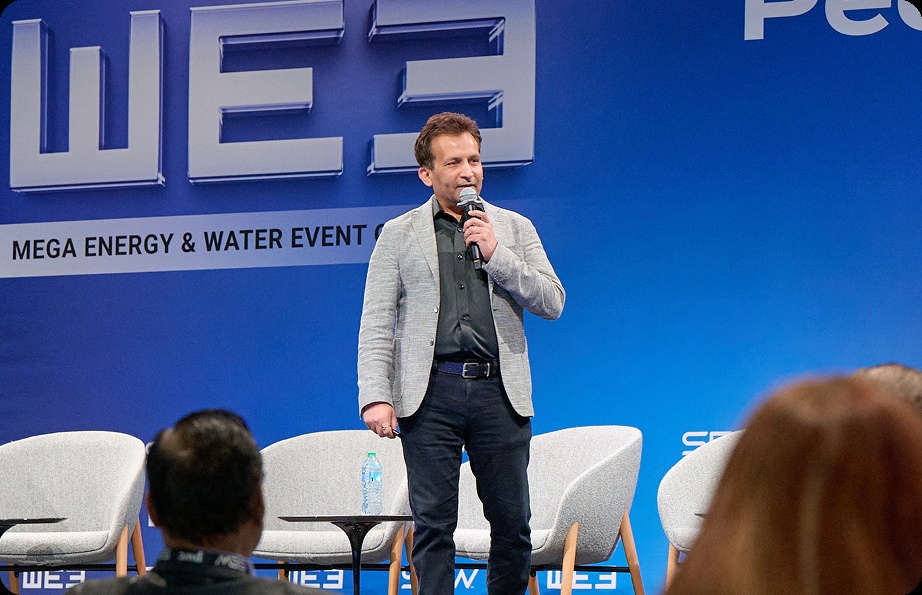
In those discussions, human judgment and institutional experience remained part of the proposal. AI was presented as something to embed in daily operations alongside experienced staff. That focus makes the gathering relevant to Garg’s story. He is asking organizations to connect their work, and assembling the people whose cooperation would be necessary to do it.
Four billion, one useful interaction at a time
His stated ambition now reaches four billion people by 2030. That is a goal, with the work of reaching it ahead. In a recent interview, he argued for using existing utility infrastructure more intelligently and making the value of participation visible to customers. Someone offering battery capacity or changing consumption should be able to understand the benefit.
He also described the importance of owning the underlying technology and adapting to utilities with different equipment and resources. His ambition therefore depends on accommodating an uneven world. A platform intended for widespread use has to meet organizations where they are, with the assets they already have and the people who know how those assets work.
The genie from his diary would recognize the assignment. The wish was enormous; the work is full of particulars. A bill someone understands. Information a crew can use. An account that helps a household make a decision. Garg has chosen to build around those interactions, where an ambition measured in billions eventually has to become useful to one person.