Christopher Rondeau left a perfectly sensible family business for a job at a gym reception desk. His father, who ran a chain of drugstores, was unimpressed. Rondeau was studying at the University of New Hampshire and working in the family stores when he decided to join the gym where he was already a member. It was November 1993. Behind the counter in Dover, New Hampshire, he began an apprenticeship that would last considerably longer than college.
The job eventually became a partnership, then the chief operating officer’s position, then the chief executive’s office at Planet Fitness. The intriguing part is what happened between those promotions. Rondeau and brothers Michael and Marc Grondahl found a business opportunity among people their industry had made rather good at staying away. They built around the uncertain newcomer. Looking accomplished was no longer a prerequisite for entering the building.
By June 2023, Planet Fitness counted 18.4 million members and 2,472 locations. That September, the board replaced Rondeau. A career that could have been packaged as a tidy corporate fairy tale acquired an awkward final chapter. Then it acquired several more: a Brazilian gym franchisor, a Texas strength-training business and, with admirable disregard for anyone trying to write a neat biography, car washes.
The customers outside the door
Planet Fitness began with the Grondahl brothers in 1992. Its early version had familiar gym furniture: heavy weights, classes, a juice bar and daycare. The founders and their young colleague were competing for the people who already liked gyms. There were plenty of businesses doing that. Rondeau’s eventual career would turn on a different question: what would make someone who disliked the usual gym experience feel willing to try?
Price was one answer. Atmosphere was another. Together they removed services, simplified the operation and developed the Judgement Free Zone. The familiar $10 monthly offer belonged to that original proposition. It gave a hesitant customer a relatively small financial decision to make, while the room itself was supposed to reduce the social awkwardness of making it. The promise concerned both the bill and the welcome.
There is a distinction between making a product cheap and deciding whom it should serve. The former can be copied onto a sign overnight. The latter means resisting requests to become a different business. In Rondeau’s case, removing parts of a conventional gym was part of the design. An operation with fewer competing activities could concentrate on equipment, cleanliness and a repeatable experience. The omissions did some of the work.
The counter was a useful place to learn this. A customer meets a company there before meeting its strategy. Questions arrive without the courtesy of an agenda. Rondeau worked his way through club and regional management before becoming COO in 2003. He had spent years seeing the gap between what a business intended and what a person at the entrance actually experienced.
Ten years before the copies
The company began franchising in 2003, more than a decade after its founding. That interval matters to Rondeau. In a later discussion of Hang 10 Car Wash, he pointed back to those years of operating gyms before allowing others to invest in the format. A franchise offer carries an obligation: someone else is committing capital and a reputation to a system you claim to understand.
His account makes the early years sound less like a strategic master plan than a long series of practical lessons. There were processes to refine and mistakes to identify before a new owner could reproduce the experience elsewhere. Growth meant teaching other entrepreneurs how to run the business. The front desk had become a system of desks, each with its own employees and customers.
That helps explain his emphasis on franchisees. A headquarters can announce a welcoming culture; a local operator has to deliver it on an ordinary afternoon. In his leadership discussions, Rondeau treats the franchise owner as a customer whose experience affects the member’s experience. The distance between the two is short. An unhappy operator is an unreliable messenger for a cheerful brand.
He became CEO in January 2013 after a decade as COO. His succession to Michael Grondahl brought continuity, but also a change in the work. The operator who knew the clubs now had to lead an expanding corporation. Familiarity with a reception counter does not automatically prepare someone for every question in a boardroom. It does provide a useful stock of answers about what happens downstairs.
A small-town desk gets a ticker symbol
In June 2015, Planet Fitness opened its thousandth club, in Washington, D.C. Two months later it went public. The offering priced 13.5 million shares at $16 each, with trading set to begin on August 6 under PLNT. For a business built around a modest monthly purchase, it was an unusually grand new kind of counter: the New York Stock Exchange.
Those two milestones show the dual nature of Rondeau’s job. One measured how often the operation could be reproduced. The other put the company before investors who would examine its performance in public. The basic offer still had to make sense to a person walking into a neighborhood club. A share listing could expand the audience for the business; it could hardly greet a member.
The rise is easy to tell as a succession of titles. Rondeau’s own telling leaves more room for discomfort. He left college at 20. Looking back in 2023, he described feeling like an underdog and learning while the business grew. His advice to his younger self included paying more attention in school. There is little romance in discovering which lessons you skipped precisely when you need them.
He also described returning to reception work once a quarter before 2020, to understand what could make employees’ jobs easier and members’ visits better. A familiar desk gave him access to details an executive can lose through promotion. He called the whole career a “30-year college degree.” It is a good phrase for an education whose tuition was collected in working days.
“At times I’ve felt like the underdog.”
Chris Rondeau, 2023
The ending the career ladder leaves out
On September 15, 2023, Planet Fitness announced that Craig Benson would become interim CEO immediately. The board had decided to change leadership. Rondeau initially remained a director and was to provide transition advice. Thirty years in the company and ten years in its top job did not make the position permanent. The organization he had helped build could choose someone else to run it.
The separation extended beyond the executive office. He resigned from the board on February 15, 2024. The company’s subsequent filing described disagreements over headquarters job cuts, the interim CEO’s responsibilities and board oversight. Planet Fitness said it disagreed with his views. The disagreement belongs in the story because it ends the comforting assumption that a lifetime of operational knowledge guarantees agreement over a company’s next move.
It also changes the meaning of what follows. Rondeau’s later investments are being made outside the institution where he learned his trade. A new business cannot borrow its customers from his biography. It has to win them through its own locations, employees and proposition. Experience travels. A membership base stays where it signed up.
Brazil, Texas, and a fresh set of keys
In late 2025, Rondeau joined Panobianco Academia as an investor, board member and strategic advisor. The Brazilian company gave him another franchise network to help develop, including plans for expansion into Mexico. Its interest in building capable operators fits the work he had spent years doing. A familiar business problem had arrived with a different geography and a different group of entrepreneurs.
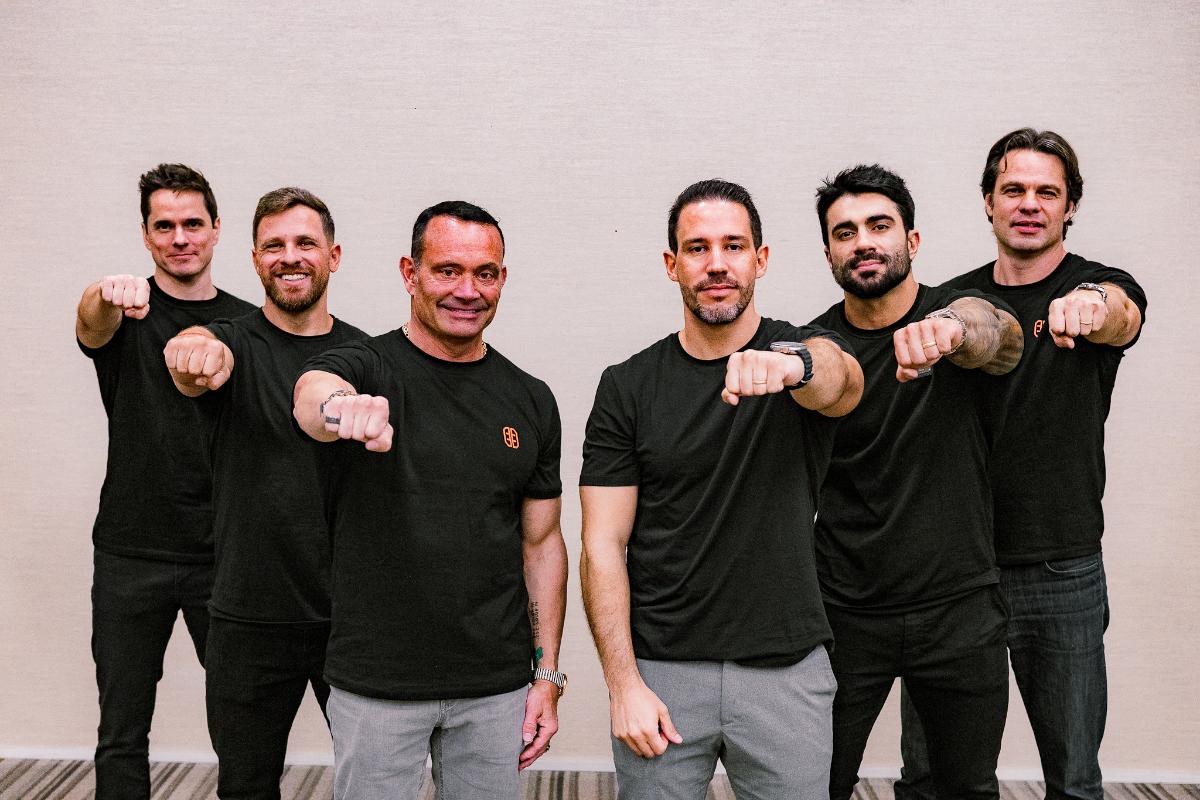
In June 2026, he emerged as a partner, board member and chief growth officer at Absolute Recomp, the Dallas-Fort Worth business founded by Nabil Saeed. Here the customer proposition is different: a premium environment built for committed strength enthusiasts. Saeed and fellow partner Tim Kurtz belong to the next chapter alongside Rondeau. Reception-desk experience has found some new colleagues.
The apparent surprise is useful. Someone associated for decades with welcoming beginners is now backing a concept for people who already take their training seriously. His explanation is that a customer gap has moved. The continuity lies in looking for a group whose preferences are poorly served, then making a clear choice about the experience to offer. Loyalty to an audience need not mean freezing the audience in 1993.
Hang 10 makes the connection clearer still. As a partner in the car-wash business, he is again thinking about memberships, consistency and repeat visits. In discussing a planned opening, he emphasized the work required after the presale: convenient locations, a reliable wash and employees who execute. Selling a subscription creates a recurring occasion to disappoint someone. Keeping it requires earning the next month.
Rondeau has also written about fishing with his father, and about recognizing, years later, a lesson in timing. Some opportunities require movement; others require waiting. It is a more patient image than the usual executive portrait of perpetual acceleration. The young employee who left the drugstore business now describes judging different ventures at different speeds.
His latest chapter has no tidy closing bell. There are franchise owners to meet, locations to assess and unfamiliar customers to understand. The desk in Dover remains a useful beginning because it placed him close enough to hear what people wanted. More than three decades later, the question is still recognizably his: who is standing outside, and what would persuade them to come in?
Continue the conversation
- Christopher Rondeau on LinkedInPersonal updates
- Planet FitnessThe company where the career began
- Rondeau on leadership and learning2017 interview
- The 2023 leadership transitionPlanet Fitness announcement
- The February 2024 board departureCorporate filing
- His move to PanobiancoDecember 2025
- His move to Absolute RecompJune 2026
- Watch: Resetting Fitness with Chris RondeauYouTube interview appearance