Consider the chair. It occupies valuable floor space. It produces no espresso. A customer can sit in it for an hour after buying one drink. On a spreadsheet devoted to moving orders through a building, the chair looks suspicious. Yet Starbucks is putting comfort back into its coffeehouses. The furniture exposes a question that has followed the company for decades: what, exactly, did the customer come to buy?
- Starbucks sells coffee, food and a familiar place in the day.
- Its repair plan includes $500 million in additional staffing hours.
- Traffic is recovering; the contribution of each change remains harder to measure.
A place became a product
In March 1971, Jerry Baldwin, Zev Siegl and Gordon Bowker opened a Seattle shop selling coffee beans and tea. Their first customer, a friend named Dan Chasan, bought Sumatra and tea. The transaction came to $5.36. There was no elaborate drink order to shout across the room. The founders were teaching people what good beans could taste like at home.
Howard Schultz joined in 1982. An encounter with Italian espresso culture helped shape his enthusiasm for a different business: somewhere people gathered around coffee. In 1987, his investor group bought Starbucks for $3.8 million. The company went public in 1992. Its enduring commercial insight was that the setting could become part of the purchase.
That helps explain Starbucks’s position between a convenience stop and a neighborhood café. A commuter wants a predictable drink. A student wants somewhere to land. Friends want a meeting point neither has to host. These customers share a counter while buying different kinds of usefulness. The familiar green sign reduces the work of choosing.
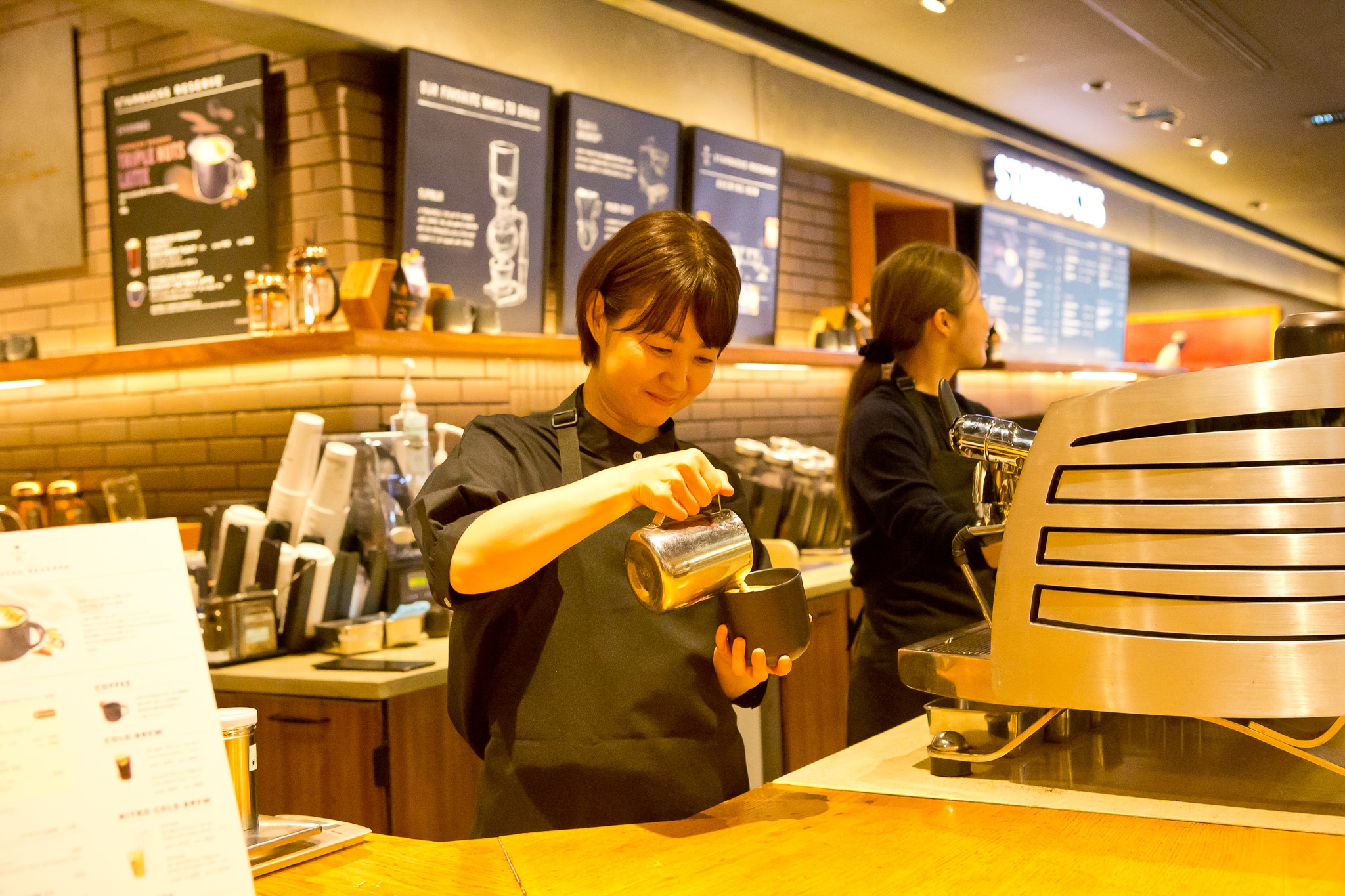
The order arrived. The welcome got lost.
The menu grew into a collection of daily habits: espresso drinks, cold brew, tea, Refreshers, breakfast sandwiches and baked goods. Frappuccino blended beverages arrived in 1995. The Pumpkin Spice Latte followed in 2003, giving customers a recurring seasonal appointment. Customization lets the same brand serve someone seeking plain coffee and someone seeking something closer to dessert.
Digital ordering makes that routine easier. At participating stores, customers can order ahead, pay through the app and collect Rewards. But a phone can accept an order faster than a person can steam milk. Each new route to the counter adds another claim on the same equipment and people. Convenience for the individual can become congestion for the room.
By fiscal 2024, global comparable transactions had fallen 4%. Brian Niccol, who became chairman and chief executive that September, described inconsistent products, overwhelming menus, long waits and hectic handoffs. His diagnosis came from conversations with customers and employees. The failure he identified was in the visit itself: a place associated with a welcome could feel like a processing station.
“It can feel transactional.”
Brian Niccol, September 2024
This was the change of mind that mattered. In a 2025 interview, Niccol acknowledged that reducing seating had been a misstep. Starbucks began restoring the reasons to stay. By September 2026, the company reported more than 1,000 redesigned coffeehouses across the United States and Canada, adding softer seating, artwork, greenery and local touches.
Hospitality has a payroll
The operational repair was Green Apron Service. Starbucks tested the approach in 1,500 stores before its national rollout in August 2025. It combined staffing and service routines intended to give employees more time for drink preparation and customers. Management reported faster service and stronger engagement in the pilot; those were company-reported results.
Additional partner hours announced with Green Apron Service in 2025. Staffing is one component of the broader turnaround.
The staffing investment was $500 million in additional hours. That figure is revealing because it gives a price to something branding language often treats as free: attention. A barista cannot make a careful drink, untangle a queue and have a conversation with three people simultaneously. More labor creates room for those activities, provided the work is organized sensibly.
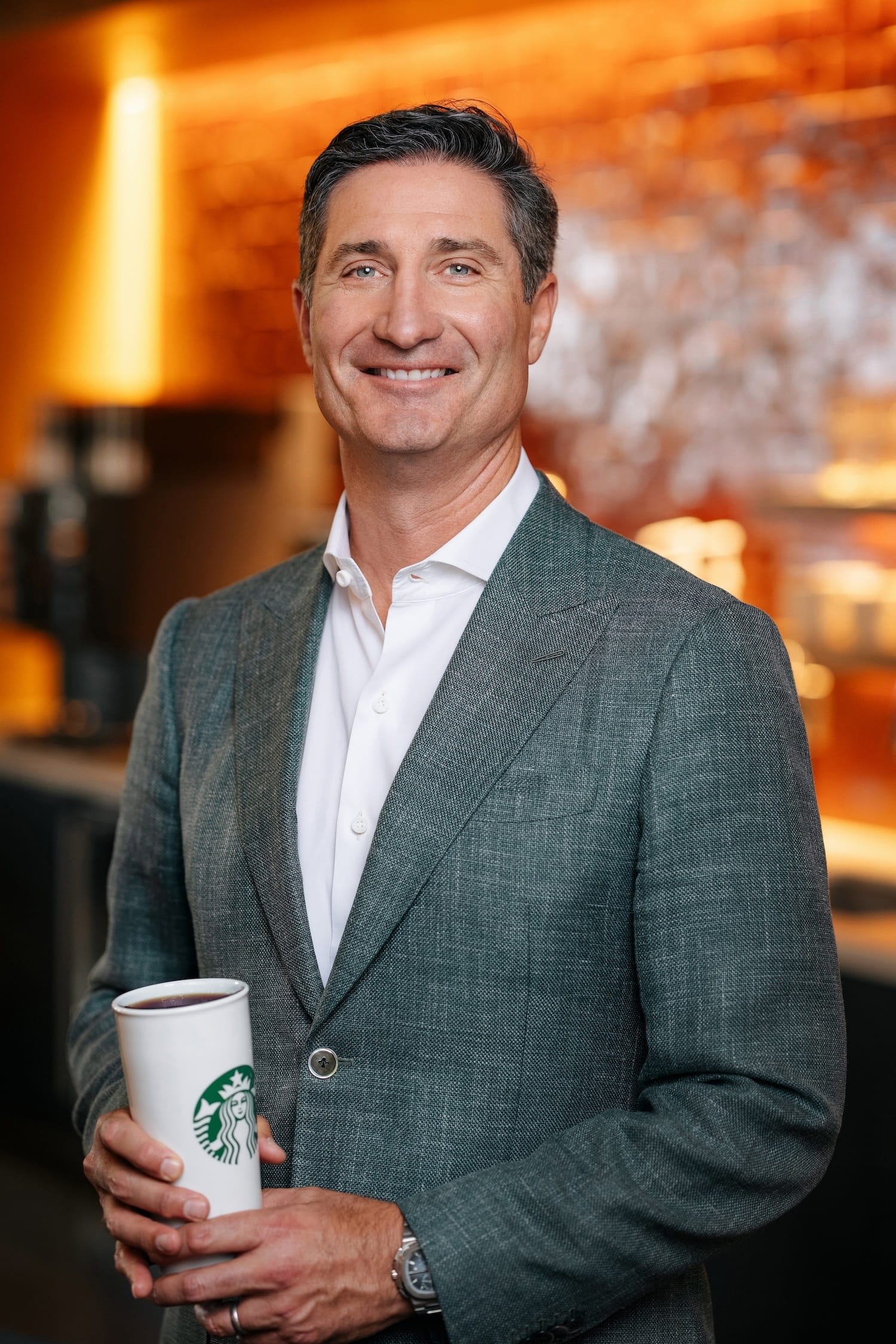
Employees, called partners, are central to that promise. Starbucks offers eligible U.S. partners tuition coverage through Arizona State University, alongside other benefits. Its employment story also includes organizing and bargaining with Workers United. A list of benefits cannot settle questions about working conditions. The service customers experience depends on how the job works during an actual shift.
The café has another business behind it
Starbucks earns money through company-operated stores, product sales and royalties from licensed operators, and products consumed elsewhere. Nestlé paid $7.15 billion in 2018 for a global packaged-coffee and foodservice alliance. That arrangement carries the brand into homes and workplaces through a partner’s reach. A Starbucks purchase need not involve a Starbucks chair at all.
The China business shows another adjustment. In 2026, Boyu-managed funds took a 60% interest in Starbucks’s China retail operations, with Starbucks retaining 40% and licensing its brand. Ownership can change while the sign stays familiar. The challenge is keeping a coherent customer experience across operators and markets with different tastes, rents and competitive pressures.
What the next visit can tell you
The recovery has encouraging evidence. Global comparable transactions rose 4.2% in the third quarter of fiscal 2026. That quarterly comparison differs from the full-year 2024 measure, but it shows customers returning. It does not isolate the effect of staffing, seating, new drinks or marketing. A turnaround changes several things at once; the earnings release cannot tell us what each chair earned.
Global comparable transactions, year over year. Different reporting periods; these are two observations, not a continuous trend.
For another business, the useful lesson is to investigate where the promised experience gets stuck, test a specific repair, then fund the work it requires. Copying the décor would be easier. It would also miss the operating problem. This approach needs customers willing to pay for the experience and enough repeat demand to support the added cost.
A useful test for a shop owner is to follow one order from payment to pickup. Where does it wait? Who explains a delay? Does the employee have authority to fix a mistake? Those questions turn hospitality into observable work. They also help distinguish a problem that needs another person from one that needs a simpler process.
For a customer buying chiefly on price, home brewing or a cheaper chain may make more sense. An independent café may offer a more distinctive coffee experience. Starbucks’s wager is that enough people want its particular combination of customization, familiarity and a welcoming room. The next visit makes that proposition unusually easy to inspect. Order a drink. Watch the handoff. Try the chair.
Keep the conversation brewing
Watch: From coffee farms to the cup · Together, at Starbucks