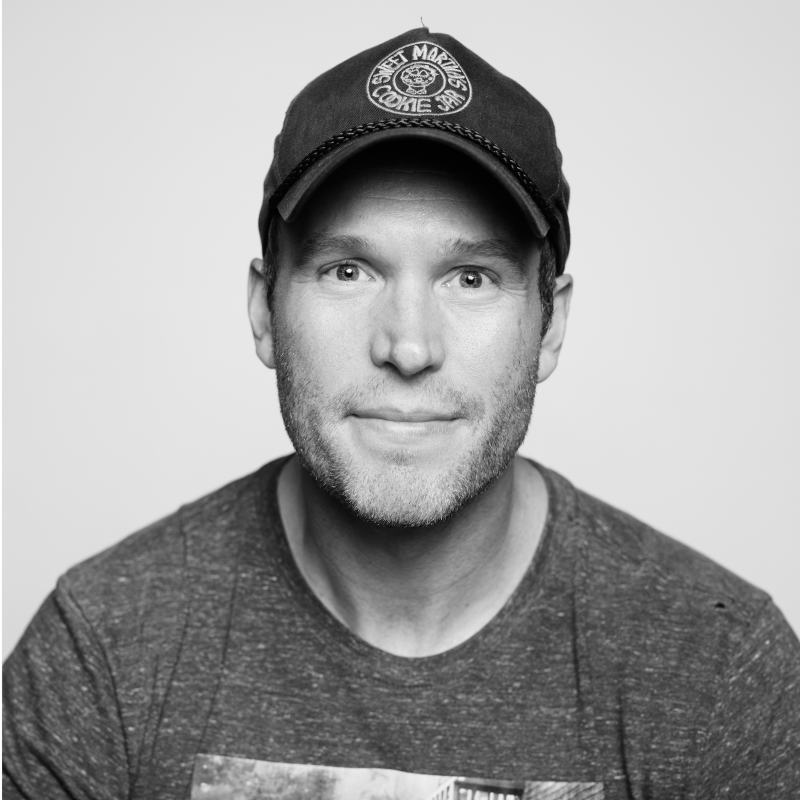
The Kettle That Ended Up in the MoMA Store
Jake Miller runs Fellow from a converted warehouse space in San Francisco's Mission District, a neighborhood that has seen approximately 10,000 "disruptive" startups come and go. Fellow is different in the specific way that matters: its Stagg EKG electric kettle - a gooseneck precision instrument with a matte black finish and an LCD temperature display - sells in the New York Museum of Modern Art's gift shop. Not because it looks like art. Because it is.
Miller founded Fellow in 2013 as a Stanford d.School class project with a clear and singular brief: go from idea to product in one quarter. The first product, the Duo Coffee Steeper, was a dual-purpose French press variant for hot and cold brews. The Kickstarter raised $200,000. It took 15 months to ship. The fulfillment cost $330,000. The product was so hard to use and clean that Miller eventually scrapped it entirely.
Most people would have stopped there. Miller went back to the drawing board, started pitching investors, and collected 73 rejection letters before his first yes - a $250,000 angel check that kept Fellow alive. That gap between the first $200K raised and the path to $42M total funding contains roughly a decade of iteration, patience, and a studied refusal to move fast without having something worth moving fast toward.
Today Fellow sells premium coffee gear - electric kettles, precision grinders, travel mugs, scales, pour-over tools - in 45+ countries, through Williams-Sonoma, Crate & Barrel, Nordstrom, and its own flagship stores in San Francisco and Venice Beach. The company is valued in nine figures. It sells at airports and in museum shops. And it all traces back to a class project, a failed first product, and a founder who kept count of every no.
Nothing was going to stop me. Each no was simply one step closer to the eventual yes - and if it would have only been no's, I would have figured out how to sell a kidney.
Jake Miller, Fortune (2026)Miller grew up in Minnesota and holds a marketing degree from the University of Saint Thomas, followed by an MBA from Stanford's Graduate School of Business (class of 2013). Before Stanford, he spent time as a Brand Manager at Caribou Coffee - not a barista, but someone who traveled to coffee-producing countries, worked alongside roast masters, and started to understand the gap between what roasters were doing and what home equipment was available to people who cared. The equipment, broadly, was ugly and frustrating. The specialty coffee movement was real and growing. The gear hadn't caught up.
During his MBA, Miller interned at Enlisted Design, an Oakland product design agency run by Jared Aller and Beau Oyler. That's where the design-first instinct crystallized. Fellow's products quote Dieter Rams explicitly - the German industrial designer behind Braun's legendary product line, whose "10 Principles for Good Design" remain the closest thing to a constitution that thoughtful product makers have.
-
Stanford GSBMBA, 2011-2013
-
Stanford d.SchoolLaunchpad Course - where Fellow began
-
Univ. of Saint ThomasB.S. Marketing
How a Class Project Became a $100M+ Company
The Stanford d.School's "Launchpad" course has a simple prompt: turn an idea into a real product in one quarter. Miller's idea was the Duo Coffee Steeper - a sleek vessel that could brew both hot and cold coffee without needing two separate pieces of gear. The Kickstarter was a success by every measure people use to define Kickstarter success, and a failure by every measure that actually matters.
The $200,000 raised looked like validation. It was actually just demand. Demand isn't a company. Miller found that out over 15 months of production problems, supply chain lessons, and customer support conversations. By the time the Duo Coffee Steeper reached backers, he had spent $330,000 to fulfill $200,000 in orders - a $130,000 loss - and the product was still flawed. It was hard to clean, unreliable, and complicated to use. He scrapped it.
The pivot wasn't dramatic. Miller didn't change his thesis - the gap between specialty coffee and the tools people use at home was real, and it was still there. He changed the product. He moved toward kettles. The Stagg Pour-Over Kettle came first (2015), followed by the Stagg EKG Electric Kettle in 2016. The EKG was designed for a specific kind of pour-over obsessive: someone who wanted temperature control to within a single degree, a gooseneck for precision pouring, and a piece of gear that looked as serious as it performed. It sold roughly $500,000 worth after its Kickstarter launch. Fellow was now a company with a product that people were proud to leave on their countertops.
Between the first product's failure and the Stagg EKG's success, Miller was pitching. Constantly. To angel investors, small funds, anyone who might write a check. He kept count. Seventy-three rejections. The objections varied - coffee is a low-margin business, hardware is hard, consumer goods startups are unpredictable - but the pattern was the same. No. No. No. The $250,000 angel check that finally arrived didn't end the uncertainty; it just gave Miller enough runway to keep building.
First Kickstarter Math
Brands take a long time to build. It took Fellow seven years to reach goals I initially expected in three.
Jake MillerWhat Fellow Actually Makes
Each Fellow product targets the gap between professional barista equipment and mass-market kitchen gear. Miller's rule: never choose between aesthetics and functionality.
Precision temperature control, gooseneck spout, counterbalanced handle. Designed for pour-over obsessives. Now in the MoMA store. Raised ~$500K on Kickstarter at launch.
Raised $1M+ on Kickstarter. Features a Smart Speed PID Motor with RPM-monitoring. Flat burr design optimized for filter coffee - the first grinder from Fellow to target serious home brewers.
31 grind settings. Sub-$200 entry point. Designed to bring Fellow precision to coffee drinkers earlier in their specialty coffee journey without the Ode's price point.
A compact coffee brewing scale with a clean, Fellow aesthetic. Part of the broader push to complete the precision brewing ecosystem at every price tier.
$365. 10-cup thermal carafe. Programmable batch brewing and single-serve modes. Fellow's first drip machine - and an argument that home drip coffee can be as precise as any pour-over.
Ceramic-coated interior, splash-proof lid. Keeps coffee hot without metallic aftertaste. Fellow's answer to the Stanley cup moment - a travel vessel for people who care what's inside it.
The Dieter Rams Lineage
Dieter Rams spent 34 years designing for Braun and Vitsœ. His "10 Principles for Good Design" - which includes declarations like "good design is as little design as possible" and "good design is honest" - form the closest thing to a shared manifesto that serious industrial designers recognize. Miller cites them explicitly. The influence is visible in every Fellow product: clean forms, functional logic, no decoration that doesn't serve a purpose.
The coffee gear market Miller entered was crowded at both extremes. On one end: commercial espresso machines and professional grinders built for cafes, priced accordingly. On the other: mass-market drip machines and blade grinders that valued cheapness over craft. The middle was empty in a specific way - there was almost nothing that looked like it belonged on a design-conscious person's countertop while also performing at the level specialty coffee demanded.
Miller's thesis was simple: the specialty coffee movement was producing better beans, better roasters, better cafes. The missing piece was home equipment that matched. Not equipment that looked beautiful in spite of being functional - equipment where the two were inseparable. His frame: "works of art" that push the "bleeding edge" of what home coffee equipment can do.
The Stagg EKG proved the thesis. A gooseneck kettle with an LCD temperature display and counterbalanced handle sounds like a product brief that could yield something clunky. Miller's version is routinely described by coffee reviewers as the best-looking piece of equipment in their kitchen. The design won a Red Dot Award. It ended up in museum stores. And it sells - consistently - at a price point that mass-market competitors can't touch and don't want to.
10 Principles for Good Design - Miller's explicit design constitution. "Good design is as little design as possible."
The reference brands: products that are iconic because function and aesthetic are the same decision, not competing ones.
Furniture company Miller cites for consistent, timeless product lines. The standard for building a brand across multiple SKUs.
Oakland product design agency where Miller interned during his Stanford MBA. His design education in practice.
- ★ Red Dot Design Award
- ★ Dezeen Awards
- ★ SFMOMA Museum Store
- ★ NY MoMA Store (permanent collection)
- ★ Specialty Coffee Association recognition
- ★ Fortune 9-Figure Company profile (2026)
Eight Years of Patience, Then $42M
Miller bootstrapped Fellow for most of its first decade before taking institutional money. His Series A in 2021 was entirely from angels. The Series B came with Benchmark's Peter Fenton.
From Class Project to Nine Figures
Specialty Coffee as Iconic Culture
Miller wants Fellow's gear to carry the cultural weight that Nike sneakers or Apple products do - objects people are proud to own, that signal something about their values and attention to craft. His frame for the specialty coffee market: better beans, better roasters, better cafes already exist. The home experience is the last gap to close.
His broader test for Fellow's success isn't just revenue; it's whether the brand has become synonymous with the idea that great coffee at home is attainable - not just for professional baristas, but for anyone who cares enough to have the right tools.
- Fortune: "This millennial founder got rejected 73 times before building a 9-figure coffee company"
- TechCrunch: "How Fellow bootstrapped for 8 years to build a coffee empire"
- TechCrunch: "Coffee paraphernalia co Fellow brews up a round of funding"
- Coffee Tea & Magazine: "Making is in My DNA"
- Assembled Brands: Interview with Jake Miller
- SFMOMA: "Who Is Fellow?"
- Daily Coffee News: Fellow Raises $30M Series B
How He Builds
Miller bootstrapped Fellow for eight years before institutional money. His rule: don't install expensive systems until you actually need them. Minimize infrastructure; maximize product. Wait for momentum before accelerating - "accelerating nothing just makes you move nowhere faster."
Miller uses Warren Buffett's personal framework for career decisions: would you do this work if you didn't need the money? He left home remodeling after 18 months because the answer was no. Fellow passed the test. So does waking up to brew a pour-over before checking email.
Fellow runs on Asana, Google Suite, Zapier, Slack, and Shopify. Miller is a practitioner of restraint in operations the same way he is in design. The tools reflect the company: purposeful, not elaborate, and always in service of the thing that matters - the product itself.