A hospital floor and a family’s moving boxes seem to belong to different businesses. One needs cleaning; the other needs carrying. Then consider what the customer is actually handing over: access to a place that matters, a deadline, and permission to get something wrong. ServiceMaster Brands has assembled a business around that uncomfortable little transaction. Its brands do the physical work. Its franchise system tries to make the encounter repeatable.
- Cleaning, restoration, moving and junk removal sit under one corporate roof.
- Local franchise owners deliver much of the work; the parent supplies brands and business support.
- The operating challenge is consistency, especially when customers have many locations.
That distinction matters if you are buying a service, buying a franchise, or simply wondering why a familiar truck keeps appearing in unfamiliar industries. ServiceMaster serves two customers at once: the person who needs help and the entrepreneur who wants a business that already has a name, methods, and a support network.
A moth, a franchise, a $1.553 billion deal
The origin is wonderfully unglamorous. Marion E. Wade started a moth-proofing company in Chicago in 1929. A former minor league baseball player and salesman, he began with a problem small enough to fit in a wardrobe. The company dates its first residential and commercial franchise sale to 1952. That was the consequential expansion: another owner could operate the service.
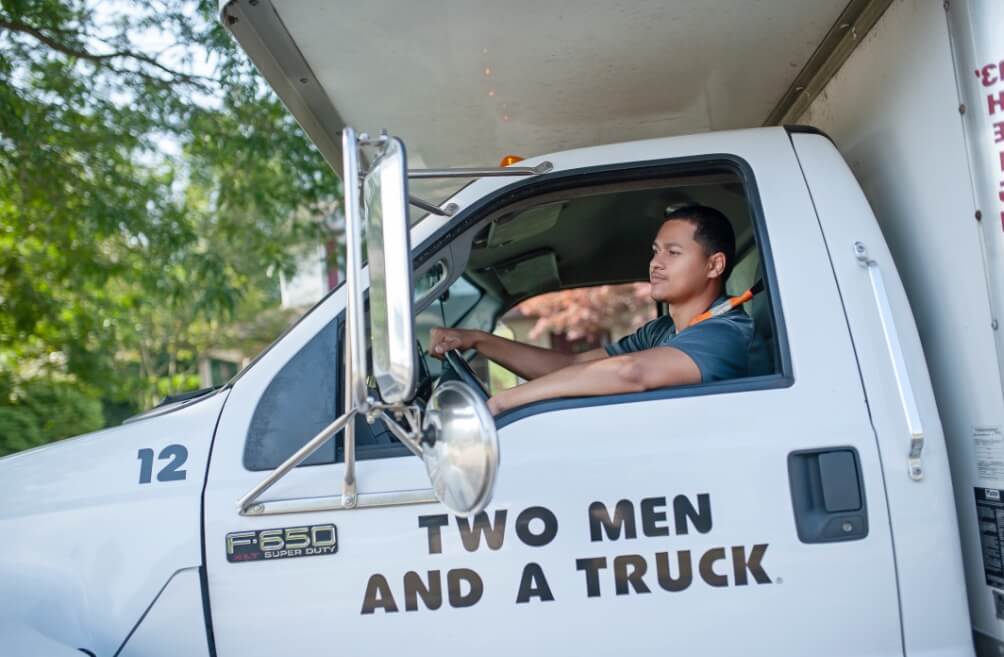
Acquisitions widened the occasions on which someone might call. Merry Maids joined in 1988. Disaster recovery became an organized business in 1993. Much later, moving entered the portfolio through the 2021 acquisition of TWO MEN AND A TRUCK. TWO MEN AND A JUNK TRUCK followed in 2023. The connection is practical: homes and buildings need looking after, and sometimes their contents need to leave.
The ownership changed, too. Roark Capital acquired ServiceMaster Brands in October 2020, in a transaction announced at $1.553 billion. The seller said the separation would give its remaining pest-control business greater management focus and resources. For the service brands, it meant an owner already experienced in franchised and multi-location businesses. This was the purchase of an operating network with established customers and franchisees.
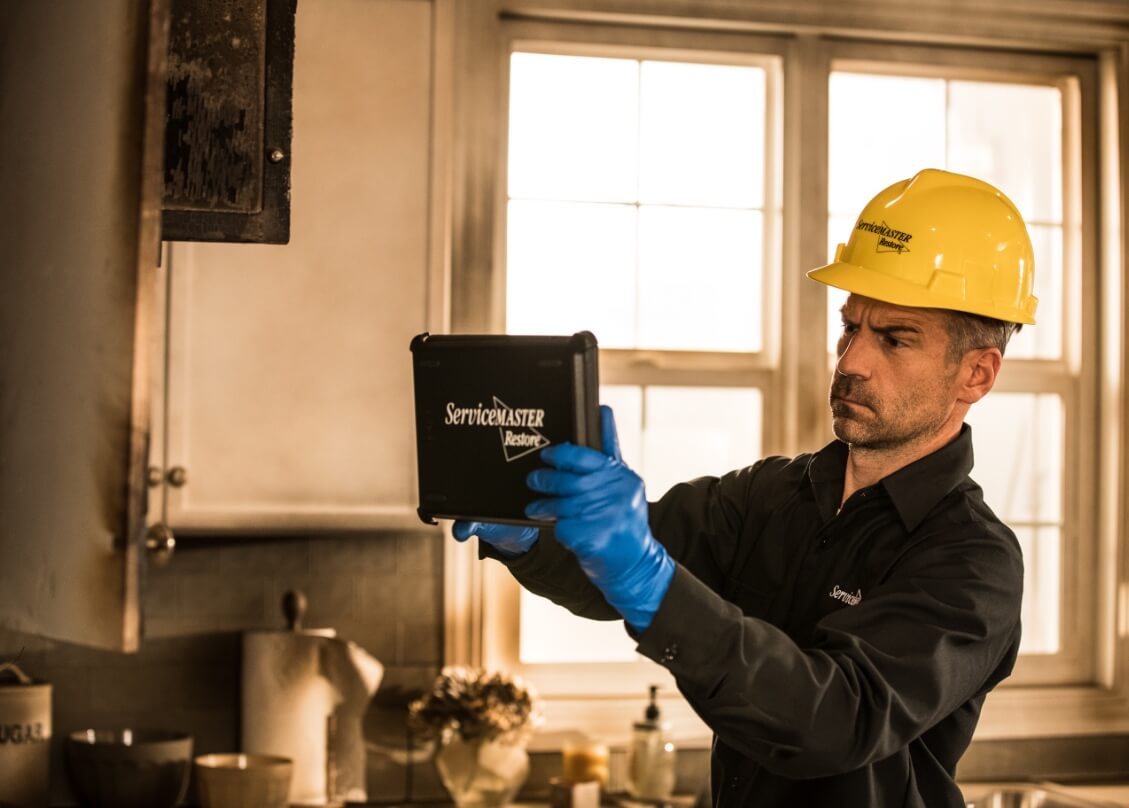
The portfolio has also shrunk in places. ServiceMaster sold home-inspection brand AmeriSpec and furniture-repair business Furniture Medic in 2023. Those exits deserve a place beside the acquisitions: the company’s present shape came from subtraction as well as addition. An old list of ServiceMaster businesses can be a poor guide to what a customer can book today.
One contract. Many front doors.
Consider a company with buildings in several cities. Each building needs a cleaning crew. Each crew needs instructions. Someone must notice when the agreed work has slipped. The customer could assemble that arrangement contractor by contractor. ServiceMaster Clean’s Strategic Accounts Program offers another route: one cleaning agreement, consolidated billing, a dedicated contact, and reporting across locations.
The revealing feature is the inspection process. The company describes standardized checklists and Express Inspections that monitor cleanliness scores, completed tasks, and compliance with service protocols. Cleaning is the visible output. Coordination is a substantial part of the purchase. A facilities manager needs to know whether the same promise is being kept at every address.
Clean → commercial routines
Merry Maids → household cleaning
Moving + junk removal → booked jobs
Restore → damaged homes and businesses
Recovery Management → commercial disaster recovery
The distinction from competitors lies partly in this breadth. SERVPRO offers a substantial restoration franchise alternative. Molly Maid offers household cleaning through its own franchise network. Independent local contractors compete job by job. ServiceMaster puts several needs within one portfolio, while keeping recognizable specialist brands. Customers can choose the business appropriate to their problem rather than decode one enormous menu.
Those problems run on different clocks. Merry Maids can return on a household’s schedule. Restore advertises round-the-clock help after water, fire, mold, and storm damage. ServiceMaster Recovery Management addresses commercial disasters. TWO MEN AND A TRUCK offers moving, packing, and storage options. Expertise means matching the crew, equipment, and process to the situation; owning several logos does not make the work interchangeable.
The work behind the uniform
Brian Houtman’s experience offers a useful close-up. The Merry Maids owner operates across several Texas markets, including Houston and Fort Worth. In an April 2026 company interview, he described early months spent learning which performance measures mattered. Conversations with a business-development consultant sharpened his attention to revenue growth and employee retention. He now uses weekly reviews and team alignment sessions.
“Culture requires constant attention.”Brian Houtman, Merry Maids franchise owner
There is a limit built into that observation. A franchise can supply processes; the owner still has to lead people. Houtman connects consistent customer experience with technicians feeling supported. His example suggests something a new owner can copy immediately: review the numbers regularly, then ask what conditions employees need to produce them. The uniform cannot conduct that conversation.
What you can borrow
Buying access to a system takes capital. ServiceMaster Clean’s dated October 2026 guidance puts estimated initial investment at $111,800 to $187,500, covering equipment, technology, insurance, advertising, and early working funds. Franchise fees and continuing royalties are part of the broader business model. The current disclosure document and agreement determine the actual obligations. A startup estimate is a budget input, not a promise of profit.
The network can carry a shared project beyond paid work, too. Restore and Clean reported raising more than $500,000 for Hire Heroes USA after partnering with the veterans’ employment nonprofit in 2023. Local fundraising events used company-provided toolkits and marketing support. It is a smaller example of the same organizational idea: give local owners a common structure, then let them mobilize their own communities.
The practical lesson travels beyond franchising. Standardize the handoffs: the booking, the instructions, the inspection, the invoice. Keep a named person accountable when several locations are involved. Then preserve room for local judgment. This approach depends on adequate staffing and attentive management; it offers little protection when an operator cannot reliably deliver the underlying service. ServiceMaster’s central wager is that national organization and local ownership can help each other. Every appointment tests it again.