Imagine the dishwasher stops working on Tuesday. On Thursday, a pipe begins leaking. The two incidents share an address, an owner and a mounting sense of irritation. Yet the search for help starts twice. For years, The Dwyer Group owned businesses capable of answering both calls. The intriguing part of its story is how long it took to make that relationship visible to the person standing in the kitchen.
- Dwyer Group became Neighborly in 2018, after launching a shared consumer platform.
- Its customers include households seeking repairs and entrepreneurs seeking a franchise system.
- The useful lesson: make the next relevant service easy for an existing customer to find.
The family nobody could see
Don Dwyer started the business in Waco in 1981 with Rainbow International Carpet Dyeing & Cleaning Company. Carpets introduce you to something valuable: a household with recurring maintenance needs. Over time, the group grew into a collection of specialists serving different parts of the same property.
There was a catch. In a 2017 interview, marketing chief Lisa Zoellner explained that the franchise brands had been managed separately. Customers had little reason to recognize their connection. “Dwyer Group is not a consumer-facing brand,” she said. A holding company could see a portfolio. A homeowner could see a cleaner, a plumber and a bewildering number of browser tabs.
“Dwyer Group is not a consumer-facing brand.”Lisa Zoellner, then chief marketing officer, 2017
Neighborly launched in 2017 as an umbrella connecting those services. Marketing partner Bullish helped develop the brand and digital experience. In September 2018, the company reported a 39% increase in multi-brand customer penetration within a year of launch. That measure describes customers using multiple brands; it does not establish a 39% revenue gain. Still, it gave management a reason to make the consumer name the corporate name.
service visit→A familiar
family of brands→The next
household job
Buying more rooms in the house
The portfolio expanded through acquisitions as well as growth within existing brands. In 2015, Dwyer bought Service Brands International, bringing Molly Maid, Mr. Handyman and ProTect Painters into the collection. These businesses gave the group more ways to serve a property without asking a single operator to become an expert in everything.
Today, Mr. Rooter handles plumbing; Mr. Electric handles electrical work; Aire Serv covers heating and cooling. Rainbow Restoration addresses damage, while The Grounds Guys works outdoors. Real Property Management serves rental-property owners. Residential customers sit beside commercial customers in the network. The expertise remains specialized even when the customer’s entrance is shared.
Capital changed hands repeatedly. Riverside invested in 2003, TZP took ownership in 2010, and Riverside returned in 2014. Harvest Partners followed in 2018; KKR acquired Neighborly in 2021. Writing about the Riverside relationship, Dina Dwyer-Owens described support for a formal board, management recruitment, operational improvements and ten add-on acquisitions. Money arrived with organizational work attached.
The network’s sales show the scale of the resulting enterprise: $2 billion for 2018, $3.3 billion for 2021 and $4.6 billion for 2025. These are systemwide sales, encompassing the businesses in the system. Treating them as the parent company’s revenue would make a handsome graph and a poor accounting lesson.
Recognition has followed the expansion. The company announced that all 19 eligible North American brands appeared in Entrepreneur’s 2026 Franchise 500, repeating the previous year’s sweep. Rankings offer prospective owners a starting point for investigation. They cannot tell a buyer whether a particular territory has the technicians, customer demand and economics needed to support another business.
The price of belonging
Neighborly has two audiences. Homeowners want a competent person to arrive. Franchise owners want help building the business that sends that person. For owners, the offering includes a recognizable brand, training, marketing resources, operational guidance and access to the ProTradeNet purchasing network. The local operator supplies the daily execution.
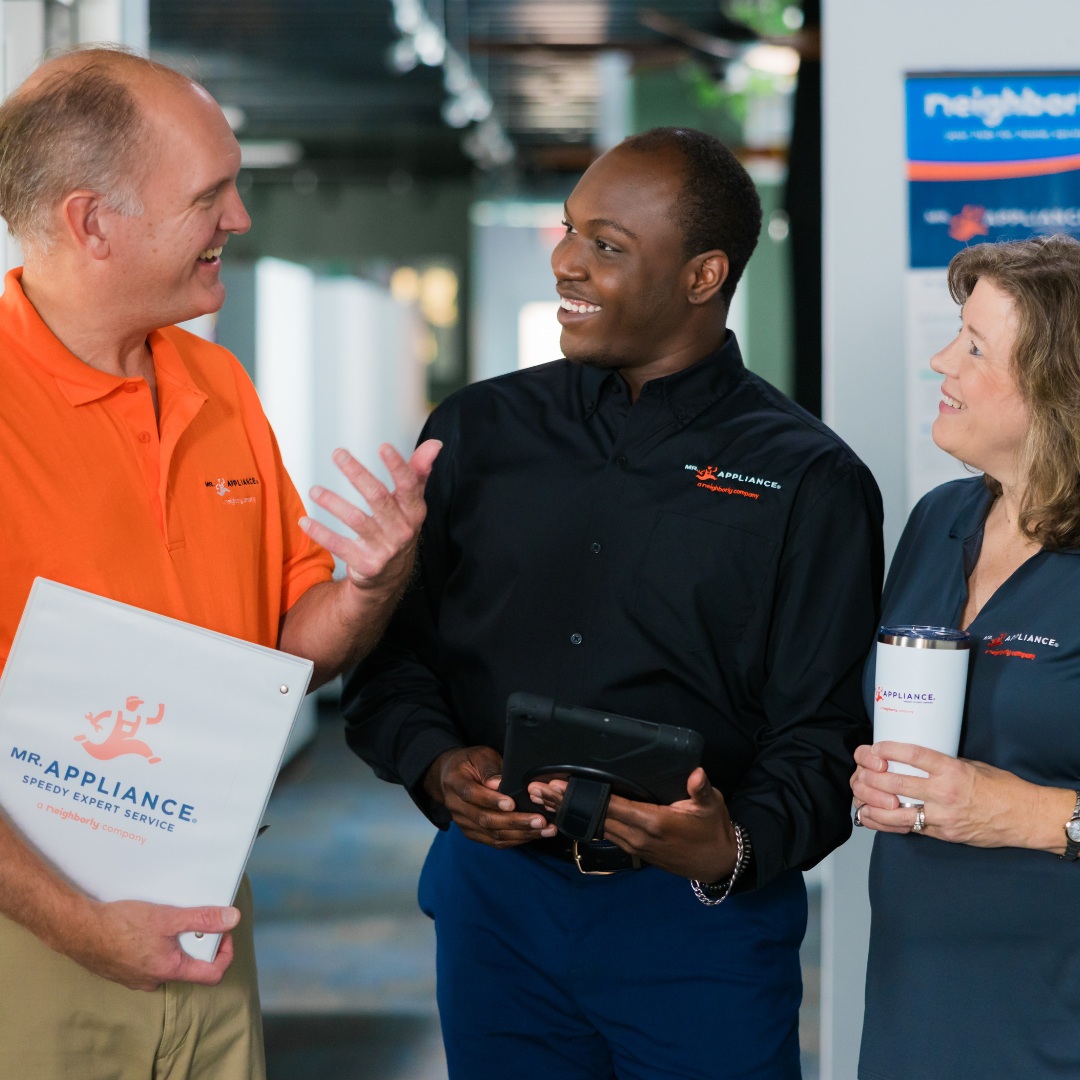
The price is concrete. Mr. Appliance’s current investment page lists estimated initial costs of $147,750 to $273,175, excluding real estate and any additional franchise fee. It calls for at least $85,000 in liquid capital and lists licensing fees of 5-7% of gross sales, with minimums and exceptions. Those figures belong to one brand, under its 2026 disclosure document.
Published initial investment estimate. Real estate and any additional franchise fee are excluded.
Royalties come from sales, so weak margins do not make them disappear. Buying the system therefore requires a calculation about territory, staffing, demand and fees. An owner who wants complete freedom over branding and processes may find the arrangement restrictive. A household in an area without the relevant franchise cannot summon a technician by admiring the umbrella.
A code for the person at the door
Dwyer’s Code of Values emphasizes respect, integrity, customer focus and enjoyment of work. Its particulars are more revealing than its headings: respond promptly, keep commitments and flag agreements that may be broken. In home services, these behaviors have practical weight. A courteous advertisement cannot explain why nobody arrived during the appointment window.
Neighborly’s Done Right Promise supplies a common service commitment, subject to its terms. Individual locations remain independently owned and operated. An independent tradesperson can also provide excellent work; Neighborly’s distinction is the shared infrastructure and breadth of connected specialties. The brand creates an expectation that each local encounter must earn again.
The founder also helped open franchising to another audience. After the Gulf War in 1991, Don Dwyer established VetFran, encouraging participating franchisors to offer financial incentives to veterans. The idea travelled beyond the company, through the International Franchise Association. It is a distinctive piece of Dwyer’s legacy: a discount became an industry program.
The next repair, already in the address book
The newest version of the idea is digital. In June 2026, Neighborly introduced a redesigned U.S. app with booking, service records, documents and personalized maintenance reminders. In September, its CFO announcement highlighted cross-brand marketing and a database of 26 million households. Database records are another measure entirely, rather than a count of annual service customers.
The lesson other businesses can borrow is modest enough to be useful: identify the next adjacent problem, introduce a capable specialist and measure whether customers return across services. It depends on reliable delivery and a relevant next offer. Otherwise, the introduction merely spreads disappointment. The dishwasher and the leaking pipe will never care who owns the holding company. Their owner might care who makes the second call easier.