A house is a peculiar customer. Its dishwasher, lawn and bathroom pipes share an address but require different experts. To the homeowner, they belong to one endless list. To the service industry, they belong to separate businesses. Neighborly has spent decades building a company inside that mismatch.
- Specialist brands do the work; a shared parent connects them.
- Franchise owners buy a business system, then run the local operation.
- The opportunity is repeat trust across different household jobs.
Perhaps you know Molly Maid. Perhaps Mr. Rooter Plumbing has visited your kitchen. Both sit inside Neighborly’s portfolio. So do Mr. Electric, Mr. Appliance, Five Star Painting and The Grounds Guys. The names stay specific because the jobs are specific. The parent’s ambition is broader: when the next thing needs attention, keep the customer in the family.
01 / The name that escaped the boardroom
The business began in 1981 with Don Dwyer Sr. and Rainbow, a carpet cleaning operation. What became Dwyer Group grew through franchising and acquisitions of complementary service businesses. That gave it a collection of brands with a useful common feature: they could all serve the same property.
Owning the collection did not automatically make customers see the connection. Someone who liked a cleaning company still needed to find a plumber. In 2017, Neighborly launched as a consumer umbrella, with a shared online destination and marketing developed with Bullish. The parent was making its ownership structure useful to the person paying for the work.
A year later, the company reported that multi-brand customer penetration had increased 39%. It then changed its corporate name to Neighborly. That figure needs restraint: it was a company-reported increase, without a published baseline or proof that the platform alone caused it. Still, the choice of measurement is revealing. The company was counting whether trust could travel between brands.
The next household problem is also the next chance to keep a customer.
Mr. Electric
The Grounds Guys
Mr. Handyman
02 / The owner buys the machinery
There are two customers here. One wants a working dishwasher. The other wants to own the business that fixes it. Neighborly’s franchise proposition serves the second customer with training, marketing resources, operating systems, purchasing support through ProTradeNet and a network of fellow owners. The homeowner encounters the result at the front door.
Consider Mike Routon, whose story appears on Neighborly’s franchise site. After six years running an independent painting business, he had work but had reached a growth plateau. A local Five Star Painting owner in Spokane spent years explaining the franchise model. Routon eventually joined, opening his franchise in 2022.
“We had hit a stalemate and needed to do something different,” he says in the company-published testimonial. His account credits structured systems, more varied advertising and connections with other Neighborly businesses. His wife’s support helped him make the decision. It is a sales testimonial, not a controlled experiment, but the problem is concrete: word of mouth had carried his business only so far.
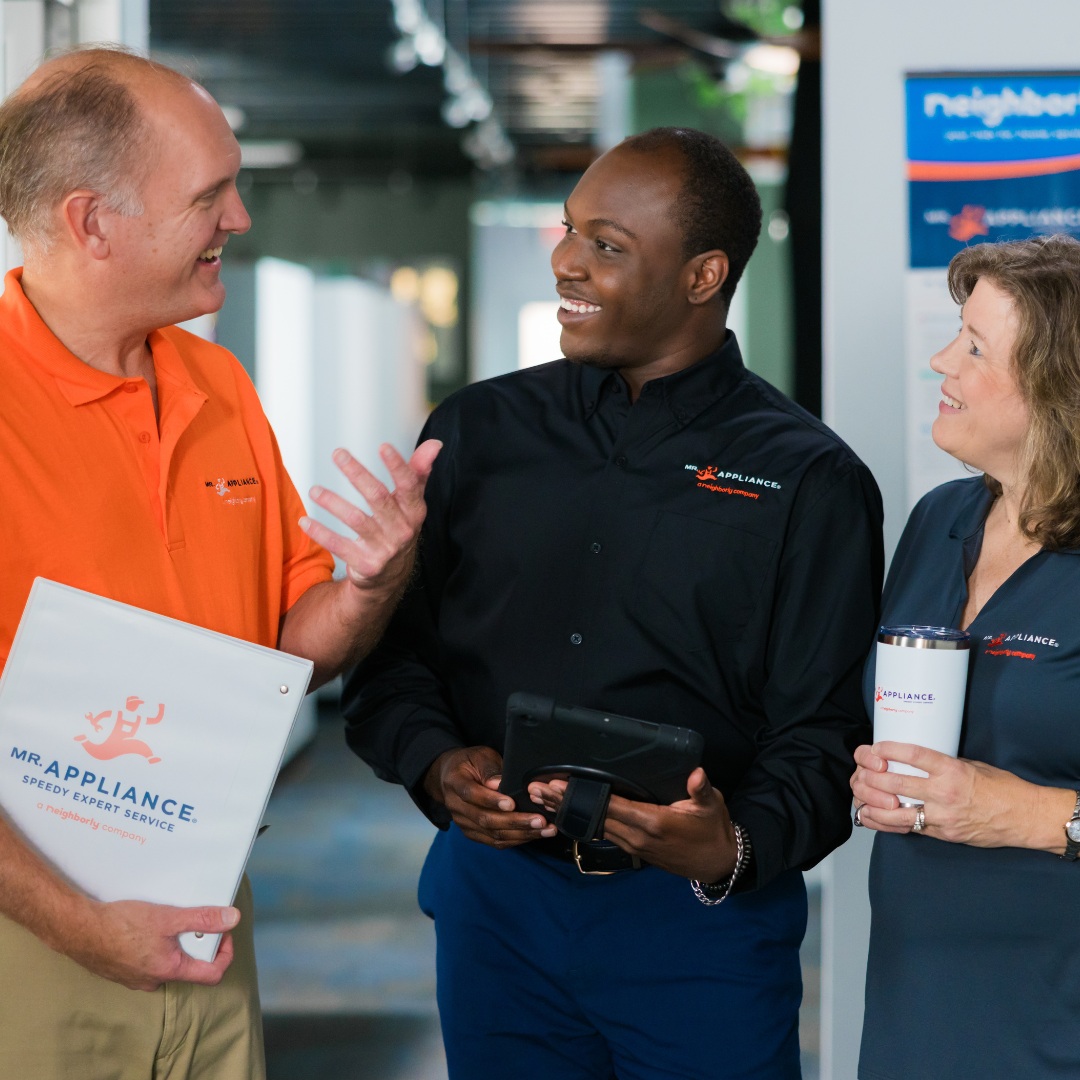
What does that support cost? One current example is Mr. Appliance’s published investment range: $147,750 to $273,175. Its stated licensing fee runs from 5% to 7% of annual gross sales, with minimums and other conditions. The investment estimate excludes real estate and potential additional franchise fees. Other brands have different economics. A familiar name does not remove the need to hire, sell, schedule and manage cash.
The fee basis matters as much as the percentage. Gross sales are measured before the owner pays the technicians, buys supplies or covers other operating costs. The franchise relationship therefore has to deliver enough practical value to justify an expense that follows sales rather than profit.
03 / Follow the sales, carefully
Neighborly’s corporate facts page reports $4.6 billion in systemwide sales for 2025. The word “systemwide” does considerable work. It describes sales across the network, rather than revenue received by the parent. Confusing those numbers would make the franchisor look like a different kind of business.
Private equity has repeatedly bought into that structure. Harvest Partners acquired the company from Riverside in 2018; KKR acquired it from Harvest in 2021. The announcements did not disclose transaction terms. The attraction, in strategic terms, is understandable: separate service categories can share business support while addressing many needs within the same household.
That is also where Neighborly fits in the market. An independent contractor competes on local reputation and execution. A broad directory helps people search among providers. Neighborly combines discovery with ownership of specialist brands and franchise systems. Its reach extends to commercial properties and landlords too, through services including restoration and property management. Breadth creates opportunities; local performance decides whether customers return.
04 / A phone remembers. A person repairs.
In June 2026, Neighborly introduced its redesigned app. It offers booking, service records, home information and maintenance reminders. Estimates, invoices and payments depend on participating brands. The company describes AI features that learn from a home’s digital profile. The practical appeal is less glamorous: finding the receipt when something needs fixing again.
For customers, the distinction between booking and execution remains useful. An appointment record can tell you who is coming and what happened last time. It cannot replace the person with the right skills, equipment and available hours. The digital connection is valuable precisely because the underlying work remains physical.
A shared experience also needs a shared standard. Neighborly promotes its Done Right Promise, while its terms differ by brand. Its R.I.C.H. culture code covers respect, integrity, customer focus and having fun. The corporate website says employees recite it at meetings of three or more. Repetition is the chosen method for keeping those expectations visible. The code also calls for timely responses and early communication when an agreement might be broken. Those are small behaviors with direct consequences for someone waiting at home.
For a homeowner, the useful move is simple: check local availability, get the estimate and understand the specific service promise. For a business owner, the transferable lesson is to connect the next need to the relationship already earned. That logic depends on relevant neighboring services, capable local operators and a handoff customers actually want. The second invitation still has to be earned at the first visit.