At about thirteen, Bill Ready made a careless mistake on a farmer’s truck. He was working in his parents’ auto repair shop in Kentucky, and he expected his parents to handle the explanation. They sent him to face the customer himself. The farmer needed that truck to earn a living. He was angry. Ready remembers the knocking knees and the effort of explaining what had gone wrong and how he would put it right.
It is an awkward memory to carry into a technology career. A dissatisfied farmer is harder to turn into an abstraction than a number on a dashboard. Ready still uses that encounter as a test: could he explain a decision to the person living with its consequences? At Pinterest, where he became chief executive in June 2022, the distance between the decision and the customer can stretch across continents. He wants to keep imagining the conversation across the counter.
The setting matters. His father’s shop was in Vine Grove, near Fort Knox. Small business, in this account, meant one location and customers who could come back through the door. A product decision had a face attached to it. Years later, Ready would work on payment systems, shopping tools and recommendations. The scale changed; the question of what the customer actually received remained available to ask.
One job sounded like a promotion
At the University of Louisville, Ready was the first in his family to attend college. He worked multiple jobs, including overnight package sorting at UPS, while taking classes. He graduated in 2001 with a degree in information systems and finance, and later earned an MBA at Harvard Business School. The polished sequence of credentials conceals a less orderly beginning. He had arrived without knowing how to use a computer.
His first encounter with programming included asking how to save his work on a floppy disk. Then Dana Bowers, a Kentucky entrepreneur, offered him an opening at an online banking startup. Ready bought programming books at Barnes & Noble on a Friday, read through the weekend and began coding on Monday. His immediate attraction was practical: one job could replace two or three. Entrepreneurship had the unexpected virtue of simplifying his schedule.
He has continued to credit Bowers for taking a chance on him. In 2019, while writing about women entrepreneurs, he described her as an early mentor and said they had worked together at three companies. That detail complicates the familiar lone-entrepreneur story. Someone had to offer the inexperienced student a place to begin. Someone also had to see a future beyond the student’s current qualifications.
There was another kind of communication at Louisville. He and Lucy, whom he had known in high school and began dating in college, left notes on each other’s cars when their schedules failed to overlap. He has kept some of hers. Before the career in mobile payments and personalized discovery came a wonderfully literal messaging platform: a parked car.
The unglamorous business of getting paid
Ready’s career moved into the workings of commerce. He led iPay Technologies as president, became an executive in residence at Accel and took the CEO role at Braintree in 2011. Braintree supplied payment technology to businesses. The work sat behind the more visible consumer experience, in the place where an attractive app had to turn a customer’s intention into an accepted payment.
Braintree acquired Venmo in August 2012. Ready led both businesses; Venmo’s announcement promised continuity for its users and more resources for development. These were complementary pieces of a larger shopping problem. Merchants needed dependable ways to accept money. People wanted paying to require less effort. A checkout form may have little aesthetic charm, but its ability to discourage a purchase is considerable.
In December 2013, eBay completed its approximately $800 million cash acquisition of Braintree. The business became a separate service within PayPal, with Ready reporting to PayPal president David Marcus. Venmo remained a separate app. The arrangement placed Braintree alongside a larger network while preserving recognizable products. For Ready, it also opened a route from running a payments startup into the leadership of a much larger company.
By September 2015, he was writing that Braintree expected authorized payment volume to exceed $50 billion that year, compared with $12 billion in 2013. Those figures describe payments handled, rather than company revenue. He also described work enabling Pinterest’s Buyable Pins. The future Pinterest CEO was already working on the connection between a picture someone liked and something a merchant could sell.
At PayPal he became chief operating officer. In a 2018 small-business interview, he discussed Funds Now, a service intended to give eligible businesses immediate access to their money. The concern was concrete: a sale helps less if the seller cannot use the proceeds when needed. When PayPal announced his planned departure in 2019, CEO Dan Schulman singled out his customer focus among his contributions. The auto-shop lesson had acquired a considerably larger transaction volume.
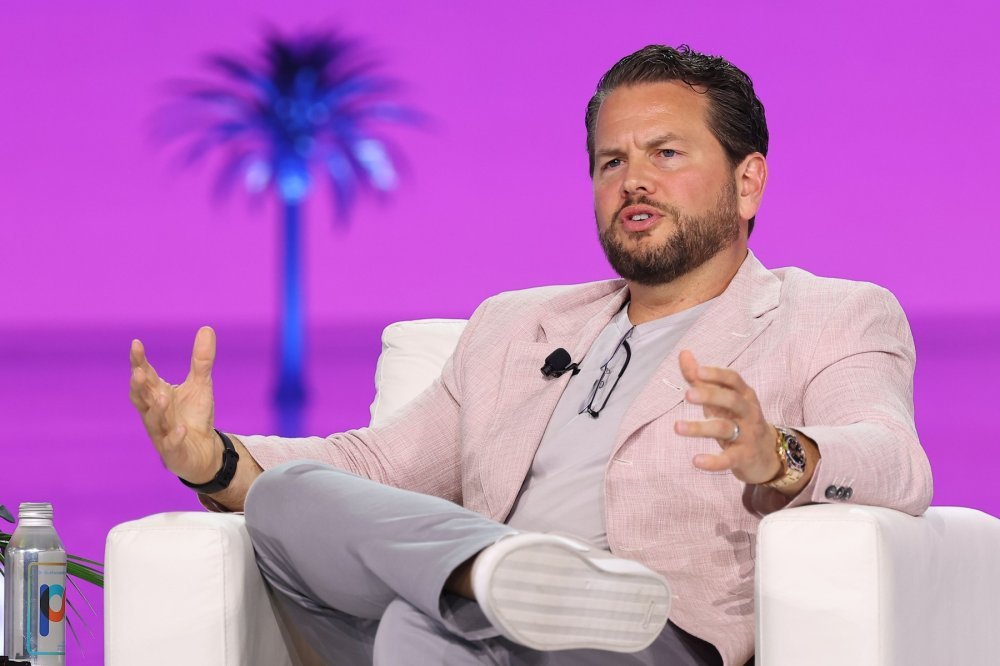
A shopping executive arrives at a pinboard
Ready joined Google as president of commerce in January 2020. That June, he announced an expansion of free retail listings to Google Search, following their introduction on the Shopping tab. In July, he announced that sellers using Buy on Google would no longer pay a commission, alongside plans to open that checkout experience to third-party providers, beginning with PayPal and Shopify.
These were choices about access: which merchants could appear, how much participation cost and which systems could connect. They also help explain why Pinterest recruited him. A person who saves an image has expressed some interest, but interest alone does not tell a merchant whether there will be a purchase. Making that next step useful requires both product design and the plumbing beneath it.
When Ben Silbermann handed over the chief executive role in 2022, he said Pinterest’s next chapter would help people act on the ideas they found. Ready joined the board as well as taking the job; Silbermann became executive chairman. The company had more than 400 million monthly users. This was an established place to collect inspiration, with a new leader whose experience lay in helping people transact.
There is an appealingly ordinary difficulty at the center of that assignment. People can recognize a room they like before they can name its style. A photograph can carry preferences that a search box struggles to extract. Pinterest’s opportunity is to make those preferences legible enough to produce a useful next choice. Ready’s career gives him reasons to care about the whole journey, including its least photogenic steps.
What a save is worth
Ready has argued for recommendations that give weight to deliberate actions, such as saving an idea or clicking through to explore it. His point is that looking at something does not necessarily mean wanting more of it. An intentional choice can tell a system something different from a moment of captured attention. For Pinterest, the commercial question is whether those choices help people find things they will actually use.
His public shorthand for an unhelpful approach is brief: “growth is not a strategy.” It is a useful provocation from a public-company CEO, because growth still has to appear in the results. A company cannot pay its bills with a thoughtful distinction. The argument becomes interesting when it changes product decisions, advertising tools and the reasons people return.
In September 2026, Pinterest announced Visual Search Ads, with placements in search results and Pin closeups and links to advertisers’ sites. It said users made more than 80 billion searches a month, mostly visual, with more than half commercial. The format was announced for beta access. It gave Ready’s shopping strategy a specific expression: put a merchant within reach while a person is still deciding what they want.
The same announcement introduced Restyle in beta in the United States and Canada, letting people use a photograph to explore changes to a space. That brings an old shopping behavior onto a screen: trying an idea against the room you actually have. The challenge is to keep the result useful when the advertiser would also very much like to be invited into the room.
“growth is not a strategy.”Bill Ready, in conversation with Adam Grant
The numbers, and the people behind them
Pinterest’s second-quarter 2026 results supplied evidence of expansion. Monthly active users reached 640 million, up 11% from a year earlier. Revenue was approximately $1.18 billion, up 18%. The company also reported a GAAP net loss of about $47 million. All three belong in the same picture. A growing audience and a growing advertising business leave further questions about costs and lasting profitability.
The transformation has carried a cost for employees. In January 2026, Pinterest disclosed a restructuring plan expected to affect less than 15% of its workforce and reduce office space. It described reallocating resources toward AI roles and products, alongside changes to sales. The company expected completion by the end of September, subject to consultation requirements. A statement about treating people well becomes more demanding when jobs are involved.
Ready has also been assembling the leadership for the next phase. David Brinker’s appointment as global head of content was reported in August. In October, Pinterest announced James Dibbo, an Amazon finance executive, as its next CFO, effective October 26. Content, advertising and financial discipline now sit close together in the task ahead. The boardroom version of a useful customer experience must survive an operating budget.
For a smaller glimpse of Ready’s own taste, there are his Pinterest interests: clothes, sneakers and classic cars. The cars bring the story back to Kentucky without requiring a grand theory. A person can spend a career removing obstacles from digital shopping and still enjoy looking at an automobile.
The farmer’s truck remains the more demanding image. It ties a decision to someone else’s day, income and expectations. Ready can measure searches, revenue and monthly users; he can hire people who know how to expand them. His earliest business lesson asks for something less easily placed on a chart: an explanation the customer would accept. At Pinterest’s present size, that is a conversation he has chosen to keep rehearsing.