The flipchart was doing its best. David Boice sat at a small desk in a car showroom, selling aftermarket products to people who had already bought the main attraction. Rust-proofing. Paint sealant. Fabric protection. At the end of the day, he faxed a handwritten sales log back to the office. A car could travel hundreds of miles in a few hours. Its paperwork required rather more encouragement.
Boice had not planned on this career. A sales job he expected to take in Chicago fell through. He searched newspaper classifieds, endured unsuccessful interviews, and landed in the dealership business. The assignment gave him a close view of how things actually worked. It also supplied the irritation that would outlast the flipchart, the fax machine, and several generations of software.
He wanted a better way to show customers what they were buying and keep track of what had been sold. At 22, he started AutoMark with his father. The initial idea was practical: a digital photo catalog of aftermarket products, accompanied by a sales database. Then dealership staff began asking whether he could do something similar for the cars.
The view from the temporary desk
Working across stores gave Boice an unusual education. He filled gaps in finance and aftermarket departments, sometimes visiting five or six dealerships in a week. Different buildings offered variations on familiar difficulties. Work moved between people more easily than information moved between their systems. The person filling in could see the pattern precisely because he did not belong to just one desk.
He had no formal technology education. His father and other relatives brought computer-science knowledge; Boice brought access to the daily nuisance. That division of labor matters to the story. His first software grew close to the work it was meant to improve, with potential customers already demonstrating where the awkward parts were.
The early business also ran on overlapping shifts. Boice developed and sold software during the day while continuing dealership work at night and on weekends. He recalls needing three or four years before he could concentrate solely on his company. Entrepreneurship, in this version, involved a long period of keeping the old job while attempting to make it less necessary.
He remembers another kind of handoff from those years: carrying deal jackets upstairs so accounting staff could enter the information into the dealer management system. The distance between departments had to be covered by a person holding a file. Later, as more specialized digital tools entered the trade, he worried that dealership managers were being asked to coordinate them all. His objection had the authority of someone who had done the carrying. A new screen might remove the stairs from the process while leaving the repeated work intact. The inconvenience had simply found another place to live.
“Let’s put the band back together.”
David Boice, recalling the conversation behind Team Velocity
A second act with familiar company
AutoMark became part of a much larger automotive technology business and was sold to Reynolds and Reynolds. An exit might have supplied a tidy ending. Boice’s subsequent career has a less tidy shape: another company, another application, another attempt to improve the passage between a customer’s interest and a dealership’s response.
In 2005, he reunited with Budd Blackburn, a colleague from the AutoMark years, to co-found Team Velocity. His musical description of the reunion is useful. A band brings shared experience to its next recording. It also has to produce something people want to hear now. Their new business returned to automotive retail with an ambition that would eventually take the name Apollo.
The early company worked with direct-mail templates and a small staff. Its later identity centered on software. The shift is an instructive part of Boice’s story: the means of reaching a customer changed, while the interest in a coherent relationship remained. A mail piece and a website may have little in common visually. Both make promises that someone else inside the dealership must be able to honor.
His business interests spread across the trade. His career includes BoatVentures, CallRevu, Tier10, and investments in other automotive ventures. The list gives a sense of the territory he kept returning to: businesses where attracting a customer, answering an inquiry, presenting an offer, and completing a transaction have to connect. The customer has one errand; the business can accidentally turn it into several.
A customer with a memory
Apollo borrows its name from the space program. Boice has explained the choice in terms of the difficulty of the mission. There were setbacks. The name makes room for ambition, but the job on earth is easy enough to recognize: help a dealership carry the relevant details of a relationship from one interaction to the next.
Team Velocity describes Apollo as a customer experience platform. Websites, advertising, digital retailing, and retention marketing sit within its scope. The dealer management system retains its own job. Apollo addresses the surrounding activity, where a shopper can otherwise move through several tools that each require a new introduction.
A conceptual view of the activities Boice wants connected, rather than a performance chart.
Consider the everyday expectation underneath that architecture. A person looks at a vehicle online, asks about it, visits the store, and later needs service. Those activities make sense as chapters of one relationship. Repeating a name, a preference, or a request can make them feel like separate applications for admission. The inconvenience is small enough to become routine, which helps explain why it survives.
Boice’s work with Brian Benstock of Paragon Honda and Acura extends the argument beyond the first sale. Their public conversations have emphasized the value of the continuing customer relationship, including service. For a founder whose career began after the vehicle purchase, that return to what happens next has a certain symmetry. The signature on the sale closes one transaction. It leaves years of possible interactions ahead.
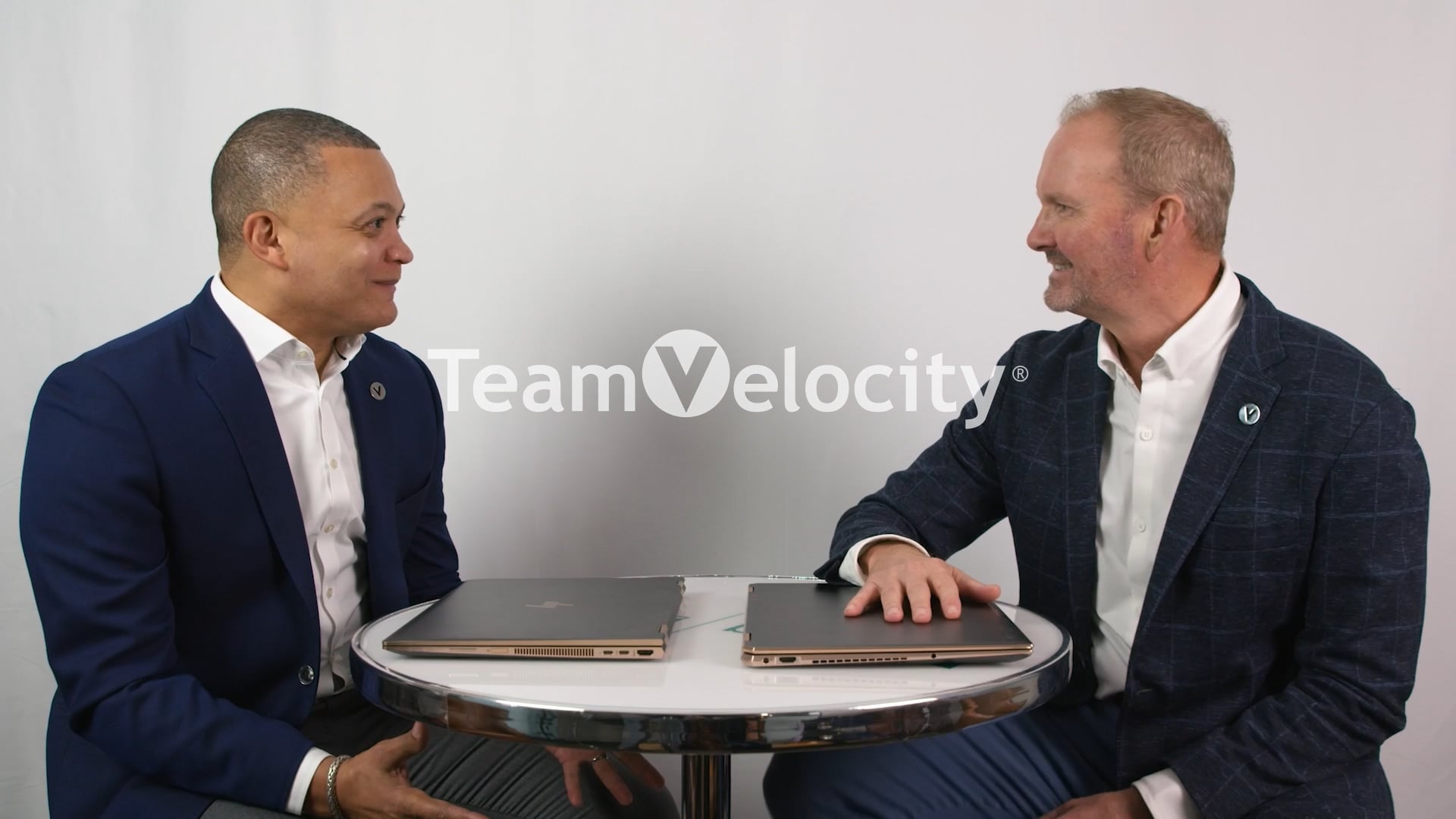
Superspeed, with a calendar attached
Asked which business superpower he would choose, Boice picked superspeed. He was thinking about product development: the team’s appetite to build, the pace of new technology, and the distance between a useful idea and something a client can use. Even a company named Velocity must occasionally wait for the software to be ready.
His advice to founders shows the operating concerns behind that answer. He urges care in giving away equity, faster decisions, and preparation for demand beyond the present quarter. Ownership can determine whose priorities govern the business. Capacity can determine whether a promising sales month becomes a delivery problem. Speed needs room to run.
There is also a change in emphasis between the young founder working extra shifts and the executive writing about running several businesses. In his later account, effort alone cannot carry a growing organization. He describes putting routine decisions into rules, documenting how work moves, and using shared information to make responsibility clearer. The founder cannot remain the permanent switchboard.
That is an interesting complication in a career built on fixing disconnected systems. The same problem can appear inside the company doing the fixing. People need reliable handoffs too. An organization that depends on its founder remembering every exception has acquired a database with a very crowded calendar.
“Curiosity has always been the constant.”
David Boice
The people between the platforms
Boice also puts effort into assembling conversations. The Automotive Leadership Roundtable brought dealers, manufacturer representatives, and technology leaders together, with Car Dealership Guy founder Yossi J. Levi moderating. The mix included FordDirect’s Dean Stoneley, Toyota’s Lindsay Lee, and dealer voices such as Benstock. A discussion about handoffs benefits from having people on both sides of them.
In his account of organizing the event, Boice describes preparing participants to address shared problems rather than talk past each other. The detail is revealing. Putting capable people on a stage does not guarantee that their perspectives will connect. Someone still has to design the conversation. The software argument acquires a human counterpart.
His stated curiosity also has a practical object. He talks about staying near customers and questioning assumptions. Those are useful habits for someone whose first opportunity arrived through ordinary work. The danger, after enough success, would be to let the company’s explanation of the problem become more authoritative than the customer currently experiencing it.
Still working on the handoff
In May 2026, Team Velocity acquired Foundation Direct, a digital agency founded by former Google automotive executives. The companies already had a working relationship: Foundation Direct had used Apollo technology for years. The deal joined media strategy with the existing platform, extending Boice’s attempt to connect advertising decisions with what happens after a shopper responds.
By October, Team Velocity had announced its second consecutive Inc. Power Partner recognition. The announcement offered a current marker for a business now more than two decades beyond its founding. Boice’s accompanying argument stayed close to the old problem: buying more technology does not automatically make the customer’s experience easier.
His ambitions now include AI, although he describes its useful role in terms of supporting people, improving timing, and helping teams interpret information. The desired effect is fairly untheatrical. A customer should be able to continue a conversation. A member of staff should have the context to help. The machinery can remain backstage.
The flipchart has had its retirement. The more persistent assignment belongs to the person who once sat behind it. Boice keeps returning to the moment when a business asks someone to begin again, even though they have already explained what they need. After all the platforms and product names, a little institutional memory remains a surprisingly personal ambition.