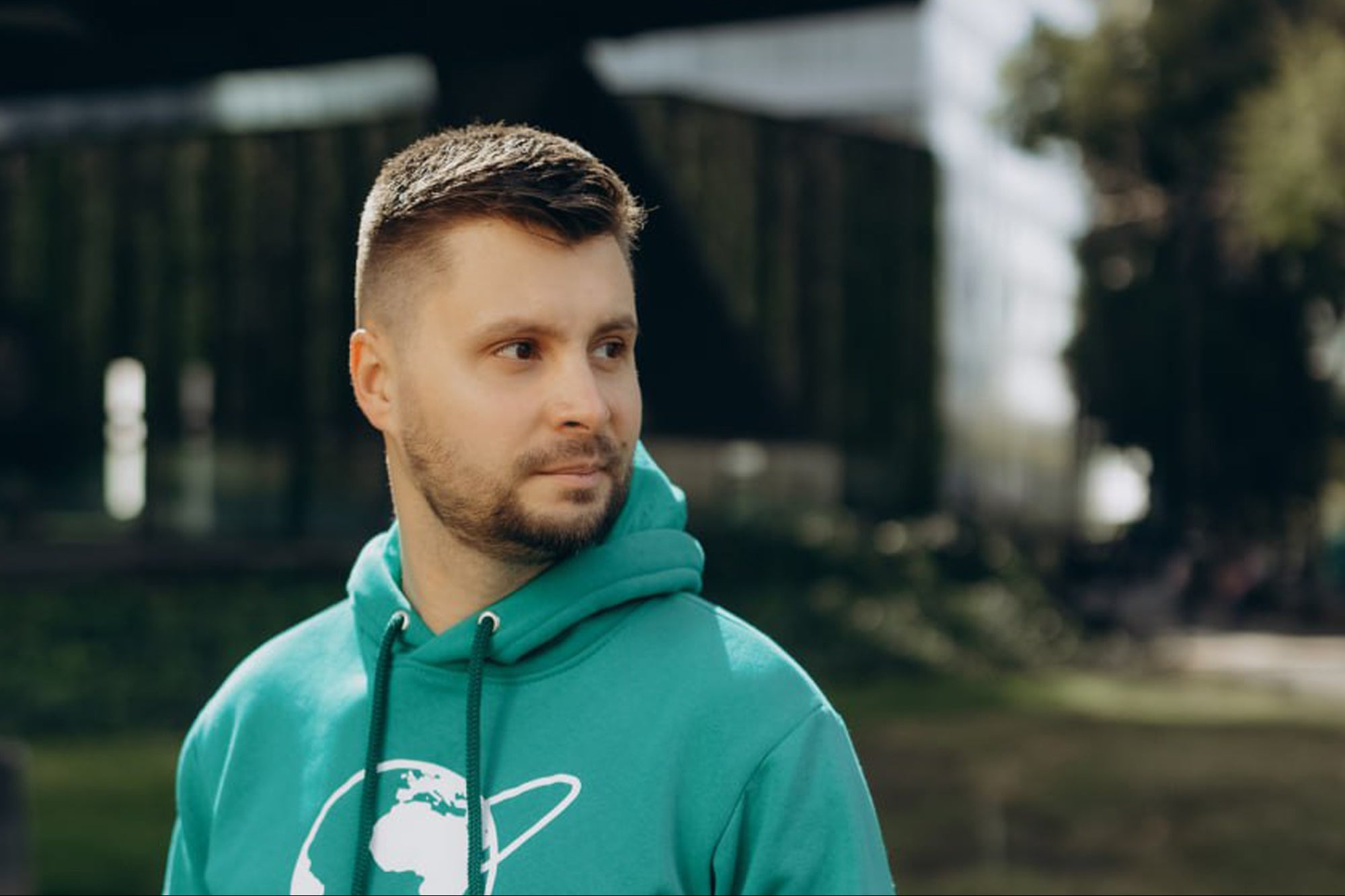
When Danil Kislinskiy welcomed newcomers, he asked them to introduce themselves and explain how they could help. In the welcome instructions for Go Global World, a founder looking for developers could meet someone willing to share developers; another trying to incorporate in Delaware could meet someone who knew the procedure. The grand ambition was international entrepreneurship. The opening move was the conversational equivalent of pulling up another chair.
There were house rules, too. No advertising. No spam. Respect the other people in the room. Speak English so founders and investors from different countries could join in. A global community, it turns out, still needs someone to ask the guests to behave. Kislinskiy’s early instructions have the reassuring specificity of a host who expects people to arrive with both possibilities and bad habits.
Today he is the San Francisco-based founder and CEO of Go Global World, as well as a general partner at GGW Ventures. His project has developed into a platform for connecting founders, investors and advisors. Its underlying question remains pleasantly stubborn: how much of the opportunity attached to a place can travel through an introduction?
A trip, a language, a shorter runway
Kislinskiy grew up in Nizhny Tagil in the Urals. In 2002, a student Work & Travel program brought him to the United States. He remembers becoming proficient in English within two months. Later came approximately eight years at Philip Morris International, beginning in merchandising and progressing into international management. He eventually left for Silicon Valley and studied business and entrepreneurship, including Stanford’s New Venture Creation course.
His first company lasted three months. He attributes the failure to his choice of founding team. That makes an unusually economical entry in a founder’s history: the people problem arrived before the business had time to acquire a lengthy mythology. He continued starting companies and advising entrepreneurs. The lesson about choosing people sits close to the center of his later work.
There is a useful sequence here. Learning a language widened the range of conversations available to him. International work widened the range of people. Founding a company demonstrated how consequential those people could become. The eventual community would give those encounters a structure others could use.
Please introduce yourself. Please spare us the spam.
Go Global World’s community account dates its founding to February 2020, after an idea conceived in 2019. It described a free international network for English-speaking founders. By October, it reported more than 1,500 entrepreneurs had joined in six months, alongside more than 20 partnerships. Those figures belong to the community’s early chapter; they explain the scale of the experiment at that moment.
Kislinskiy wanted people beyond established startup centers to reach entrepreneurial knowledge, useful contacts and capital. He also imagined a community whose members helped shape its development. That is a demanding proposition for a founder. Being the person who starts a room is straightforward compared with persuading everyone else to take responsibility for it.
The welcome instructions made the expectation tangible. Members were asked to describe what they needed and what they could offer. Sharing events and inviting other entrepreneurs mattered because the community described itself as operating without a marketing budget. Its members were part of the distribution system as well as its audience. Participation included helping the next useful person find the door.
An introduction every week
In July 2021, Kislinskiy wrote about Go Global World’s Telegram networking bot. It made introductions automatically on a weekly basis. His description pictured people connecting from cities including Tokyo, Paris and London, as well as a small village in Thailand. The appeal was specific: the bot could bring someone into your orbit whom you were unlikely to approach directly yourself.
Automation supplied a rhythm. A recurring introduction could make international networking part of an ordinary week, rather than something reserved for a flight, a conference badge and an expensive sandwich. The geography was broad; the unit of activity was small enough to act on. Meet one person. Find out whether you can help.
His advice after the introduction was emphatic: keep your word. It is a useful boundary on the promise of networking software. A tool can arrange the encounter. The people in it still have to make the encounter worth repeating. His interest in automation remained tied to an old-fashioned concern about how people behave once they have each other’s attention.
“KEEP YOUR WORD, IT’S YOUR REPUTATION.”
Danil Kislinskiy, on maintaining new connections
That concern also appeared in a September 2022 online networking invitation. Kislinskiy invited members to share experience and support, presenting the gathering as a way to bring the world closer and make it less complicated. The event offered a free ticket and an optional paid mentoring hour. Community access and individual advice occupied the same invitation, with their different purposes plainly visible.
The teacher leaves room for other teachers
His teaching work gives the network another use. In January 2021, Go Global World and the Moscow School of Management SKOLKOVO announced a business-breakfast series for business owners and startups already selling outside their local markets. The online events offered Russian and English with simultaneous translation. Breakfast, in this case, required a Zoom connection rather than agreement about which time zone was hungry.
The program combined entrepreneurial cases, conversations with teachers and community members, and practical materials such as checklists and presentations. Its purpose was to help participants assess their businesses and identify a next step. This was a more structured version of the founding invitation: bring a problem, encounter experience, leave with something you can use.
Kislinskiy also made room for expertise that belonged to others. In August 2021, he introduced a bottom-up startup assessment by Olga Duka, a general partner at Impro Ventures, and thanked Catherine Yushina for helping make it happen. Publishing someone else’s framework is a small but telling editorial choice. A community founder can be useful by knowing whose advice deserves the microphone.
The assessment addressed questions about teams and the competitive advantages created by their combination of skills. Set alongside his account of a first company undone by team selection, the subject has a particular resonance. The framework was Duka’s; Kislinskiy’s contribution was to put it in front of founders who might need it. Mentoring sometimes consists of making the right handoff.
When the address book becomes software
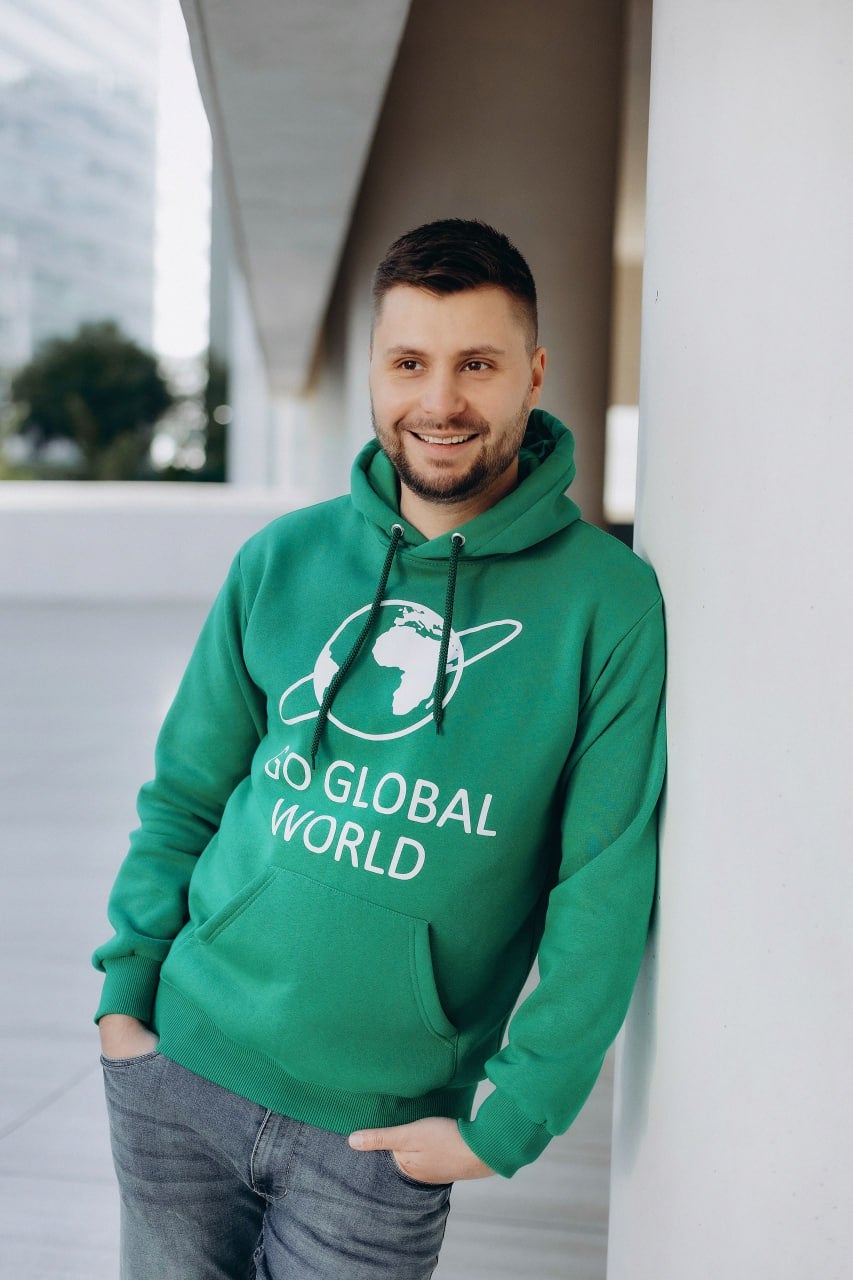
By 2023, Go Global World had developed into a matching platform. Its startup listing identified Kislinskiy as CEO, Ana Pavlova as COO and Dmitry Khanukov as CTO. The product described a combination of filters, messaging, analytics and relationship-management tools. The progression from community to software gave the founders a new place to organize introductions and the work that followed them.
The platform’s published matching process is based on mutual interest: relevant profiles appear through filters, and a conversation opens when both parties choose each other. It supports connections between startups and investors, startups and advisors, and investors themselves. Verification is part of the process. The design makes the recipient’s willingness to engage a condition of the exchange.
Mutual interest opens the conversation.
That is an important detail in Kislinskiy’s story. Giving more founders access to people also means giving those people a reason to remain available. An introduction that ignores the other side’s interests can exhaust the goodwill it was meant to distribute. The software attempts to make relevance explicit before anyone has to compose a polite refusal.
His investor profile describes an interest in B2B software and founders with traction. It also emphasizes people willing to help others become entrepreneurs. Commercial criteria and community behavior appear together. As an investor and founder, he has reasons to care about both the business being presented and the person who will be responsible for it.
The forms behind the dream
In 2024, Kislinskiy described community as a way to improve ideas through exchange with people from different backgrounds. He spoke about combining theory with practical examples in his teaching, and about continuing GGW Sharks pitching events. The point of gathering people extended beyond fundraising: a founder’s thinking could change before an investor ever made a decision.
The international ambition also reaches into less glamorous tasks. In an April 2025 Russian-language podcast appearance, he discussed opening a company in the United States, choosing a corporate structure and establishing a bank account. These are the subjects that follow a grand declaration about going global, usually carrying several forms. His public work includes that administrative side of the journey.
On February 17, 2026, he appeared on Silicon Valley Impact alongside Exonome founder Jonathan Padilla. The episode presented Go Global World’s support for international teams entering the United States, including incorporation, accounting and access to venture networks. It placed community building beside the practical machinery a business needs in a new market.
A different encounter offers a lighter perspective. Kislinskiy posted about meeting YouTube co-founder Steve Chen at a Berkeley SkyDeck gathering hosted by Caroline Winnett. Even someone whose work is making introductions remains interested in being on the receiving end. The community builder is still a participant, listening to another founder’s account of how a company began.
His own project began with a request for an introduction and an offer of help. It now has profiles, matching tools and investment connections around it. The personal wager is easy to recognize: useful knowledge and useful people should be easier to reach from somewhere else. The next step is still the size of a conversation. Someone has to introduce themselves. Someone else has to answer.