Ryan Baird had a plan for decades. Then the increments changed. In his account of running Flotilla, the trading firm he started in 2010, options that had been priced in nickels moved to pennies. The margins narrowed. A business built around finding small differences between prices suddenly had much less room to work. A penny can look insignificant until your livelihood depends on the distance between it and the next one.
Baird describes buying inexpensive volatility and selling expensive volatility, with positions brought back to market neutral before going home. He also wrote algorithms to exploit differences in exchange fees and rebates. Eventually, thinner margins and the cost of competing closer to the exchanges made the economics harder. His college professor's warning had caught up with him: “arbitrage is there, but it doesn't stay there.”
The episode supplies a useful opening to a career that resists a tidy job title. Baird has worked in wealth management, trading, mobile games, international startup competitions and a social network. Today, based in Los Gatos, California, he is CEO and co-founder of Baird Augustine. The constant is an interest in the arrangements that bring people, incentives and capital together. The arrangements themselves have changed considerably.
A trading edge has a price. A professional relationship has a history. His later work spends much more time on the second, though the first remains an unusually concrete reminder that a successful arrangement can stop working. There is little sentimentality in a market that has decided to count differently.
An HP household, then Sand Hill Road
Baird describes himself as a third-generation Silicon Valley native. Both his parents spent their careers at Hewlett-Packard, and he connects his own approach to the company's emphasis on relationships. He says that approach is ingrained in him. His explanation for a business philosophy begins with the workplace that shaped his family rather than a slogan discovered later.
He graduated from San Jose State University and began his finance career at Morgan Stanley's private wealth management office on Sand Hill Road. The location put him in a region associated with venture capital, while the work concerned portfolios, assets and risk. Before he was helping entrepreneurs reach investors, he was working on the investor's side of the table.
His university record has its own small surprises. He completed the College of Business Honors Academy in 2005, with year-long projects for Subaru and the FBI. A car company and a federal agency make an eclectic pair of classroom assignments. His public profile also records involvement in the Entrepreneurial Society and Spartan Investors. The overlap between organizing, business and investing was already present.
That background helps explain the vocabulary of his current work. A founder may enter a meeting thinking about a product. An investor may be considering exposure, timing and how that product fits among existing commitments. Those are different starting points for the same conversation. Baird's early career gave him direct experience of the portfolio questions that sit behind a funding decision.
When the trading screen became a game screen
By September 2014, Baird was Cashplay's business development lead in the United States, after a business development role at Upsight. Cashplay offered real-money tournaments for mobile games. Its commercial proposition involved turning competition into another revenue stream for developers, alongside the advertising and in-app purchases already familiar to the industry.
At Pocket Gamer Connects San Francisco in 2015, he discussed cash tournaments, distinguishing games of skill from games of chance. His presentation addressed retention and purchases as well as tournament entry fees. The audience was a different one from a wealth management office, but the discussion still revolved around how an incentive changes participation.
He also imagined tournaments becoming part of live events and meetups. “It's social, fun and competitive,” he said of that possibility. This was a business development executive thinking about what people might do together in a room, well before his current firm's roadshows. A leaderboard, in this version of the evening, might give guests something more engaging to discuss than the volume of the DJ.
The gaming chapter is useful because it complicates the standard banker biography. Baird was dealing with developers and players, with software distribution and the ways people return to an app. Money mattered, certainly. So did the experience surrounding it. A tournament needs participants; a platform needs a reason for them to come back. The human part of the model cannot be left in a footnote.
“It's social, fun and competitive.”Ryan Baird, discussing live game tournaments, 2015
Tokyo, Jakarta, São Paulo: introductions on an itinerary
Baird's work with G-Startup Worldwide brought that interest onto an international stage. A June 2016 update he published listed competitions in Tokyo, Jakarta and São Paulo, followed by Silicon Valley and later events in Taipei and Bangalore. The calendar offers a more tangible picture of cross-border work than the phrase itself: applications, judging, travel and founders presenting to unfamiliar audiences.
The same update celebrated alumni and linked to coverage of companies including Didi Chuxing, Filld and OpenGarden. His role included communicating opportunities and keeping the wider community aware of what its participants were doing. A competition ends with a winner, but an alumni network continues to need attention after the stage lights have gone out.
He has also listed investor and mentor work with Alchemist Accelerator, Founders Space and Google's Launchpad Accelerator. These affiliations place him in the support structures around young companies: introductions, feedback and access to people who have seen similar problems before. They also show how much of his career has taken place between organizations, rather than entirely inside one.
There is a distinction worth preserving here. Running a competition, investing through a fund and founding the company onstage are different activities. The recognizable names surrounding a startup program can make those differences disappear in a hurried biography. Baird's particular thread is the work of connecting: assembling a setting where a founder can be evaluated, and where an investor can decide whether to keep talking.
- 15 JULTokyo
- 09 AUGJakarta
- 24 AUGSão Paulo
- 28 SEPSilicon Valley
- 21–22 OCTTaipei
- 16–17 NOVBangalore
LYKA: a reward becomes a payment question
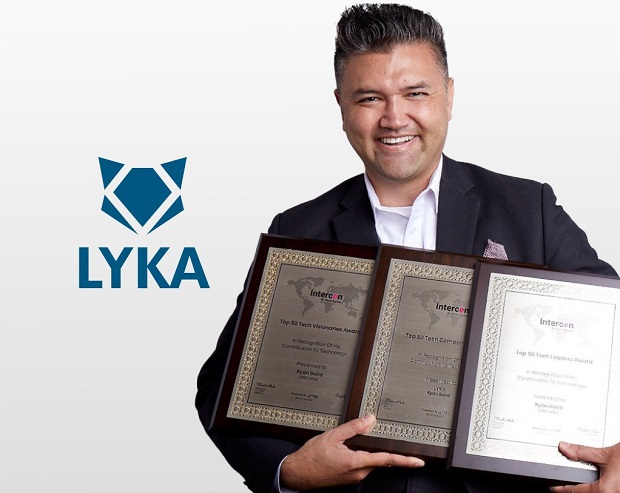
LYKA put Baird into an operating role with much broader public consequences. As founder and CEO, he led a social app where activity earned users GEMs, rewards that could be spent with participating merchants. Posting and interacting were connected to purchasing. In the Philippines, the prospect of getting something tangible from ordinary social media activity attracted users and businesses.
A January 2021 message issued in his name thanked users, described development work and outlined the goal of connecting businesses with customers. The message discussed adding developers from Europe and India and improving the app's reliability. It is a glimpse of the everyday obligations behind a platform's growth: the product must keep functioning while the business tries to expand.
In December 2021, LYKA's Philippine marketing representative described access to around 11 million users and said the company wanted to resume operations. Baird has put the capital raised for LYKA at $35 million. Those figures describe the scale claimed by the business and its representatives; they do not settle the harder question of how its reward economy worked for everyone involved.
On July 22, 2021, the Philippine central bank's Monetary Board directed LYKA to stop operating a payment system without registration and to take action to register. It also directed Digital Spring, a participant in the system, to halt activities including cash-in services and merchant settlement until LYKA registered properly. The boundary between a social reward and a payment system had become decisive.
By February 2023, users and merchants were describing rewards they could no longer use or cash out. Baird was still discussing a relaunch and potential expansion into Indonesia and Malaysia. The gap between those ambitions and the customers' experience is part of his career, too. Growth brought obligations extending beyond a user count, and a functioning social feed could not by itself resolve the payment problem.
The next business begins with the other side of the table
Baird Augustine's leadership page dates his CEO and co-founder role, alongside Henry Augustine, to 2023. The firm describes its work as cross-border investment banking, with a focus on alternative assets, venture capital and institutional advisory. Baird has returned to the world of investors, carrying experience of being an operator who needed their backing.
In conversations with John Light, he has discussed feedback from family offices that felt treated transactionally by investment banks. His proposed response is to build relationships even when no immediate business is available. For an intermediary, that is a practical choice about where to spend time: on a meeting with a visible transaction, or on someone whose needs may become clearer much later.
The firm's roadshow program continues the event work. Its stated format brings companies together with potential investors, and its current roadshow page describes the Silicon Valley Economic Forum as a gathering of business leaders, founders, allocators and policymakers. Baird's role fits a familiar pattern from the competition circuit: create the occasion, bring the participants together, then give the conversation somewhere to go.
A room is a modest unit of financial infrastructure. It can make an introduction possible; it cannot make the investment decision for anyone inside it. That limit is useful. The trade, the game, the social app and the roadshow each depend on participants agreeing that the arrangement serves them. Sustaining that agreement is more demanding than attracting their attention for an afternoon.
Baird's career has moved through several versions of that problem. The nickel-to-penny shift exposed the fragility of a trading margin. Cashplay connected competition with spending. G-Startup organized access across countries. LYKA connected social activity to a reward economy and encountered the requirements of a payment system. At Baird Augustine, his answer centers on relationships that survive beyond the first conversation. The HP household remains in the story, but so do the pennies.