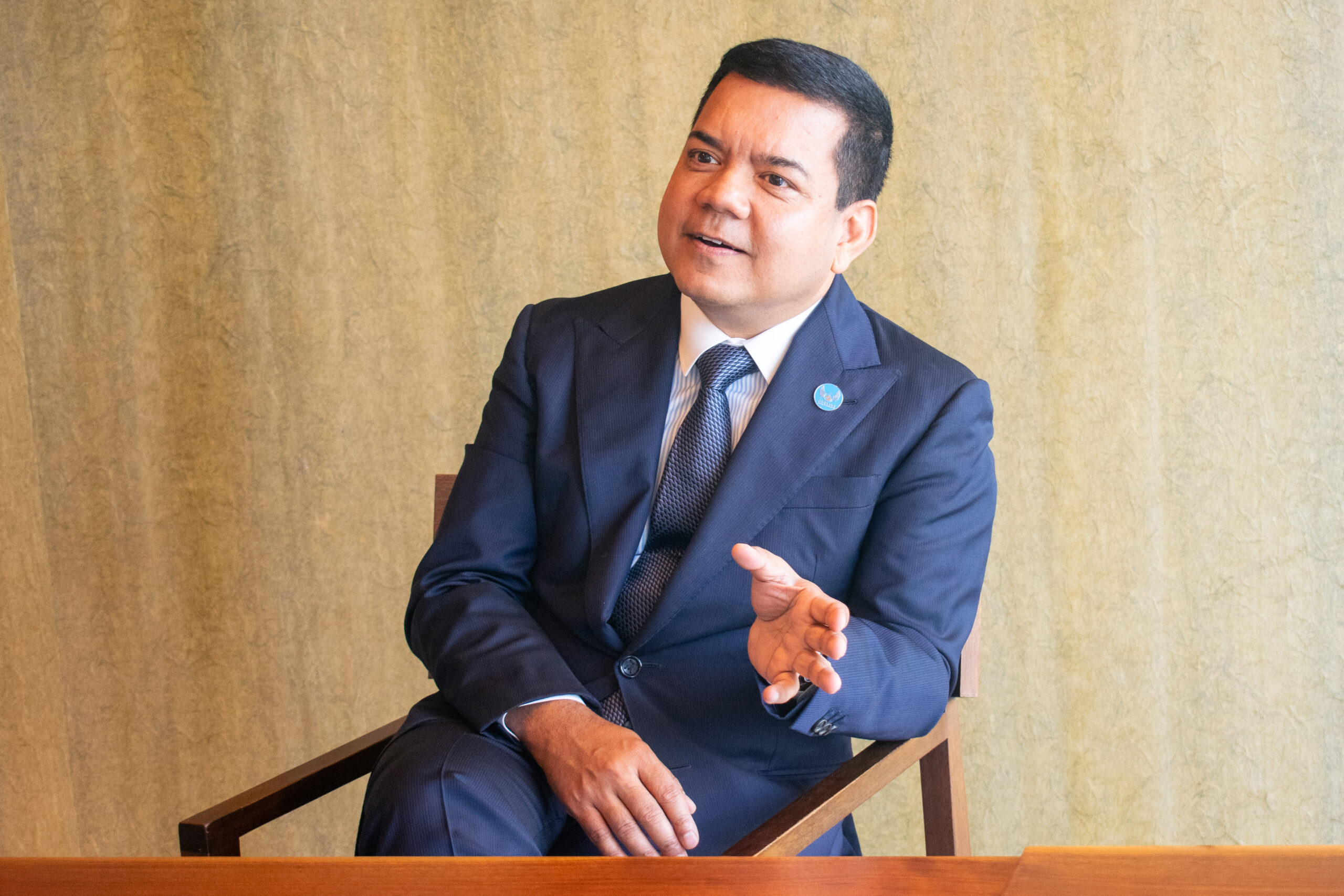
Anis Uzzaman has a job that sounds better on a conference badge than it does on a to-do list. Founder and CEO of Pegasus Tech Ventures. Founder and chairman of Startup World Cup. Somewhere beneath those titles sits a task with considerably less glamour: writing invitation letters to American embassies so entrepreneurs can attend his competition.
In 2025, he put the annual number at 700 to 800. The destinations included Senegal, Ethiopia, and Bangladesh. A founder might have a company worth discussing and still struggle to reach the place where the discussion happens. Uzzaman helps with the paperwork. There is something usefully concrete about that. The word “access” acquires an address, a recipient, and a signature.
His investment firm is based in San Jose. Its work connects established corporations with technology businesses around the world. That makes him an intermediary by profession, although the word undersells the complications. A startup and a corporate customer can want the same outcome while disagreeing about almost everything required to get there. Add a national border and the meeting needs more than a calendar invitation.
A scholarship before a term sheet
Uzzaman arrived in Japan after high school on a government scholarship, without speaking Japanese. His memory of the appeal is domestic: a Sony television and a Hitachi refrigerator back home. Japan was somewhere that made the things he admired. Engineering offered a way to get closer to their makers.
The scholarship came with a deadline. He had a year to pass a university entrance examination. He studied Japanese alongside science textbooks, then entered the Tokyo Institute of Technology. Later came a master's degree at Oklahoma State University and a doctorate in computer engineering at Tokyo Metropolitan University.
His education crossed countries before his investing did. It also supplied two kinds of fluency: an engineer's familiarity with technical work and the Japanese needed to operate beyond an English-speaking business circle. That combination matters in a career built around introductions. Understanding the product helps; understanding the person being asked to buy it helps too.
At IBM and Cadence Design Systems, his work expanded into business development and corporate transactions. Encounters with startups showed him how established companies could learn from smaller ones. In 2011, he founded the firm originally called Fenox Venture Capital, now Pegasus Tech Ventures. He had moved from working within corporations to arranging their encounters with outsiders.
The introduction is part of the investment
Pegasus's central proposition is venture capital as a service, abbreviated VCaaS. A corporation can participate in startup investing through an outside investment team, with its business objectives built into the arrangement. Pegasus handles work including finding companies, assessing investments, managing portfolios, and developing partnerships. The corporate partner brings its own priorities and the possibility of commercial cooperation.
Consider the practical difference that could make to a young business. Money pays for the next stretch of work. A customer can reveal whether that work is useful. A manufacturing or distribution relationship can change what the company is able to deliver. Those advantages require attention after the investment agreement is signed. They also require somebody who knows whom to call.
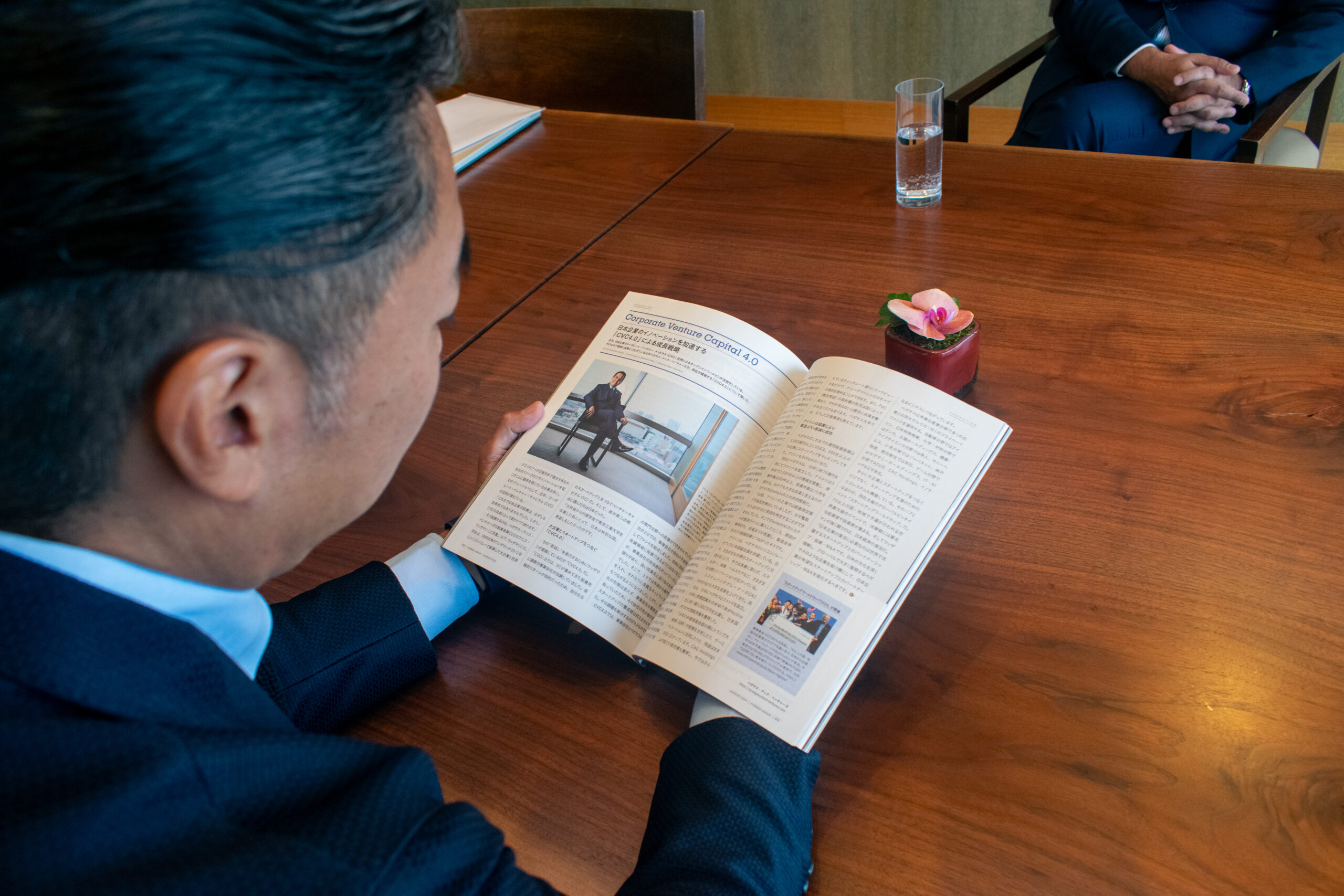
Uzzaman describes his version of corporate venture investing as “CVC 4.0.” In his account, corporations have tried investing in existing funds, building internal teams, and hiring outside professionals into those teams. Outsourcing the venture function is his proposed next step. The numbering has the brisk confidence of a software release. The underlying problem is older: buying expertise is easier than making it work inside an organization.
One example involved the Canadian company Element AI and the Japanese automotive supplier AISIN. Uzzaman described bringing AI expertise into manufacturing work in Aichi. The attraction was a business problem that needed solving, with a technology company capable of helping. Here, the investment relationship was tied to a prospective working relationship.
It is a revealing choice of example. Factory processes are less photogenic than fundraising announcements. They are also where a corporate partner has to decide whether an investment has practical value. The questions become specific: what can this technology do, who will use it, and how will the two organizations work together? An introduction earns its fee when those questions produce a usable answer.
- 01Set the briefCorporate objectives
- 02Find the fitStartup discovery + diligence
- 03Put it to workInvestment + collaboration
Capital and commercial relationships travel together. A schematic of the firm's service model.
Trust gets a longer calendar
In February 2026, AISIN doubled its Pegasus-managed fund from $50 million to $100 million and extended the arrangement through 2036. The original fund dated to 2018. Across its first eight years, it had invested in more than 40 startups worldwide. Uzzaman described the extension as an 18-year partnership.
Eighteen years gives the relationship a different rhythm from a single announcement. It allows room for technologies to develop and for corporate needs to change. AISIN identified next-generation AI, robotics, energy, and mobility among its areas of interest. For Uzzaman, the renewal is a concrete expression of something every adviser would like to claim: the client has chosen to keep working together.
Japanet supplied another example in April 2026. The Japanese home-shopping group expanded its venture fund with Pegasus to $200 million. Pegasus acts as general partner; Japanet is the sole limited partner. Their collaboration had included investments in SpaceX, OpenAI, Anthropic, and xAI, as well as direct connections between Japanet and portfolio companies.
The distinction between investment exposure and a working connection is central to Uzzaman's pitch. A corporation can own a financial interest in a technology business without learning much from it. The additional promise is proximity: a chance to speak with people building products that may affect its future. Proximity alone guarantees little. It does, however, give a conversation somewhere to begin.
Fund doubled in February 2026. Partnership extended through 2036. Fund capital, not personal wealth.
A world cup with a different kind of ticket
Startup World Cup takes the same interest in connections into a public setting. Regional competitions lead to a grand finale in San Francisco, where finalists compete for a $1 million investment prize. Pegasus organizes the event, and Uzzaman is its founder and chairman. The first grand finale took place in 2017.
The prize is an investment, a detail worth preserving whenever a dollar figure threatens to take over the story. The competition also creates meetings with investors, corporate executives, and other founders. A winner receives a conspicuous opportunity. Other participants may leave with a relationship that becomes useful later. A tournament can have one champion and several consequential conversations.
In his August 2026 account of preparations, Uzzaman described 200 regional events across six continents feeding into the November finale. He recalled Coreshell winning the previous year's competition and the applause from founders who had recently been its rivals. It is his recollection, and it tells us what he wants the event to mean: competition strong enough to attract participants, with a community capable of surviving the result.
He also pointed to encounters away from the stage. Those are harder to package in a photograph. A founder can rehearse a pitch; a meeting in a hallway has less predictable choreography. For someone whose business depends on matching companies, the unscheduled conversation is part of the attraction. The formal program gathers people close enough for informal business to happen.
That brings the story back to the embassy letters. An event can advertise worldwide participation while leaving its travel difficulties to individual applicants. Uzzaman has taken on some of that administrative work himself. The invitation does not guarantee a company will succeed. It helps the founder reach a room where success can at least be discussed face to face.
The question before the cheque
Asked what he considers before investing, Uzzaman supplied a compact question: “What am I missing?” It is a good question for somebody paid to make judgments. Expertise can make an investor faster. It can also make an incomplete explanation feel complete. Asking what remains unexamined keeps a little friction in the process.
His advice to chief executives is similarly practical: people, finances, and customers deserve priority. He values clear communication, realistic optimism, and leaders who demonstrate the behavior they ask of others. These preferences sit comfortably beside his interest in corporate partnerships. A technically persuasive startup still needs a team that can explain itself and sustain a working relationship.
“What am I missing?”
Anis Uzzaman, on the question he asks before investing
There are quieter details too. He has said he enjoys working in an English garden at home, likes visiting Maui, and admires Barack Obama's clear explanations. His favorite business book in that 2020 conversation was Sheryl Sandberg's Lean In. The garden is an agreeable interruption to a career of conferences. Even venture capital occasionally requires stepping outside without a badge.
Someone recommended his own book
Uzzaman has written for business publications and written books about building companies. At a 2015 launch of StartupPedia in Jakarta, he recounted being advised in Japan to read his own book. Few author testimonials come with quite that complication. The anecdote has a pleasing absence of ceremony: the recommendation arrived before recognition of the author.
The book presented startup building as a sequence of practical decisions, from assembling a team to financing and eventual exit. His later work with management scholar Seiichiro Yonekura included a 2021 article on CVC 4.0 in Hitotsubashi Business Review. Writing gives his ideas a second route outward, beyond the meetings he can personally attend.
In a May 2026 essay, Uzzaman argued that outside venture partnerships would change the role of corporate research and development while internal R&D would continue. That is a more interesting proposition than simply asking established businesses to abandon their own expertise. The challenge is deciding which knowledge to develop inside and which relationships to build outside.
His career keeps returning to that boundary. Universities, employers, investment funds, and competitions have given him different ways to cross it. The task varies: explain a technology, find a commercial partner, invite a founder, write a book. The useful result is somebody being able to take a step that was previously difficult. Sometimes it takes a fund. Sometimes it takes a letter.