A perfectly good career can be a difficult thing to leave. Gen Isayama had the ingredients: a law degree from the University of Tokyo, a place at the Industrial Bank of Japan, an MBA from Stanford, and a decade in venture capital. The sequence reads like a well-behaved answer to the question adults ask children about their future. His eventual project, World Innovation Lab, concerns the people whose answers might be less well behaved.
Born and raised in Tokyo, Isayama moved to Silicon Valley in 2001. He has spent much of his working life considering what happens when ideas cross borders. A technology travels more easily than the assumptions surrounding it. A product can be useful in two countries and still need two quite different businesses. The challenge is to understand the people who will buy it, hire its makers, or give its founders a chance.
That makes his career a useful story about permission. Who gets to try something unfamiliar? Which institutions can make the attempt easier? And why should a person with a respectable job entertain the rather inconvenient idea of creating one? Isayama has built a firm around these questions. His own history supplies an early complication: he had tried entrepreneurship before he ever became a banker.
Before the banker, a browser
In 1995, while still a student, he co-founded Arch Pacific, a web design and consulting business, with Stanford students. Two years later, he graduated from Tokyo University’s law faculty and joined the Industrial Bank of Japan. The startup and the bank sit beside each other in his biography without obligingly forming a conversion story. He was already acquainted with the freedom of making something when he entered an institution.
At the bank, his work included corporate finance and market risk management. Those are useful disciplines for anyone who will later sit opposite an entrepreneur. The idea needs money; the money brings obligations. An appealing future and an awkward balance sheet can coexist. Banking also offers a close view of established companies, whose resources are substantial and whose reasons for caution can be substantial too.
Stanford followed in 2001, with his MBA completed in 2003. He then joined DCM Ventures. His investment work covered internet media, mobile, and consumer services. During those years, his professional geography included China, Japan, and the United States. He described helping open DCM’s Tokyo office and returning to its Menlo Park office. The recurring exercise was comparison: watching similar technologies find different uses in different cultures.
“I was always fascinated with the potential of the global market,” he said in 2022. It is an expansive ambition with a practical consequence. Expansion requires someone to attend to the local details. A country is more than a coloured shape on a sales presentation. The founder needs people, customers, and an understanding of what counts as a credible promise.
Student co-founder
of Japan
Investment career
Co-founder
The talent was already inside
Isayama co-founded WiL in 2013, after ten years at DCM. Its work brings startups and large corporations into contact across Japan and the United States. It also creates businesses and teaches people how to approach entrepreneurship. These activities give the firm a wider set of conversations than an investment meeting alone would provide.
Consider the familiar picture of a startup: a small team, a new idea, and insufficient resources. Now consider a large company with engineers, intellectual property, distribution, and an idea that does not quite belong in its existing business. The second situation also contains the ingredients for a new venture. The awkward part is deciding who can use them, on what terms, and with what freedom.
At a 2016 Stanford event, WiL’s work was described as incubating businesses from unused corporate intellectual property and resources. The word “unused” matters. It suggests a problem of access and organisation as well as invention. A promising technology can remain idle while everyone involved has perfectly reasonable duties elsewhere. Helping it become a business means finding someone prepared to give it sustained attention.
This approach asks an investor to be comfortable with institutions as well as impatient with them. A corporation has assets worth preserving. An entrepreneur needs room to make decisions that the existing organisation would prefer to debate. Both concerns deserve an answer. The interesting work begins where a corporate introduction becomes a commitment with people, responsibilities, and a customer attached.
Three jobs, one conversation
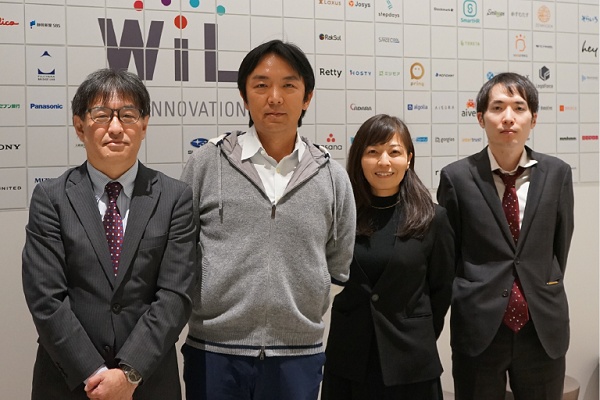
In his March 2025 podcast appearance with Coral Capital, Isayama discussed WiL through three activities: business creation, education, and investment. The combination offers a way to follow an idea from its first advocate to a functioning company, and then towards a market beyond the one it already knows.
He put particular weight on leadership in corporate spinouts. Technology alone does not settle the question of whether a business can stand on its own. Someone must choose a customer, accept responsibility for the product, and manage the uncomfortable interval before the plan becomes convincing. An invention can be impressive while the organisation around it remains undecided.
The same discussion described pitch events with corporate partners as a means of testing demand for overseas startups considering Japan. This is an appealingly concrete use of a network. Rather than treating market entry as a declaration of intent, it puts a product in front of possible customers. Their questions may be more useful than their compliments. Enthusiasm acquires value when someone is willing to buy.
For a founder, this changes the significance of the introduction. Access can shorten the distance to useful feedback. It can also reveal that a proposed market is a poor fit. Either result improves the decision. A business crossing an ocean needs evidence about the place it is going, and a room of potential customers can offer evidence that a room of fellow investors cannot.
New businesses
Corporate connections
Support in Japan
A billion dollars needs a destination
In June 2022, WiL secured more than $1 billion across multiple funds. The announcement included capital for its third venture fund, strategic partner funds, and corporate venture capital funds. The distinction matters: the headline number covered several strategies, rather than a single cheque for one business.
Its corporate network included companies such as Sony, Mizuho, KDDI, and Suzuki. Subaru separately announced its investment in WiL Ventures III that month. It described using WiL’s Silicon Valley base as a business innovation hub and drawing on the firm’s experience in creating businesses and developing people. The carmaker’s explanation gives the arrangement a purpose beyond holding an investment.
A fund total measures available capital. It leaves the harder questions open. Can a startup find a customer inside a large organisation? Will the people who attend a presentation have the authority to act? Can a corporate partner learn enough to make its next decision more confidently? These are the less photogenic parts of collaboration, and they determine whether the money has somewhere useful to go.
Isayama’s banking background makes an interesting counterpoint here. He understands the institutional side of the table, yet his firm’s work also involves creating opportunities for people to leave established routines. The capital and the education belong in the same account of his career. One helps finance an attempt; the other helps someone recognise that an attempt is possible.
Capital raised by WiL for venture, strategic partner, and corporate venture strategies.
The classroom follows him home
Teaching appears outside his investment work too. Isayama has four children, and his public biography traces his enthusiasm for golf to teaching them to play. It is a pleasingly ordinary detail in a career involving international funds. The subject changes, but the activity stays familiar: helping someone acquire a skill that initially looks difficult.
His interest in education also extends to writing. He has contributed technology columns to Nikkei’s digital edition, Nikkei Industrial Newspaper, and Toyo Keizai Online. A column gives an investor a different audience from a board meeting. It allows an argument about entrepreneurship to reach someone who has never asked for venture funding and may never do so.
His LinkedIn profile records service as chairman of the Stanford Japanese Association in 2002-2003, a board member of the Japan Society of Northern California from 2018 to 2024, and a director of the Japan Venture Capital Association from 2017 to 2023. These roles connect the educational, cultural, and professional communities around his work. They also show that the connections have been maintained over years.
In a 2023 interview, he discussed volunteering and internships as ways for young people to encounter society before choosing a career. His account drew on raising children in the United States. The emphasis was on experience: doing useful work, discovering an unfamiliar setting, and learning what it feels like to contribute. A prestigious employer’s name tells a student less than an actual summer spent working.
Let the institution learn
Isayama’s view of technological change also resists a tidy timetable. In a 2018 discussion with Daiwa Securities’ Toshihiro Matsui, he explained how technologies can develop separately and become practical when the surrounding conditions come together. Faster communications and better semiconductors can change the usefulness of ideas that have existed for years. Timing involves the system around an invention.
He also stressed the importance of trust in financial services. An established institution’s relationships with customers affect how quickly a newcomer can replace it. That observation helps explain why working with corporations occupies so much of his career. A startup may possess an effective tool while a longstanding company possesses the confidence of the people who would use it. There is something to discuss before either side declares victory.
In April 2025, he called WiL an “exploration arm” for corporate partners and described himself as a “tour guide” for startups entering Japan. He also said, “Personally, I value independence.” The three phrases fit together. His work depends on close relationships, but a new business needs enough independence to develop a character and a direction of its own.
“Personally, I value independence.”
Gen Isayama · April 2025
Asked about his hopes for 2033, he wanted corporate partners to become more proactive in working with and acquiring startups. That is a revealing measure of success. A useful intermediary can help people become more capable participants in the relationship. Eventually the next conversation starts with fewer explanations and a clearer understanding of what each side can offer.
Isayama’s career keeps returning to the same practical question: what would let someone take the next step? Sometimes the answer is capital. Sometimes it is a customer, an internship, a person willing to teach, or permission to use an idea that has been sitting inside a company. A perfectly good career can provide all sorts of useful experience. His continuing interest is in what that experience might make possible next.