Daniel J. Kim’s first product had a shorter shelf life than frozen yogurt. He sold flowers on street corners in Southern California, where an education in commerce could arrive with the next passing car. Location mattered. So did price, competition and how you treated the person holding the money. Even theft made the curriculum. Business school would follow. The street had already supplied the practical examination.
Years later, Kim opened an American business around a Korean frozen-yogurt brand called Red Mango. It grew into a chain, acquired an audience online and gave him a public identity that has proved rather more durable than a cup of dessert. His career subsequently took him through electric cars, home sharing and cryptocurrency. By 2026, he was working at Airwallex on the machinery of global payments.
Read those job titles in sequence and the changes look abrupt. Follow the customer through them and a connection appears. Kim keeps working on the distance between a promising idea and the experience of actually using it. At Red Mango, that distance could be measured in a bad store location, an uncomfortable seat or a customer who never returned.
A street corner before a storefront
Born in Seoul, Kim spent roughly his first five years in South Korea before moving to the United States with his parents. He grew up in Southern California and later studied business at the University of California, Berkeley. He graduated from Haas in 1998. His early professional work included investment banking at Donaldson, Lufkin & Jenrette, alongside a growing interest in technology businesses.
Banking helped clarify what he wanted from work. He preferred building things to serving clients, and his career moved through startups. In his own account, the early technology years included software, hardware and optical networking. The eventual move into frozen yogurt was a deliberate attempt to get closer to consumers. Few products offer feedback quite as promptly as something handed across a counter.
In 2006, acquaintances approached him about bringing Red Mango to America. The brand already existed in South Korea. Kim’s task was to adapt it for a different market and build the U.S. company around it. He had an interest in branding and quick-service restaurants, but no previous restaurant experience. Enthusiasm would have to share the shift with a considerable amount of learning.
The room around the yogurt
The first American Red Mango opened near UCLA in Los Angeles in July 2007. A university neighborhood offered customers, conversation and the possibility of a habit. The business was selling a tart frozen dessert in a category already crowded with alternatives. A recognizable name and a menu would only get it part of the way.
Kim paid attention to what surrounded the cup. Lighting, music, seating and the feel of the room were part of his description of the product. He wanted a place where people could spend time together, observe the passing scene and feel inclined to stay. The shop had to make sense as a small social destination. Dessert was entitled to decent accommodation.
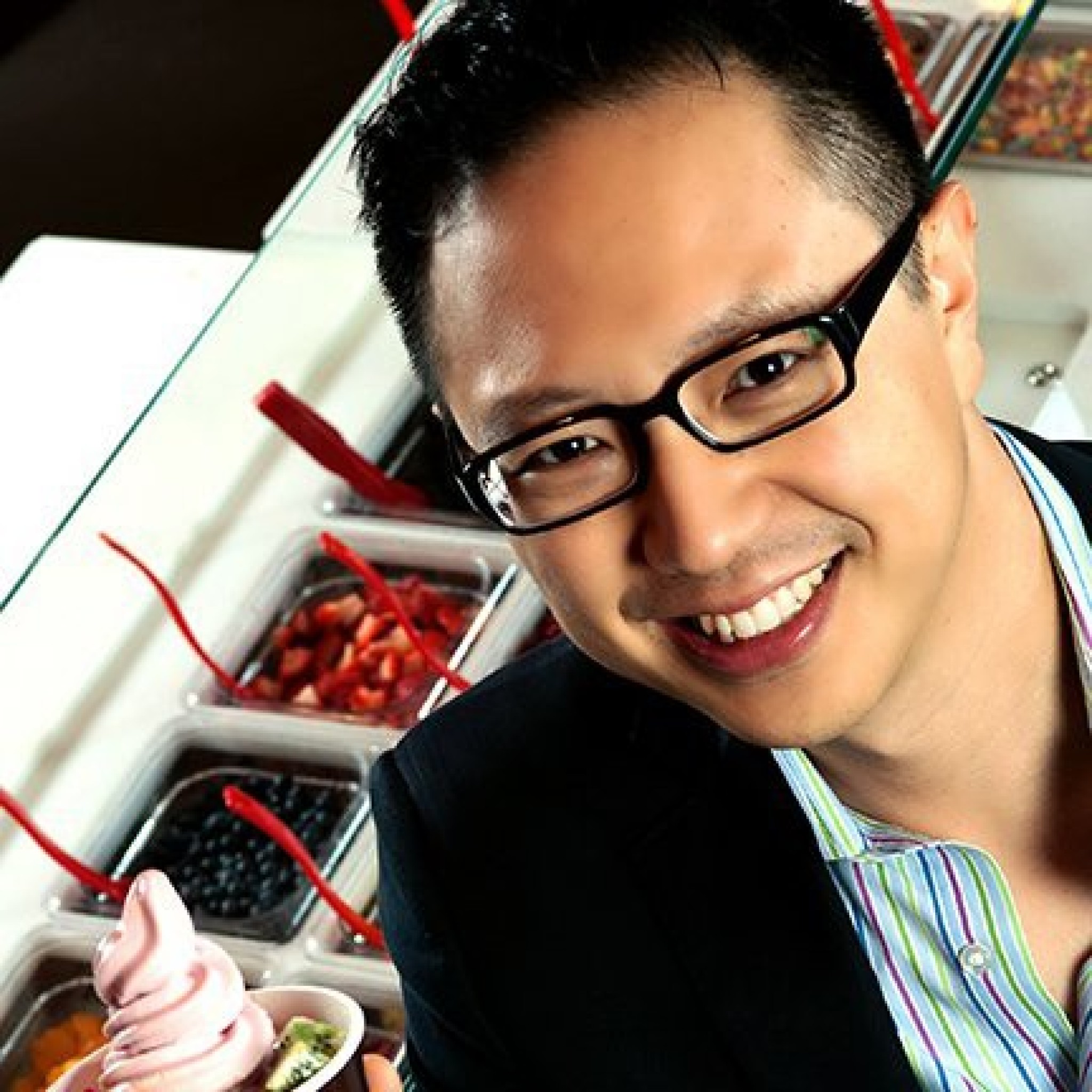
Later, Kim recalled how overwhelmed he felt when the first store opened. His motivation had begun to wear thin. Seeing customers enjoy the product and return helped steady him. The repeat visit supplied evidence that the work was connecting with someone beyond the founding team. It is a modest scene for a business biography, which is precisely why it matters.
His own order was comparatively restrained: original yogurt, with berries or honey. He called himself a purist. For someone occupied with brand development, the preference is pleasingly plain. Customers could have their elaborate combinations; the founder was content to begin with the thing underneath them.
Confidence, with a price attached
Growth did not make every location a good one. By June 2009, Red Mango had 51 company-owned and franchised U.S. stores. It had also closed five early Southern California shops. Kim described those openings as “bad real estate decisions.” The acknowledgment matters alongside the expansion figures. A brand can attract attention while still opening a door on the wrong street.
That year, Red Mango offered first-time franchisees a program called the Real Deal. Within the first six months, they could sell a store back to the company for $275,000, roughly its build-out cost. For an operator considering a young chain during a difficult economy, this was a specific proposition. The company was attaching an amount and a deadline to its confidence.
A buyback option for first-time franchisees within their first six months.
The chain continued adding locations. By 2010, its formats included traditional shops, kiosks, shared locations and self-service stores. Airport licensing opened another route to customers. The work required decisions about how much space a shop needed, who would operate it and which version of the experience could fit the setting. Expansion was becoming a collection of practical variations.
Red Mango celebrated its 200th location in The Woodlands, Texas, in 2012. It had also entered Mexico that year. Those milestones give the early story scale, but the failed locations keep the numbers in perspective. A store count records openings. It takes a more candid conversation to explain which assumptions survived them.
- 2007First American store
Los Angeles - 200951 U.S. locations
Reported in June - 2012200th location
The Woodlands, Texas
A honey badger walks into the marketing meeting
Kim also treated social media as somewhere the founder should turn up himself. He posted offers, suggested combinations and communicated with customers through the channels they were already using. By May 2012, Red Mango reported more than 500,000 followers across its social accounts. The audience gave him a way to hear from people who would otherwise remain anonymous customers.
Photography helped connect his personal interests with that work. Pictures gave customers something immediate to respond to, and a cup of yogurt was conveniently cooperative in front of a camera. Kim wanted people to feel they could contact him and influence the products. A national chain could still have someone recognizable at the other end of a message.
Then came the honey badger. In June 2012, Red Mango introduced a honey yogurt flavor named after the viral animal video. Kim announced it on Facebook, Twitter, Pinterest and Instagram. Outside the shops, promotion ran through social media; in-store material was kept to the flavor label. The product borrowed a joke its audience already understood.
The campaign’s cheekiness suited a business asking customers to do some of the talking. Recognizing the reference was part of the pleasure. A person could encounter it, photograph it and pass it along without first attending a seminar on brand values. There are occasions when a honey badger can spare everyone a slide presentation.
“Be true to the customer”
Daniel J. Kim, on advice for restaurant owners, 2015
Leaving room for another career
Kim moved from CEO to chief concept officer in July 2011. In January 2015, he announced that he was leaving his executive role to establish DAN.KIM&CO, a consultancy focused on digital and social marketing. He would retain an advisory relationship with Red Mango and finish a few projects. The chain had reached roughly 300 locations by the time of the announcement.
He wanted to work with companies across a broader range of consumer markets and spend more time with colleges and universities on innovation. The move makes sense beside his interest in changing customer preferences. He had built a business around one category, then decided to apply what he had learned elsewhere.
The later résumé includes Tesla, where he held global sales and delivery responsibilities, and Airbnb, where he worked on the supply of homes for Airbnb Plus. These jobs put him alongside other complicated consumer experiences: getting a vehicle to a buyer and bringing suitable homes onto a platform. Different products, with plenty of operational details between the promise and the person receiving it.
At Coinbase, his responsibilities included business development, developer relationships and asset listings. He spent five years there. In 2025, he was among the named authors of the x402 white paper, an open standard for internet-native payments. The former yogurt founder was now working on how software could pay for access to digital services.
What happens after the money arrives
Kim joined Airwallex in 2026. His current title is VP, Product Partnerships, Ecosystem & Developer Experience. In explaining the move, he concentrated on the work surrounding a payment. A business receiving money may still need to convert it, pay a supplier in local currency, reconcile its records and get funds into an account its team uses. Arrival is only one stage of usefulness.
His August writing described why many Airwallex customers had not needed stablecoins: they already had a workable way to move money internationally. New uses, including payments made by software agents, were changing the calculation. For a career that had passed through Coinbase, it was a practical observation. The customer’s existing experience deserved examination before another technology was added.
By October, he was writing about the controls companies need around financial tasks performed by AI agents. Permissions, spending limits, approval chains and records were central to his argument. His phrasing was unusually economical: “A prompt is not a financial control.” He wanted boundaries enforced by the underlying systems. Responsibility had to survive beyond an instruction typed into a box.
There is an appealing continuity between the founder discussing store locations in 2009 and the executive examining payment permissions in 2026. Both conversations become useful when they reach the operational detail. A fashionable idea still has to function on an ordinary working day.
Kim’s subjects have changed considerably since the flower stand. His customers have become harder to picture, sometimes building software rather than holding a cup. But the questions around the transaction remain recognizable. Can someone use what is being offered? Does the experience justify the decision? And, once the first burst of curiosity passes, is there a reason to come back?
Keep the conversation going
Interviews, public profiles and further reading.