In December 2013, a Red Mango franchise in Ridgewood, New Jersey, closed after roughly eighteen months. Its farewell was unusually plain: sales could not support fixed costs and debt. There was no mysterious ingredient missing from the cup. The missing ingredient was enough customers. For a business associated with fruit, cheerful toppings, and the agreeable idea of healthy indulgence, this was an inconveniently adult problem.
- Red Mango built its distinction around yogurt with live cultures.
- A $12 million investment helped finance its early U.S. expansion.
- Competition and local store economics exposed the limits of dessert alone.
- Café food, juice, and shared-store formats gave it more reasons to be visited.
A spoonful of evidence
Dan Kim started the U.S. venture in 2006; its first American shop opened in Los Angeles in July 2007. The Red Mango brand already existed in South Korea. Kim was entering a market where Pinkberry had helped make tart frozen yogurt fashionable. A pretty cup was unlikely to be a sufficient argument. Red Mango needed something a customer could understand before taking the first bite.
In August 2007, it received approval to use the National Yogurt Association’s Live & Active Cultures seal. Independent laboratory testing supported the certification. The seal turned an otherwise invisible property into a visible distinction. A customer could not inspect bacterial cultures across the counter. A recognizable mark could do some of that work. Certification gave the brand’s ingredient story a small, concrete object to point to.
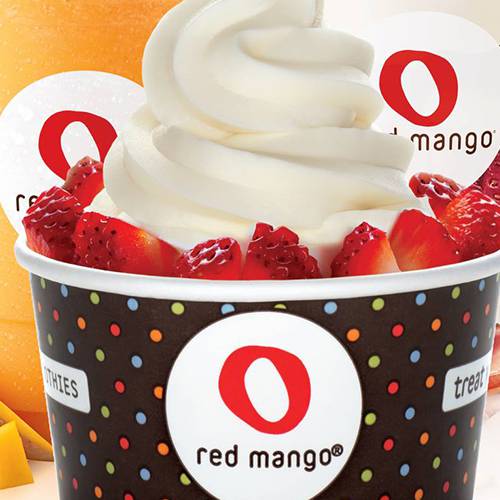
Then came money and experience. In August 2008, CIC Partners and restaurant veteran John Antioco led a $12 million growth-capital investment. Antioco became chairman. Contemporary reporting also named new operations and marketing leaders. Expansion was acquiring a professional apparatus. The proposition was attractive: a treat with an ingredient story, sold through a repeatable retail system. Neither the funding nor the certification, however, guaranteed that every address would work.
Rent does not take winter off
The Ridgewood closure made that distinction painfully clear. The franchisees said they lacked the sales to support their obligations. This was one local business, not a diagnosis of every Red Mango. Yet it revealed the question beneath the category’s excitement: how often would people return, and would their spending cover the store’s continuing costs? Affection is lovely. A landlord generally prefers money.
The broader frozen-yogurt market became crowded. By 2022, Restaurant Business reported that Red Mango, Orange Leaf, and Cherry Berry were each down at least 60 percent from their peaks, largely through closures. That was a historical assessment, not today’s store count. It described a category that had built too much similar supply. A stronger product story could help a shop compete; it could not manufacture unlimited demand.
“Our customers are telling us it made sense to them that we would be adding these kinds of products”Jim Notarnicola, on the café menu, 2014
The same promise, another occasion
Red Mango began testing its café concept in selected Houston and Long Island franchises in fall 2013. The menu added flatbreads, salads, and wraps, with soups for colder months. The reasoning was practical. The space already existed. The store was already open. A customer who knew the yogurt might accept lunch from the same counter. Marketing executive Jim Notarnicola described the additional products as another reason to return at a different time of day.
This is the most useful part of the story to copy: preserve the customer promise while testing a new occasion. At Red Mango, the promise concerned enjoyable, health-oriented food. Extending that to fruit drinks and light meals was intelligible. Extending it indefinitely would be another matter. Every extra item asks something of the operator: ingredients, storage, preparation, training, and a customer who actually wants it.
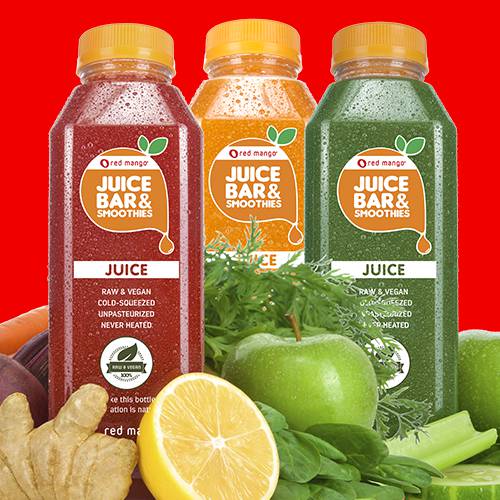
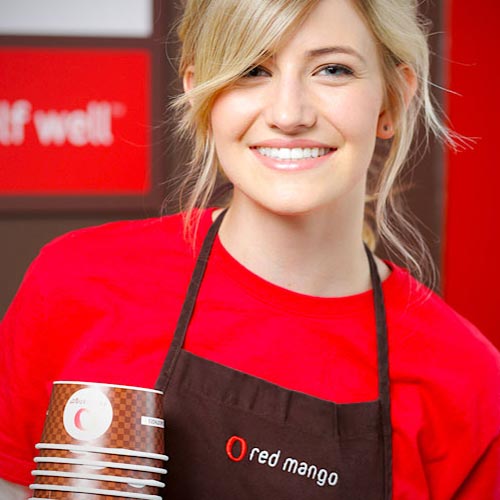
Location could change, too. A March 2019 announcement reported that Red Mango had added yogurt and smoothies to nine Bolla Market convenience stores since mid-2018. A standalone dessert shop asks someone to make a special trip. A counter inside an existing stop asks for an additional purchase. The distinction is modest in wording and substantial in retail logic. It brings its own dependence on the host store’s traffic.
The entrance fee is only the entrance
For consumers, the current menu offers tart and creamy yogurt, fruit smoothies, parfaits, and acai bowls. Coconut-milk options appear at participating locations. Café and juice selections depend on the store. Red Mango sits between dessert retail and fruit-based quick service, competing with yogurt chains for one visit and smoothie shops for another. Ordering tools and Club Mango offers help customers find a location and plan a purchase.
For franchisees, the purchase is a brand and operating system. BRIX’s July 2024 announcement advertised a $30,000 traditional franchise fee for a ten-year term, $100,000 in liquid assets, and $250,000 minimum net worth. Across the brands promoted, it listed typical royalties of 5-6 percent and a 3 percent brand development contribution. Those dated terms describe entry requirements and ongoing charges; they are not a complete construction budget or a promise of profit.
Initial franchise fee for a 10-year term
Total opening investment is a separate calculation. Non-traditional requirements vary.A smaller chain, a wider proposition
The current U.S. website says there are more than sixty domestic locations and that every location is locally owned. In 2024, BRIX announced an agreement for three Smoothie Factory + Kitchen and Red Mango co-branded stores in Arizona over three years. That was a development plan. The logic was familiar: offer complementary choices under one roof, giving the same premises more opportunities to earn a visit.
In July 2025, Legacy Brands International, managed by Friendly’s franchisee Amol Kohli, acquired BRIX Holdings, including Red Mango. The existing leadership remained. Red Mango’s story now belongs inside a wider restaurant portfolio. Its useful lesson remains surprisingly small: a customer may love your dessert and still need another reason to walk through the door. Give that reason a test, then count what serving it costs.
Follow the fruit
Explore the website, menu, and store finder. Follow Red Mango on LinkedIn, X, Instagram, or Facebook.
For more: brand news, Dan Kim’s social-media podcast interview, and the BRIX ownership announcement.