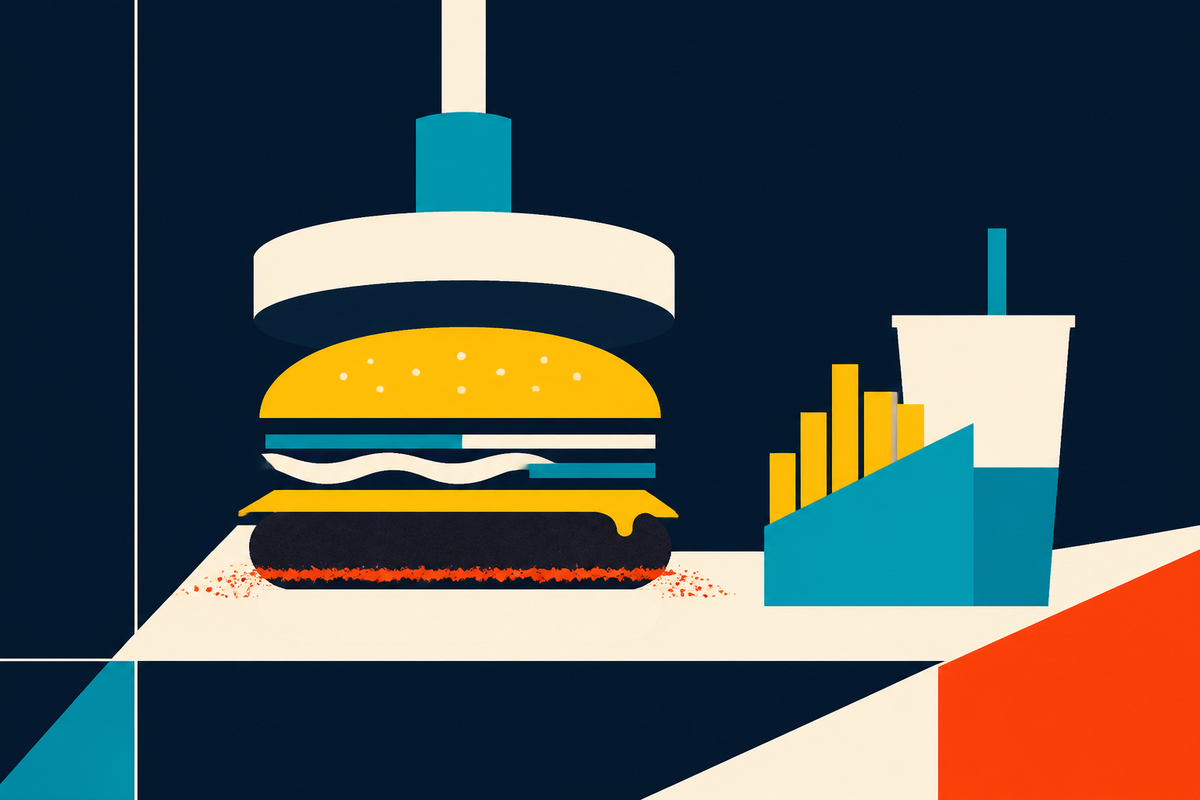
The crucial moment at Smashburger lasts only a few seconds. A ball of fresh beef meets a very hot griddle. A custom metal press comes down. Surface area expands, moisture hisses and the underside darkens into a ragged, caramelized crust. In an open kitchen, the customer can see the promise happen. The brand is not merely named after its product; it is named after the verb that makes the product.
That was a sharp piece of positioning in Denver in 2007, when food scientist Tom Ryan and restaurant entrepreneur Rick Schaden opened the first location. The American burger market had plenty of speed and plenty of heft, but the emerging “better burger” tier was selling something between fast food and a full-service meal: fresher ingredients, customization, a room worth sitting in and a check that still felt casual. Smashburger made its production method the star.
Nearly two decades later, the technique is everywhere. Independent cooks, sports bars and major chains now know the vocabulary of thin patties and browned edges. Smashburger, meanwhile, is smaller than it was at its early peak. The company reported 178 restaurants in July 2026, split between 112 corporate stores and 66 franchises. That count makes the current project more interesting. This is not a breathless land grab. It is a reset built around focus, value and selective growth.
01 / The productA crust customers can watch
Smashburger’s distinction is physical rather than philosophical. Its restaurants use fresh, never-frozen Certified Angus Beef and a proprietary smasher to increase contact with the hot cooking surface. Browning creates the crisp sear that separates a smashed patty from a thick, softly grilled one. The open kitchen turns that bit of food science into theater: press, scrape, flip, build.
The core menu extends the idea without depending on beef alone. There are crispy chicken sandwiches, Chicken Smash builds, veggie options and all-Angus hot dogs. Rosemary-garlic SmashFries and SmashTots give the sides a recognizable signature. Hand-spun Häagen-Dazs shakes supply indulgence and margin. Kids’ meals, salads, catering, gift cards and delivery stretch the restaurant across family dinners, office lunches and at-home orders.
The customer is someone who wants more attention than a conventional drive-through burger usually receives, but not the time or ceremony of table service. That includes families, digital orderers, travelers, workers buying lunch and loyalty members responding to an offer. The company also serves a second customer: the franchise operator buying a known brand, recipes, suppliers, training and an operating system.
Taste is our core identity and competitive edge.Jim Sullivan, chief executive officer
02 / The positionThe crowded middle of the market
Smashburger lives between two powerful expectations. Quick-service chains train people to expect low prices, broad availability and relentless convenience. Fast-casual brands ask them to pay more for ingredients, customization and atmosphere. Smashburger must deliver both versions of value at once: a burger that looks and tastes made for the customer, served with enough speed and consistency to work on an ordinary Tuesday.
Its direct alternatives include Shake Shack, Five Guys, The Habit, Freddy’s and BurgerFi. McDonald’s, Wendy’s, Burger King, Sonic and Culver’s compete for many of the same occasions. Then there is the local smash-burger shop, which can borrow the technique without borrowing the chain’s overhead. The word “smash” no longer belongs to one company’s mental territory.
That makes the surrounding system more important. Certified beef is a quality shorthand. A butter-toasted bun, signature seasoning and named sides create recall. Open kitchens make freshness legible. The app stores favorite orders and powers SmashRewards, turning a one-time lunch into data, offers and repeat visits. Catering adds group occasions. Franchising converts the brand into a product for operators as well as diners.
03 / The resetDoing fewer things, better
The revealing phrase in Smashburger’s summer 2026 announcement was not the name of a new sandwich. It was “fewer things.” The chain narrowed its seasonal lineup to improve speed and consistency. The Pickle Stack Smash joined the everyday-value menu, while the returning Smoked Brisket Bacon Smash carried the premium story with 14-hour pit-smoked brisket, bacon and aged cheddar. Two shakes completed the promotion.
Menu subtraction is not glamorous, but restaurant operations punish excess. Every extra ingredient complicates ordering, storage and training. Every additional build adds another chance for a slow ticket or a disappointing handoff. A smaller set of limited-time offers can be marketed more clearly and executed more reliably. It also gives franchisees a better chance of seeing the same campaign work across different kitchens.
The 2015 count accompanied Jollibee’s initial investment. The July 2026 company count includes 112 corporate and 66 franchised restaurants. Different reporting dates can include openings and closures in motion.
The $4.99 tier solves a different problem: trial. Premium fast-casual food can lose an argument before the customer reaches the counter if the expected check feels too high. An under-$5 burger or hot dog creates a clear entry point. Fries, shakes and upgrades can build the final ticket, while the low headline price gives advertising and the loyalty program a simple invitation.
Smashburger has paired that menu work with a brand and leadership reset. Jim Sullivan became CEO in August 2025 after serving as president and chief development officer. In 2026, Kate Savelli arrived as chief marketing officer alongside leaders for nontraditional development and Western operations. Creative agency Understory was hired to align narrative, digital content, campaigns and loyalty storytelling. The brief is not subtle: make the brand easier to understand and the system easier to grow.
04 / The machineHow a burger becomes a business
Smashburger’s business model has four connected engines. Corporate restaurants provide direct food and beverage sales and a laboratory for menu and service changes. Franchised locations contribute fees and royalties while shifting much of the opening capital to operators. Digital ordering, delivery and rewards make access easier and repeat behavior more measurable. Catering and gift cards bring in occasions that do not depend on a single diner walking through the door.
Restaurant checks
Burgers attract the visit; fries, shakes, drinks and upgrades shape the economics of the meal.
Franchise income
Operators fund and run stores using Smashburger’s brand, menu, sourcing, training and support.
Digital frequency
Ordering and rewards reduce friction, distribute offers and give the company a route back to guests.
More occasions
Delivery, catering, airports, military bases and gift cards extend demand beyond a standard dining room.
Ownership matters here. Jollibee Foods Corporation entered with a 40 percent stake in 2015, increased its holding to 85 percent in 2018 and became sole owner in 2019. The Philippine group supplies the perspective of a multinational restaurant operator. Smashburger gives Jollibee an American fast-casual platform with a familiar product and room for selective expansion.
The expansion map now favors fit over sheer count. A Detroit airport restaurant added breakfast sandwiches and grab-and-go wraps for early travelers. A location at Naval Air Station North Island serves military personnel and families. A 1,600-square-foot franchised restaurant opened in Huntersville, North Carolina, in February 2026. Smashburger said in July that it planned as many as 12 openings during the year.
05 / The peopleConsistency is a human skill
No proprietary press fixes an inattentive shift. Smashburger’s published workplace values emphasize guest focus, speed with excellence, humility, family, fun and integrity. The company advertises four weeks of training for shift leaders and six weeks for restaurant managers, along with recognition programs and benefits. Those details are operational, not ornamental. A made-to-order promise depends on cooks, cashiers and managers repeating dozens of small judgments under pressure.
The chain’s expertise therefore sits at the intersection of culinary development and restaurant choreography. It must identify flavors broad enough for a national promotion, source them reliably, teach a build, price the result, make it photograph well, prepare it quickly and preserve the edge that justified the name. When the process works, the customer experiences a burger. Behind it is a compact manufacturing system with hospitality attached.
The open kitchen is the quiet genius of the concept: the advertisement and the assembly line occupy the same few feet.
06 / The next biteWhat the second act must prove
Smashburger’s problem is not awareness of the cooking method. The culture has learned that lesson. Its problem is ownership of an experience: a consistent sear, a hospitable room, useful speed and a check that feels fair. That is harder to copy in full, but also harder to deliver across a network.
The current strategy is appropriately unromantic. Tighten the promotional menu. Put a clear value item at the front. Use loyalty and digital ordering to make return visits easier. Find franchisees who can operate the system. Enter airports, bases and markets where the format has a reason to exist. Let premium builds carry excitement without asking every kitchen to memorize a catalog.
There is still charm in the original insight. A burger can explain itself in the time it takes a press to fall. But Smashburger’s second act will be judged by everything that follows the hiss: the speed of the line, the accuracy of the build, the welcome at the counter and whether the customer decides the crisp edge is worth another trip. Craft and scale can share a griddle. They simply require a very disciplined cook.