A city budget is a peculiar place to begin a career in scientific ambition. It has neither the romance of a rocket nor the agreeable mystery of a laboratory. It has columns, codes and people who would quite reasonably like the software to work before the next meeting. Dakin Sloss began there anyway. As OpenGov’s first CEO, he helped turn a concern about government transparency into the early workings of a software company.
The founding group included Joe Lonsdale, Zac Bookman and Nate Levine. Their earlier work at California Common Sense had exposed a practical difficulty: officials needed better ways to understand and use their own financial information. Posting data was useful. Making the machinery behind the data usable was a larger undertaking. There was a business hiding inside the transparency project, although getting it out would require considerably more than a declaration of good intentions.
Sloss helped recruit the early team. He worked with Levine to get the company going while Bookman was still returning from work in Afghanistan. Lonsdale remembers evenings spent comparing notes, government-accounting books and weekend barbecues. The scene has the pleasing untidiness of a young company: people with large plans discovering that someone must also understand the accounts.
The first CEO is a chapter, not the whole book
Sloss’s time running OpenGov was brief. Bookman took over, and the company spent years developing the products and customer relationships behind its later growth. The handover belongs in Sloss’s story because it gives the familiar founder label a useful boundary. He helped begin the enterprise. Other people carried it much further.
In February 2024, OpenGov announced its acquisition by Cox Enterprises at a $1.8 billion valuation. That number arrives more than a decade after the early work. Compressing those years into a founder’s triumph would erase most of the actual company-building. It would also miss the more interesting development in Sloss’s own career: he had already gone looking for another difficult industry.
Co-founder · first CEO
Co-founder · founding CEO
Founder · general partner
Before the budgets, a different plan
Sloss was born in Vienna and lived in Washington, D.C., St. Louis and the Bay Area. At Stanford he studied mathematics, physics and philosophy, earning a mathematics degree in 2011. Those subjects allow a person to spend a respectable amount of time asking what is true, what can be proved and whether the question was sensible in the first place. He considered continuing into a doctorate combining those interests.
Friendship intervened. Lonsdale, a Palantir co-founder, became a mentor. Together with other Stanford students and alumni, they worked on California Common Sense, using public information to make government finances easier to examine. It was an introduction to a different kind of uncertainty. An equation can be checked on paper; an organization has to persuade people to change what they do.
His university interests were wider than a compressed professional biography suggests. His LinkedIn profile lists club tennis, leadership of Stanford’s Objectivist group and writing for campus publications. Mathematics sat alongside argument, sport and organization. These details do not explain every later decision, but they make the route into entrepreneurship less abrupt. He was already spending time with ideas and with people willing to dispute them.
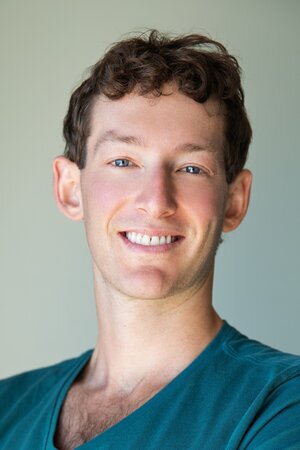
Physics goes to work
Tachyus, co-founded in 2013, brought him closer to the physical world. The company developed software for oil and gas production, combining physical modeling with machine learning. Its central concern was an operational one: helping people understand a reservoir well enough to make better decisions about it. The customer’s problem gave the mathematics a job.
The attraction was partly the mismatch between the industry’s importance and the attention it received from Silicon Valley talent. Sloss argued that technical inventors were overlooking opportunities because of their attitudes toward oil and gas. Whatever one makes of that argument, his choice put him in a business where the customer’s priorities were unlikely to resemble those of a campus software club.
The distinction matters. A model has to earn its place in a working operation. Its users have established methods, specialized experience and expensive consequences to consider. For Sloss, the work meant bringing technical capabilities into contact with a customer’s actual decisions. Tachyus also brought recognition: Forbes included him in its 2016 Energy 30 Under 30 selection, identifying him as a co-founder of the company.
Recognition could not smooth the industry’s cycles. He later described how customers could struggle to pay even when the software offered operational benefits. A useful product still needs a solvent buyer. For a founder trained in quantitative subjects, it was a particularly tangible reminder that the variables outside the model retain their voting rights.
By November 2018, he was being identified as Tachyus’s co-founder and chairman. He was also beginning the next stage of his working life, this time with a broader view of the organizations that might turn scientific knowledge into businesses.
The founder becomes the customer
Sloss founded Prime Movers Lab in 2018. The firm’s focus is scientific startups, with investments spanning fields such as energy, transportation, manufacturing and infrastructure. His public biography lists investments in companies including Tarana, Halo, Focused Energy, E-Space and Boom Supersonic. The range is wide; the common interest is technology whose commercial promise rests on a substantive technical invention.
Writing a cheque is only one part of the offer. In a 2021 conversation with Lonsdale, Sloss described a support system that included executive coaches, recruiting resources and help with communications and government relations. The aim was to give founders practical assistance as their responsibilities widened. A scientist developing a technology can quickly acquire a second occupation: running an organization.
“We treat our founders like customers.”
Dakin Sloss · SALT Talks, 2021
That wording reverses an everyday piece of venture-capital etiquette. Founders often spend their fundraising meetings demonstrating why an investor should choose them. Sloss’s formulation asks what the investor must keep delivering after the choice has been made. The cheque clears. The relationship continues.
His 2019 account of the firm’s process made the proposition more specific. Evaluation covered the founder, business, technology and deal. Even the evaluation period was meant to produce useful learning and introductions. After investing, the firm described regular business and leadership coaching, peer exchanges and help with commercial decisions. These were commitments about how the work should proceed, rather than a guarantee of the outcome.
- 01FounderThe person building it
- 02BusinessThe commercial case
- 03TechnologyThe underlying invention
- 04DealThe terms of partnership
A separate account from partner Anton Brevde gives the relationship some history. Brevde had known Sloss since 2013, when Brevde’s company Asseta was in Y Combinator. Years later, he joined Prime Movers Lab. He described an interest in giving founders the support he and Sloss had wanted from their own investors. The service proposition had roots in the experience of people who had sat in the other chair.
A philosophy with an operating budget
Prime Movers Lab is unusually explicit about its worldview. Its published principles discuss service, love and growth, and give spiritual development a place in working life. Its name points to the independent creators celebrated in Ayn Rand’s The Fountainhead. An investment firm can reveal a surprising amount of personality before anyone opens a financial model.
Sloss’s philanthropy also has a public vehicle, the Satchitananda Foundation. Its stated ambition concerns human flourishing, and his biography connects the foundation with access to food and freedom. Those are broad aims. The practical question, for a reader as much as for a founder, is where such language meets an operating project.
The venture business, meanwhile, grew. In July 2023, Prime Movers Lab announced $245 million for its third early-stage fund, bringing reported assets under management above $1.2 billion. The announcement listed earlier vehicles of $100 million, $245 million and $500 million. Each figure describes money managed by the firm, with its own obligations to investors and companies.
Strawberries at the end of the argument
Near Pinedale, Wyoming, the abstract conversation gets pleasantly literal. Sloss funded the greenhouses behind Silver Stream Farm, a year-round produce operation in a place where the outdoor growing season is short. The project uses controlled environments to make local growing less dependent on the weather’s generosity.
Around 2021, he approached LeeAnn and Cooper Shelton about a garden project. It began with one grow house. By the spring of 2025, the operation had expanded to five, with 25,000 square feet of growing space. The Sheltons and their colleagues did the work of learning the systems, tending the crops and developing the operation. Sloss’s idea required people who could make plants, equipment and daily routines cooperate.
There is something usefully modest about ending a venture-capital story with produce. The scale changes. The underlying test remains recognizable: can a technical system deliver something people want, under the conditions in which they actually live? A strawberry offers a rather brisk answer. Nobody needs a slide explaining what to do with it.
Sloss’s route has passed through public budgets, industrial software and scientific investing. Across those changes, he has kept an interest in the work between a promising idea and a useful result. In Wyoming, that distance can be walked inside a greenhouse. Someone still has to tend the plants.
Keep following the questions
- Prime Movers Lab · team and biography
- Dakin Sloss · LinkedIn
- Dakin Sloss · X
- Personal website
- OpenGov · company profile
- OpenGov’s beginnings · Joe Lonsdale
- Tachyus and the energy industry · YPO
- The Meb Faber Show · interview and transcript
- Venture Capital in 2023 · watch on YouTube
- Founders Are Our Customers · essay
- Silver Stream Farm · WyoFile
- Satchitananda Foundation