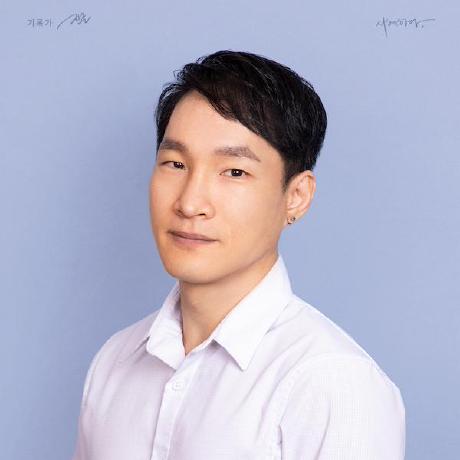
Open almost any recent paper that measures gene activity, and somewhere in the methods section there is a good chance you will find one of Daehwan Kim's programs. TopHat. HISAT. HISAT2. These are the tools researchers reach for when they need to line up millions of short DNA or RNA fragments against a reference genome and figure out where each one belongs. The work is technical, invisible to patients, and enormously consequential. It is also, by the numbers, some of the most-cited software in modern biology.
Kim is a computer scientist by training. He earned his PhD in computer science, with a focus on computational biology, at the University of Maryland, and spent years turning hard algorithmic problems into practical tools. His signature idea was to treat the human reference genome not as a single flat string of letters but as a graph, one that could hold millions of known variations at once. That reframing became HISAT2, published in Nature Biotechnology in 2019, which packs more than 14.5 million genomic variants and their haplotypes into a single searchable data structure.
The payoff was speed without a supercomputer. His software can analyze an individual's genome and transcriptome within a few hours on an ordinary desktop machine. For a field where reading data was once a bottleneck of cost and time, that mattered. It meant a graduate student with a laptop-class budget could do work that used to require a cluster.
The quiet infrastructure of a field
Kim's citation record reads less like a resume and more like a map of how genomics actually gets done. His 2015 HISAT paper alone has been cited more than 24,000 times. The 2013 TopHat2 paper and the 2012 TopHat-and-Cufflinks protocol each pass 14,000. Add HISAT2, the transcript-level expression protocol with StringTie and Ballgown, and the rest, and the total climbs past 78,000.
Most of that software is open source and free. HISAT2, HISAT-genotype, Centrifuge, HISAT-3N and SeqWho all sit in public repositories under his GitHub handle, infphilo, and the DaehwanKimLab organization. For years he carried the title of Michael L. Rosenberg Assistant Professor in the Lyda Hill Department of Bioinformatics at UT Southwestern Medical Center in Dallas, where the lab kept shipping tools rather than just papers.
L++ is the first high-level programming language to efficiently describe lifeforms as an alternative to DNA.
A bigger, stranger bet
Around 2021, Kim started reaching past analysis toward something harder: design. He co-founded Omphalos Lifesciences, taking the co-CEO role alongside experimental biologist Donghoon Lee, and set out to make biology programmable rather than only readable. The company's pitch borrows directly from the history of computing. Machine code came first, then assembly, then high-level languages like C++ that let people describe what a machine should do without wrestling with every bit. Biology, Kim argues, has been stuck writing in the equivalent of machine code - DNA. His answer is L++, a language meant to describe living systems at high resolution, in text a computer can parse into a virtual organism.
The design goal is unusually humane for a piece of infrastructure: L++ is meant to be learnable by a working biologist in less than a day. That constraint says a lot about how Kim thinks. The point is not to build a cathedral only he can enter. It is to hand the field a tool it can pick up and use, the same way it picked up HISAT.
Around the language sits a platform. Omphalos calls its core product Life Designer, software for modeling, simulating and visualizing biological systems - from virtual human models for drug discovery to digital patient twins for treatment planning and biomanufacturing predictions. An IDE-style environment lets researchers write L++ and watch simulated life forms behave. The ambition, stated plainly by the company, is that "lifeform programming will propel the world into a new era of innovation with advancements that were previously thought to be confined to science fiction."
Lifeform programming will propel the world into a new era of innovation.
Why the track record matters
Programmable biology and virtual cells are not new dreams. What makes Kim's version worth watching is who is making it. It is one thing for a promoter to promise that biology will become software. It is another for the person who already made genome analysis fast, cheap and reproducible for tens of thousands of studies to sit down and try to write the compiler. He has done the unglamorous version of this problem before, and shipped.
There is a pattern in how Kim works. He picks a problem that is slow, expensive or clumsy. He reframes it in the language of computer science - indexes, graphs, grammars. Then he builds a tool other people can actually run, and gives it away or productizes it so the field moves. HISAT did that for alignment. L++ is the same move aimed at something far larger and far less certain: the description of life itself.
Whether Omphalos succeeds in building a true virtual cell is an open question, and an honest observer should hold it loosely. Simulating biology at useful fidelity is brutally hard, and plenty of well-funded efforts have stalled at the gap between a tidy model and a messy organism. But Kim has spent a career closing gaps like that, quietly, in code. The company name is a tell. Omphalos was the ancient Greek stone said to mark the navel of the world - the center point. It is a big name for a small team in Dallas. Kim's history suggests he is comfortable letting the work argue the case.
The person behind the handle
Kim keeps a low public profile. There is no stream of hot takes, no personal brand engineered for attention. What he leaves behind instead is a trail of repositories, papers and tools that other people build on. In an era of loud founders, that restraint is its own kind of signal. The receipts are on GitHub, the citations are in the literature, and the next bet - a language for living things - is now out in the open for the field to test.