A sewer camera can deliver a beautifully sharp picture of a problem that nobody is ready to solve. The crack is visible. The pipe has an address. Somewhere else, perhaps in another application, sits the work order. Somewhere else again sits the budget. The distance between those pieces of information is where an inspection can lose much of its value.
CUES makes the machines that go underground: cameras, wheeled transporters, lateral launchers, profiling systems and equipment for repairs. But the more revealing part of its business is what happens after the machine comes back. Its GraniteNet software gives the footage a place in an asset record, a review process and a maintenance workflow. A sewer video acquires a future.
- See it: robotic cameras and sensors inspect pipes that crews cannot simply walk through.
- Make it usable: GraniteNet connects inspection evidence with maps, assignments and condition assessments.
- Act on it: cutters, grouting equipment and planning services support the next stage of rehabilitation.
The groundwater came first
The origin of CUES is pleasingly unglamorous. Penetryn Systems had made money rehabilitating concrete on railroad bridges during the Second World War. In 1961, a patent was filed for a packer that could isolate an open joint in a sewer or pipeline. It was approved in 1963. Penetryn’s sewer division inspected, cleaned and grouted pipes; the equipment itself began to look like something municipalities might buy.
That year, Penetryn formed Community Utility Equipment Supply. The initials did the sensible thing and became CUES. The company initially located in Hollywood, Florida, where high groundwater made its proprietary sewer joint-sealing process particularly relevant. Orlando later offered a central Florida base. Water entering a sewer through an unwanted opening was a business problem before it became a software problem.
This repair-first ancestry helps explain the catalogue today. CUES sells tools for finding defects and tools for dealing with them. Chemical sealing equipment addresses leaking joints. Lateral reinstatement cutters reopen service connections after a mainline has been relined. Inspection is part of a longer job.
Give the camera wheels
Early inspection equipment imposed its own indignities. CUES’s history describes fragile vidicon and saticon tube cameras, subsequently replaced by solid-state cameras. Moving a camera through a sewer could require a winch or a jetter truck. Setup was cumbersome, and dead-end lines without remote access presented a particular difficulty.
In 1984, CUES introduced a self-propelled camera transporter. Giving the camera its own means of travel reduced dependence on towing equipment and made difficult lines more accessible. It was a practical change in the economics of setup: fewer arrangements above ground before useful work could begin below it.
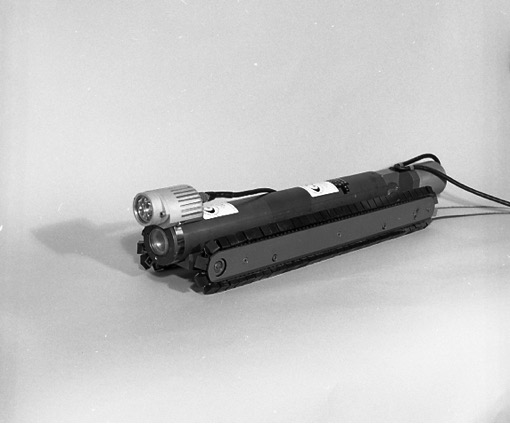
The company also describes a joint development effort with underwater-vehicle manufacturer Benthos in the mid-1980s that produced a pan-and-tilt sewer camera. A moving head lets an operator inspect the wall and connections rather than accept whatever happens to lie straight ahead. The useful innovation was a better view of the awkward detail.
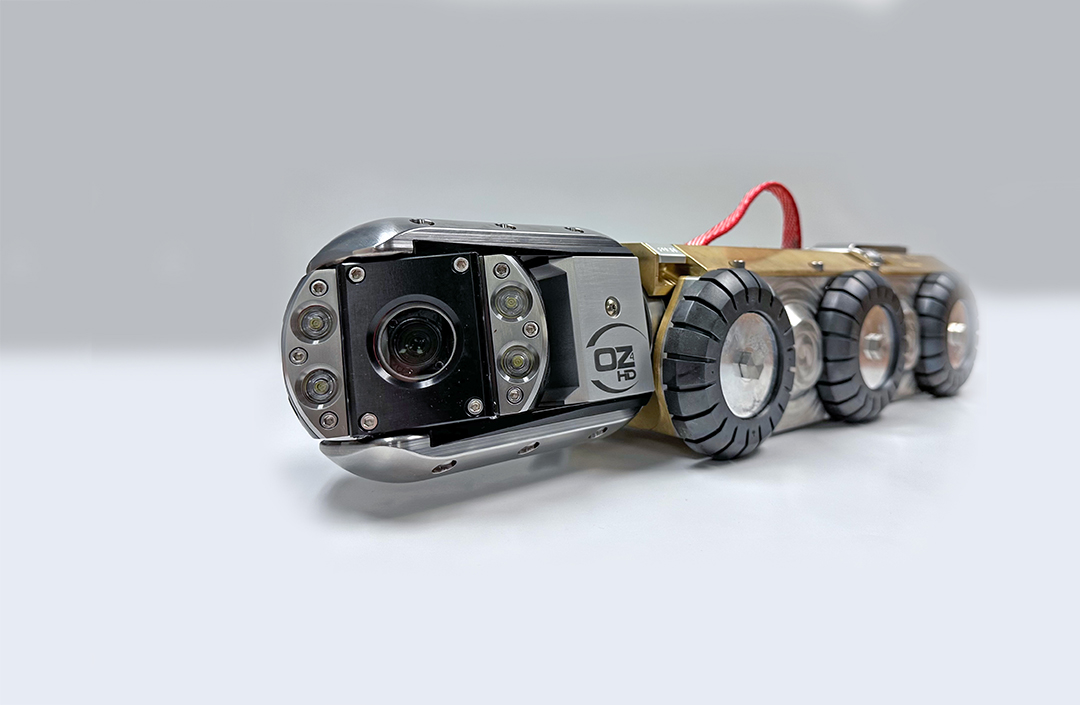
Those details remain central to the current range. The Compact Pipe Ranger is a steerable wheeled transporter with different wheel options for pipe conditions. The OZ4-HD supplies 1080p video, 10x optical zoom and a sapphire camera window. CUES offers an HD truck upgrade that retains compatible existing K2 controls, transporters, cable and reels. For an owner with a fleet already paid for, that compatibility deserves attention.
The side street matters, too
A main sewer is only part of the network. The smaller lateral connections feeding it can contain their own defects and unwanted inflow. CUES developed its first Lateral and Mainline Probe in 2002. The LAMP II system uses a mainline camera and launches a second camera into a lateral, allowing both to be inspected from one setup.
Other questions demand other senses. The laser profiler projects a ring of light onto the pipe’s interior; software analyses that ring to build a dimensional profile. CATVS combines TV and sonar on one cable. These are different ways of collecting evidence. A picture of a surface and a measurement of its shape answer different questions.
The paperwork catches up with the robot
After Alexander Milley and Company purchased CUES in 1990, the business reworked products and customer support. Its history places a consequential decision in the mid-1990s: Milley anticipated that data acquisition and management would become critical for municipalities and hired software and hardware engineers. The inspection manufacturer began writing and servicing its own information-management software.
GraniteNet makes that decision tangible. Its published workflow includes assignments, tasks, sessions that can resume after interruption, and supervisor acceptance or rejection. Capturing video and creating observations can be separate assignments performed by different people. The asset history receives reviewed work rather than every unfinished fragment.
Consider Sangamon County Water Reclamation District in Illinois. In a CUES-published case study, the district describes a system serving approximately 150,000 residents and maintaining roughly 280 miles of gravity sewer mains. It began using GraniteNet in 2015 after maintenance tracking became inefficient across paper forms, software and home-built applications.
“We evaluated and selected GraniteNet from CUES.”John Higginbotham / Assistant District Engineer, SCWRD
The district first connected inspection records with Esri maps. Later, a security breach, the need for integrated work management and remote access pushed it toward additional web tools and Cityworks integration. It adopted cloud hosting under an annual service contract. The transferable lesson is procedural: keep the map, the inspection and the work order connected, then give field and office staff access to the same evolving record.
The AI has a reviewer
CUES’s published defect-coding service makes a useful distinction between identifying a likely defect and accepting a finished inspection. Footage uploaded to GraniteNet’s cloud environment enters an AI processing queue. Machine vision classifies potential PACP defects within the video. Each inspection then goes to a certified CUES PACP coder for review and certification, followed by customer review and acceptance.
The service addresses daily inspection uploads and older recordings awaiting assessment. A separate prescriptive-planning service can use processed inspections to help group rehabilitation needs and prioritize work. This is an attempt to reduce the distance between accumulated video and a practical programme of repairs.
Pricing depends on footage volume, video format and requirements such as urgent turnaround. CUES offers sample processing to establish a quote. A buyer can copy that approach: test representative footage, examine the delivered coding and review process, then assess whether the service suits the workload. The decision belongs with the actual inspection evidence.
A $189 million vote for buried infrastructure
In June 2018, SPX completed its acquisition of CUES through a transaction involving CUES’s parent, ELXSI. The announced cash consideration to ELXSI shareholders was approximately $189 million. SPX saw a fit with its Radiodetection business and placed the acquired operation in Detection & Measurement. This was the purchase of an established industrial business, with equipment, customer relationships and technology already in the field.
Approximate cash consideration to shareholders of ELXSI, CUES’s then-parent.
Today the commercial mix includes equipment and custom vehicles, software packages and optional modules, cloud services, defect coding, parts and repairs. Municipalities, utilities and contractors buy different combinations. Cooperative purchasing adds another route: CUES holds Sourcewell contract 080525-CUE and announced Canoe Procurement Canada supplier approval in June 2026. In May, it announced GraniteNet certification for NASSCO Version 8 PACP, LACP and MACP standards.
The less glamorous buying questions
CUES competes with suppliers such as RapidView IBAK and Envirosight, both of which also offer inspection hardware, vehicle systems and software. The relevant comparison starts with the job: pipe sizes, bends, access, sensor requirements, existing equipment and reporting obligations. CUES’s case rests on the breadth of its connected equipment and software range, compatibility options and support.
The limits are physical and organisational. A camera cannot reveal a surface it cannot see. The wrong transporter configuration cannot be rescued by a dashboard. Cloud transfers need a connection, and integrated records need maintained asset identifiers. Better footage still requires competent interpretation and a funded response.
CUES puts the service problem plainly on its website: “Equipment goes down.” That admission belongs in the buying conversation. Repair access, spare parts and the ability to keep existing equipment working affect the useful cost of an inspection system. The company’s most interesting promise is the continuity of the job: getting into the pipe, bringing back evidence and helping someone make a decision that survives beyond the video.
Go a little further underground
Explore CUES equipment and software, the Below the Surface explainers, and company news.
Watch the LAMP II product demonstration or browse the CUES YouTube channel. Follow CUES on LinkedIn, X and Facebook.