The absurdity arrived as a choice. Crystal Brown's daughters attended Sherman Elementary in San Francisco, and the school was staring at another year of California budget cuts. The options, as Brown described them in 2012, were to lose a reading specialist who helped struggling students or to give up the paper, pencils, erasers, paper towels, toilet paper, paint, scissors, and crayons needed for the year. “We were making decisions that were ridiculous,” she said.
Some people hear a bad choice and complain about it over dinner. Brown turned it into logistics. With other parents, she helped organize “This Budget Blows,” a protest whose visual joke was irresistible: children and parents at 60 schools in 40 cities blew bubbles while asking lawmakers to stop hollowing out classrooms. Within six hours, 1,500 letters had been sent.
That combination of blunt diagnosis, a memorable device, and coordinated follow-through is the recurring pattern in Brown's career. She has worked in healthcare systems, civic organizing, education policy, consulting, consumer health, startup operations, partnerships, and marketing. The subjects change. The operating instinct does not.
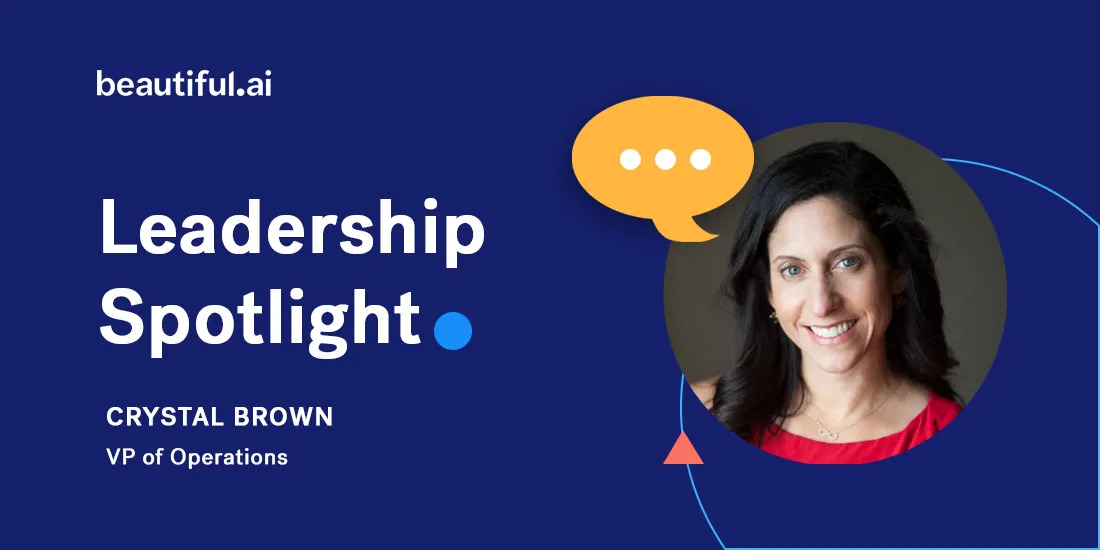
The breakfast shift was the first operating system
Brown's first job was waiting tables at a busy breakfast restaurant in Berkeley. Years later, asked what she learned there, she skipped the sentimental lesson and went straight to capacity: balancing about a hundred things at once. Breakfast service is merciless training. Coffee cools. Eggs do not wait. Every customer believes the clock belongs to them.
That reflex found a professional home in healthcare technology. After earning a biology degree from Lafayette College and studying biological sciences at UC Berkeley, Brown worked through management and consulting roles at MedPartners, Certus, Stryker, and TeraHealth. Her projects included database management, contract implementation, physician-practice management, and relationships among providers and insurers. At Brown & Toland Medical Group, she managed IT, configuration, and contracts.
The work was unglamorous in the useful way. It required her to understand what different groups needed, find the handoffs, and keep systems from dropping the ball. Meanwhile, San Francisco drew her into public life. She worked on the renovation of Moscone Playground, helped found the SF Marina Community Association, and later developed a strategy that raised close to $500,000 for a branch-library renovation.
Six mothers discover the size of the room
In 2009, the arena widened. Brown was one of six San Francisco mothers who started Educate Our State after a proposed 25 percent cut, totaling $113 million, hit the city's schools. Their concern was local, but the arithmetic was statewide. The group connected with parent organizations from Sacramento to Southern California and grew into a network pressing for durable school funding and a stronger parent voice in policy.
By late 2011, Educate Our State counted about 40,000 members and more than 20 allied organizations. Its volunteers had delivered 60,000 letters to legislators and organized “Wake Up California!” rallies in 22 communities. Brown served as co-founder, president, and board chair. She spoke at rallies, trained organizers, joined policy panels, and argued that annual emergency fixes were exhausting families without repairing the underlying system.
The details reveal her style. When rival tax proposals threatened to split California's education vote in 2012, Brown resisted the spectacle of a political horse race. Her attention stayed on the practical outcome for schools. “Passing taxes in California is really hard,” she said, so treating the measures as simple competitors sent the wrong message. The point was not to win an argument elegantly. It was to keep school funding alive.
She also worked both sides of the distance between a rally and a policy table. In January 2013, Brown joined educators and policy specialists in Sacramento for a discussion of K-12 accountability. The setting was quieter than children blowing bubbles on sidewalks, but the underlying demand was the same: public systems should be legible to the people who depend on them. Organizing supplied the pressure. Panels, campaigns, and legislative relationships gave that pressure somewhere to go.
“Parents from all different cities and towns across the state are saying we're not happy.”Crystal Brown, 2012
In 2011, San Francisco Supervisor Mark Farrell recognized Brown during Women's History Month for her work with Educate Our State. In 2013, she stepped down as board chair while remaining active on the board. A later open letter showed that the cause had not left her. During the disruption of 2020, as her eldest daughter chose a university, Brown urged California to rethink higher education rather than merely administer another cut. Her closing promise sounded exactly like an operator: “I will gather the parents, professors, and the tech community - let's do this.”
From movement builder to company builder
After Educate Our State, Brown moved through The Learning Accelerator and the consulting firm Schaffer&Combs, then founded Healthiest in 2014. The company tried to simplify shopping for wellness products, including a browser extension that offered suggestions while customers browsed Amazon. Healthiest won Vator Splash in 2015 and joined the MergeLane and Circular Board accelerator cohorts in 2016.
The founder years expanded her range again. Public profiles describe her as an investor and advisor as well as a company builder. She moved into business development at Taproot Networks and later became COO at Suggestic, an AI-enabled nutrition platform. By 2020, she had accumulated the kind of experience that makes departmental borders seem less sacred. Sales, product, operations, partnerships, and marketing were simply different angles on whether a company could understand a need and respond to it.
The presentation is where the threads meet
Brown joined Beautiful.ai in 2020, though she said she had been a user, fan, and advocate since the presentation company's inception. Her early remit was broad even by startup standards: operations, business development, partnerships, and strategy, in close collaboration with the CEO and daily contact with sales, marketing, customer success, and product.
Presentations were not an abstract category to her. In 2022, Brown said she used them in nearly every meeting and usually had at least 15 such meetings a week. Her favorite feature was logo lookup. The preference was wonderfully specific. After two decades as a founder, investor, advisor, and operator, her decks often needed lists of customers, clients, and partners. A feature that removed friction from that small recurring chore mattered more than a grand demo flourish.
Asked to explain her job to kindergarteners, Brown answered with a marketer's respect for the audience: “I help my company get new customers.” Then she made the mechanism equally plain. She finds ways to tell people how to use the product, why it is useful, and why they need it. The child-sized explanation contains a grown-up discipline. If a job cannot survive translation into ordinary language, perhaps the job has not yet been understood.
Her stated lesson from the founder's seat was just as compact: a great team matters; experimentation and iteration are the route forward; try things, learn, and grow. At Beautiful.ai, she praised the team, leadership, and product in the same breath. She was especially proud of partnerships with early-stage startups and education customers, two groups that neatly joined her experience as a founder and a public-education advocate.
Hard problems, plainly spoken
Brown's LinkedIn introduction says she is drawn to hard problems, including building full-stack marketing organizations and partnerships. It is a fair summary, but the more interesting word is drawn. Her career repeatedly moves toward places where coordination has broken down: healthcare databases, school budgets, product choices, cross-functional teams, and markets crowded with AI claims.
Beautiful.ai now sells software that turns prompts, outlines, and documents into designed presentations. In 2026, the company introduced a context-aware workflow, localized the product into 15 languages, announced an API and ChatGPT app, and secured $45 million in non-dilutive financing for global and go-to-market expansion. Brown's marketing role sits at the junction between what the system can do and what customers can understand.
Her public profile now places her in the Miami-Fort Lauderdale area, a long way from the San Francisco schoolyards where her organizing became visible. Yet the move makes the continuity easier to see. Brown's work was never only about one city or one product. It was about scale without losing the human reason for scaling: the student missing a reading specialist, the founder assembling a partner deck, the customer trying to make an idea clear before the next meeting begins.
Away from work, her enthusiasms are active and pleasantly concrete: pickleball, hiking, walking the dog, and a daily Peloton ritual. At Lafayette she was a varsity swimmer. Even the leisure list has cadence. Move, adjust, keep going.
The temptation with a varied career is to force every chapter into a perfect origin story. Brown's record needs no such tidying. A breakfast shift taught her to juggle. Healthcare taught systems. A neighborhood taught civic work. Parents taught one another how to organize. Founding taught iteration. Software made the act of explaining visible. The result is not a straight line. It is a practiced ability to enter a complicated room, identify what matters, and help the people inside it act together.