At NS Solutions, the innovation course began with a rule that deserves a place above every corporate suggestion box: bring a project the business already intends to pursue. Sixteen people, organized into four teams, joined a roughly five-month program with addlight. Their assignment had a life outside the classroom. That small distinction explains a great deal about the Tokyo consultancy.
- Build the people and the business together.
- Connect corporate resources with startup technology.
- Give climate-tech partnerships a commercial route forward.
The engagement also resisted a tidy timetable. One team started behind the others; addlight added two opening sessions. The client’s published account describes choosing the firm for unusually attentive mentoring relative to its price. Three projects were expected to continue afterward. One stopped because another assignment intervened. These are modest, useful details: progress depended on time, attention, and competing priorities.
The accountant who wanted to get closer
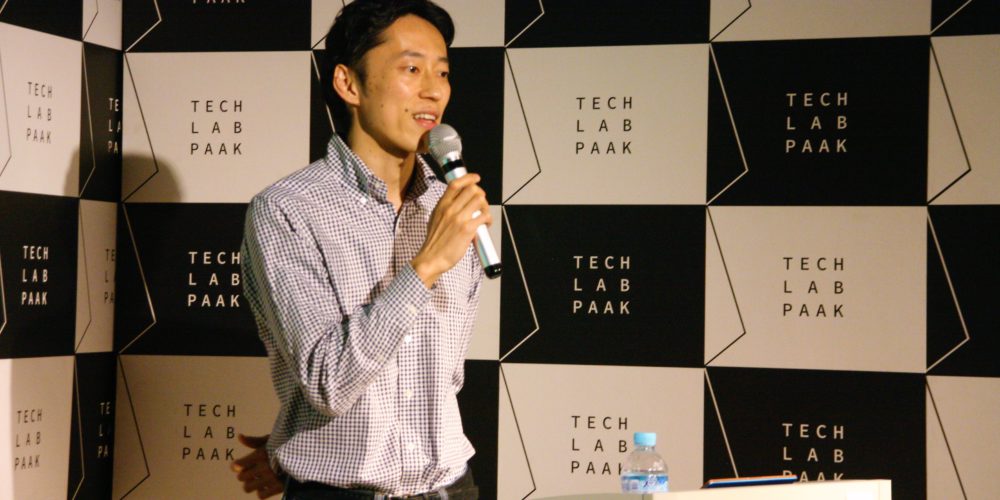
Founder Tadaaki Kimura arrived at this work through accounting. After studying economics at the University of Tokyo, he worked at Deloitte, helping companies prepare for public listings. In his telling, the trouble was distance. He wanted to work closer to the people making a company, and in 2008 left to provide hands-on CFO support to startups.
“I wanted to have a hands-on approach in my work with new business creators.”
Tadaaki Kimura · 2017 interview
Euglena, the university-linked microalgae company, became his first successful IPO support assignment in 2012. Later trips through Asian startup centers and San Francisco helped redirect his attention toward large Japanese companies. He saw an opportunity to connect their resources with the entrepreneurial activity outside them. The business expanded from advising founders to organizing those connections.
A compass, a dojo, a sherpa
Today, addlight sells several pieces of that work. INTRAPRENEURz is its corporate business creation family. COMPASS addresses the organizational machinery: incubation strategy, frameworks, and systems. DOJO develops the people expected to use it. SHERPA provides concentrated support when a team understands the process but needs help moving a particular business forward. CAMP brings participants together across company boundaries.
CAMP adds learning across company boundaries.
The mountain vocabulary continues inside SHERPA, whose courses include Mount Takao, Mount Fuji, and Everest. Beneath the playful naming is a sensible distinction. An organization without a way to manage new ventures needs different help from a team looking for a development partner. Buying a workshop for both problems would be convenient for procurement. It would be a peculiar diagnosis.
The customer has more than one problem
Consider POLA ORBIS Holdings. Its internal venture system began in fiscal 2017, and its second cycle produced encyclo. addlight’s case describes supporting the translation of a founder’s ambition into a business plan and the development of a first product. The difficulty was moving from enthusiasm into an unfamiliar commercial activity.
East, which provides services to commercial facilities, needed help at another level. addlight supplemented its corporate planning function, supported divisional strategies, and ran business-development workshops alongside the medium-term planning work. Here, the intervention joined organizational decisions to employee learning. A promising idea still needed somewhere in the company to belong.
Sapporo selected ten people from its previously trained DX/IT talent pool for an approximately eight-month advanced development program announced in April 2024.
Honda offers another variation. Its sustainability and digital team sought an outside perspective on creating something new, along with shared language and experience among participants. The published case describes a curriculum developed together with addlight. Across these examples, customization concerns the client’s actual work: what people must decide, build, and carry forward.
Climate tech needs a way into the company
SUITz applies the collaboration approach to decarbonization and green transformation, commonly shortened to GX in Japan. It supports identifying business themes and relevant technologies, finding domestic or overseas solutions, and developing joint projects. The attraction is practical: a corporate team can search beyond its own research department while a startup can reach an organization with a potential use for its technology.
SUITz Tokyo adds a defined international program. Selected under Tokyo’s TOKYO SUTEAM initiative, it has inbound and outbound tracks. Overseas climate-tech startups can explore collaboration with Tokyo companies; Tokyo-based startups can seek international investor connections. The second inbound batch lists Mitsubishi Electric and Canon Marketing Japan as partners. Matching creates an opening. Individual meetings and further consideration determine whether it develops into an alliance or investment.
The public sector is another customer. addlight lists assignments involving Yokohama startup development, Aichi overseas expansion, and the transport ministry’s PLATEAU accelerator for applications of open 3D city models. This places the company between several markets: corporate consulting, entrepreneurship education, accelerator operation, and international business development.
Its market position is clearest when you look at the handoffs. A research report can identify a technology. An accelerator can introduce its founders. A training provider can explain a business model. addlight offers work across those stages, including help inside the corporate organization. That breadth is the proposition a prospective customer should examine. The relevant comparison is the team’s own missing capability: finding partners, developing people, designing a venture process, or helping a specific project advance. Different gaps justify different assignments.
What the work asks of its buyer
The business model follows those assignments: corporate consulting and training, plus commissioned government program delivery. Buyers are purchasing expertise, program design, and continuing project support. Comparing suppliers therefore means examining the scope of mentoring and execution work alongside the fee. A free event answers a different purchasing question: the February 2025 SUITz Tokyo inbound Demo Day advertised no admission charge.
The copyable lesson is to connect learning to a decision someone already needs to make. Give the project an owner, bring in outside knowledge where it is useful, and keep a route from discussion to execution. This is an interpretation of the service design, rather than a guarantee of results. It asks the buyer to contribute people, attention, and authority. External introductions cannot supply those internal commitments.
In February 2026, addlight opened a Sydney office at Greenhouse, a climate-tech hub. The move extends its search for collaborators, research connections, and demonstration opportunities into Australia. It also returns to Kimura’s original preference for proximity. The company’s proposition depends on getting close enough to the work to help it move.